Author: salamanca

Preserved myself at the Imaginary Republic, Kunsthall 3.14, Bergen
The Imaginary Republic | 18.10. – 16.12.2018 | Kunsthall 3.14, Bergen, Norway
Tatiana Fiodorova | Brandon LaBelle / Octavio Camargo | Sala-manca group | Joulia Strauss
Curator: Brandon Labelle
https://www.kunsthall314.art/upcoming
The Imaginary Republic looks at questions of public life and civic culture in today’s globally fraught environment. It questions ongoing social and political unrest and how this has led to an intensification of grass-roots initiatives, artistic activism, and practices of commoning. In particular, the project considers the creative expressions and dissident imaginaries of contemporary political subjectivity.
The exhibition features participating artists whose works and practices engage with communities of struggle, transitional zones and the drive of autonomous cultures. It brings into play forms and fictions by which emergent social configurations work as solidarity machines. As such, it sets out to dialogue with what Stavros Stavrides calls “communities in movement”. These act as expressions of social thresholds, where borders function less as fortifications and more as points of contact with others. Communities in movement suggest new lines of collective power and imagination by traversing and upsetting demarcations of the managed self. Such configurations of sociality may rework patterns of neoliberal life described by Isabell Lorey as “governing through insecurity”. Instead, they bring forward a culture of co-existence and poetic world making that often hovers in the gaps of political life. The works presented in the exhibition dialogue with these larger issues and realities, articulating fragile meetings and temporary dwellings, imaginary journeys and the creative resistances found in small gestures of care. As such, they document and point toward ways of figuring an art of survival.
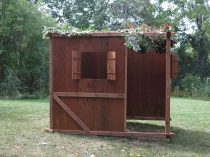
Temporary Dwelling, Fragile Structures: Sukkot 2018, Canada
The Sala-manca Group (ISL/ARG) presents the OFF/SITE series
Sukkot (Jewish tabernacles) is a seven-day Jewish celebration commemorating the forty years of travel through the desert after the exodus from Egypt. During the celebration, temporary dwellings called sukkah are built with simple materials and are used for seven days for for eating, entertaining, and even sleeping.
During the coming holidays of Sukkot, the Sala-manca group (see below) are constructing a Sukkah (Jewish tabernacle) in their front garden referring to their actual temporary migration to Kingston and are opening their (rented) house for a series of talks, performances, and workshops dealing with topics related to Sukkot: Temporary Dwelling, Forced and Voluntary Migration, Hybrid Identities, Fragile Structures.
September 23, 7:00-9:00 pm
A temporary Dwelling in our Rented Garden
A sukkah by Sala-manca family Informal Opening, refreshments will be served at the Sukkah
September 25, 7:00-9:00 pm
Panel on Sukkot
Sukkot Basics | Rabbi Erin Polansky
Rabbi Polansky is originally from Montreal, Quebec and grew up in Thornhill, Ontario. She was the first graduate of the Jewish Studies program at Queen’s University and subsequently attended the Hebrew Union College-Jewish Institute of Religion in Jerusalem and then in Cincinnati, earning ordination in 2000. Upon ordination, Rabbi Polansky served as Assistant Rabbi and Rabbi Educator at Bet Shalom Congregation in Minnesota. In 2004, she returned to Toronto where she served as Associate Rabbi at Temple Sinai and was the spiritual leader at Neshamah Congregation of York Region in Vaughan, Ontario from 2011 – 2018. And now Rabbi Polansky begins the next phase of her career as Rabbi at Beth Israel Congregation in Kingston
Absentee Landscapes | Sala-manca
Sala-manca will present two projects on Sukkot: In the lead-up to the 2014 Sukkot holiday, the Sala-Manca Group together with Itamar Mendes-Flohr and Yeshaiahu Rabinowitz decided to create a public sukkah on the Hansen grounds in Jerusalem, a temporary dwelling for its activities during the holiday. They collaborated with Al Korshan family of the Jahalin bedouin tribe to delve into the sukkah’s charged meaning in the Israeli context and to highlight the temporary nature of the structure and its associations with exile – thus evoking associations not only with Jewish history but also with the modern Israeli context, and proposing a contemporary reading of the sukkah, both as a concrete object and as a symbol. The Sukkah was bought a year later by the Israel Museum for their collection of Contemporary Art.
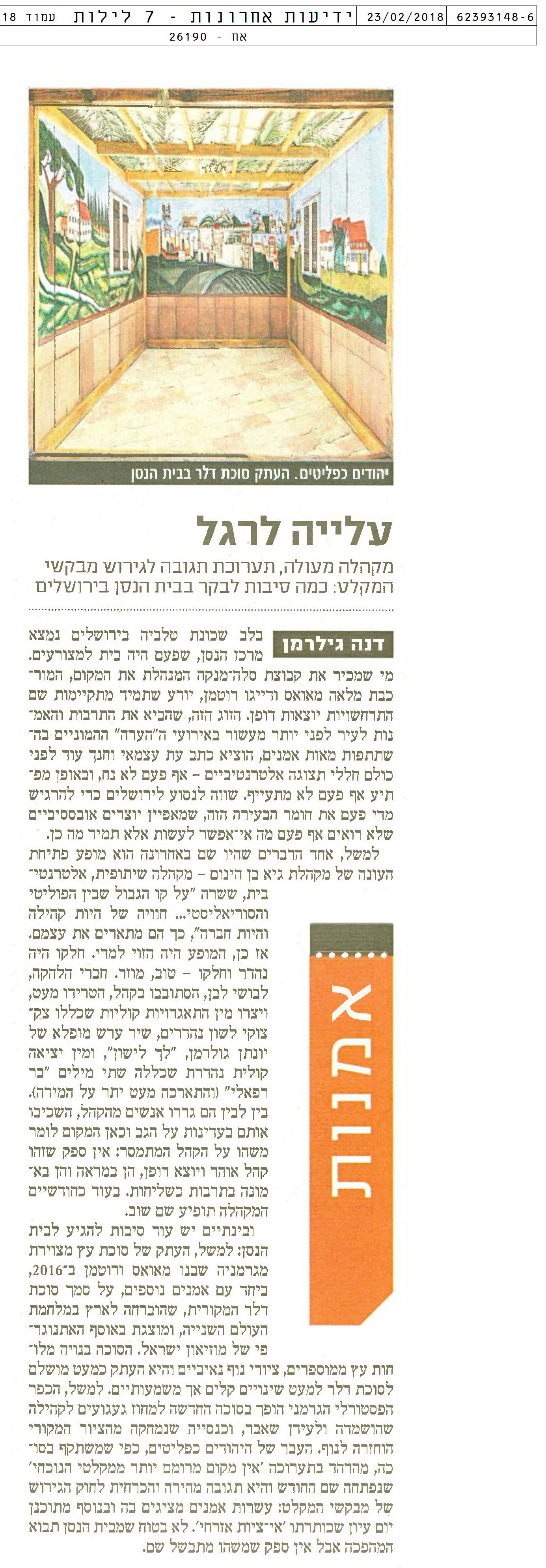
The second project is the Deller Sukkah (2017). In the winter of 2017 (the SalaManca Group, Nir Yahalom and Ktura Manor began building an unauthorized but accurate replica of a painted wooden sukkah from Germany (dating to 1850), which with the outbreak of World War II, was smuggled to Palestine to save it from the Nazis and is on display in the permanent collection of the Israel Museum and is known as The Deller Sukkah.
Tahany Okbi, a Palestinian Bedouin woman from Beer Sheva, southern Israel, currently living in Montreal, Canada.
Tahany holds MSW from McGill University, Canada and BSW from Ben- Gurion University, Israel.
September 26, 7:00-9:00 pm
Lois Klassen: “Books and Libraries in Migration”
What happens when migration stories are held still within a book? Can a library become nomadic? Vancouver-based artist and writer, Lois Klassen, will present two participatory art projects that take up the subject of migration and its cultural representation. Artist book examples from Reading the Migration Library (2016, ongoing) and Renegade Library (1998) will be available for reading and handling.
Lois Klassen is a Doctoral Candidate in the Cultural Studies Post-Graduate Program at Queen’s University.
https://www.loisklassen.com/ http://www.readingthemigrationlibrary.com/
September 27, 1:00-3:00 pm Workshop: On the Museum of the Contemporary | Curating and Public Scholarship Lab @1400 de Maisonneuve Blvd W., LB 671, Concordia University, Montreal
Diego Rotman, from the Sala-manca group, will present and discuss the critical thinking standing behind the Museum of the Contemporary, concentrating in some key projects done in its frame. The Sala-manca group will share their tactics, way of working and their experiences as founders, directors, guides, guards and staff cleaners of the MofC.
https://www.facebook.com/events/327627557987608/?notif_t=plan_admin_added¬if_id=1536699104658146
September 27 , 7:00-9:00 pm
The Sukkah – Between Eternal and Ephemeral @ Musée du Montréal juif – Museum of Jewish Montreal 4040 Boulevard St-Laurent, Montreal
Join Diego Rotman of the Sala-manca group to discover the incredible stories and migrations behind their work and collaborative efforts creating two sukkot originally from Germany and Bedouin communities.
https://www.facebook.com/events/1219262371547070/
September 29, 1:00-4:00 pm
A Library of Temporary Shelters – A book arts workshop about migration and displacement @ Agnes Etherington Art Centre, Kingston
Join artists Lois Klassen (CA) Sala-Manca (AR/IL) in a hands-on workshop and discussion about the representation of human displacement issues through art and text. Participants will hear about art and publishing projects that take up the urgency of migration, refugee issues, and will be invited to make artist books in a studio session. The hands-on portion of the workshop will focus on the way book structures can reflect a need for shelter, whether temporary or permanent.
https://agnes.queensu.ca/event/details/a-library-of-temporary-shelters/
About Lois Klassen
Lois Klassen is an artist, writer and researcher based in Vancouver, Canada. Known for long-range projects that invite and engage participants in collective actions. Her current project Reading the Migration Library, addresses the cultural production of migration stories. Her work has been hosted by Emily Carr University of Art + Design, bruna press + archive, The Glenbow Museum, Santa Fe Art Institute, and more. She is currently a doctoral candidate in the Cultural Studies program at Queen’s University in Kingston, Ontario, Canada.
About Sala-Manca Group
Lea Mauas and Diego Rotman, were born in Buenos Aires and now live and work in Jerusalem. Since 2000, they have created performances, videos, installations, and new media projects. Their work explores the poetics of cultural translation with a focus on language, media, the urban environment, and new technologies. Their projects frequently address the tension between low and high-tech aesthetics as well as sociopolitical issues. Last August they moved to Kingston. Lea Mauas is a graduate student in Cultural Studies and Diego is the Regina Rosen Visiting Artist in Residence in Cultural Studies and Jewish Studies and Visiting Professor at the Dan School for Drama and Music at Queen’s University.
—
With the support of the Regina Rosen Fund in Jewish Studies and Cultural Studies at Queen’s University, the Ethnographic Department of the Museum of the Contemporary and the Mamuta Art and Research Center in Jerusalem
All the events are free of charge and are made in the spirit of Ushpizin ( Aramaic for guests, a reference to the seven supernal guests). The events will be held at the artists’ house, in Kingston. Off-site events will also take place at the Agnes Etherington Art Centre, Kingston, the Museum of Jewish Montreal, and the Curating and Public Scholarship Lab at Concordia.
For further info contact: salamanca00@gmail.com
Toward a Transversal Reading of Art and Politics in Israel by Mor Cohen
About Heara Events and Hearat Shulaym (among other interesting topics) in an article by Mor Cohen, publisehd at
Cohen, M. (2018). Toward a Transversal Reading of Art and Politics in Israel, Israel Studies Review, 33(2), 105-122. Retrieved Jun 19, 2019.
Abstract: The 2011 Israeli protest for social justice marked a change in
the responses of Israeli citizens to political and social matters. The ways in
which art and social change intersected during the protest, and the emergence
of art collectives following the events, call for an understanding
of the relation between art and politics in Israel. This article suggests an
alternative reading of socially engaged art in Israel. To this end, I use Félix
Guattari’s notion of ‘transversality’ and Jacques Rancière’s theory on the
‘aesthetic regime’ to highlight significant periods where art and politics
have intersected in ways that have challenged Israeli art historiography,
often neutralizing the political within an artwork. By using a theoretical
framework that emphasizes notions of hybridity and the blurring of
boundaries, I make new connections between times, places, and practices
that go beyond the binaries of center and periphery, mainstream and alternative,
and aesthetics and politics.
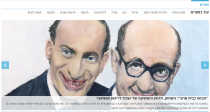
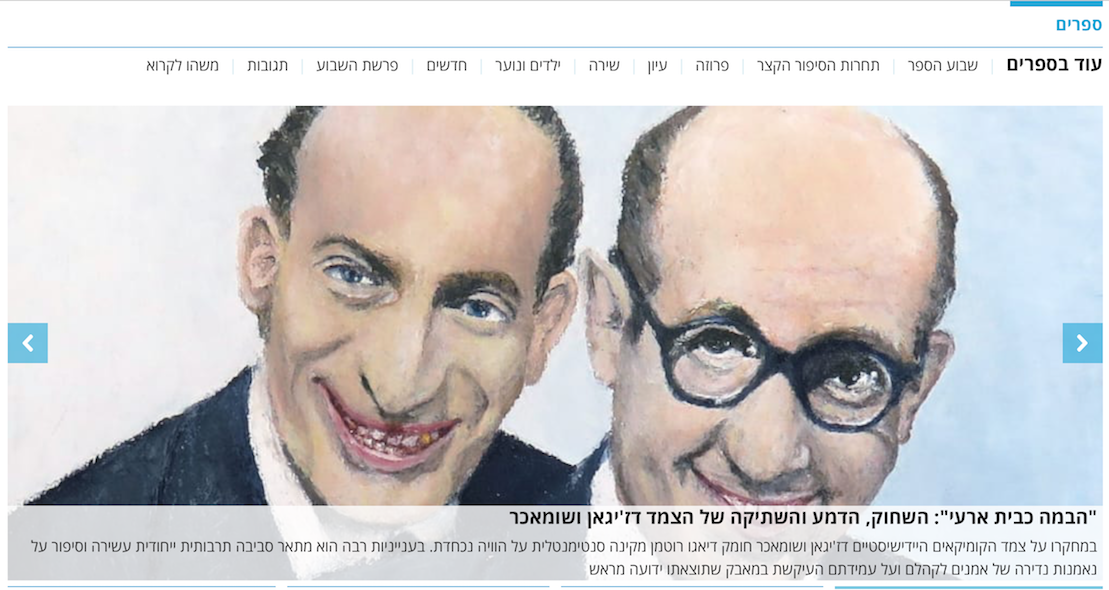
The Stage as a Temporary Home, Review by Michal Zamir
A new review of Diego Rotman’s book on Dzigan and Shumacher, The Stage as a Temporary Home, by Michal Zamir, Haaretz, 19.7.2018
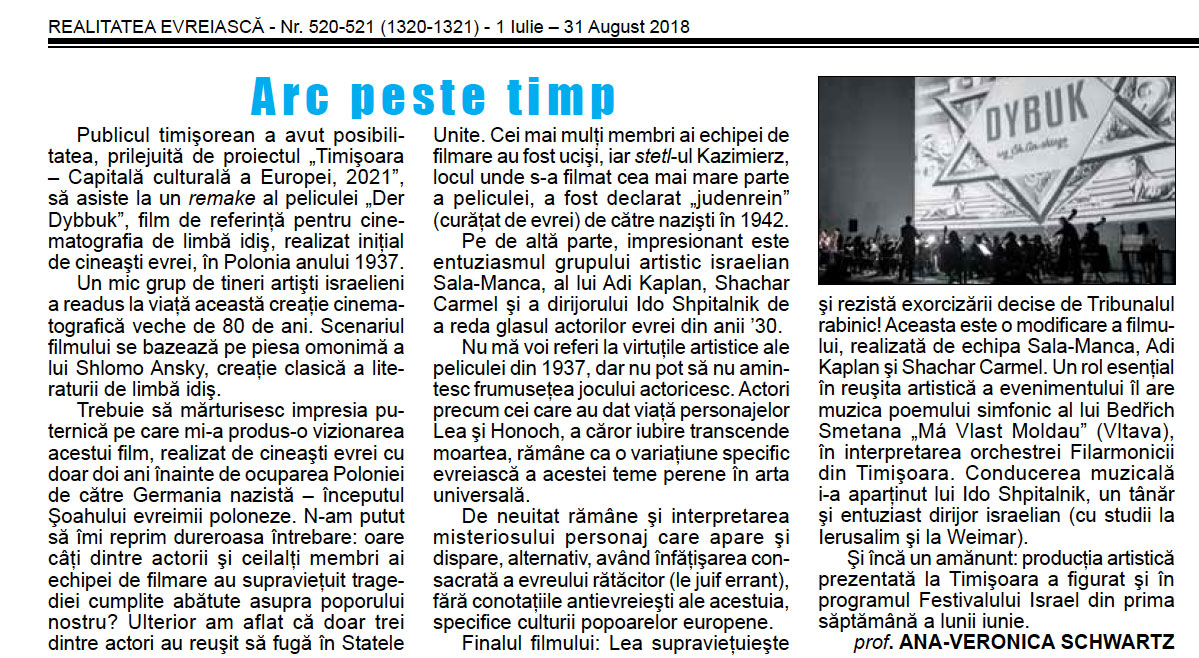
Arc Peste Timp | A review from The Dybbuk performance in Timisoara
Sala-manca’s Garage Sale | Solo (selling) Exhibition
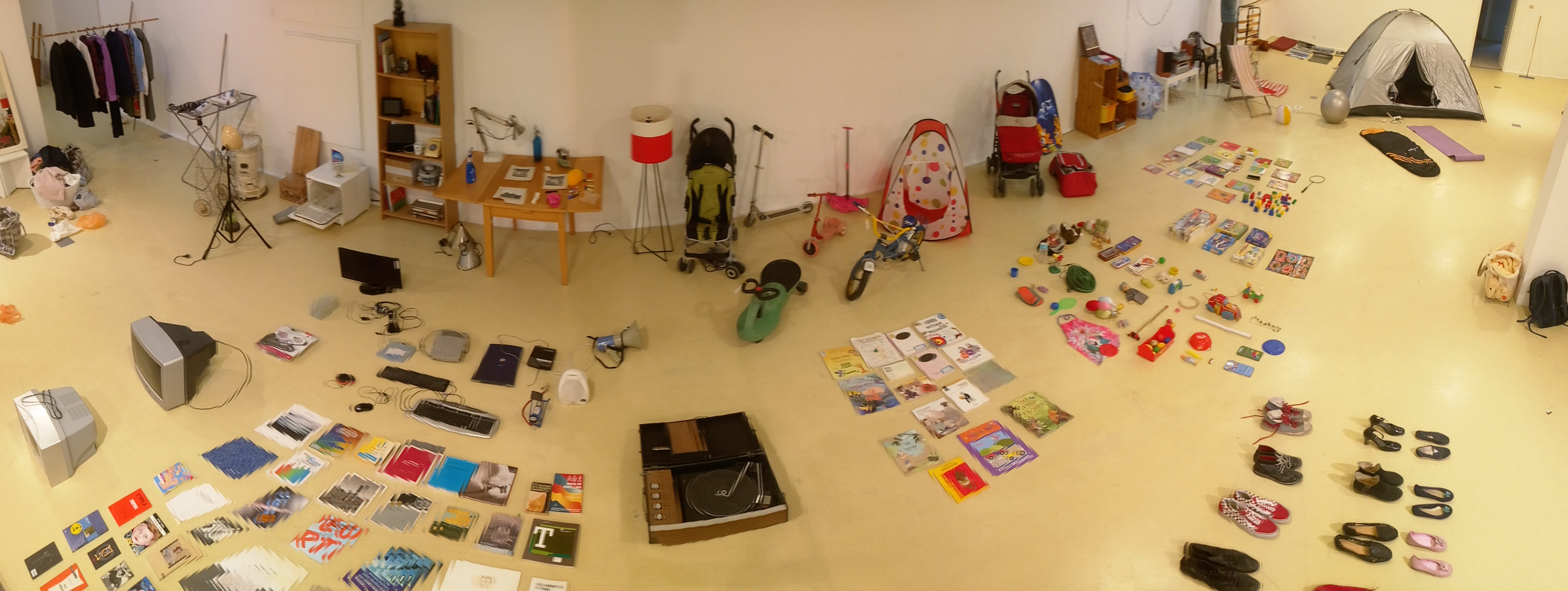
Sala-manca’s Garage Sale | Solo (selling) Exhibition
Kfar Saba Municipal Gallery | Curator: Meira Perry-Lehmann |24.5-24.7
The last exhibition presented at the Kfar Saba City Gallery during the current school year is also the last show – for the time being – by the Jerusalem-based Sala-Manca Group, whose members, Lea Mauas and Diego Rotman, are about to travel to Canada, to study there for one year. The Sala-Manca Group, active for the past eighteen years, is known for subversive, independent, dynamic artistic creation in different fields: performance, video, installation, and new media. In 2009 Mauas and Rotman founded the Mamuta Art and Media Center, which offers creators in a variety of fields a framework for encounters, research and exhibition. The Center was first situated at the Jerusalem home of the artist Daniela Passal, and since 2013 has a space at Hansen House in the city. Over the years, Sala-Manca Group activities have taken place mainly in Jerusalem, only occasionally showing elsewhere.
The Sala-Manca Garage Sale at the gallery blurs and examines, as is the group’s wont, the fine line between art and life. It gives visitors an opportunity to buy objects that belong to the artists, and in doing so exposes elements of their personal lives. The sale – an ironic take both on art auctions and on garage sales when moving house – features different kinds of items: objects that had served as props in the group’s artworks; works of art or fragments thereof; and sundry items from the family home, whose emotional history is connected to the artists’ lives or works. The commercial aspect of the show accentuates the artists’ ambivalence toward the artistic establishment, including the art gallery. Rather than finished artworks, they seek to expose in the gallery the creative process, which in this case includes travel abroad which destabilizes their artistic and domestic space. The gallery is turned into the artists’ proverbial garage, where the display may be assembled or disassembled while on view.
All proceeds from the “garage sale” will be used to produce the next chapter in the “Argentinian-Israeli telenovela” The Story of Batya M, which the Sala-Manca Group created for the 2006 Bat Yam International Festival for Theater and Street Art. A telenovela is a genre of serial drama produced mainly in Latin America, characterized by melodramatic story lines that aim to evoke strong emotions in the viewer. Typically shorter than the soap opera of the English-speaking world, events in the telenovela are usually set within the span of a year or less, and are faster-paced. The first chapter of The Story of Batya M, which is 40 minutes long, was screened with live dubbing by the actors who portray the telenovela’s main protagonists – that is, the couple Mauas and Rotman, who comprise the Sala-Manca Group. Featured alongside them are their daughter, Ashu, friends, and other family members. The work straddles the gamut between live show and TV program, between mass communication culture and avant-garde performance, between melodrama and social commentary. By producing a sequel whose events take place seven years later the artists intend to turn the work into a slower, postmodern telenovela.
Meira Perry-Lehmann
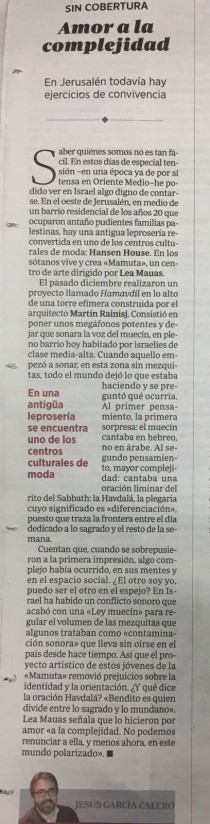
Amor a la complejidad por José García Calero (Review at ABC)
Review by José García Calero about the Hamavdil project. For link on-line and film click here
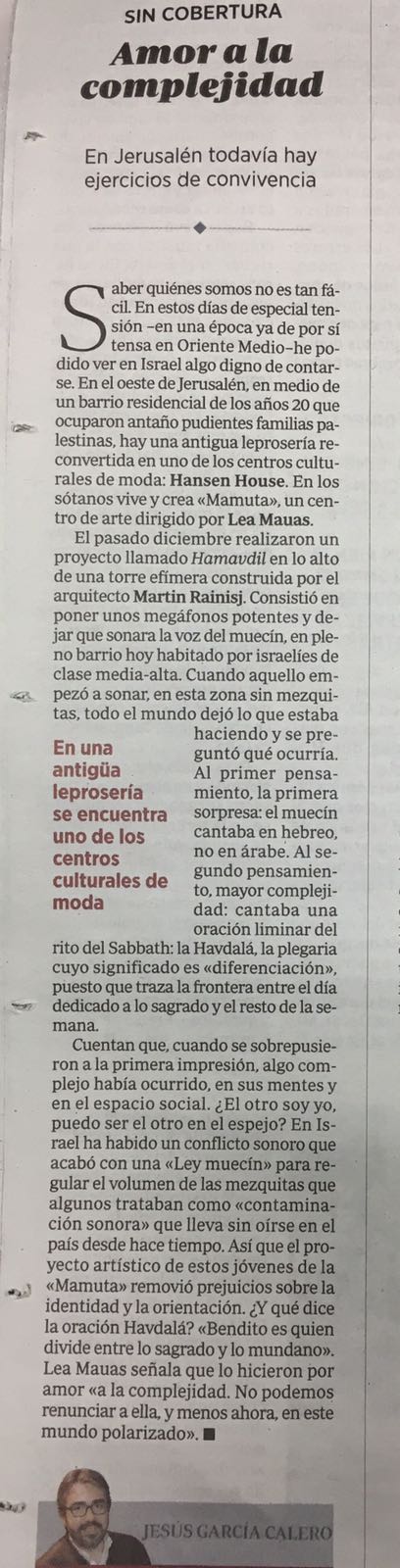
Brighter Than Thousand Suns | A solo show by Yeudit Shlosberg-Yogev
Opening: 15.3.18 20:00
Opening hours: Mon. and Tuesd: 12:00-16:00, Wed. 14:00-18:00, Friday: 10:00-14:00
In 1978, atomic scientist Anatoli Petrovich Bugorski shoved his head into a particle accelerator to fix a malfunction. A photon beam that was shooting around in the accelerator hit his head at the speed close to the speed of light. The scientist claimed he did not feel pain, but saw a light that was “brighter than a thousand suns.”
Yehudit Shlosberg-Yogev’s first solo exhibition, titled “Brighter Than a Thousand Suns” (after the book of that title on the Manhattan Project) contains apocalyptic and poetic images that are fascinating and disturbing at the same time. Like Bugorski, for Shlosberg-Yogev, too—who created these works as part of her tenure as Artist in Residence at the Mamuta Art Center, the atomic bomb is the driving force.
The exhibition is an invitation to experience the basement space of Mamuta at Hansen House as a sanctuary for visual remains moments after the great disaster—images that appear to be taken from an archeological journey through the realms of human terror—from dread of the magnitude of human power to fear of no return.
In one of the works—A Small Step for a Man—an artificial moon appears in the desert, next to a single man fighting the wind. Is this how Shlosberg-Yogev envisions the dream of the last survivor? And what lies in the man’s futile action? Is it beauty, pathos and solitude—or humor and hope, as well?
In another work—The Journey of the Dead—Shlosberg-Yogev created a documentary film shot from the locomotive of a freight train through in the Desert of Zin in southern Israel. The train is traveling from nowhere to nowhere, passing by the Israeli nuclear reactor that we are not supposed to know that we know is there. The train’s journey, which contains many references to the history of cinema, does not document the departure from the reactor complex—the plant, production and progress—but rather the void, the secret and the threat that it contains.
The series Encyclopedias expresses a yearning for an aesthetic form of absolute knowledge coupled with revulsion from the actions of man. The encyclopedias of 1908 seek to bring together all of world knowledge in beautiful volumes. The two world wars had not yet taken place, and the new century seemed promising and hopeful. Shlosberg-Yogev plays with the encyclopedias, adding simple mechanisms and creating childish games of beauty and magic, combined with documentary material from nuclear experiments.
Brighter Than a Thousand Suns offers a sensory preoccupation with existential questions: our relationship with nature, issues of control and restriction, and various aspects of art’s approach to nature—from observation to framing, from intervention to withdrawal. The human presence at the exhibition, mediated through camera and word, gives all of these fascinating interpretations and a great beauty.
– Lea and Diego
Video works: Photographer: Itamar Mender-Flohr | Actor: Eyal Flumendorf | Video Edition and Post Production: Ofek Shemer and Ada Rimon
“Watch From a Safe Distance” – Sound Editing: Ofek Shemer and Ada Rimon | Electronics: Amir Bolzman
Books – Electronics: Omri David | Cannon mechanism: Itamar Mendes-Flohr |
Monitors: Yaniv Sheinfeld
Thanks: Itamar Mendes-Flohr, Ori Mizrachi , Alon Gaash, Galia Lulko, Nava Frenkel, Michael Marziano – Israel Train, Eytan Yogev
Dzigan as Golde, Shumacher as Reb Dovidl, Review at Haaretz by Yaad Biran [Hebrew]
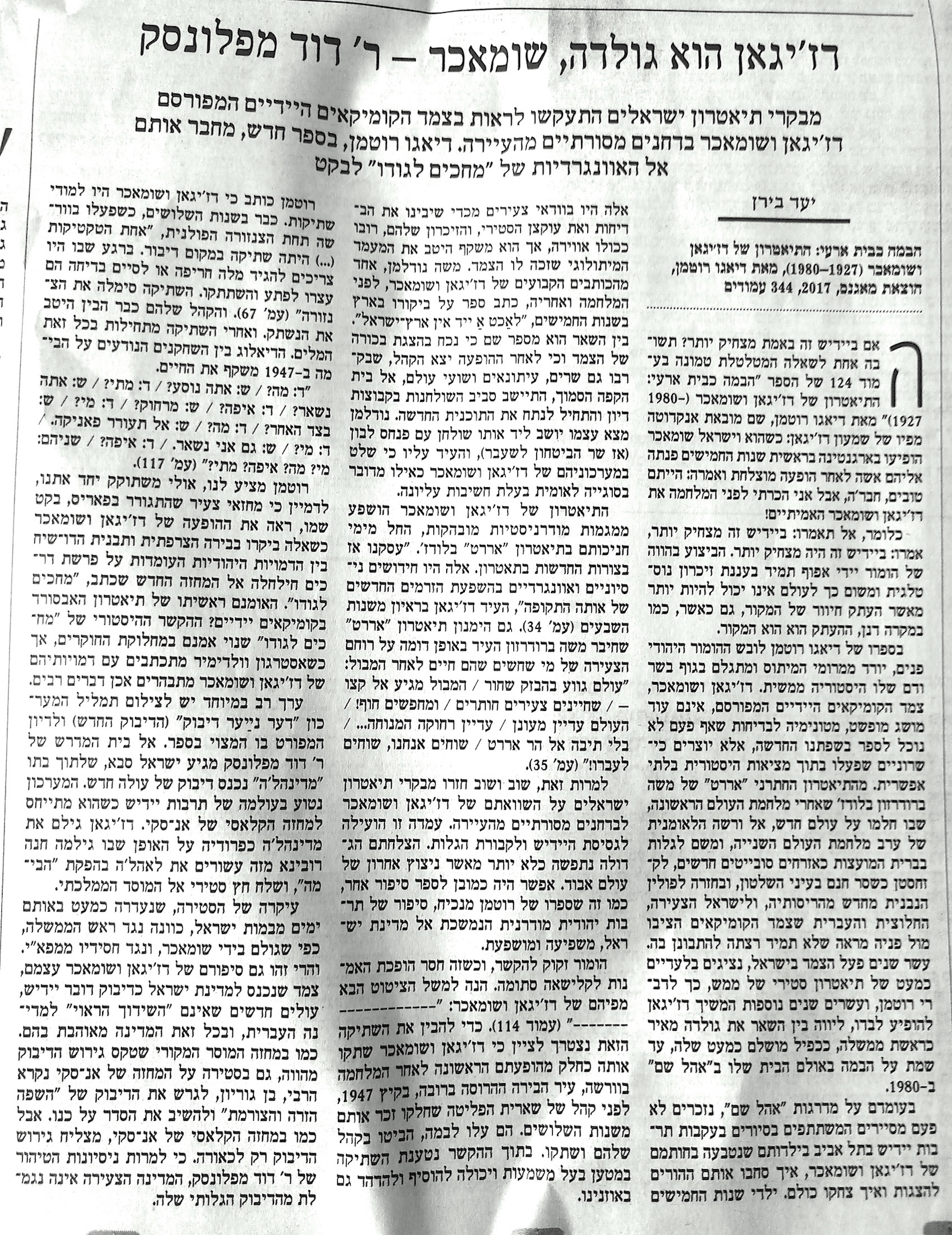 for the entire article: https://www.haaretz.co.il/literature/study/.premium-1.5871355
הבמה כבית ארעי: התיאטרון של דז’יגאן ושומאכר (1980-1927), מאת דיאגו רוטמן, הוצאתמאגנס, 2017, 344 עמודים
Haaretz, 9.3.18
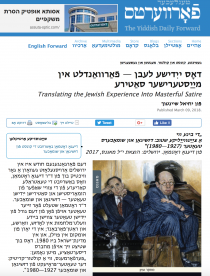
Yechiel Sheintuch’s Review in Yiddish, Forwerts, 9.3.2018
http://yiddish.forward.com/articles/208445/translating-the-jewish-experience-into-masterful-s/
Interview with Sala-manca by Judith Lenglart and Danielle Gorodenzi at Third Text
An interview with us conducted in English by
Judith Lenglart and Danielle Gorodenzik Gee was published at the Third Text Magazine. Carried out in the frame of the Bezalel Coloquium organized by Nirith Nelson.
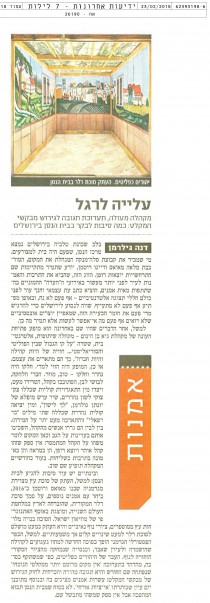
Pilgrimage by Dana Gillerman, 7 nights, Yediot Achronot [Hebrew] 23/2/18

The Stage as a Temporary Home On Dzigan and Shumacher’s Theater (1927-1980), by Diego Rotman & launching event
The Stage as a Temporary Home [in Hebrew] takes us through the fascinating stages in the life and career of the duo Shimen Dzigan and IsroelShumacher, over the course of half a century – from the beginning of their work at the Ararat avant-garde Yiddish theater in Łodz, Poland, and to their Warsaw theater, where they produced bold, groundbreaking political satire. The book further discusses their wanderings through the Soviet Union during the Second World War and their attempt to revive Jewish culture in Poland after the Holocaust, and finally describes their arrival in Israel, first as guest performers and later as permanent residents. Despite the restrictions on Yiddish actors in Israel, the duo insisted on performing in their own language and succeeded in translating the new Israeli reality into unique and timely satire. In the 1950s, they voiced a political and cultural critique of a kind that was not heard on any of the Hebrew stages. After they parted ways, and following the death of Shumacher in 1961, Dzigan continued to perform on his own and with other Israeli artists until his death in 1980.
The book is based on rare recordings, transcriptions, programs, personal diaries, letters, photographs, oral testimonies, and critical articles, all of which come together to create the first critical portrait of this extraordinary duo. The book also examines their art, the connection between theater and politics, and the complex relationship between majority culture and minority language.
The study includes several valuable indexes: of titles of programs and plays, of the artists who participated in them, of writers and the drafts they wrote, of actors and the programs in which they participated, and a general name index. The book also includes a facsimile of the manuscript Der Nayer Dybbuk [The New Dybbuk].
Launching event, Hansen House, 19.2.2018
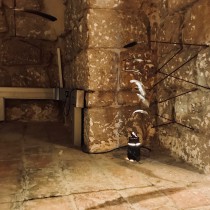
The Only Weapon I have is the Quill Pen | Ayala Landau and Lior Pinsky, Itamar Mendes-Flohr, and Eran Sachs
The Only Weapon I have is the Quill Pen” | Itamar Mendes-Flohr, Eran Sachs, Ayala Landau, Lior Pinsky
Opening: Saturday, December 30, 2017, 19:00
Opening Hours: Monday and Tuesday: 12:00-16:00, Wednesday: 14:00-18:00, Friday : 10:00-14:00
Curators: Lior Pinsky and Sala-Manca Group
Mamuta Art and Research Center
“The Only Weapon I have is the Quill Pen” is a sound exhibition comprised of three works by four artists – Ayala Landau and Lior Pinsky, Itamar Mendes-Flohr, and Eran Sachs. The works, presented in the art space/shelter of Hansen House, render fragile moments of silence and the state uncertainty and threat contained in these moments.
A hiding place, an unexpected movement, imagined landscapes reconstructing actions unfolding in the open space (a Japanese garden sculpture, a forest of feathers, a city under siege) – the three works need motion in order to exist; or in Einstein’s words: to keep your balance you must keep moving. In the tension of potential energy, on the continuum between eruption and vacuum, we hear the voice of João Delgado (1921-1976?) challenging his adversaries: “Our only weapon is the quill.”
Each of the participating artists in the exhibition has spent extended periods in the artist-in-residence program at Mamuta. These works, created after their residencies, return to the sub-conscious discursive and intellectual space of the Mamuta Center of Art and Design, to the basements of the former lepers’ hospital, which is paradoxically one of the few spaces where it is (still) possible to reflect quietly about the possibility of a different reality.
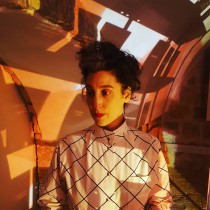
For Her Own Good | Ofri Cnaani
For Her Own Good | Ofri Cnaani
30.12.2017-10.2.2018
Curator & Text: Shirly Bahar, Curator in Jerusalem: Sala-manca
Opening: Sat. 30.12.17 | 18:00 Talk with the Artists and Curators | Opening at 19:00
Opening Hours: Monday and Tuesday: 12:00-16:00, Wednesday: 14:00-18:00, Friday (performance): 10:00-14:00
Ofri Cnaani’s exhibition, ‘For Her Own Good’, was originally commissioned by The American Jewish Historical Society and was curated by Shirly Bahar. After visiting the show when it was presented in New York in the fall of 2017, and in light of the ongoing escalation of the silencing policy in the Israeli public discourse, we decided to invite Cnaani to present it at Maamuta’s space at the Hansen House. Before we even contacted Cnaani, she decided to remove her show as an act of solidarity with theater maker Dan Fishback whose play was cancelled because of his political beliefs. Cnaani, who focused her project on different aspects of silencing, felt that the topic of the show is what led to its only possible end under these circumstances. In her statement, the artist wrote: “speech and critical thoughts were Emma’s only weapon, and they seem to be a threat to democratic society today as much as they were 100 years ago.”
Sala-manca
IN THE FACE OF SILENCING
“She arrived at the auditorium ready to speak in Berkman’s behalf just in time to be told by a federal marshal that unless she promised not to speak he would lock the audience out of the hall. Ordinarily, Goldman would simply have disregarded such an ultimatum, but feeling the urgency of this particular rally, she reluctantly gave the marshal her promise, then took a seat in the auditorium. When the preliminaries were over and several speeches had been delivered, the time came for Goldman’s speech. As the chairman began explaining her regrettable absence, out onto the stage strode Red Emma, a large handkerchief stuffed in her mouth. There she stood facing her audience without a word, as she had promised. It brought down the house.” (Alix Kates Shulman, Red Emma Speaks).
For Her Own Good is a mixed media installation poetically reshuffling textual and visual snippets from the multiple archives and accounts associated with the life and career of Emma Goldman. Indebted to and building on a myriad of texts, films, and exhibitions about Goldman, For Her Own Good
takes a close look at the 3 significant months of the summer of 1917 during which she was trialed, convicted, sent to two-year imprisonment and subsequently– deported to Russia. On June 15th 1917, Goldman and Alexander Berkman were arrested under the newly initiated Espionage Act and charged with encouraging people to refuse enlistment to the US Army which just entered WWI. On September 11th, 1917, Goldman made one of her most powerful – and as it turned out, her final -public appearance in the US. In that appearance, Goldman was on bail and thus not allowed to speak, as she was told, “for her own good.” Yet as the quote above indicates, Goldman staged a performance of both silencing and persistence that spoke for her instead. Although quite forgotten, For Her Own Good retrieved the memory of that performance, re-collecting the threads that guaranteed it lived on through the incarceration and exile of the reluctant returnee who kept writing her-story tirelessly.
Echoing the inspiring interplay between authoritative decrees and personal expressions that Goldman’s finale performance embodies, For Her Own Good weaves together her own words about her experience of that performance with words employed by officials to scrutinize and incriminate her during her trial. 21 etched glass boards display, fragment, and scatter Goldman’s story of her performance as she recounted it in her autobiography Living My Life. A video projection arbitrarily couples and scuffles between verbal procedures from the closed hearings and Dada-like visual collages juxtaposing various found objects with portraits of Goldman. A printed book with the same images and quotes rests open and available for leafing. The various media inhabit a bureaucratic-seeming setup composed of repurposed items typically or
traditionally used by archivists. As the Xerox machines assist the installation in casting its shaped shadows on the back wall, choreographed only to the subtle ticking soundtrack of a slide carousel, we are left with discreet specters of the discursive circumstances that once constituted the “The Most Dangerous Woman in America.” For Her Own Good invites us to read between the lines and cracks of light; contemplate questions of archiving, re-arranging, sorting, storing, and storytelling; and trace infinite perspectives on and narrations of the closed hearings and public non-speech of a powerful orator and performer. Perhaps we can even sense some remnants of Goldman’s rebellious spirit and affective presence that history had shed and deposited around her favorite speaking public space of Union Square.
“Have you ever been told to stay silent ‘for your own good?” Cnaani posed the question on social media, and the responses poured. In a special performance conducted on opening night of For Her Own Good, Cnaani sits down behind a desk amidst the installation and shares the stories that she collected from the responders – overwhelmingly, women– with individual spectators, who also receive a stamped copy of the heard story. Cnaani addresses her audience like a clerk granting an applicant their long desired, finally signed visa documents. Yet, instead of numbered papers that secure certain rights, the reports she reads and hands them articulate interpersonal, legislative, and/or systematic acts of deprivations and denial of the voice. The stories that Cnaani tells include testimonies of anonymous women as well as quotes from interviews with various political activists and public figures that have experienced silencing. For example, one might listen to a quote from Dareen Tatour, a Palestinian poet and citizen of Israel who has been under house arrest for almost two years in Israel for posting a poem in Arabic consisting of the word
“resist” on her Facebook account. The souvenir delivered to the spectator here is actually the very opportunity to relate to the experience of being hindered from ability to speak one’s poems, ideas, wishes, needs, or distress. Like a note from a self-help booklet, the stories convey some useful everyday tactics of how to communicate a message in the face of conditions that silence the spoken voice, despite oppression and against all odds. As this installation highlights, such tactics comprise an important part of Goldman’s legacies as an activist whose thought and action remain unpopular and challenging even after 100 years.
Shirly Bahar
September 2017
Special Thanks to: The Emma Goldman Papers, Berkeley Library, University of California The Arthur and Elizabeth Schlesinger Library on the History of Women in America, Radcliffe Institute for Advanced Study, Harvard University The Hathi Trust Records of the War Department General and Special Staffs Series: American Unofficial Collection of World War I Photographs NYPL Digital Collection Library of Congress Prints and Photographs Division
The Next Dybbuk | A review by Eppie Bat Ilan at Erev Rav [Hebrew]
to the entire review in Hebrew
הדיבוק הבא
“מה שבטוח, המופע על ‘הדיבוק’ הוא דיבוק בעצמו, החייאה של עולם, שפה ומסרים שכביכול מתו, שבאים להגיד לנו כמה דברים דחופים על עצמנו בכלל ועל היחס בין תרבויות שהושארו מאחור והתרבות העכשווית”. אפי בת-אילן על “הדיבוק 1937–2017”, יצירתם של עדי קפלן, שחר כרמל וקבוצת סלה-מנקה
Hamavdil 1&2 [sound intervention]
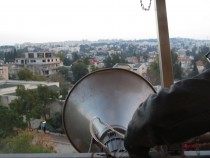
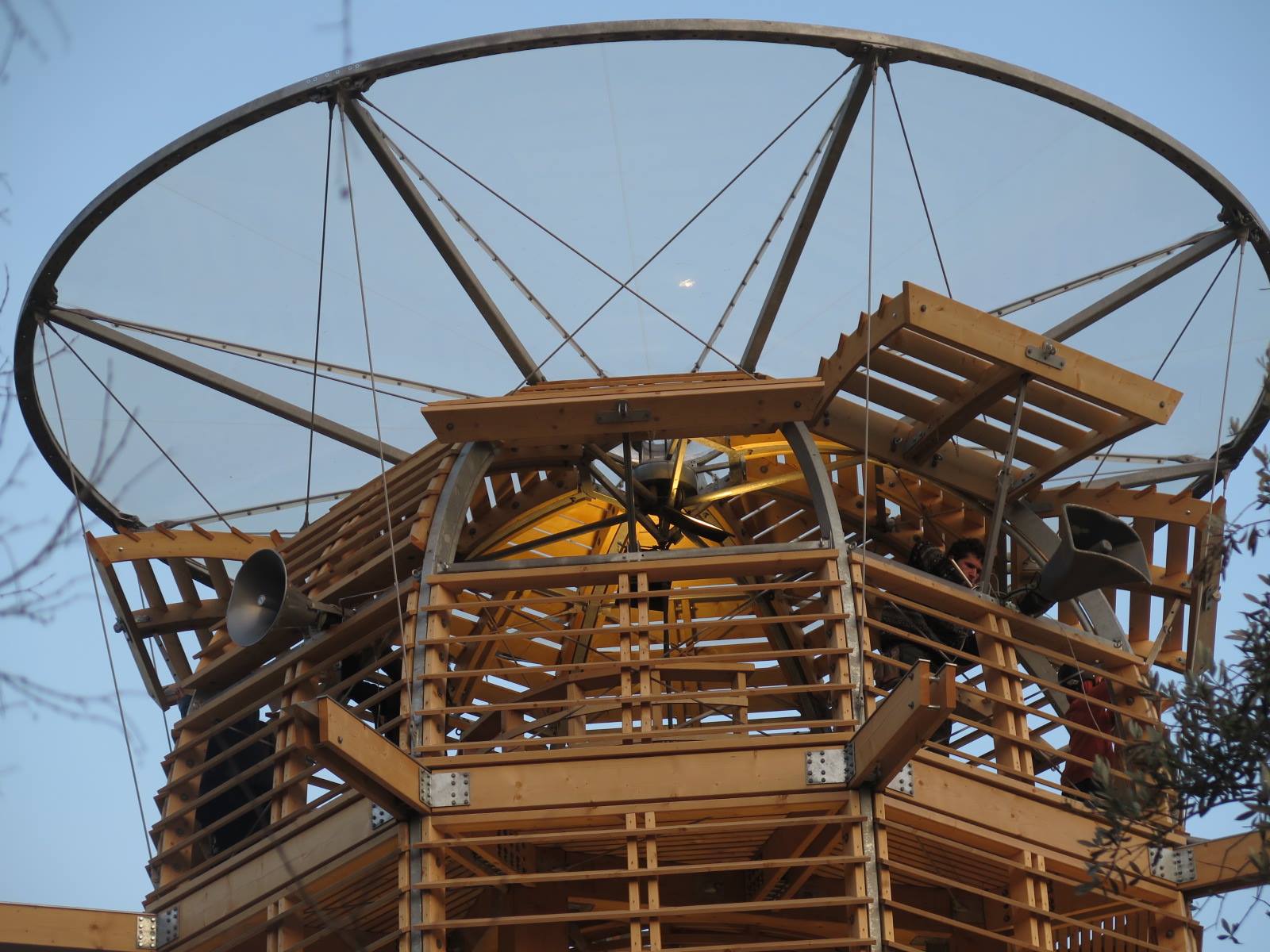
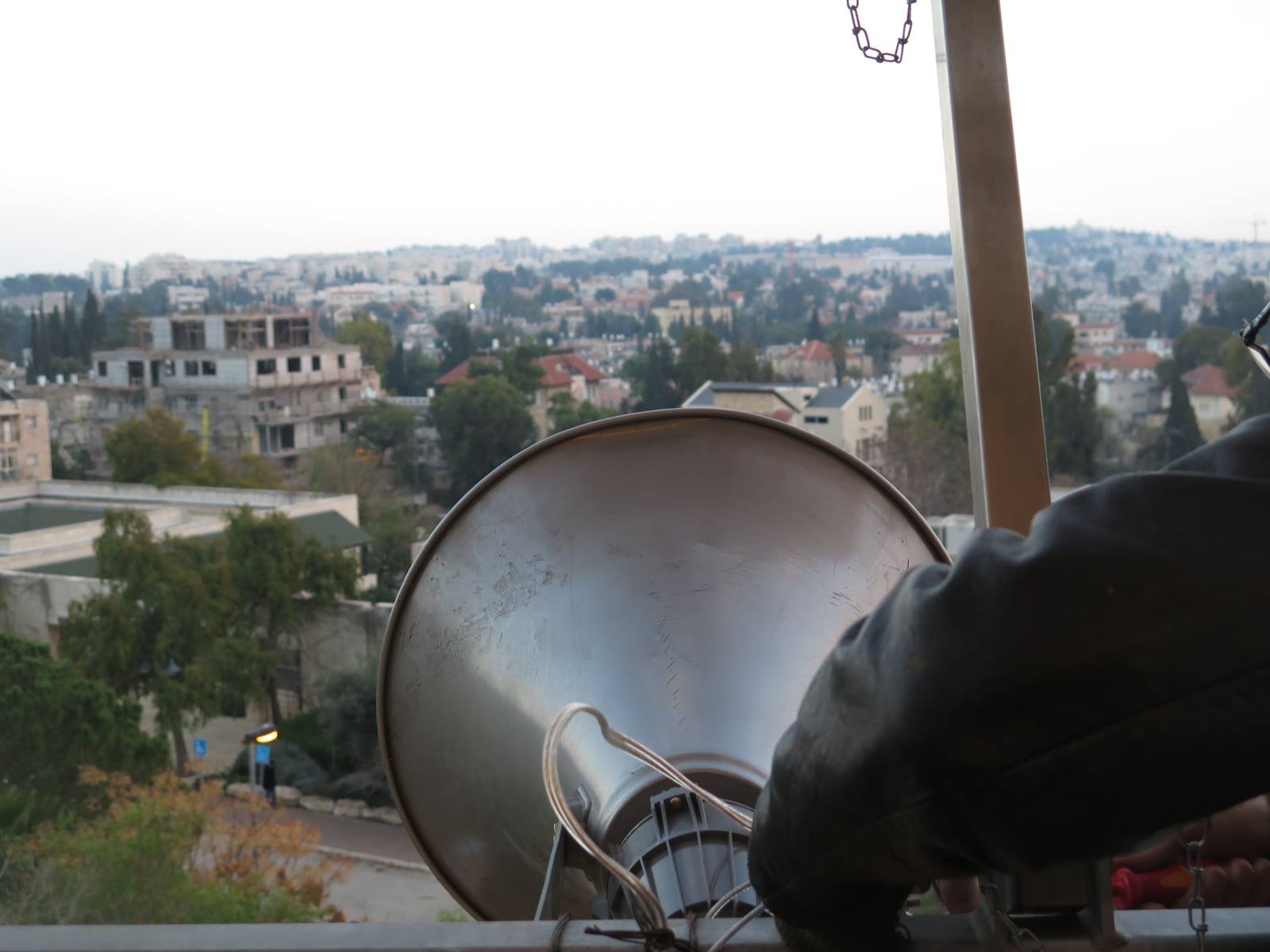
“Hamavdil 1” is a sound intervention in the West Jerusalem soundscape from a temporary tower built at Hansen House by the Czech architecht Martin Rainisj.
“Havdala” [Differenciation] is a ritual prayer and ceremony that marks the end of the Jewish Sabbath and the beginning of the week.
Amir Bolzman and the Sala-Manca artists group blurred the soundscape of the neighborhoods of Talbyeh, Katamon, and the German Colony, playing a Jewish Havdalah prayer in the Arab-Jewish style. At first instance, this traditional Makam music coming from a tower using this particular type of speaker, appears to be a Muezzin. The Muslim call to prayer and the voice of the Muezzin, played with similar technology from mosques, has been the focus of a “sound conflict” in Israel and Jerusalem, with Jewish citizens complaining of the “contamination” of the soundscape and leading to the advancement of the “Muezzin Law” in the Israeli Knesset, a law that aims at restricting the scope of those prayers.
From another direction, the Arab-Jewish sound was suppressed from the Israel soundscape for ideological reason for many years.
The work challenges notions of identity and orientation regarding the local soundscape, and propose us to imagine another possible present or future.
30.12.2017
המבדיל هَمَڤديل Hamavdil Ymca Jerusalem, 3.2.2018
סלה-מנקה ואמיר בולצמן سالا-مانكا وأمير بولزمان Sala-Manca and Amir Bolzman
“Hamavdil 2” is a sound intervention in the West Jerusalem soundscape from the Jerusalem International YMCA Tower.
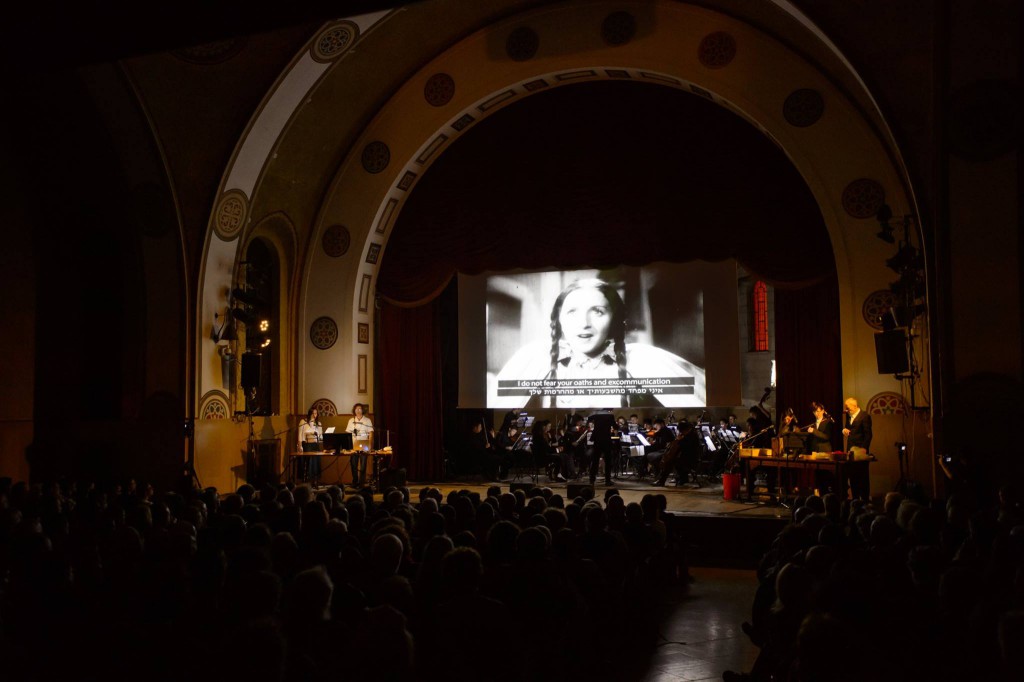
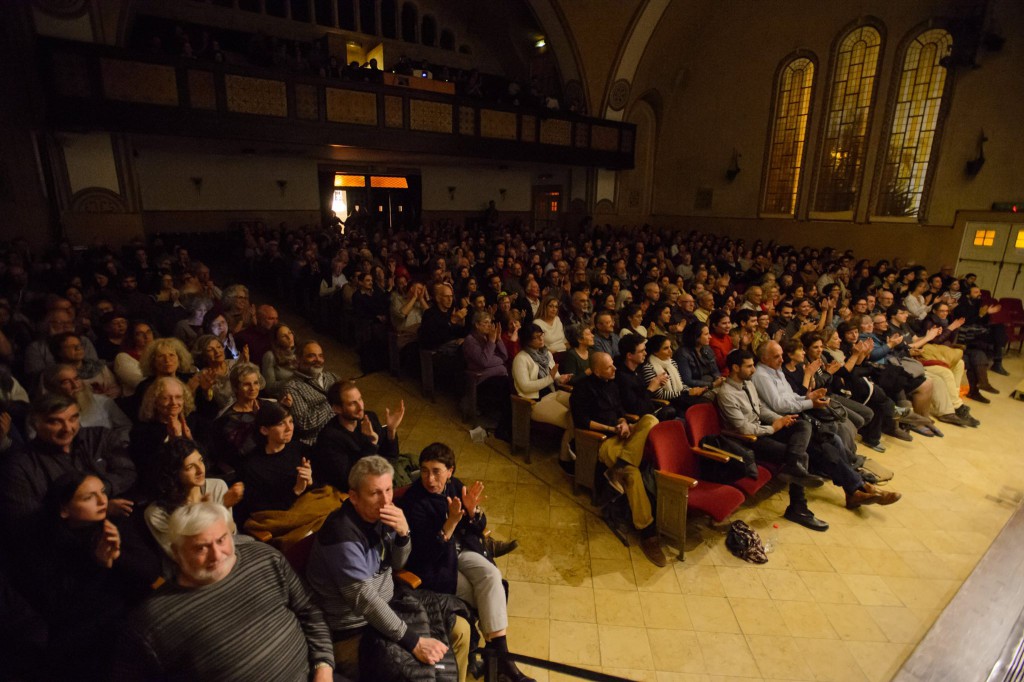
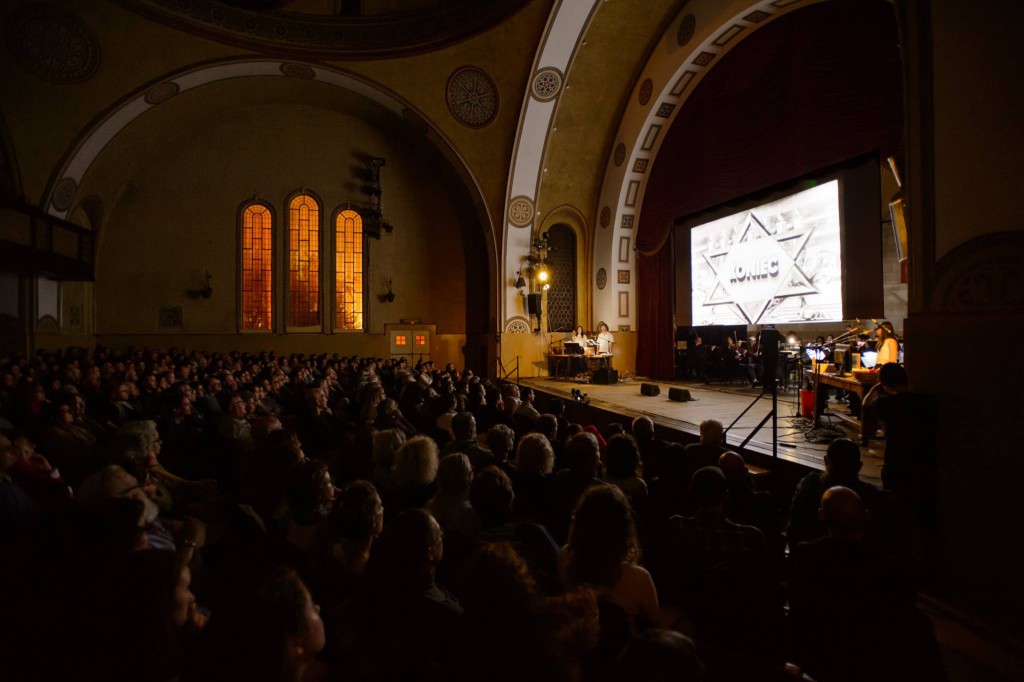
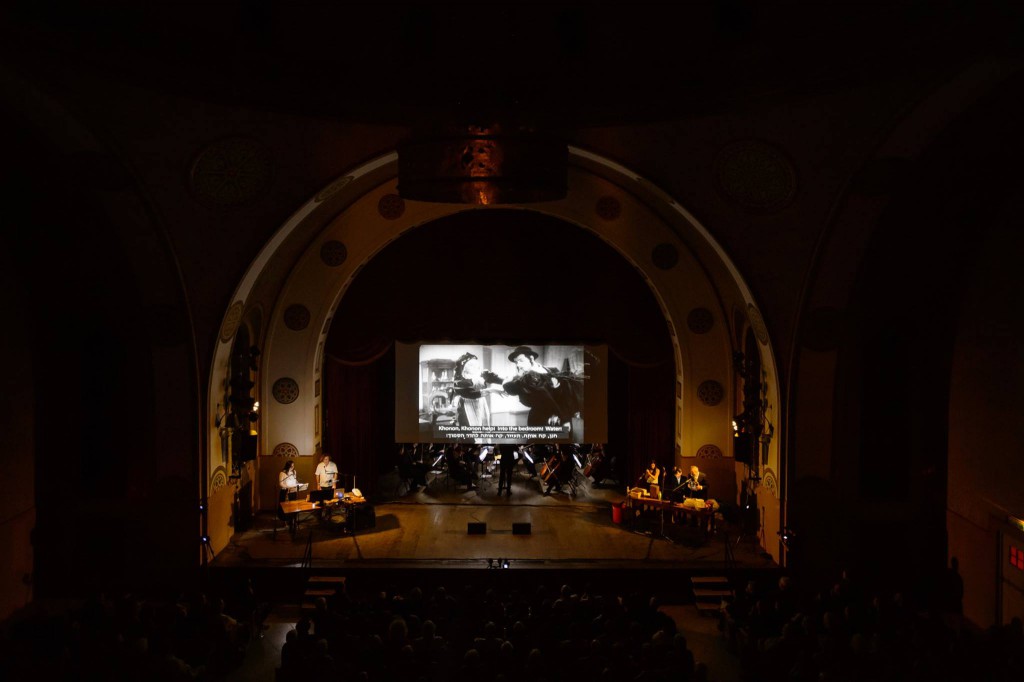
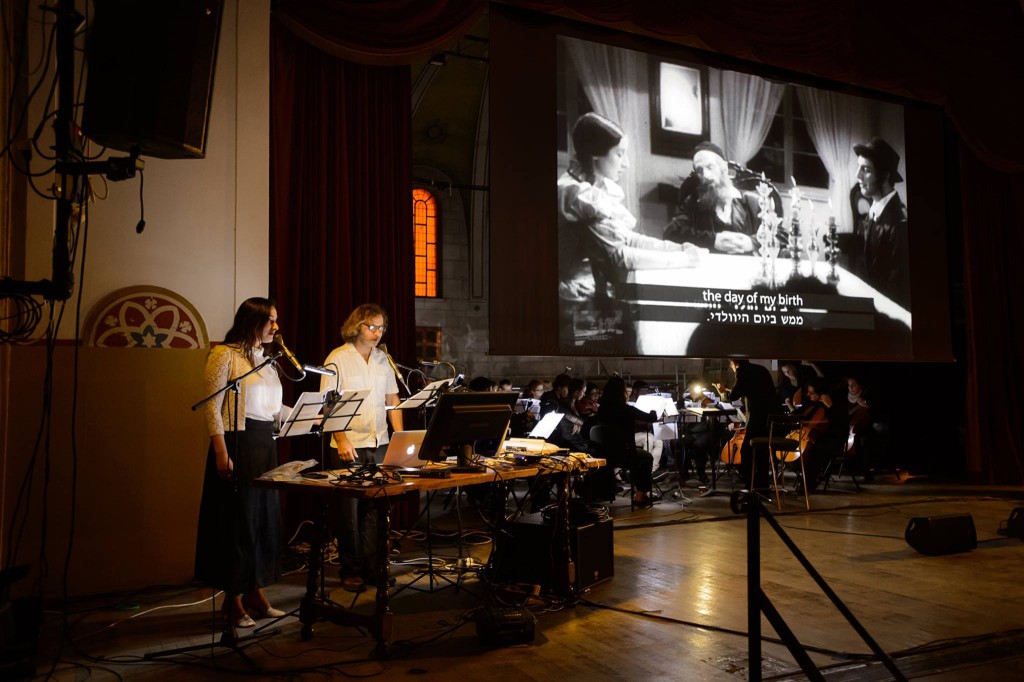
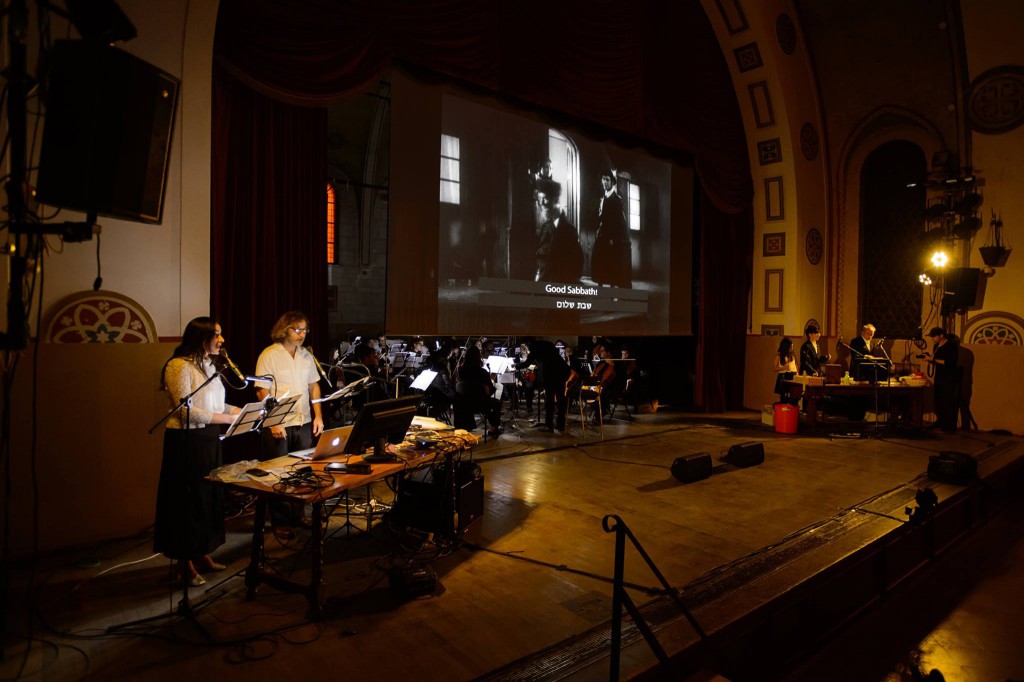
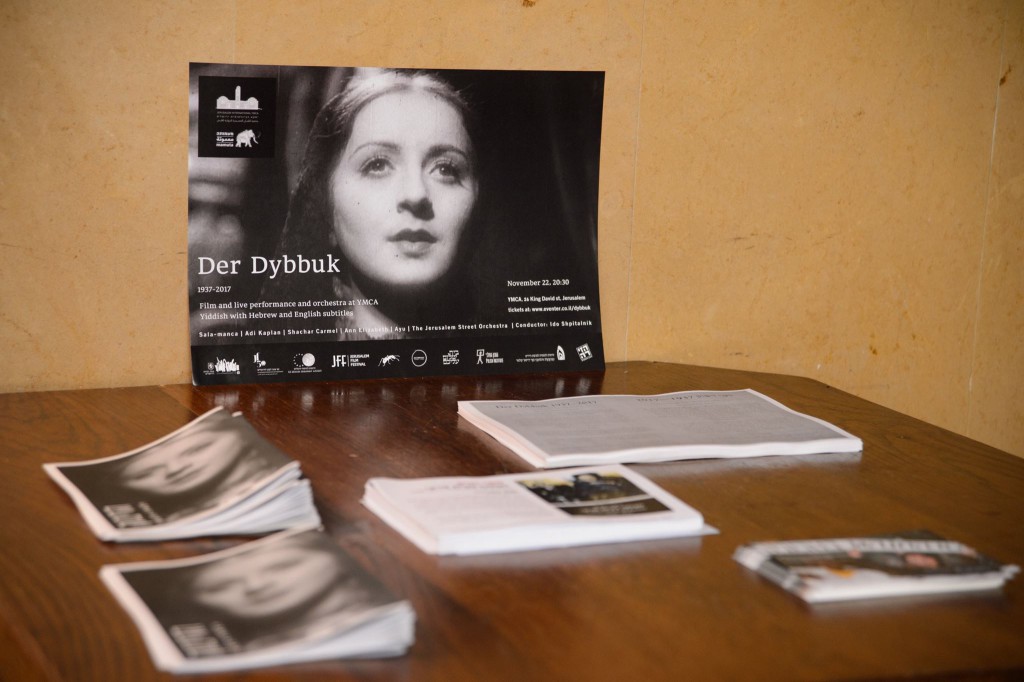
Der Dybbuk (1937-2017) | Film Performance, Jerusalem Film Festival
Directed by Michael Waszynski (Poland, 1937) with a new edition by Adi Kaplan, Shachar Carmel & Sala-manca (2017)
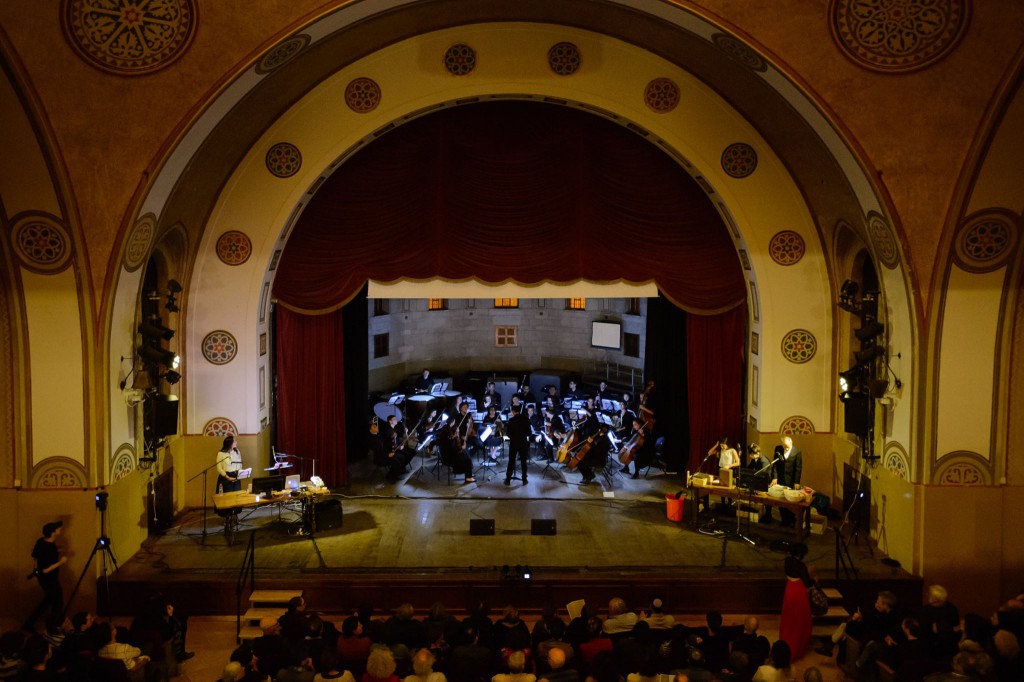
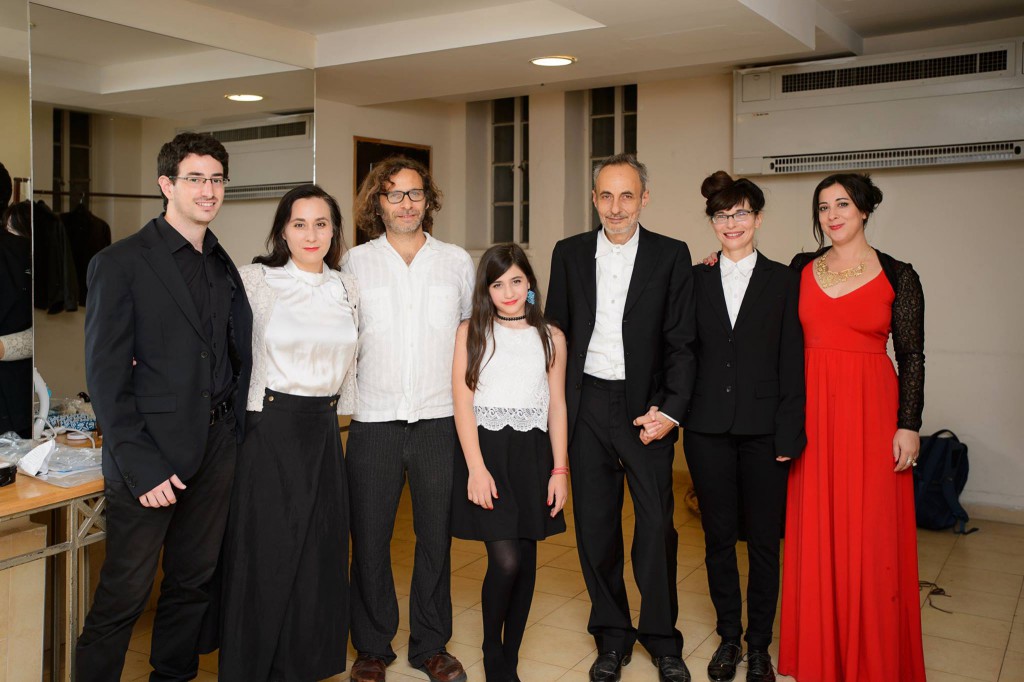
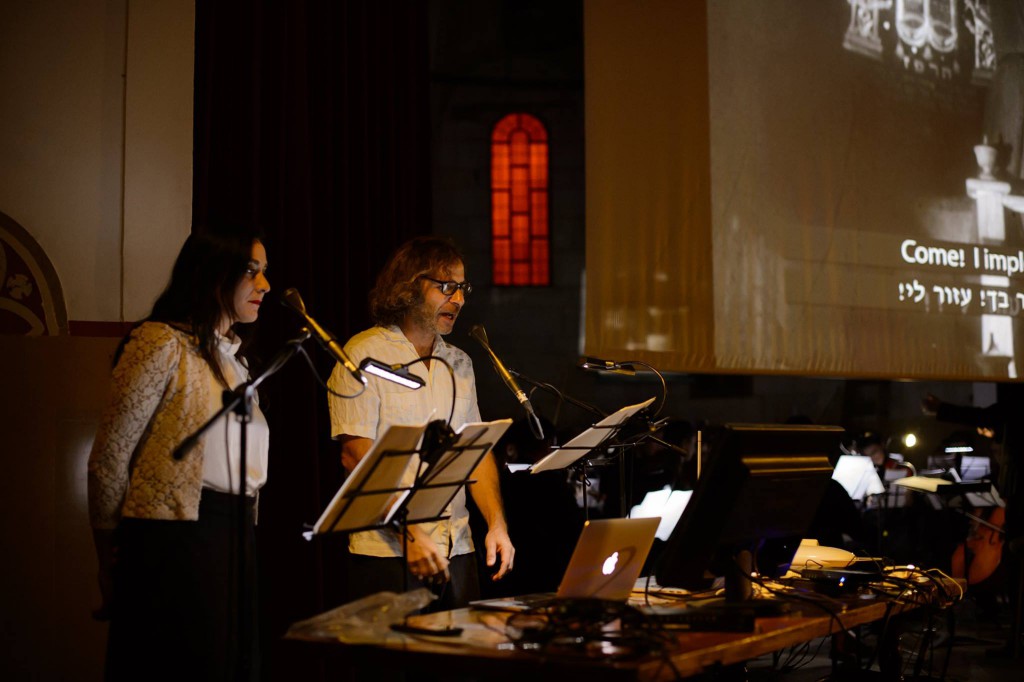
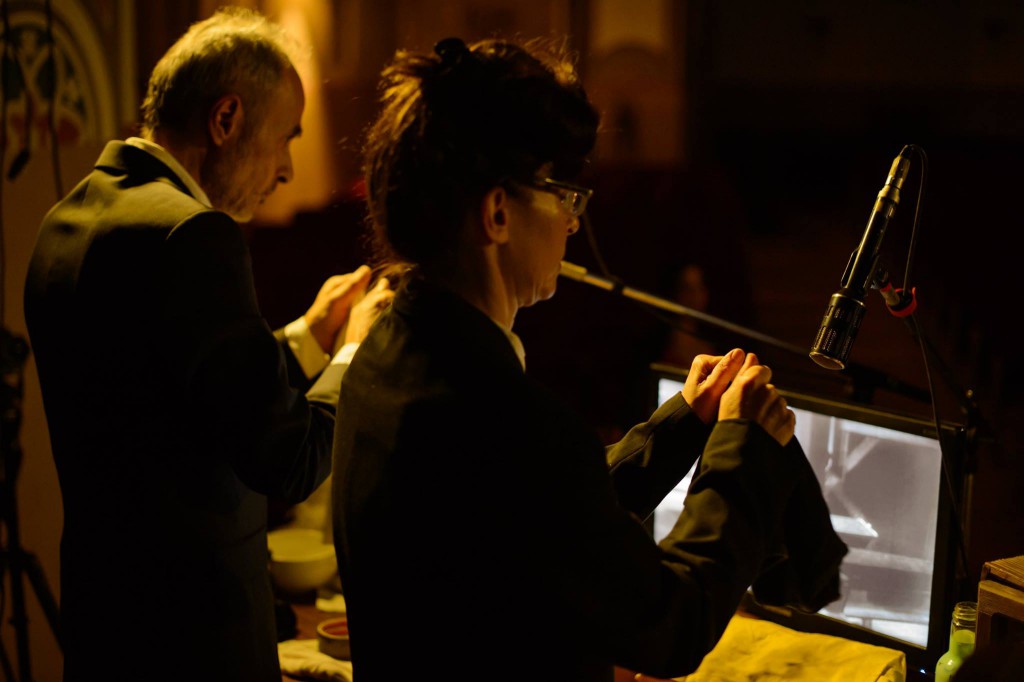
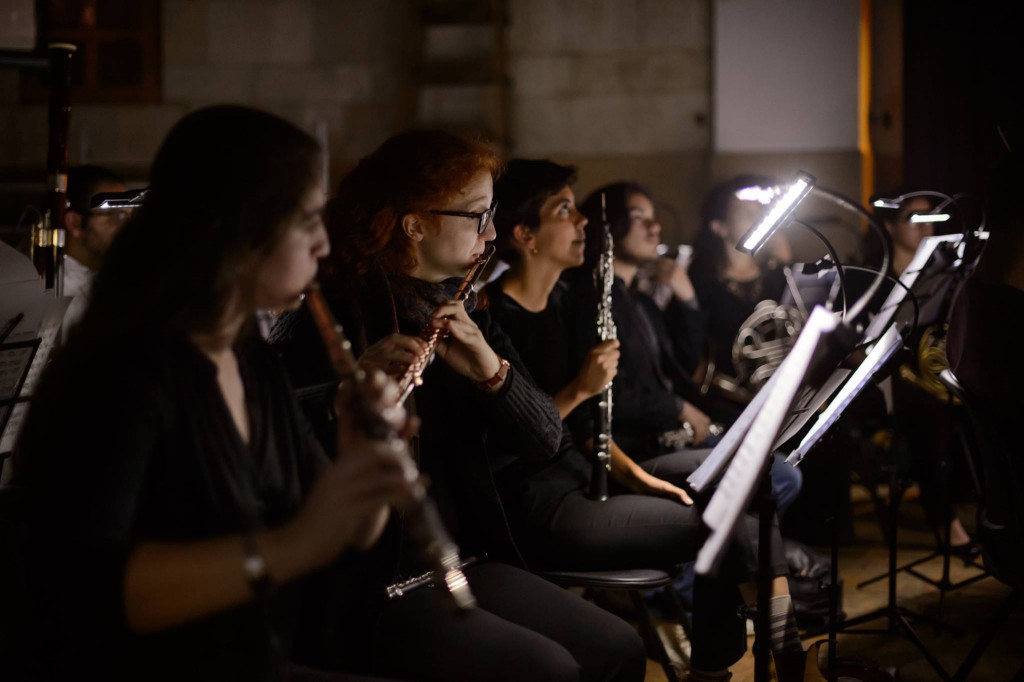
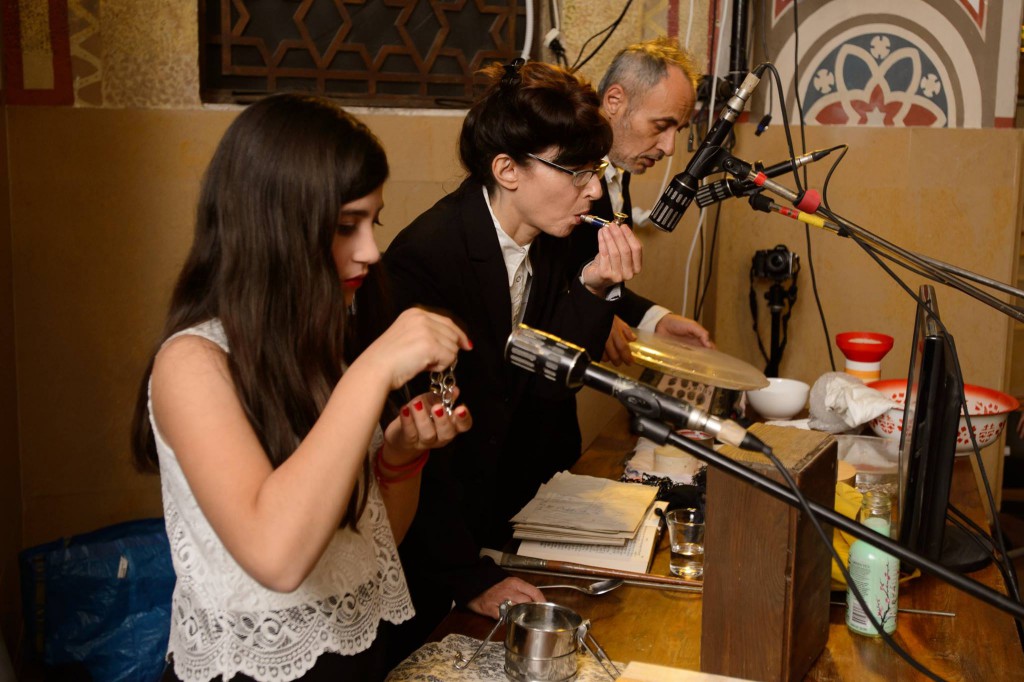
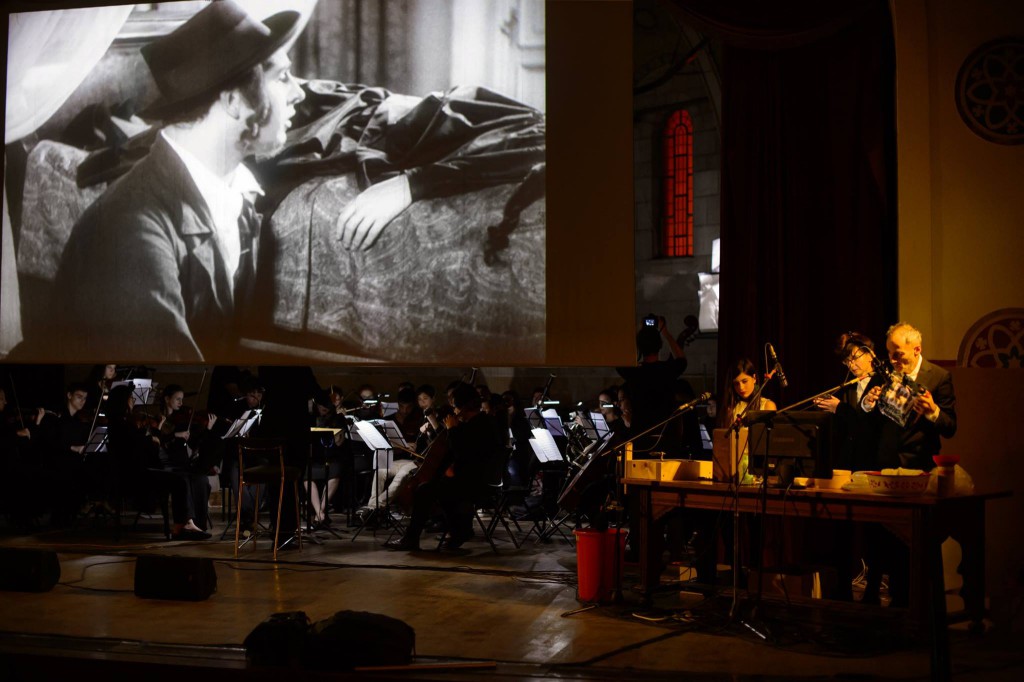
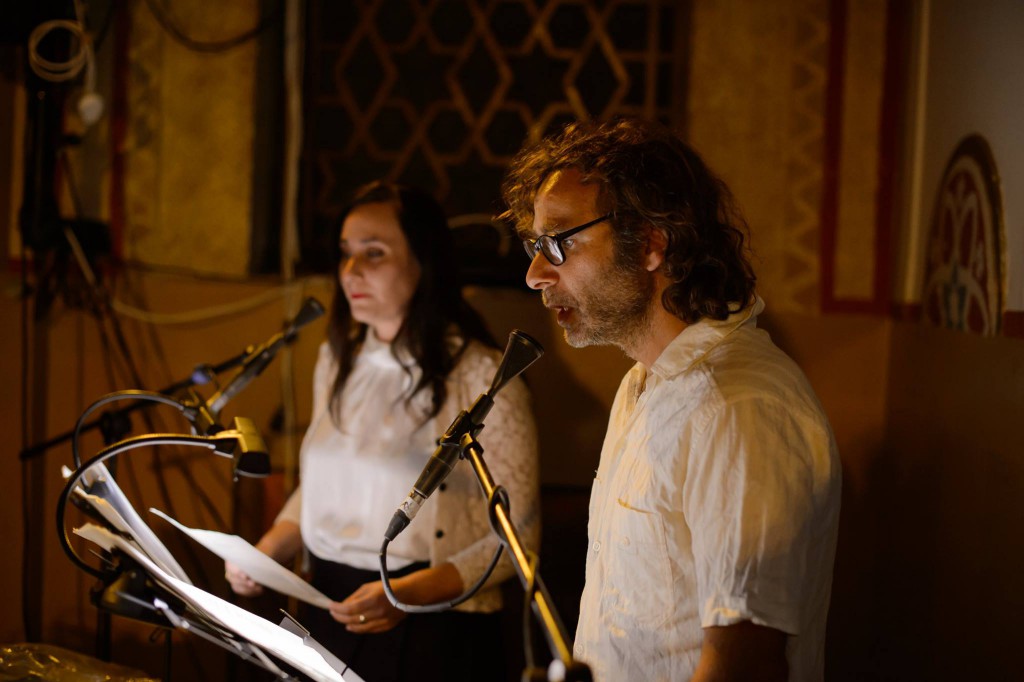
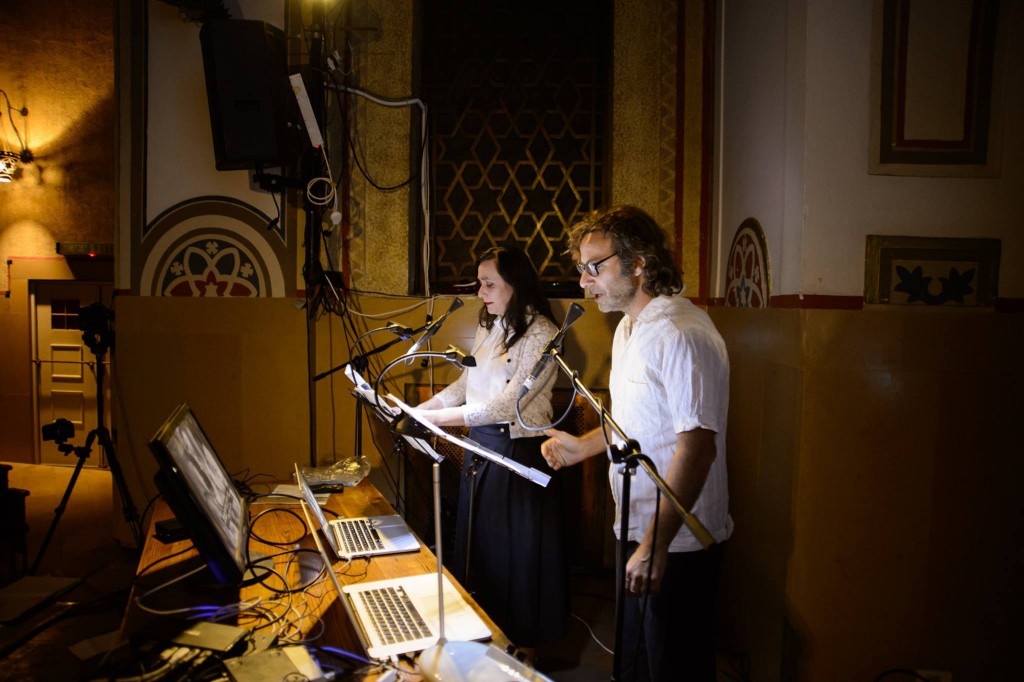
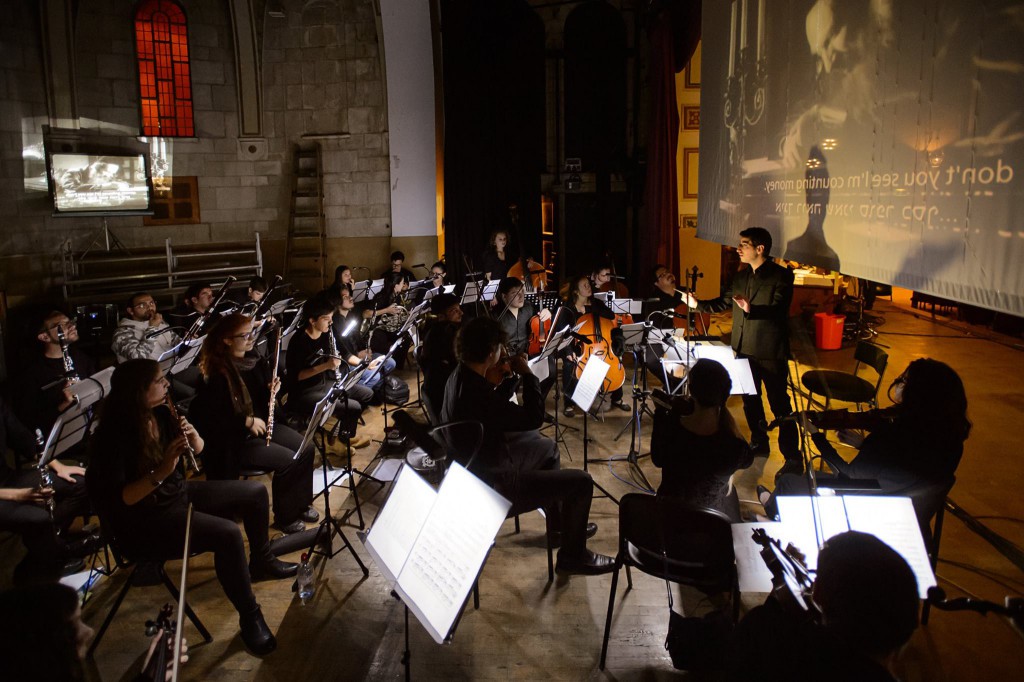
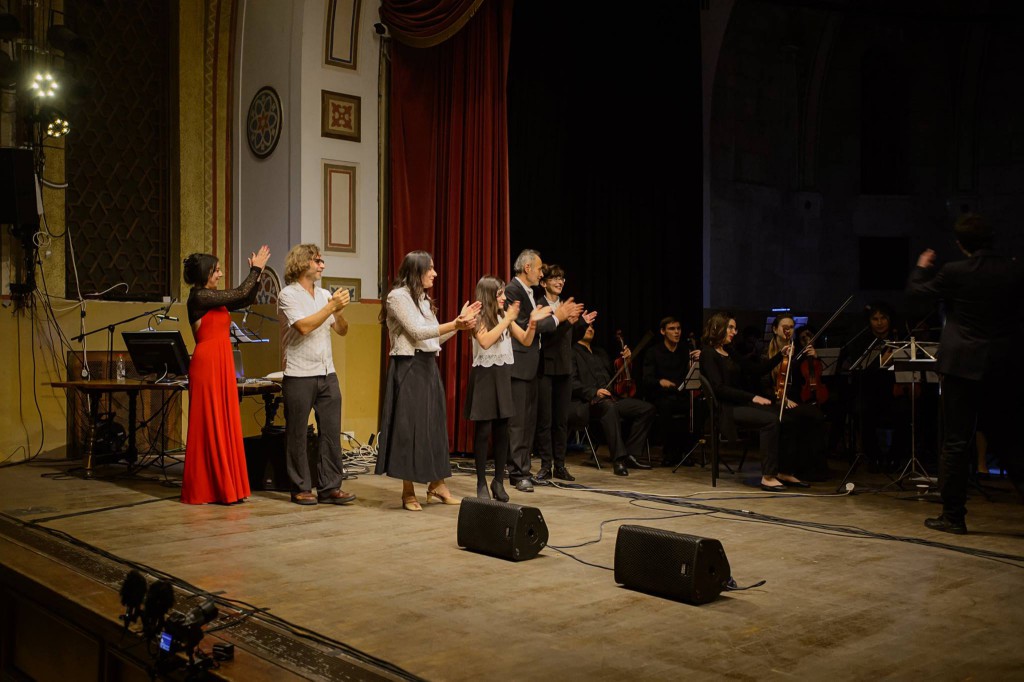
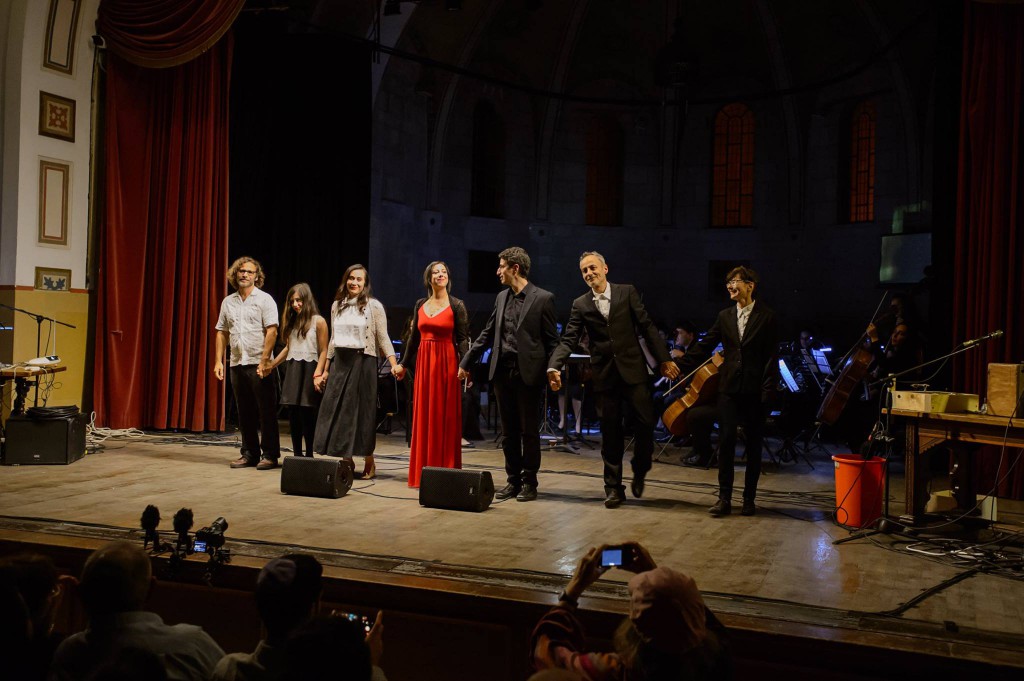
Live dubbing by Lea Mauas and Diego Rotman (Sala-manca group), Live Follies by Adi Kaplan, Shachar Carmel and Ayu Rotman Mauas & Live Music by The Jerusalem Street Orchestra, conducted by Ido Shpitalnik
״The dead were returned to life, and a culture long vanished, wiped out by the Holocaust, was resurrected on the screen” (Ira Konigsberg)
A new, re-edited version of the Yiddish film will be screened with live music and dubbing performance in the courtyard of the former Jerusalem Leprosarium (Hansen House), a venue no less gothic than the film’s aesthetics.
The new, film-performance version is based on the film directed by Michael Waszynsky (1937), based upon S. Ansky’s play Der Dybbuk. Ansky wrote the play after completing the ethnographic expedition he organized between 1912-1914. The play (and film) tells the story of the ill-fated love between Hanan and Lea, the possession of Lea’s body by Hanan’s soul, the exorcism ceremony, and death as resolution – a re-encounter of the lovers in the next world.
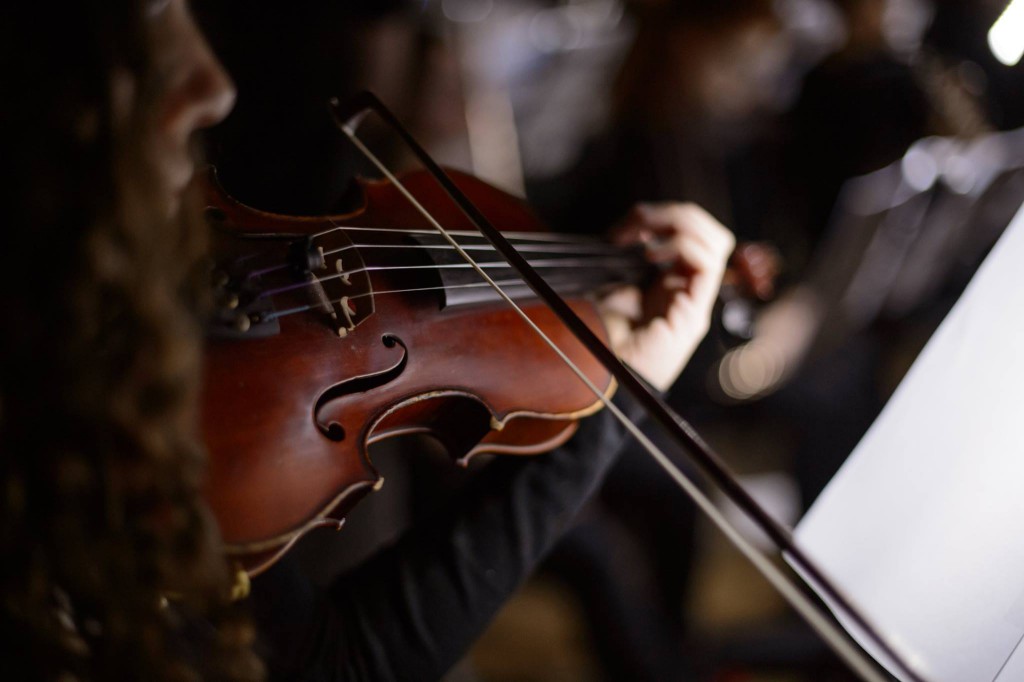
Adi Kaplan, Shahar Carmel, and Sala-manca not only re-edited the film, they also replaced the original music composed by Henekh Kohn and the cantorial songs performed by Gershon Sirotta, with a new score. Performed live by the Jerusalem Street Orchestra, conducted by Ido Shpitalnik, the score is an adapted version of the Vltva (The Moldau), the second symphonic poem of Má vlast (My Homeland), by Czech composer Bedřich Smetana. The use of Smetana’s Moldau as a clear reference to Israel’s national anthem – resonating it, but different – creates a liminal sonic soundscape incapable of defining an accurate sense of place or ideology.
Lea Mauas and Diego Rotman of the Sala-manca group are professional and real life partners, possessing the voices of the “dead but eternal” characters, originally performed by another real-life couple, Lili Liliana (Leah) and Leon Liebgold (Hannan)
In the spirit of The Dybbuk, the artists visit the archive instead of the cemetery, and invite the dead to dance with the living once again.
With the support of Ostrovsky Family Fund, Artis Grant Program, Polish Institute – Tel Aviv, P.A.T. (Performance Art and Technology), Hazira, Jerusalem Municipality, The National Authority for Yiddish Culture, Bet Shalom Aleichem.
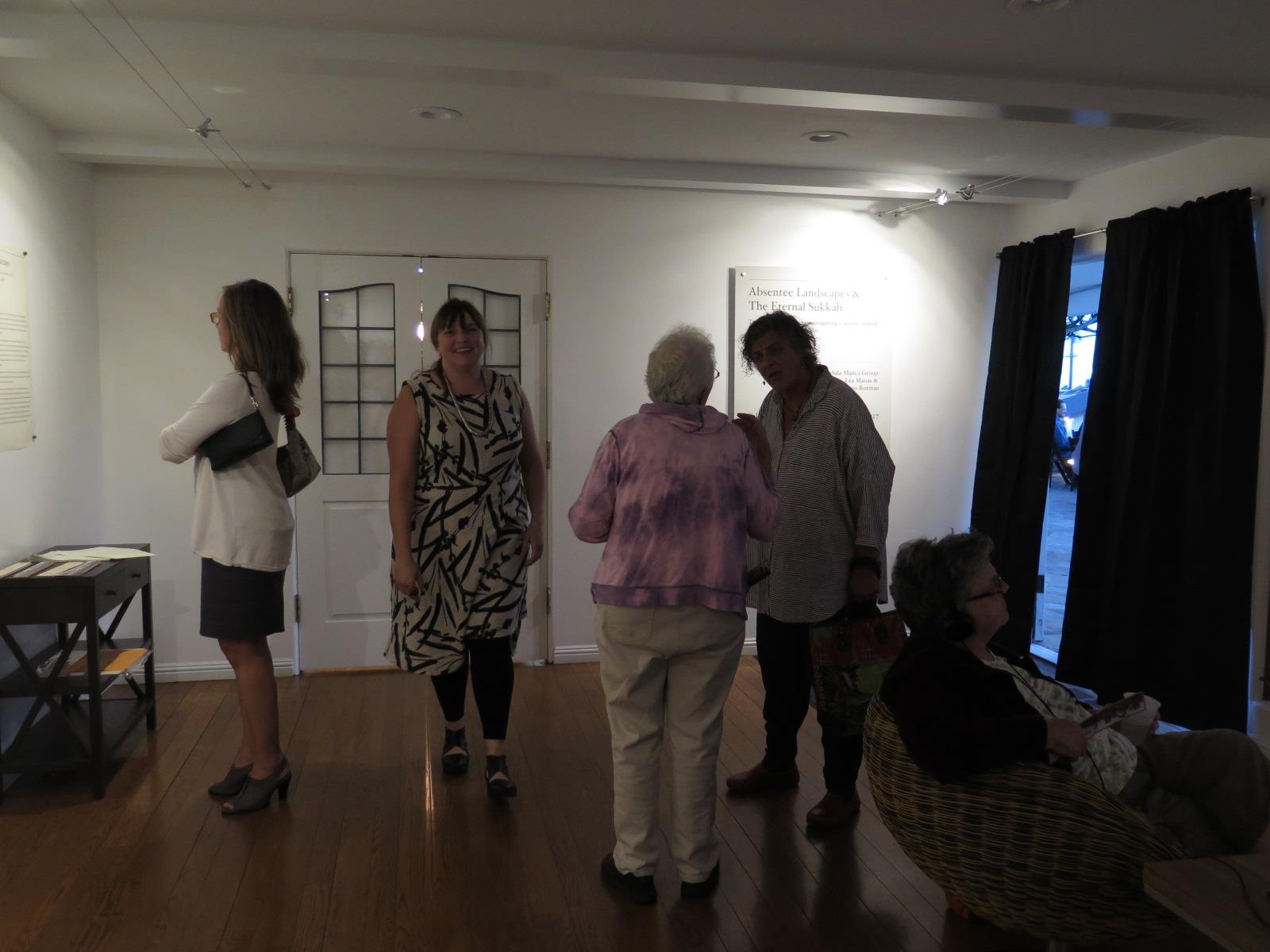
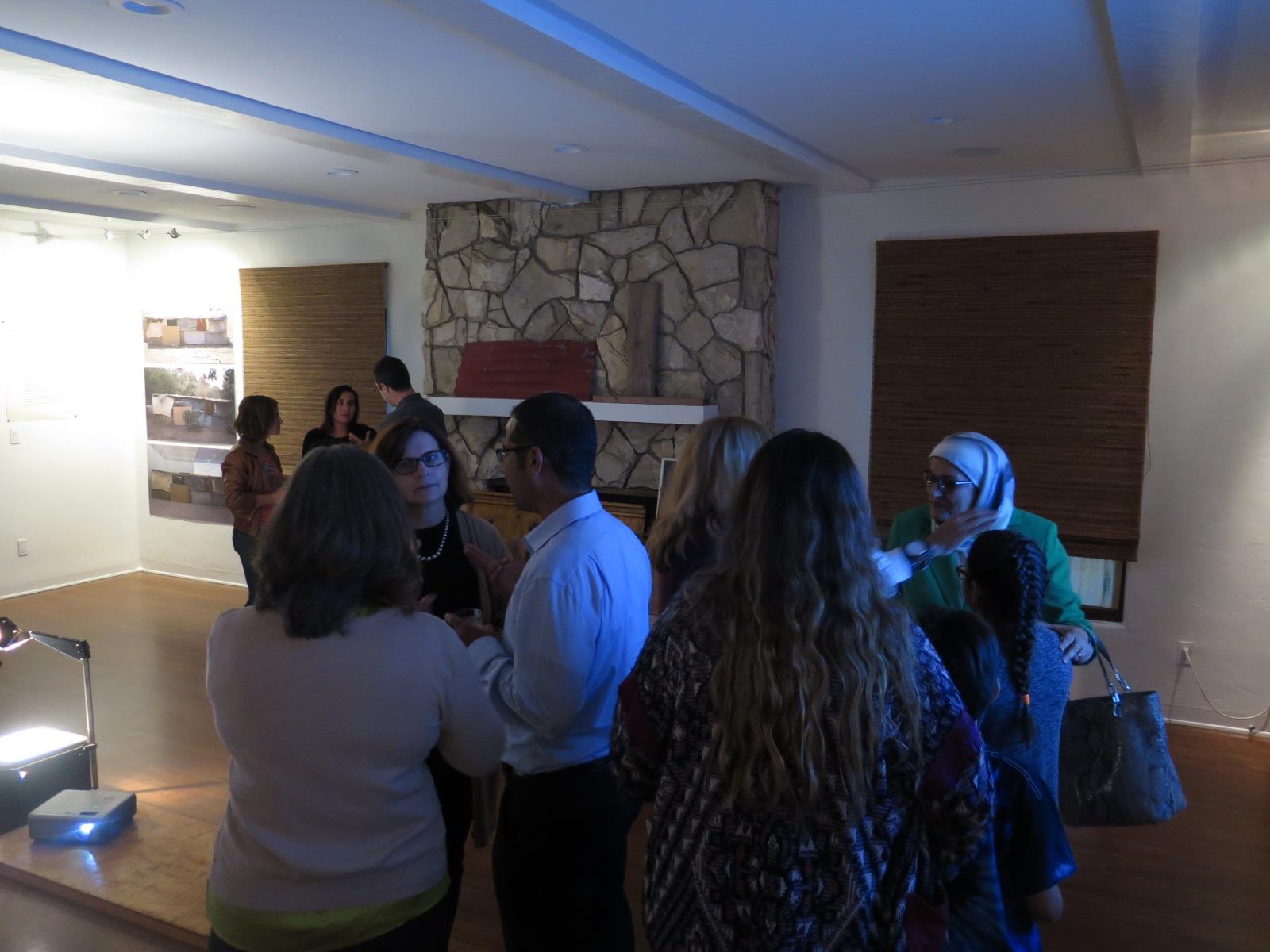
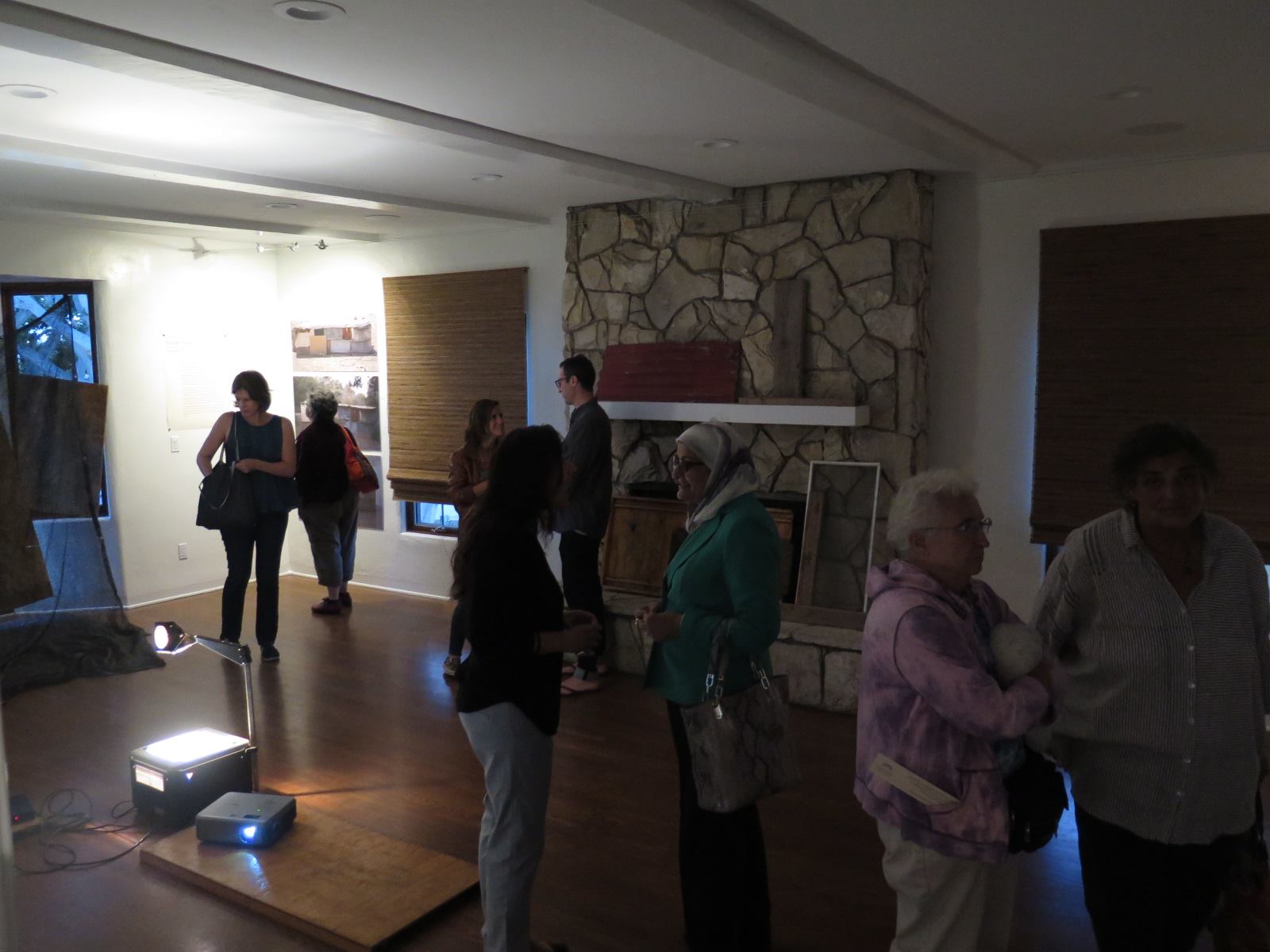
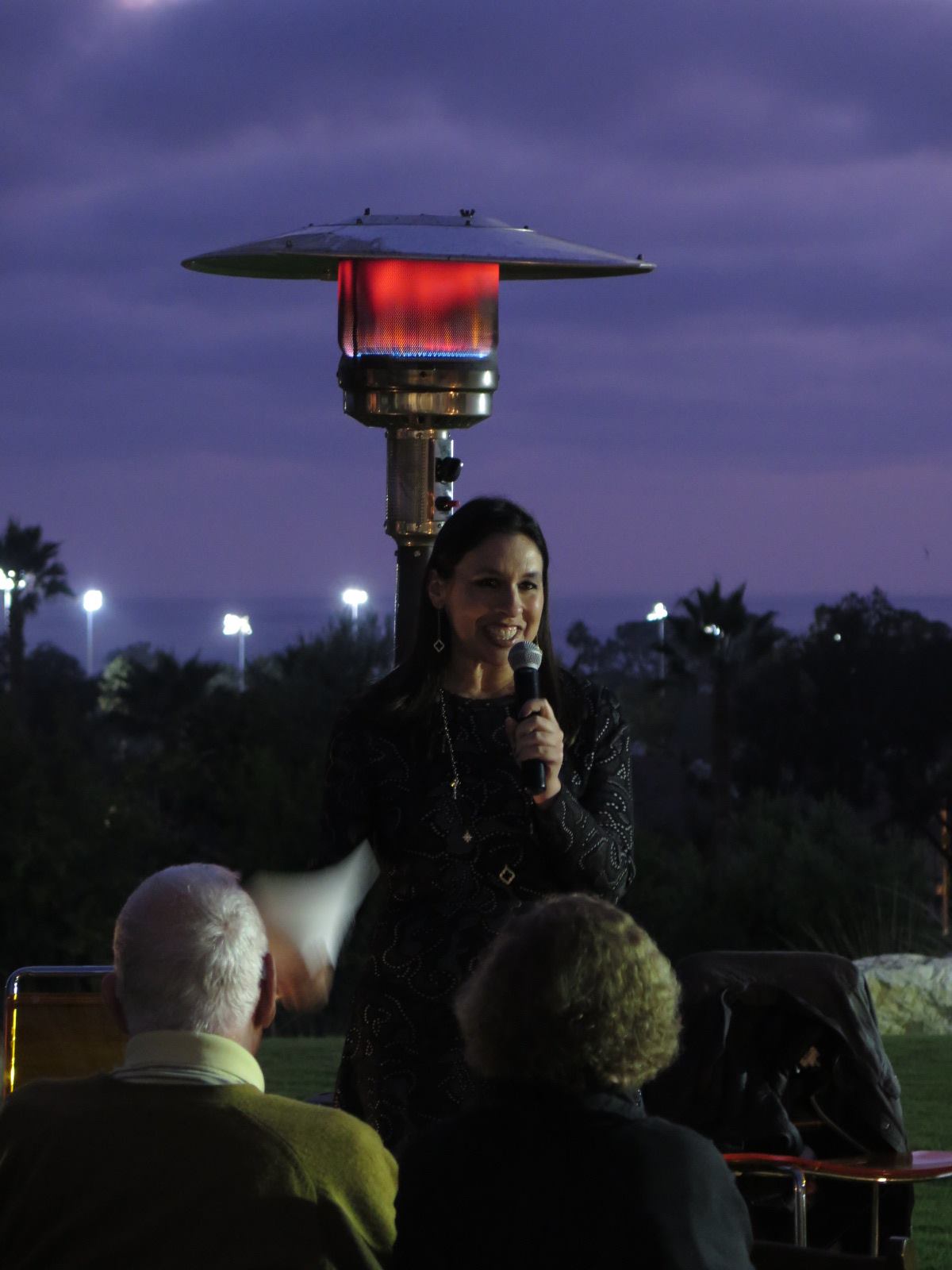
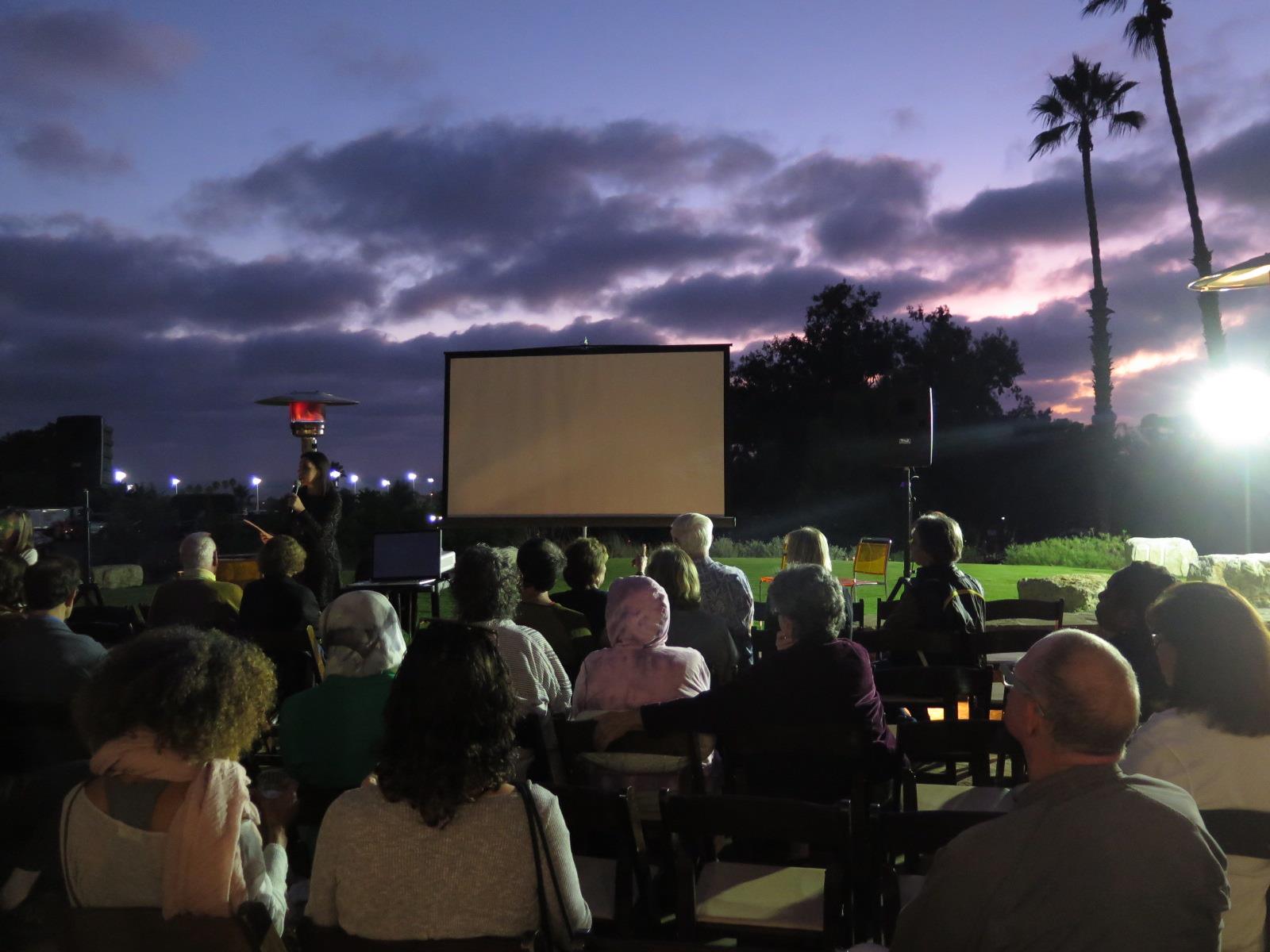
Panel on Absentees Landscapes at The Hive
Panel with Linda Caballero-Sotelo(Executive Director of http://newamericansmuseum.org ), Morad Elsana from the Bedouin community of Lakia, and Teaching Fellow at California Western School of Law, San Diego), Edith Koppel (from the Deller Family) and Charlene Seidle as moderator.
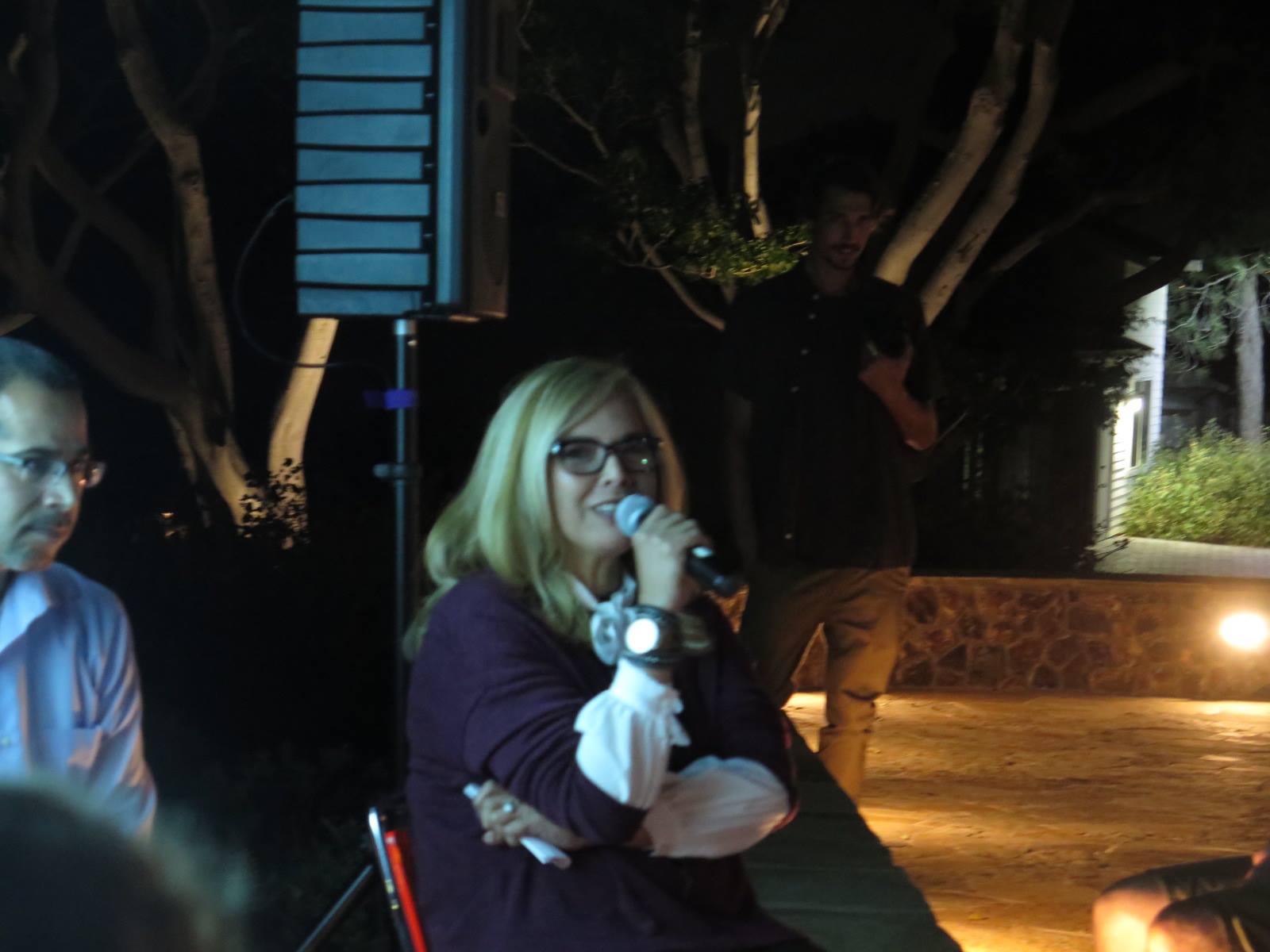
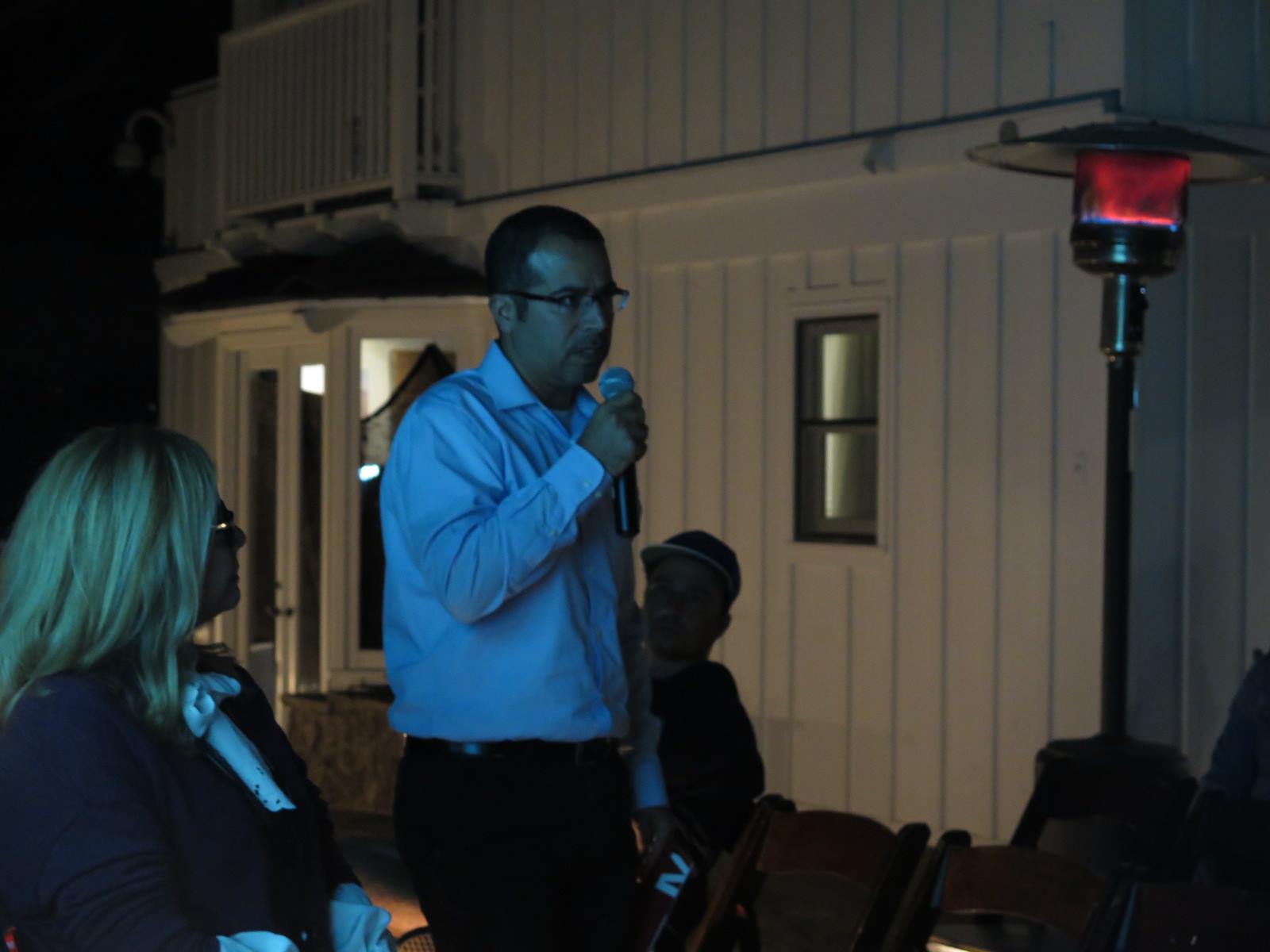
Morad gave a very importan insight on the situation of the Bedouin communities in Israel, on the unrecognized and recognized villages. Linda connected the project to the binational border USA/Mexico situation and to art projects dealing with it. The surprising and unexpected visit of the grand daughter of Alberto Deller who sat by herself as a child in the Deller Sukkah in Fischach was amazing.
Organized by Charlene Seidle