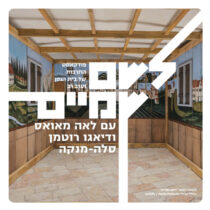
For the Sake of Heaven – Podcast devoted to the 20 years of the Sala-mana Group with Ronen Eidelman and Yonatarn Amir.
Tag: Sala-Manca
Hamavdil 1&2 [sound intervention]
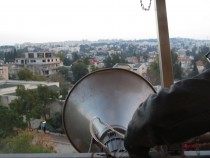
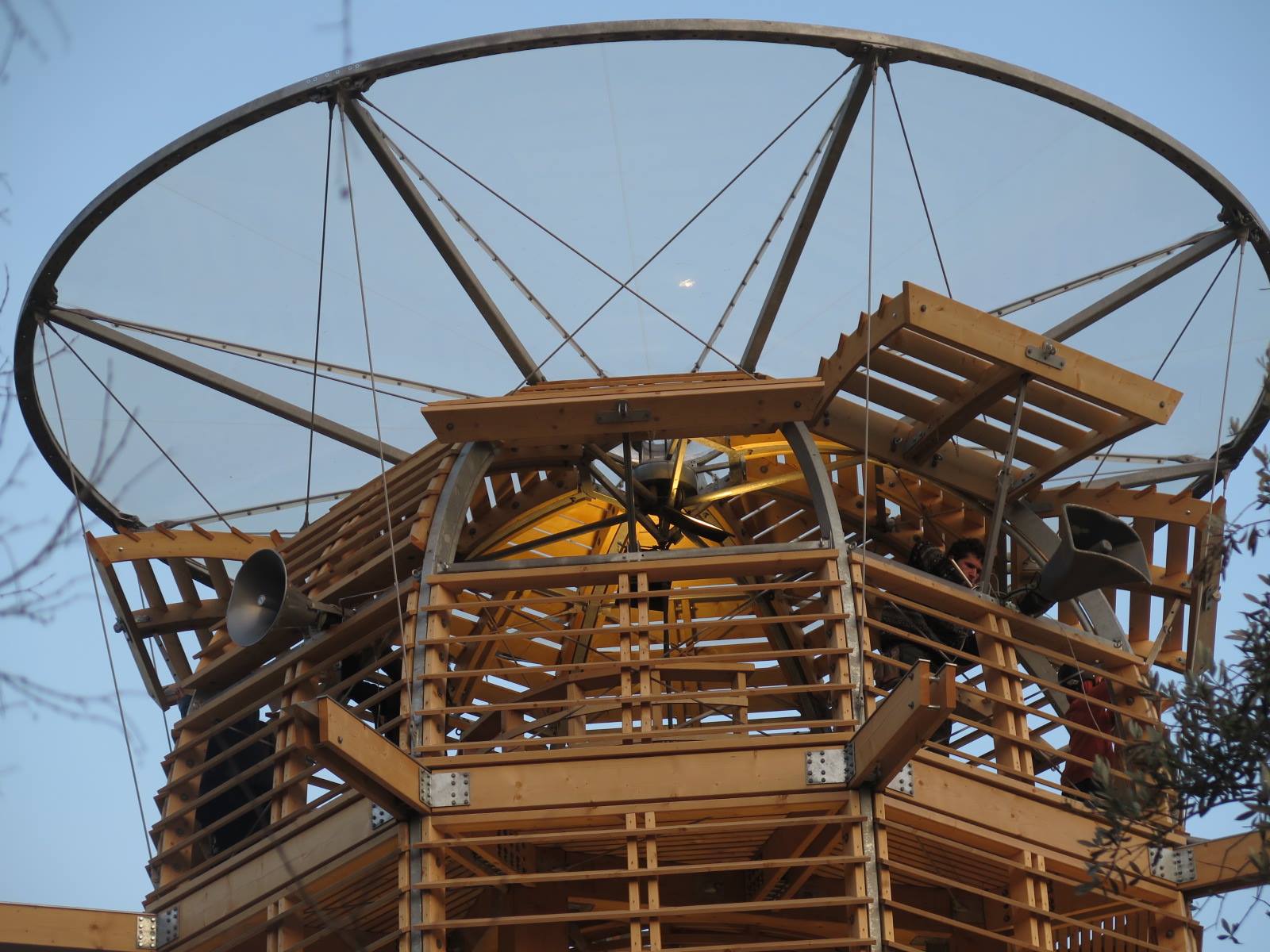
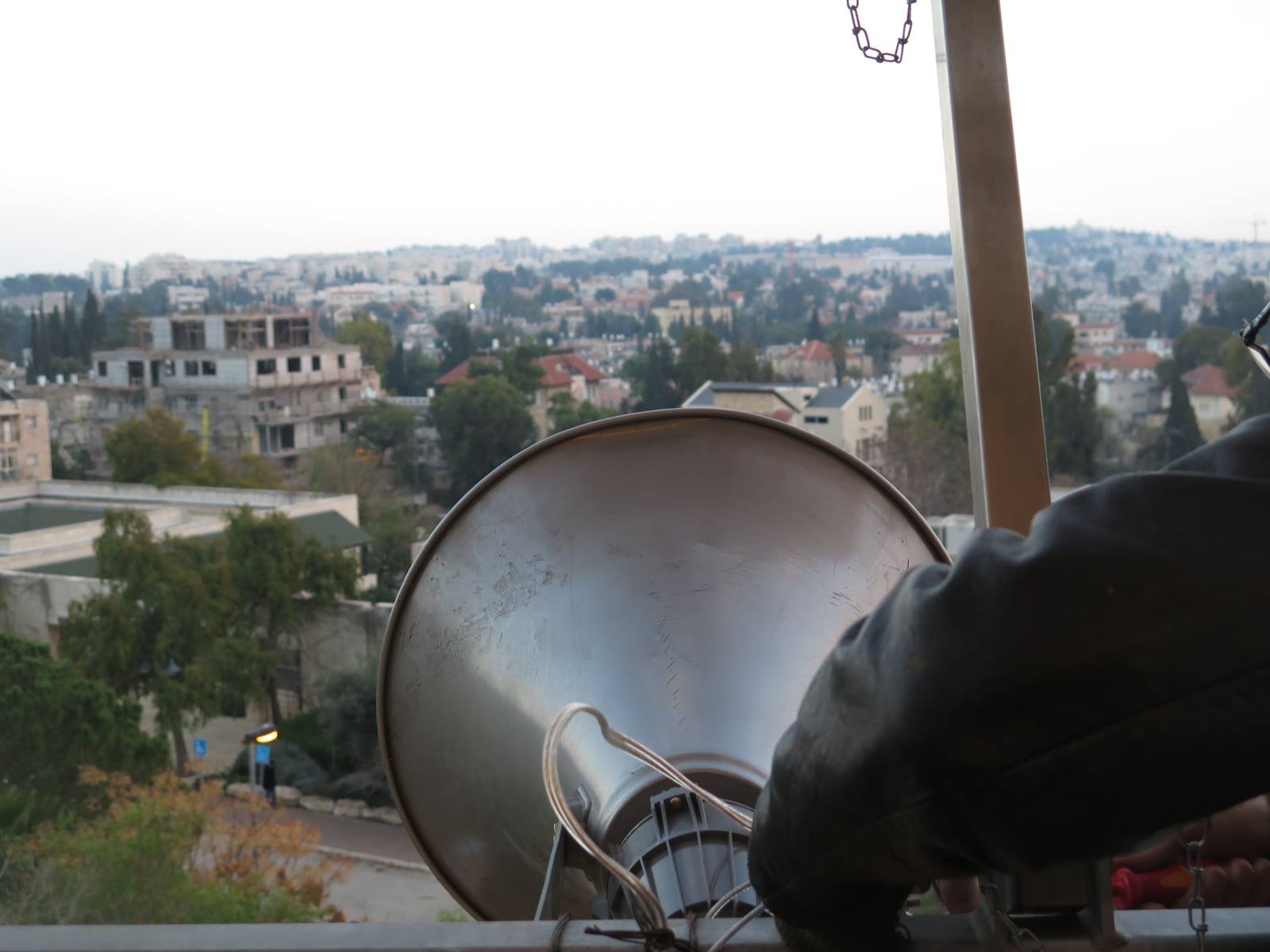
“Hamavdil 1” is a sound intervention in the West Jerusalem soundscape from a temporary tower built at Hansen House by the Czech architecht Martin Rainisj.
“Havdala” [Differenciation] is a ritual prayer and ceremony that marks the end of the Jewish Sabbath and the beginning of the week.
Amir Bolzman and the Sala-Manca artists group blurred the soundscape of the neighborhoods of Talbyeh, Katamon, and the German Colony, playing a Jewish Havdalah prayer in the Arab-Jewish style. At first instance, this traditional Makam music coming from a tower using this particular type of speaker, appears to be a Muezzin. The Muslim call to prayer and the voice of the Muezzin, played with similar technology from mosques, has been the focus of a “sound conflict” in Israel and Jerusalem, with Jewish citizens complaining of the “contamination” of the soundscape and leading to the advancement of the “Muezzin Law” in the Israeli Knesset, a law that aims at restricting the scope of those prayers.
From another direction, the Arab-Jewish sound was suppressed from the Israel soundscape for ideological reason for many years.
The work challenges notions of identity and orientation regarding the local soundscape, and propose us to imagine another possible present or future.
30.12.2017
המבדיל هَمَڤديل Hamavdil Ymca Jerusalem, 3.2.2018
סלה-מנקה ואמיר בולצמן سالا-مانكا وأمير بولزمان Sala-Manca and Amir Bolzman
“Hamavdil 2” is a sound intervention in the West Jerusalem soundscape from the Jerusalem International YMCA Tower.
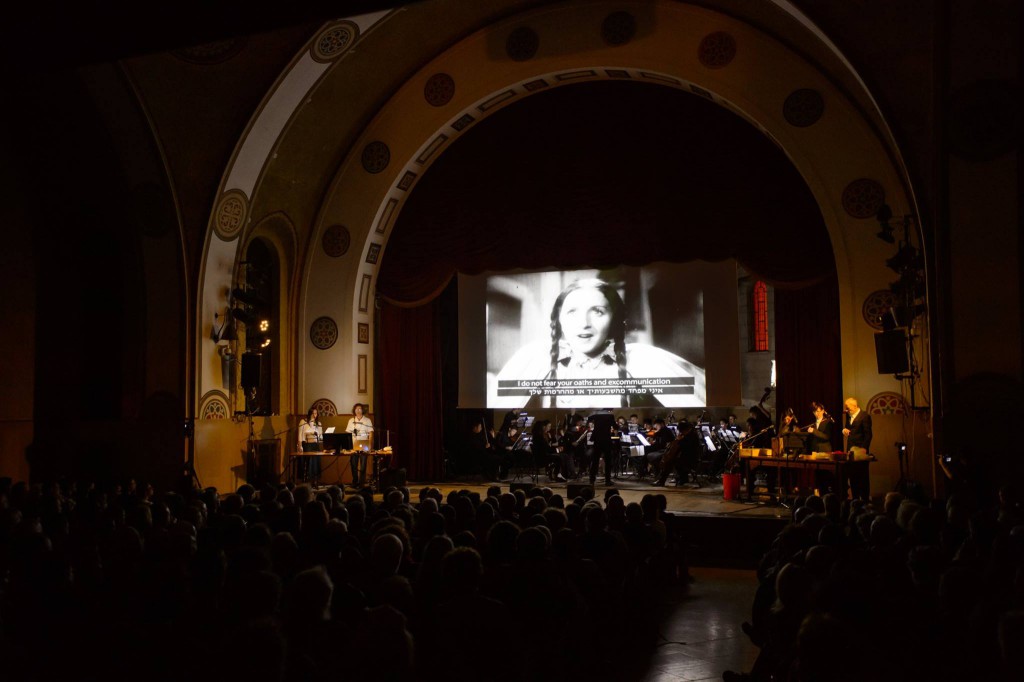
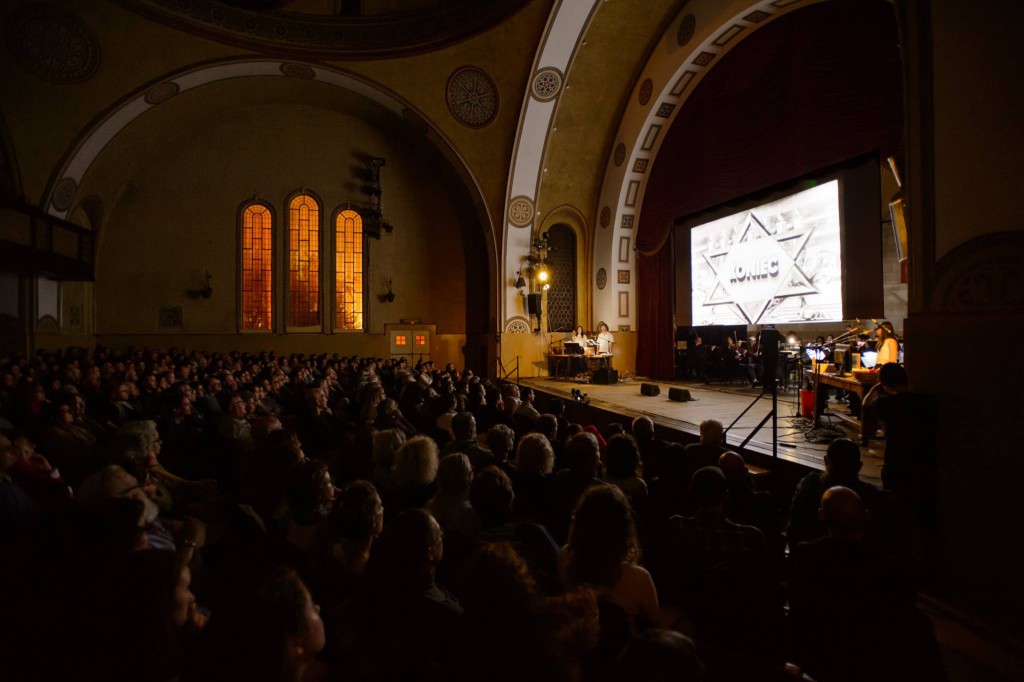
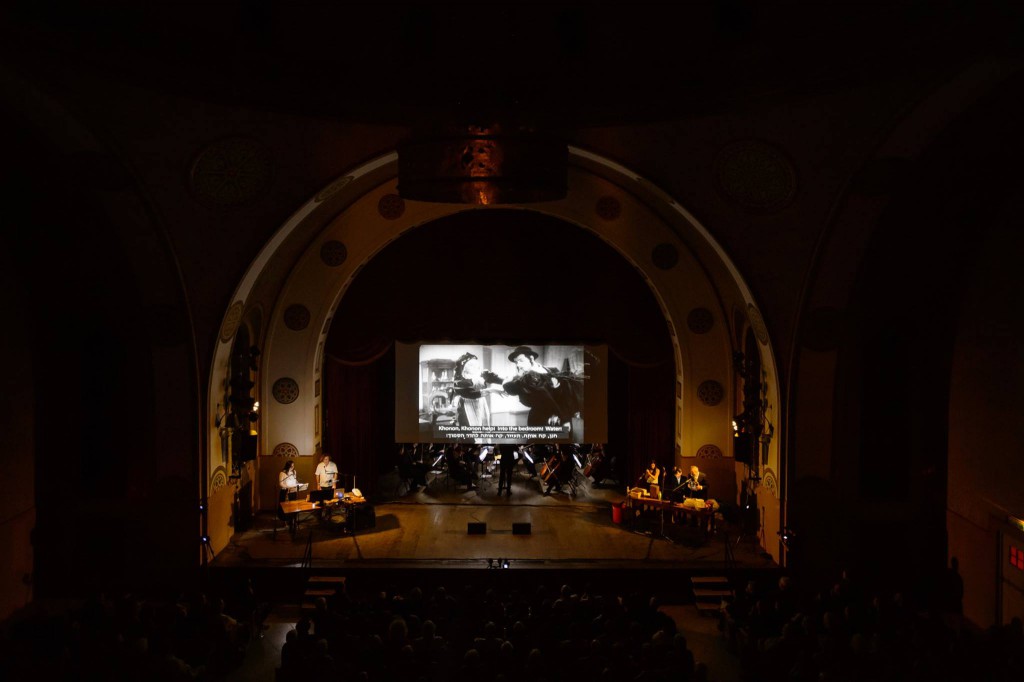
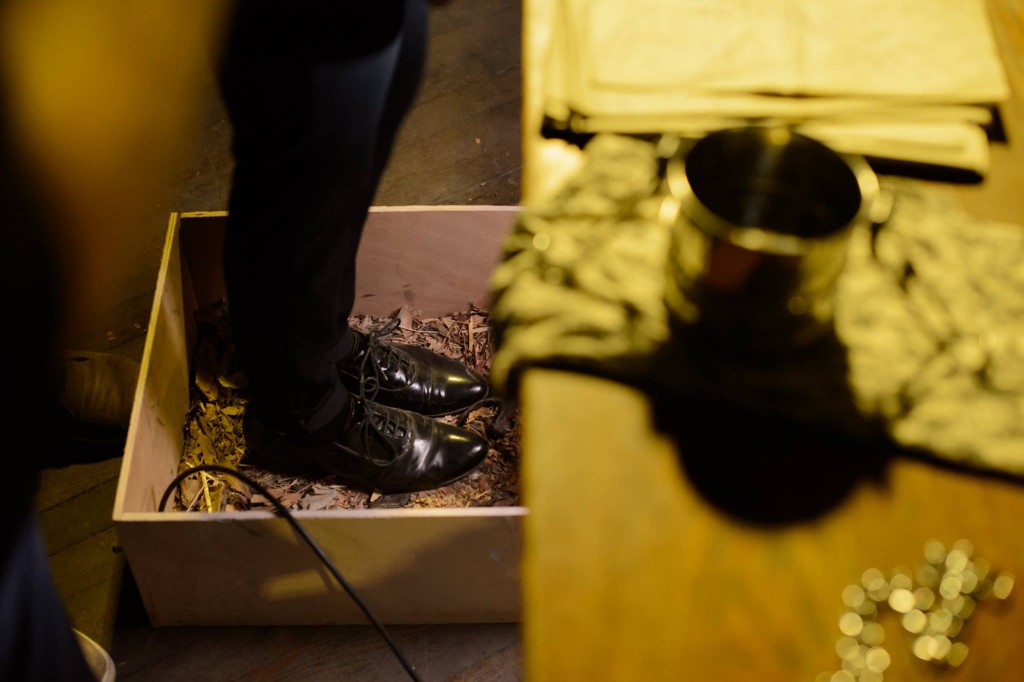
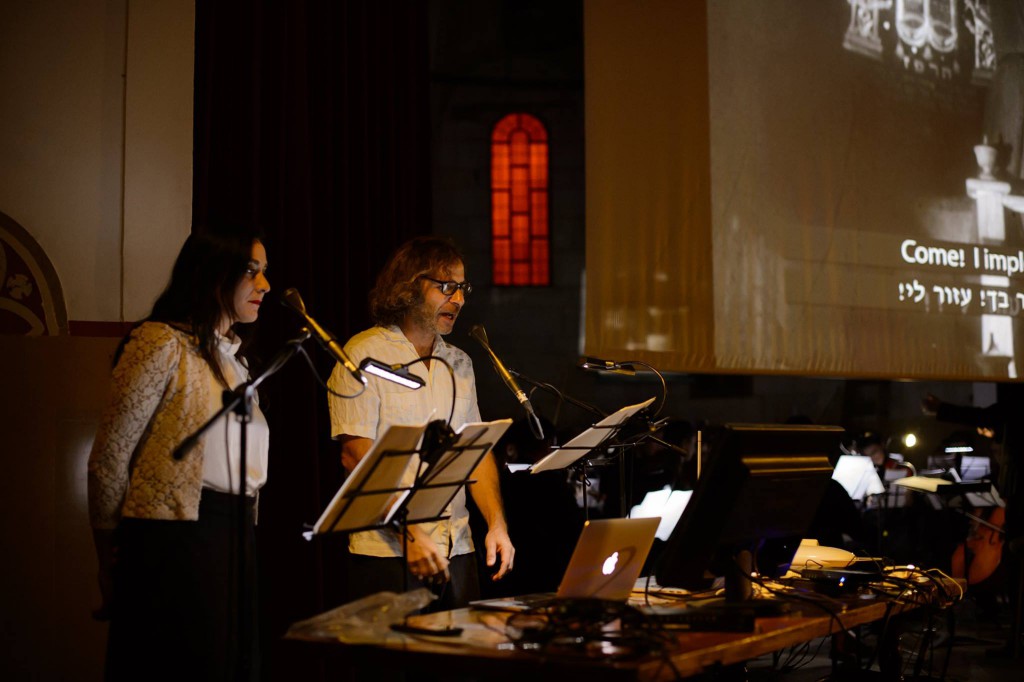
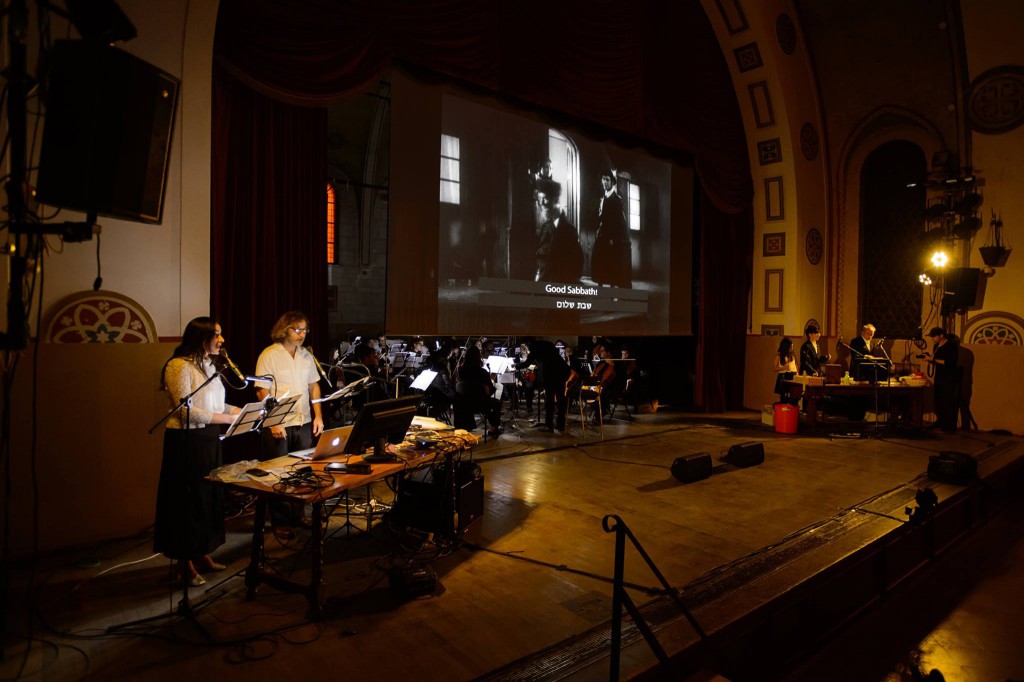
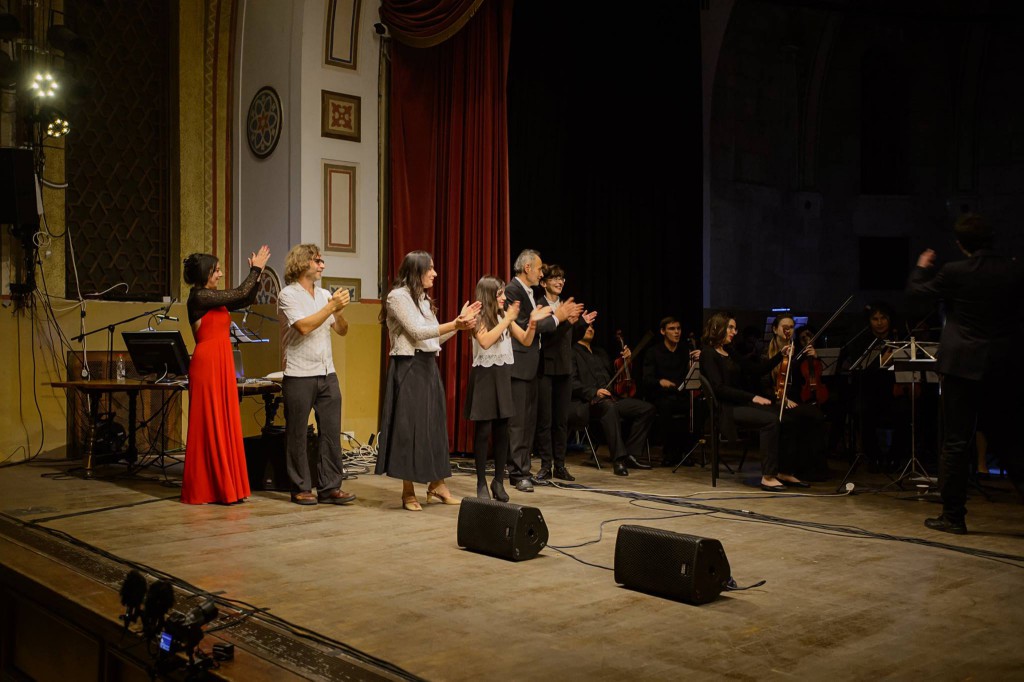
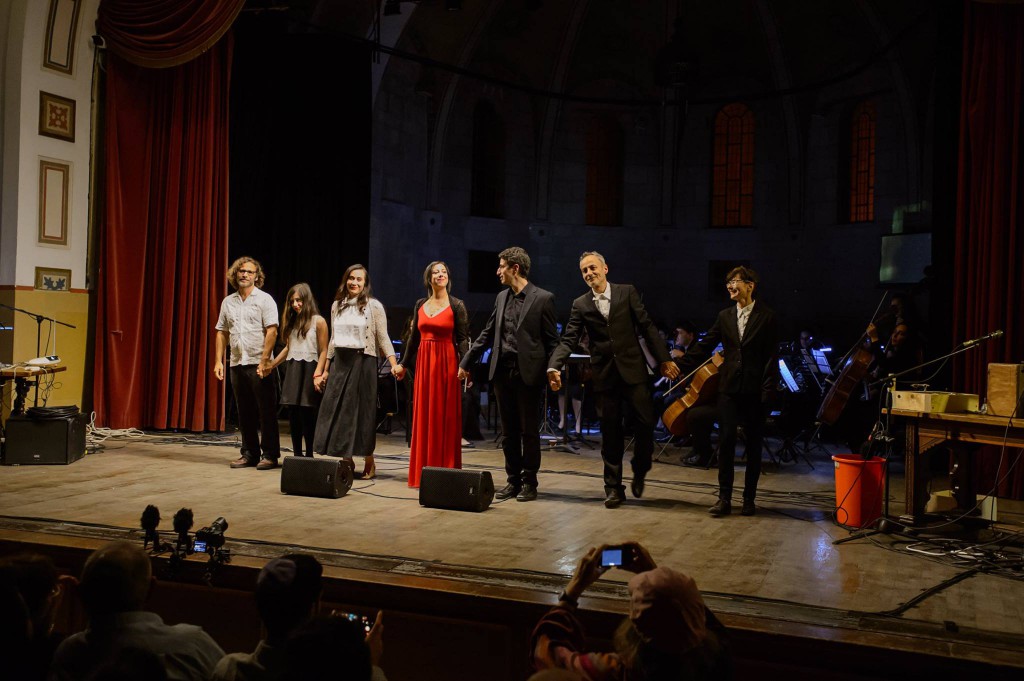
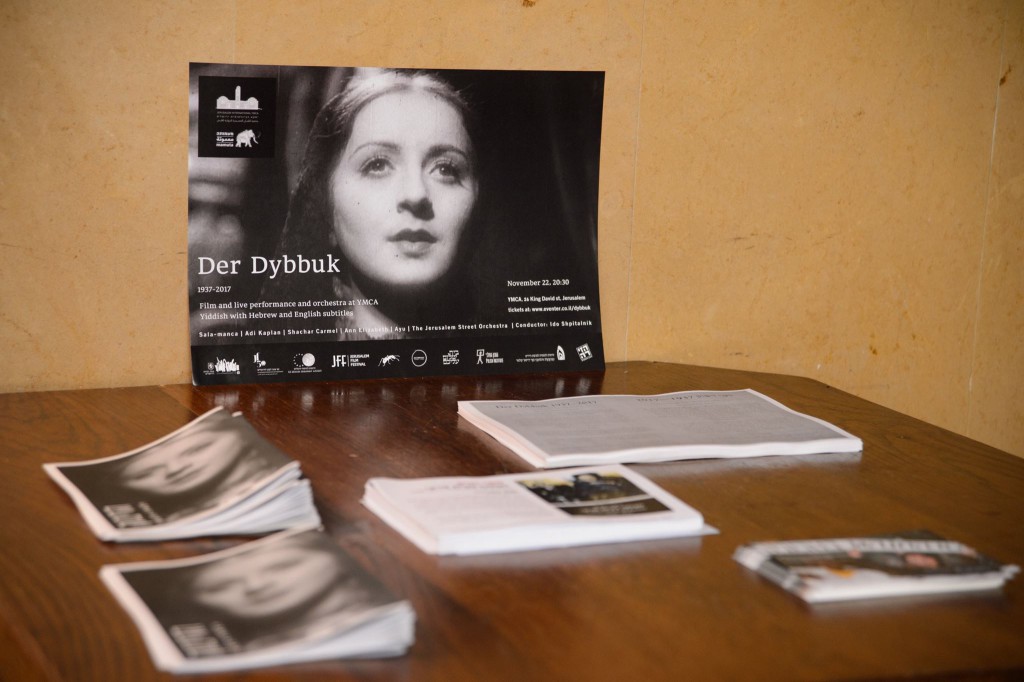
Der Dybbuk (1937-2017) | Film Performance, Jerusalem Film Festival
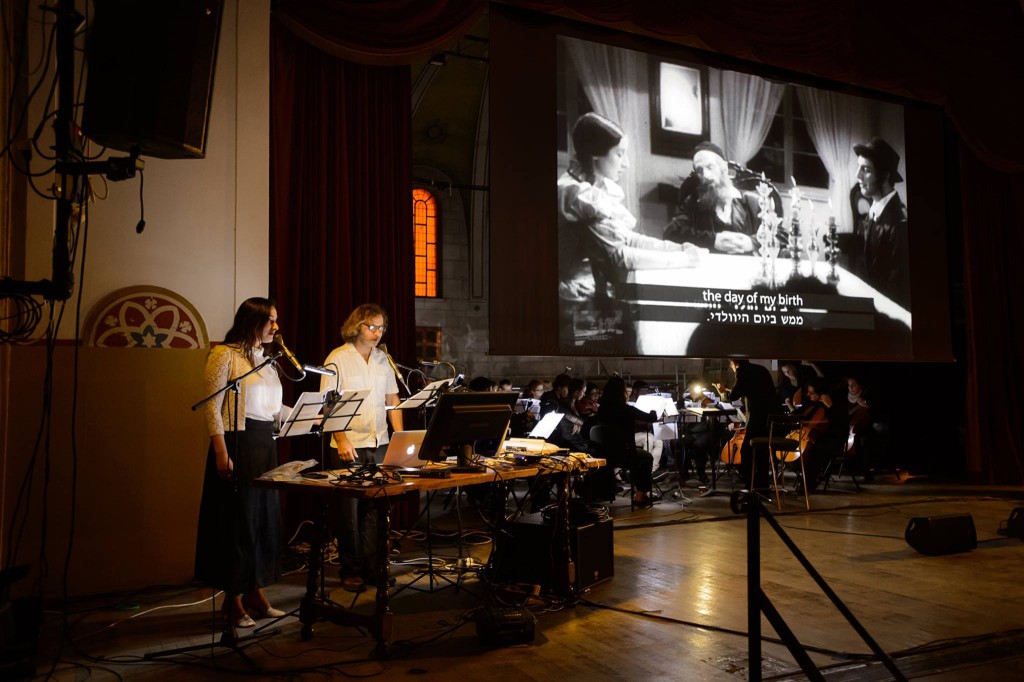
Directed by Michael Waszynski (Poland, 1937) with a new edition by Adi Kaplan, Shachar Carmel & Sala-manca (2017)
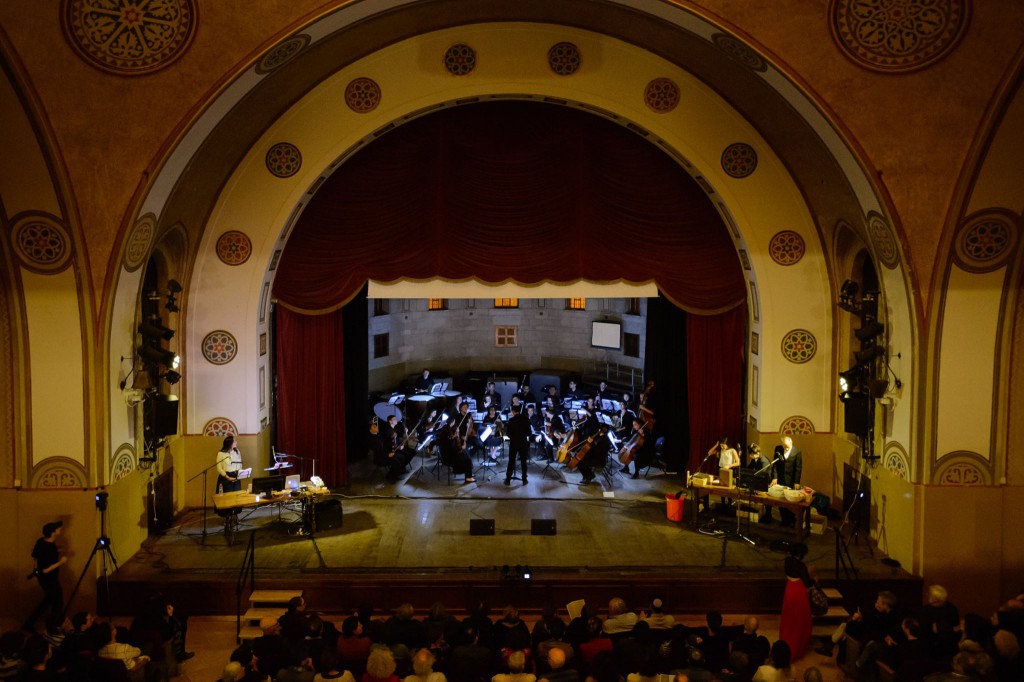
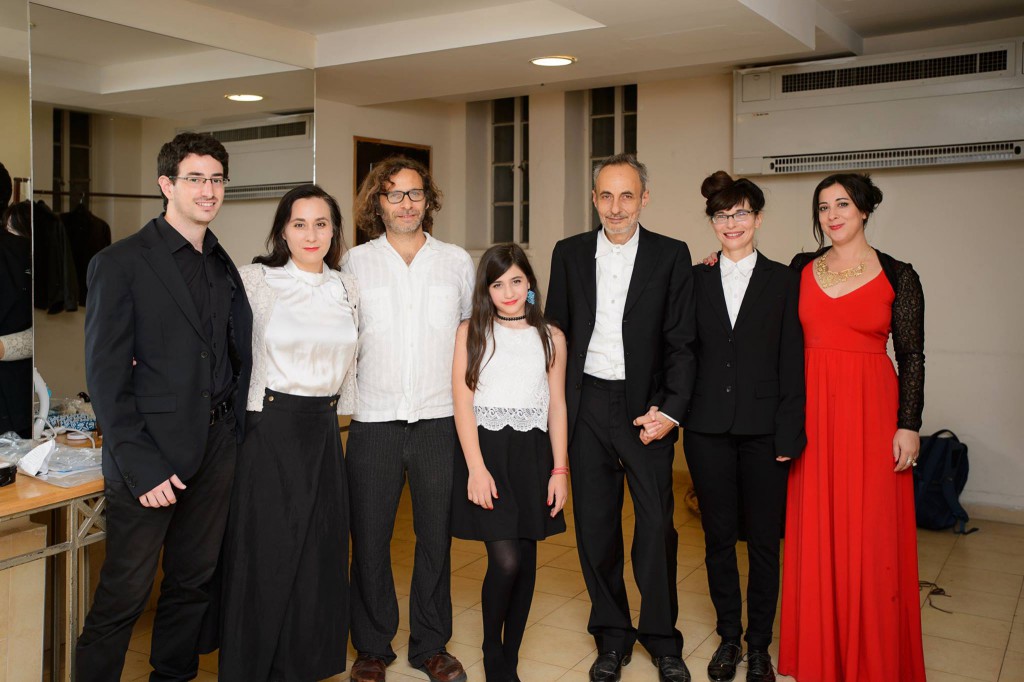
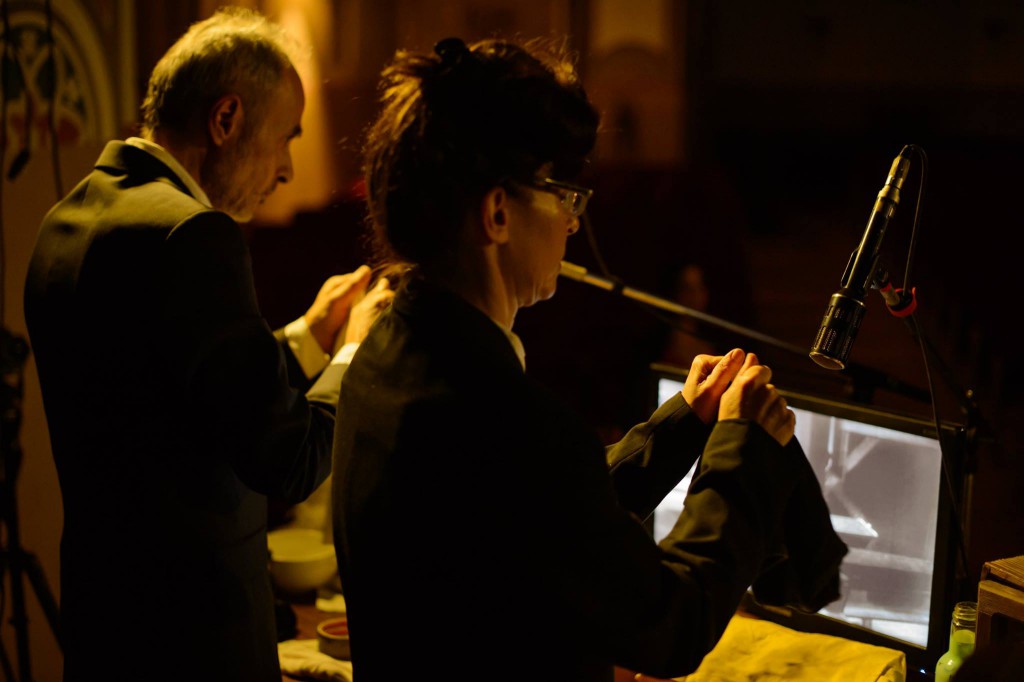
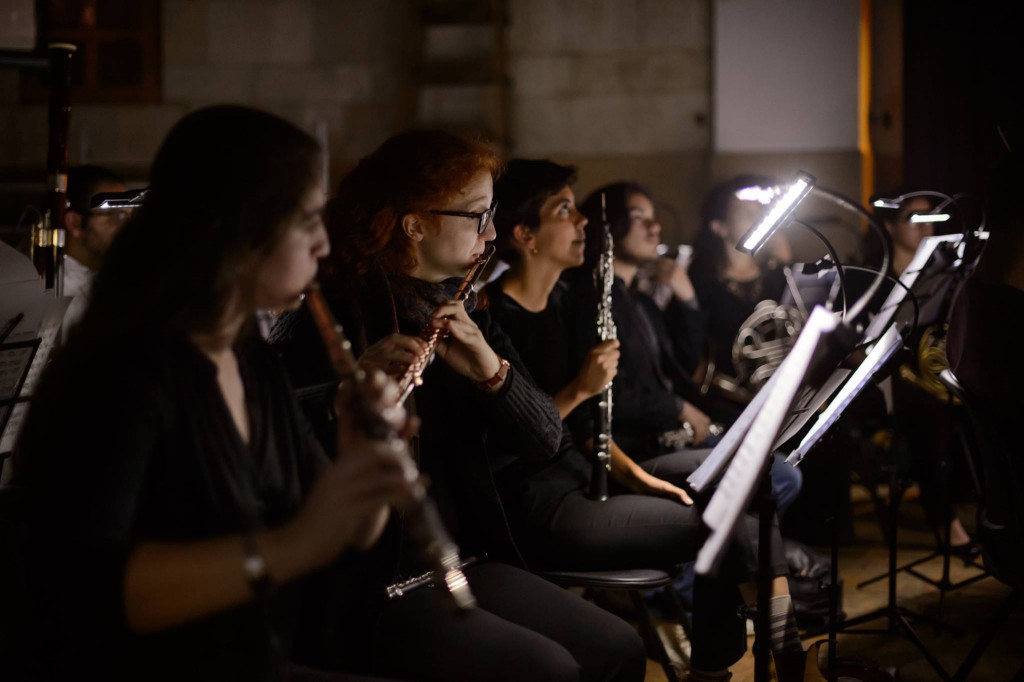
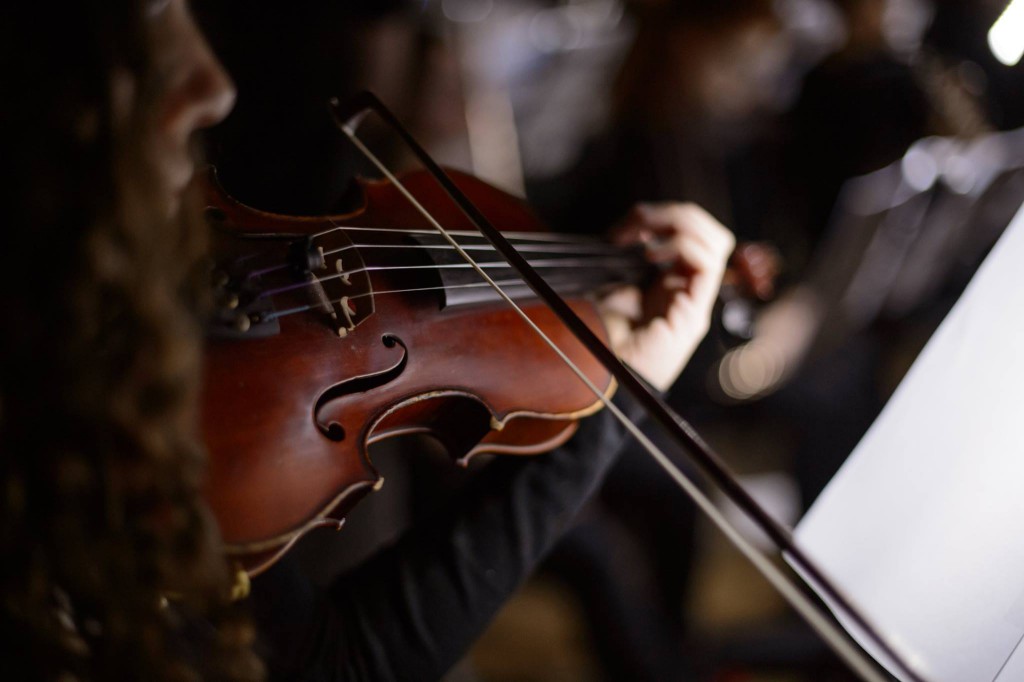
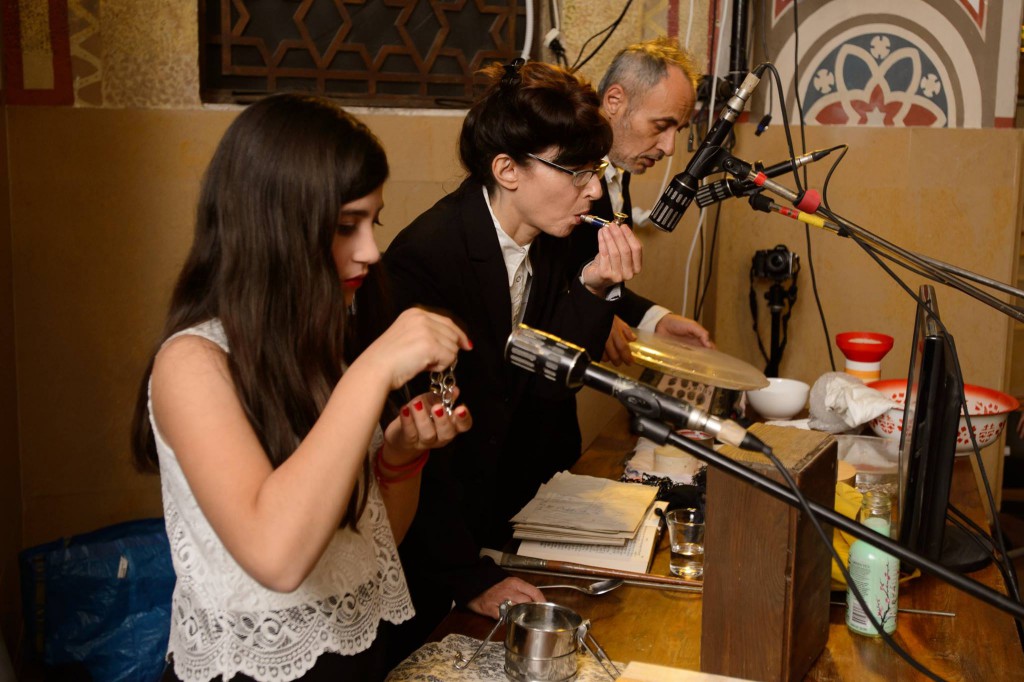
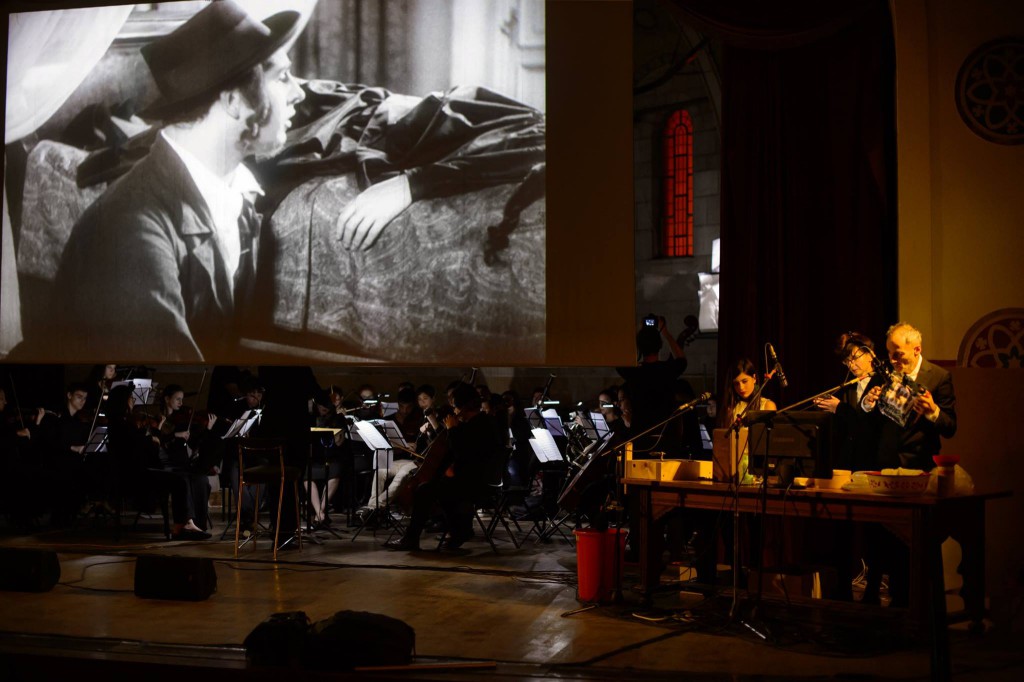
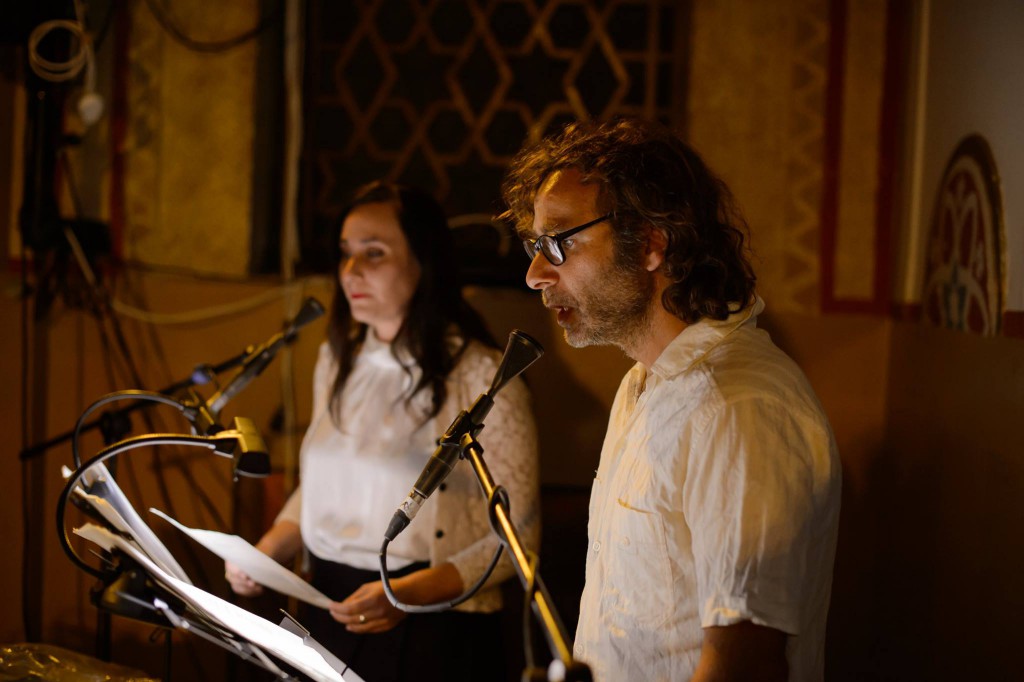
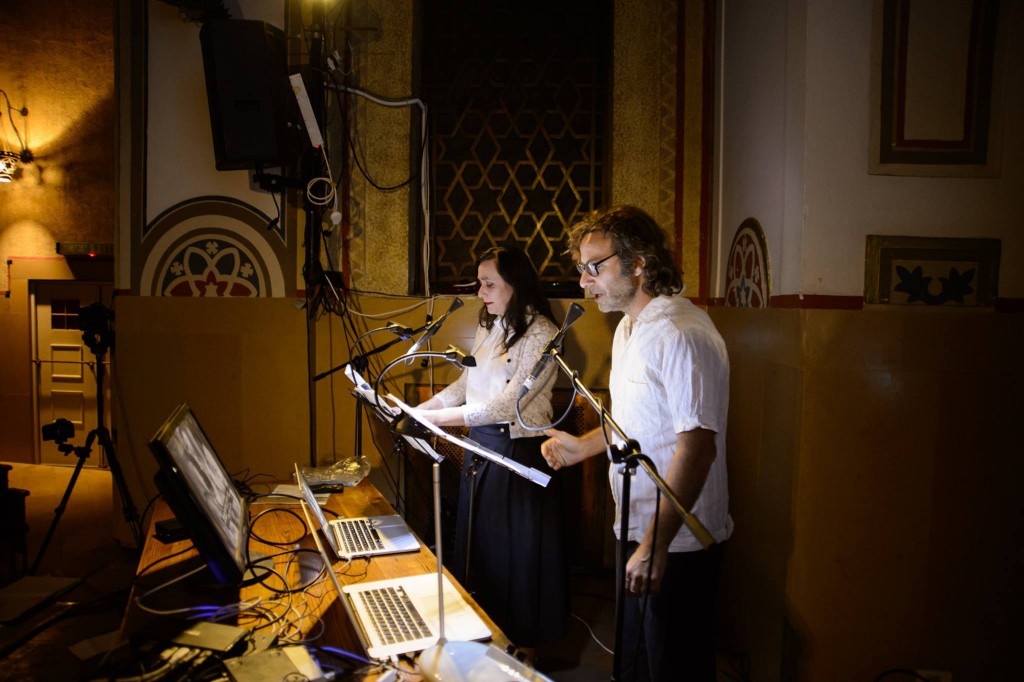
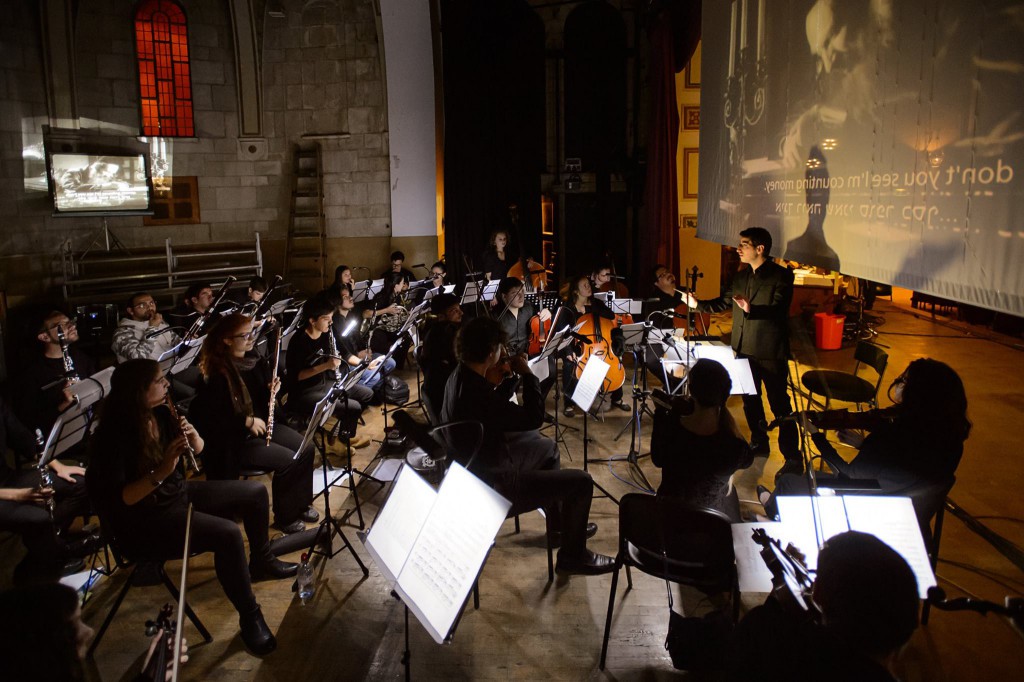
Live dubbing by Lea Mauas and Diego Rotman (Sala-manca group), Live Follies by Adi Kaplan, Shachar Carmel and Ayu Rotman Mauas & Live Music by The Jerusalem Street Orchestra, conducted by Ido Shpitalnik
״The dead were returned to life, and a culture long vanished, wiped out by the Holocaust, was resurrected on the screen” (Ira Konigsberg)
A new, re-edited version of the Yiddish film will be screened with live music and dubbing performance in the courtyard of the former Jerusalem Leprosarium (Hansen House), a venue no less gothic than the film’s aesthetics.
The new, film-performance version is based on the film directed by Michael Waszynsky (1937), based upon S. Ansky’s play Der Dybbuk. Ansky wrote the play after completing the ethnographic expedition he organized between 1912-1914. The play (and film) tells the story of the ill-fated love between Hanan and Lea, the possession of Lea’s body by Hanan’s soul, the exorcism ceremony, and death as resolution – a re-encounter of the lovers in the next world.
Adi Kaplan, Shahar Carmel, and Sala-manca not only re-edited the film, they also replaced the original music composed by Henekh Kohn and the cantorial songs performed by Gershon Sirotta, with a new score. Performed live by the Jerusalem Street Orchestra, conducted by Ido Shpitalnik, the score is an adapted version of the Vltva (The Moldau), the second symphonic poem of Má vlast (My Homeland), by Czech composer Bedřich Smetana. The use of Smetana’s Moldau as a clear reference to Israel’s national anthem – resonating it, but different – creates a liminal sonic soundscape incapable of defining an accurate sense of place or ideology.
Lea Mauas and Diego Rotman of the Sala-manca group are professional and real life partners, possessing the voices of the “dead but eternal” characters, originally performed by another real-life couple, Lili Liliana (Leah) and Leon Liebgold (Hannan)
In the spirit of The Dybbuk, the artists visit the archive instead of the cemetery, and invite the dead to dance with the living once again.
With the support of Ostrovsky Family Fund, Artis Grant Program, Polish Institute – Tel Aviv, P.A.T. (Performance Art and Technology), Hazira, Jerusalem Municipality, The National Authority for Yiddish Culture, Bet Shalom Aleichem.
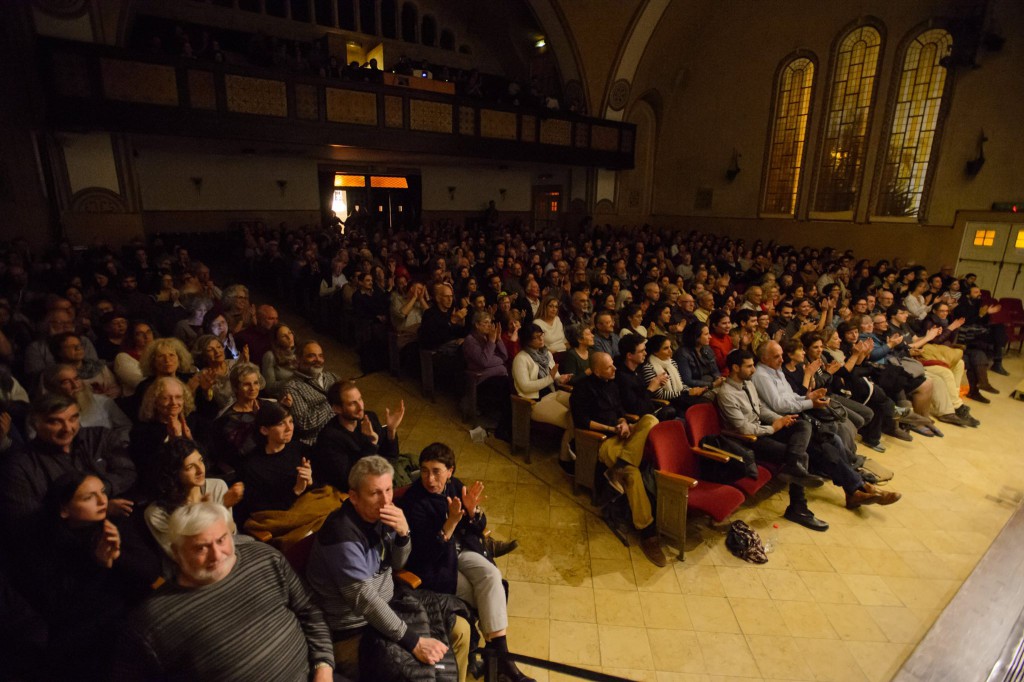
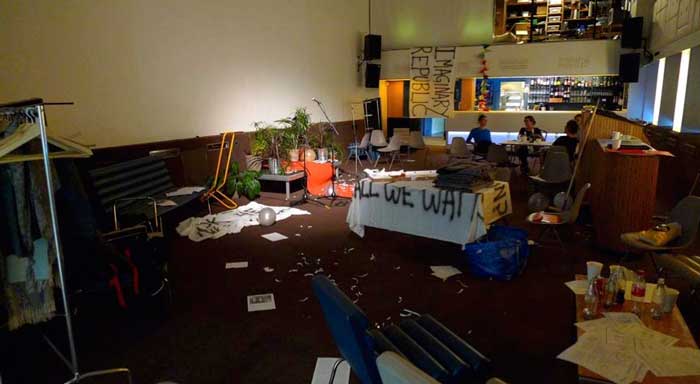
The Eternal Sukkah and Bawadi Documents at the Imaginary Republic, Bergen
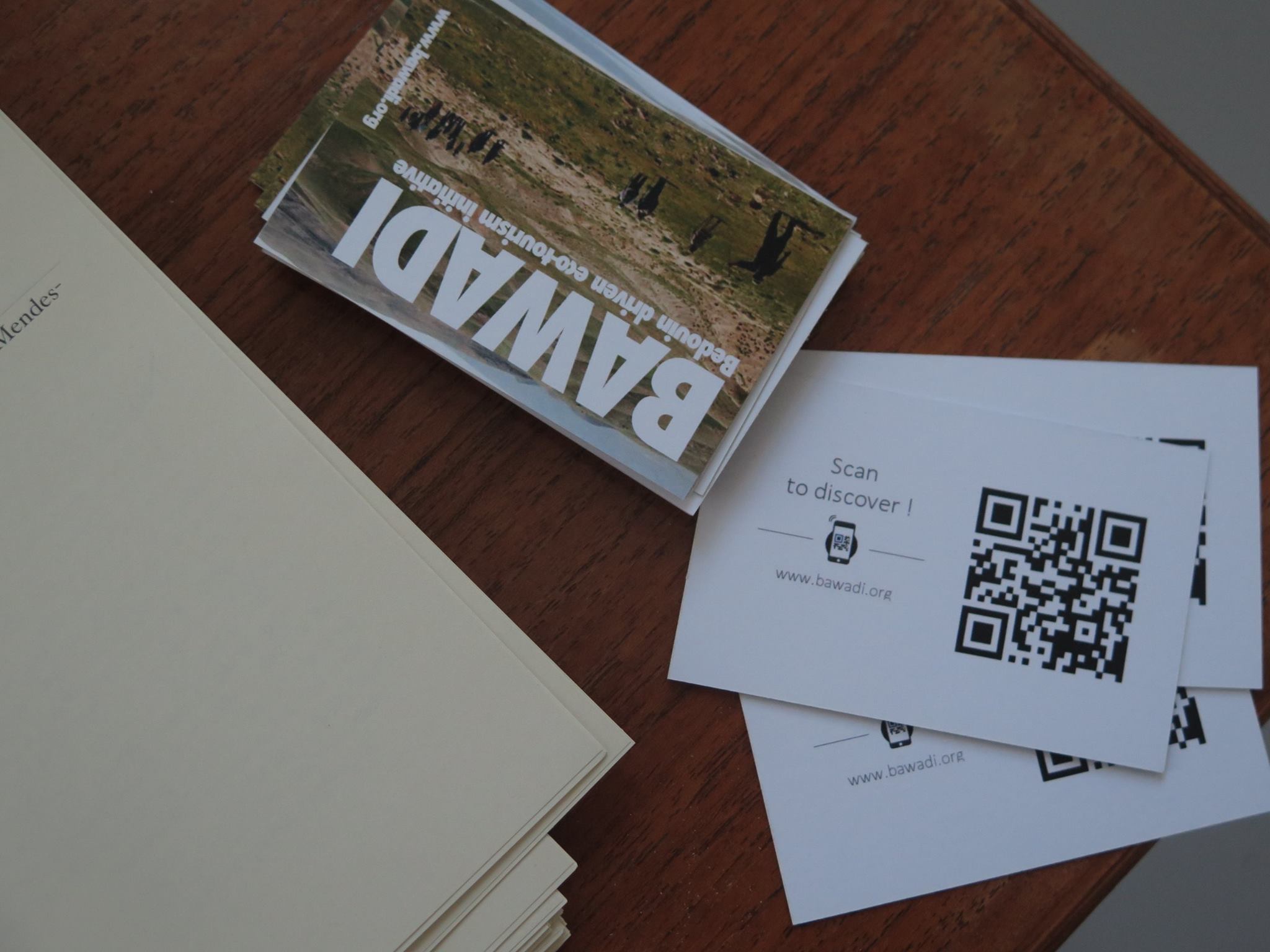
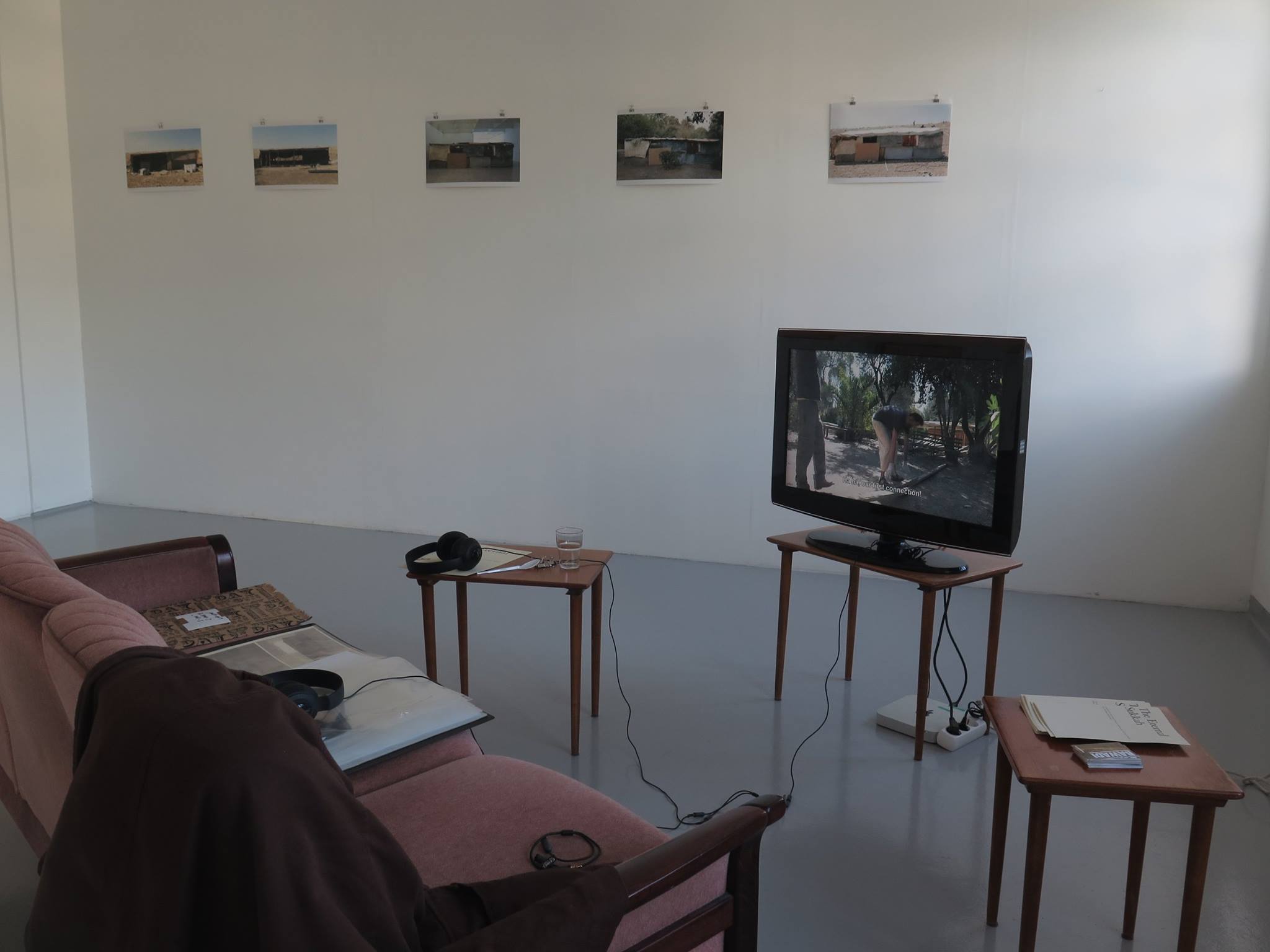
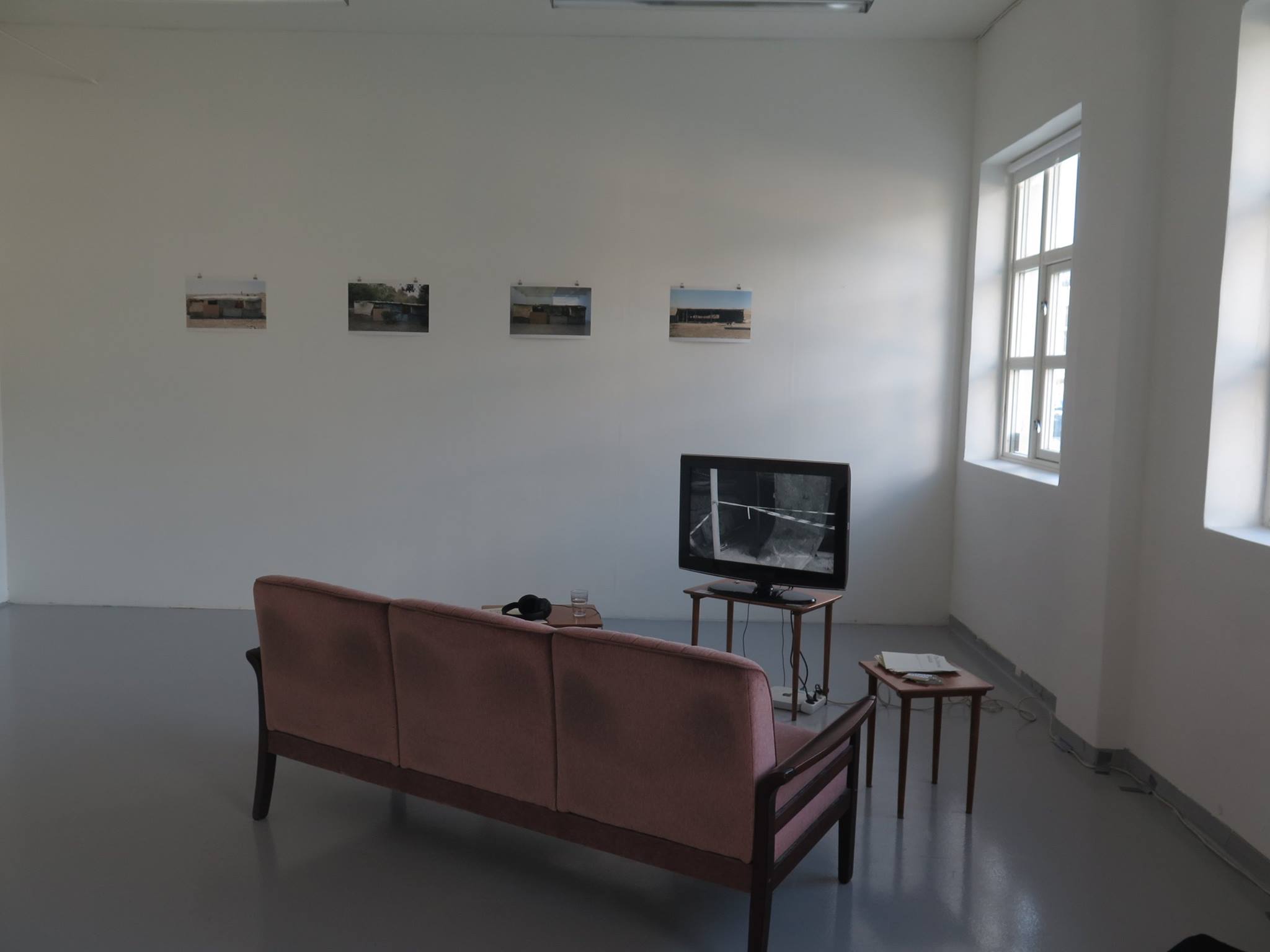
The Eternal Sukkah project (developed by us in collabortion with Itamar Mendes-Flohr and Yeshaiahu Rabinowitz) and the www.bawadi.org development project by the Jahalin Community at Tag Team Studio in Bergen, in a project runed by Brandon LaBelle in the frame of the Bergen Assembly 2016.
“The Imaginary Republic is a research project developed by Brandon LaBelle. During September and October the project takes the form of a group exhibition at Tag Team Studio, showing works by national and international artists. Through propositional and speculative works the exhibition, presented in two editions, focuses on questions and experiences of public life and culture.”
The artists showing works in Part 2 of The Imaginary Republic are Hélène Frichot, Marianne Heier, Marysia Lewandowska, Sala-manca and Lise Skou.
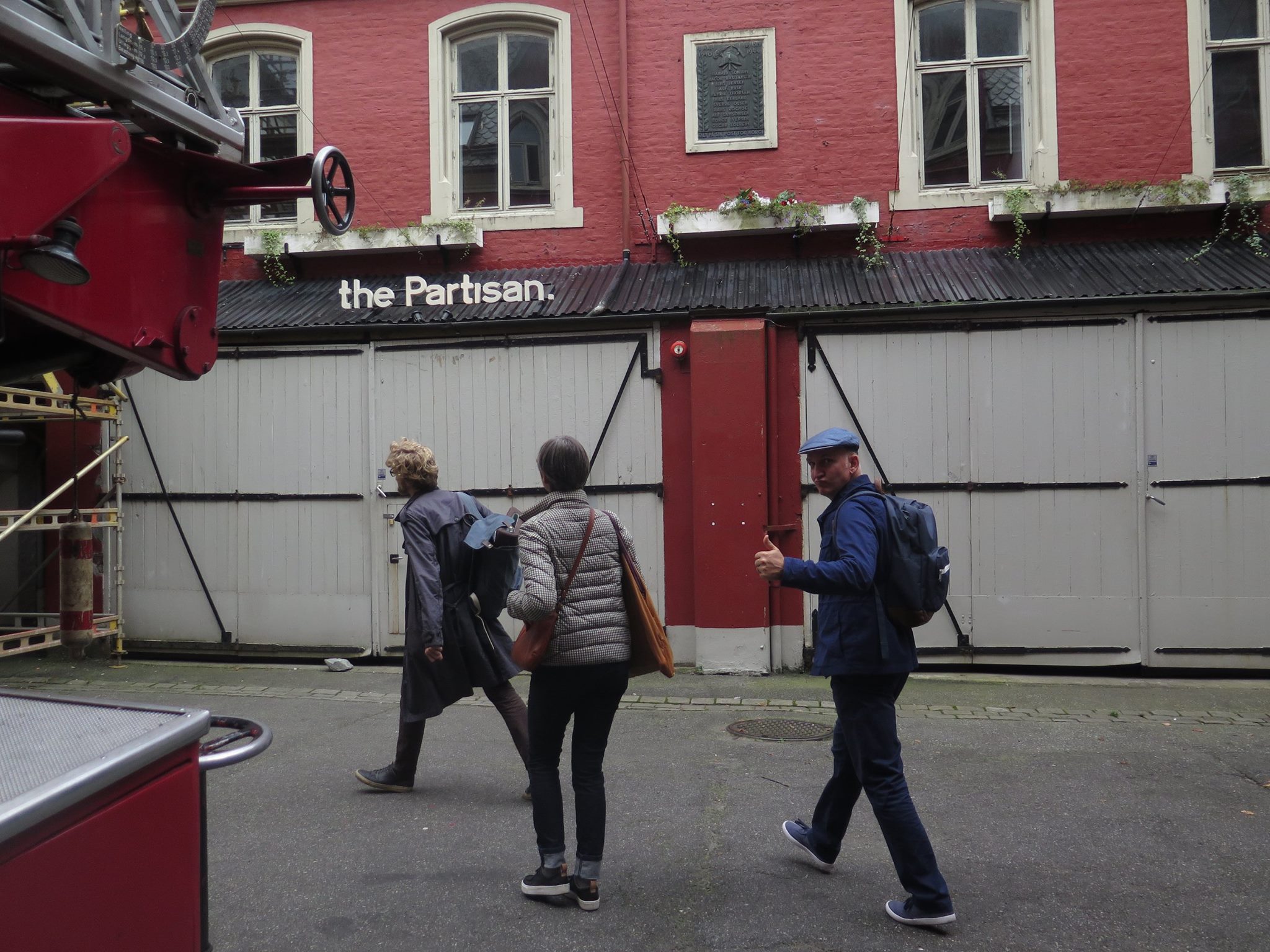
This Saturday 24.9, a talk a the Partisan Cafe, from the Bergen Assembly with Brandon Labelle (http://bergenassembly.no/en/freethought/the-partisan-cafe/)
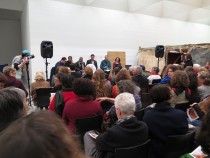
Video Documentation: On Hybridization, Transience, and Refugees | Israel Museum | 2.2.16
Video Documentation [Hebrew. Arabic& Hebrew]
2.2. 2016 | On Hybridization, Transience, and Refugees | Israel Museum
Entire documentation of a discussion focusing on The Eternal Sukkah by the Sala-Manca group, together with Itamar Mendes-Flohr and Yeshaiau Rabinowitz.
For more info on the project: http://old.sala-manca.net/?cat=274
Featuring: Amitai Mendelsohn, Abu Suleiman – Jahalin Tribe, Rachel Elior, Daphna Ben-Shaul, Alon Cohen-Lipshitz, and the artists.
Paradise Inn – A review in Haaretz
Paradise
Paradise Inn
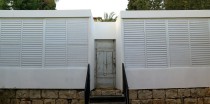
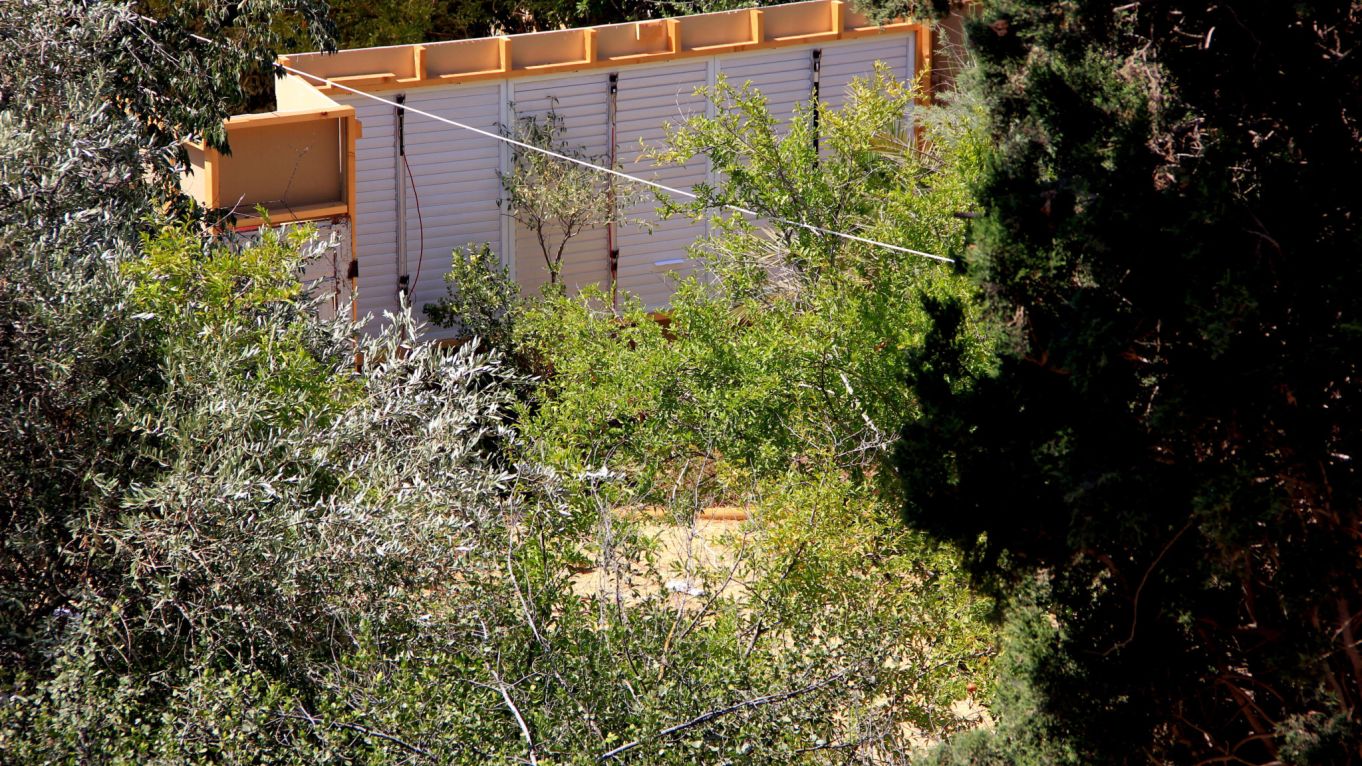
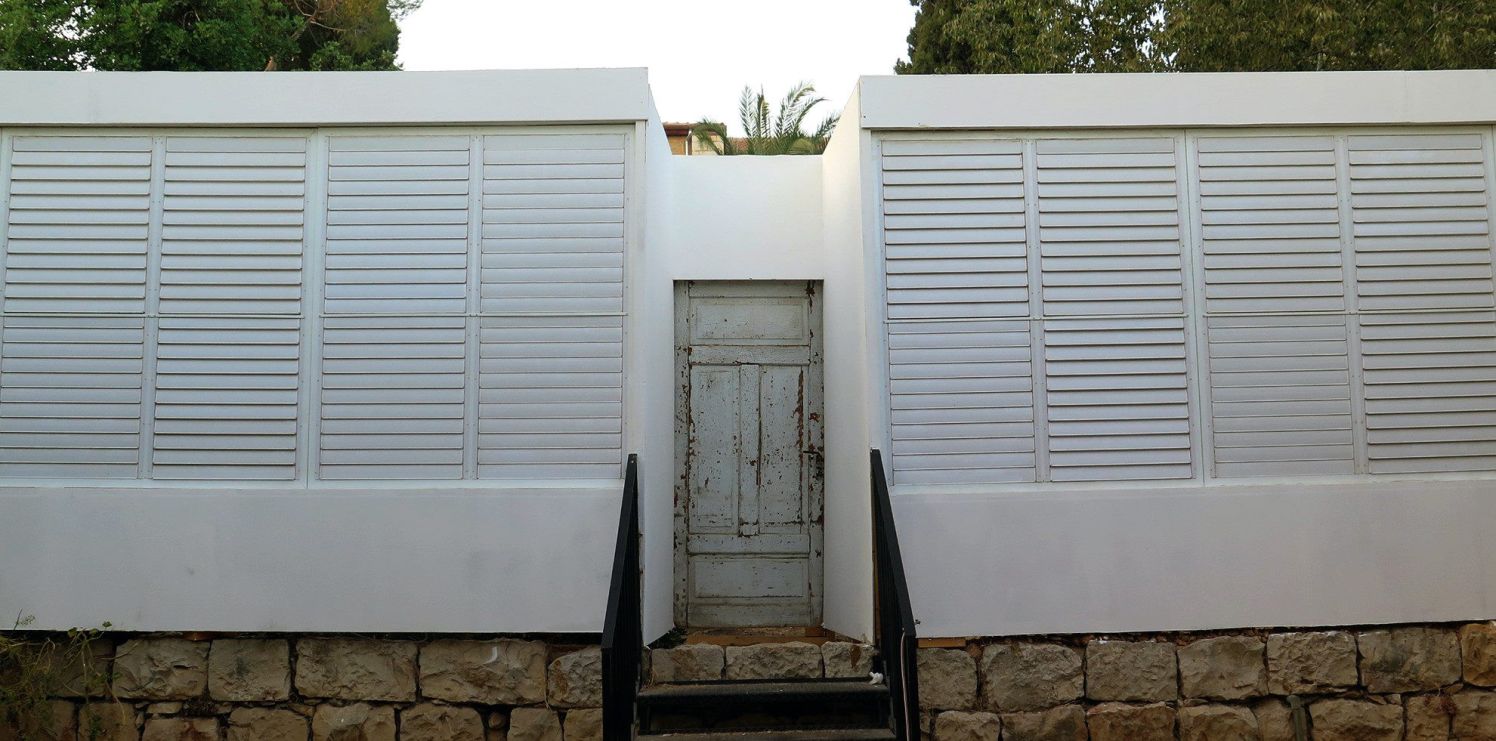
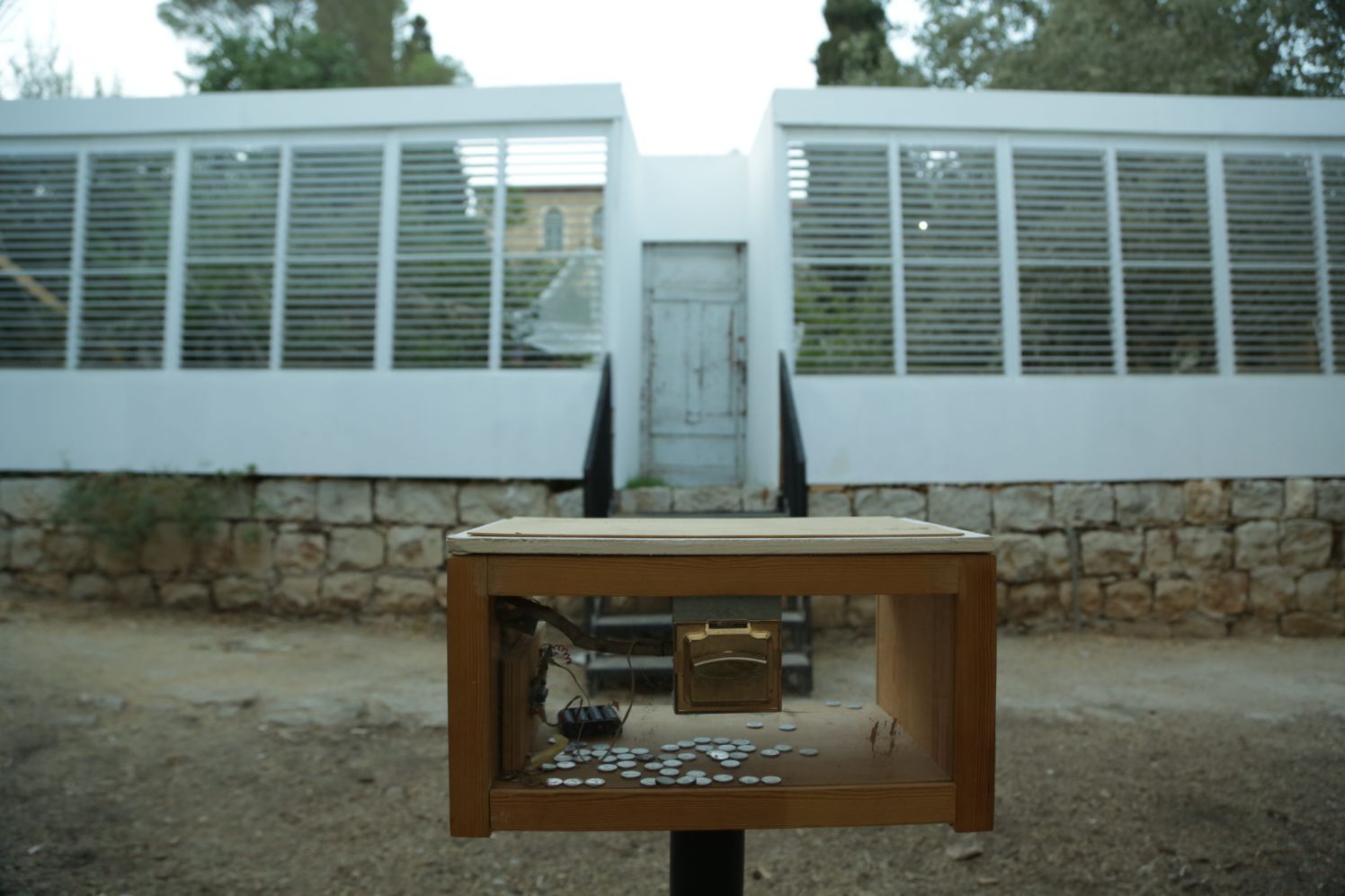
Paradise Inn, Talbiyeh, Jerusalem. A dream for only one person. Infinite stars and a real gate to paradise. Reserve your room at the former Lepers’ home.
Jerusalem, where any piece of land can become your temporary dwelling.
In light of the policy of the city of Jerusalem to develop tourism and to use art and culture as a touristic tool, a group of local artists decided to be part of this new trend. In order to generate a new resource for tourism as well as some independent income for local artists and the Mamuta Art and Media Center, they established the luxurious Paradise Inn on part of the lands of the former Jerusalem Lepers’ Home at Hansen House.
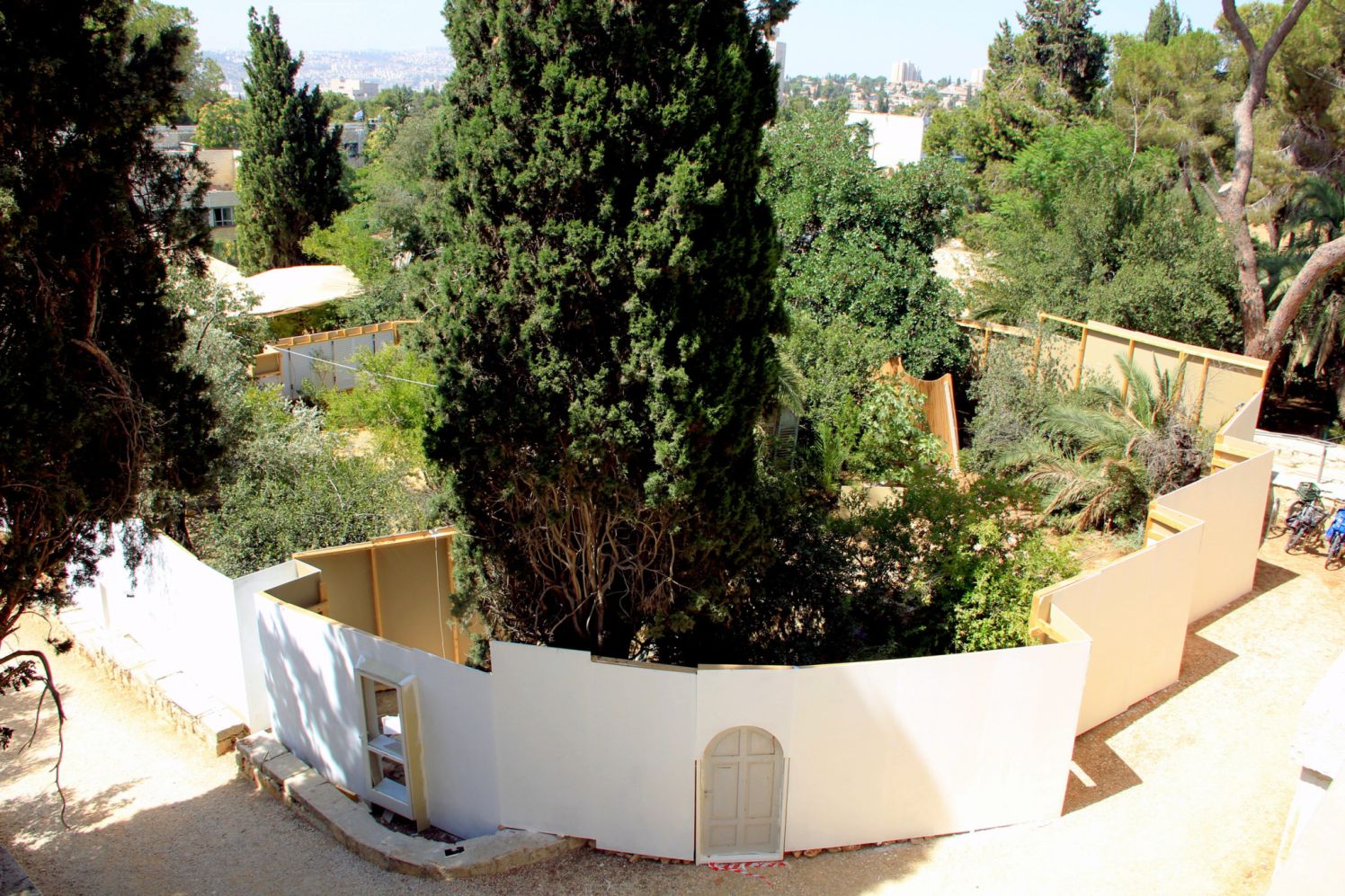
Using a “green” approach to urban design as well as the idea of recycling electronic waste, the artists created a summer hotel for temporary residence, inspired by Bauhaus architecture, temporary techniques of modernist parcelization, and the new school of architecture, Growing Walls.
The artists participated in the design and implementation of all aspects of the hotel, with the goal of giving everyone the possibility of spending a few nights at Paradise Inn. The project synthesizes new visionary ideas for a modern Jerusalem: a hotel for only one person, a personal paradise built in the exquisite Hansen House gardens.
Image“Paradise Inn is an island surrounded by the walls of the former Jerusalem Lepers’ Home. A metaphor of differentiation and exclusivity. Paradise Inn is a luxurious paradise that originates from a public institution that was historically used to protect society from lepers and lepers from society. Paradise Inn dwells in the spirit of gentrification, inviting an artist to reside for free in the paradise for a month and a half. In return, the artist is expected to produce artwork for the comfort of future residents.” (From I Love Jerusalem Magazine)
In the year 2018, the utopia that Boris Schatz wrote about in his novella “The Rebuilt Jerusalem: A Daydream” (1923), is supposed to be fulfilled. A Utopian Jerusalem in which paradise exists; harmonious coexistence with nature and with the Arab residents of the city, and building of the Third Temple, which will serve as a museum, with the consent of the Arab minority.
Three years prior, in the year 2015, at the Hansen House gardens, Paradise is built – a haven in the middle of the city, a white façade bounding a garden that has been expropriated from the public. In Paradise, only one human being at a time can experience the ideal and modern natural living, leaving the public with a sense of longing, allowing a sneak peek into a free and peaceful world, at an affordable price.
The entrepreneurs of Paradise Inn have invited an artist to live and create for a month and a half in this daydream – an infinite-star hotel for one, a slice of nature in the middle of Jerusalem, in the historical garden of the former Lepers’ House.
From the middle of September, Paradise’s sole room will be available for rent at an outrageous rate for all interested.
Please visit us and reserve your nights: www.paradisehotel.co
Concept: Sala-manca
Architects: Sala-manca and Nir Yahaom
Interior Desing: Itamar Mendes-Flohr
Paradise Inn art collection: OZ Malul, Guy Yitzhaki, Itamar Mendes-Flohr, Sala-manca, Shaul Zemach.
Souvenirs: Silent Room 1, Chen Cohen | Room-Kit, Pessi Komar | A letter for you, Shiri Zinger, Elevator to Paradise, Lior Pinski
Avantgarde workers: Yuval Galili, Diego Rotman, Yeshaiahu Rabinowitz, Rotem Zuta, Ayala Shamir, Ktura Manor, Lea Mauas, Chen Cohen, Galia Lulko, Nahuel & Ayu
Paradise Inn website: www.paradisehotel.co
Observation post to Paradise: Conrad Shick
Press:
http://www.haaretz.co.il/gallery/art/artreview/.premium-1.2732894
http://old.sala-manca.net/wordpress/wp-content/uploads/2015/08/almost-paradise.png
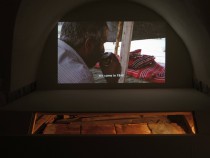
The Ethnographic Department, 2015
Mamuta at Hansen | Artists: Yeshaiau Raboinowitz, Itamar Mendes-Flohr, Sala-manca, Ktura Manor, Ester Bires, Amitai Arnon, Nir Yaalom, Adi Kaplan, Shahar Carmel, Hanan Abu-Hussein, Samuel Rotman | Curators: Sala-manca
Opening Hours: Monday and Thursday 10-15, Wednesday 17-21 and Fridays 9-12
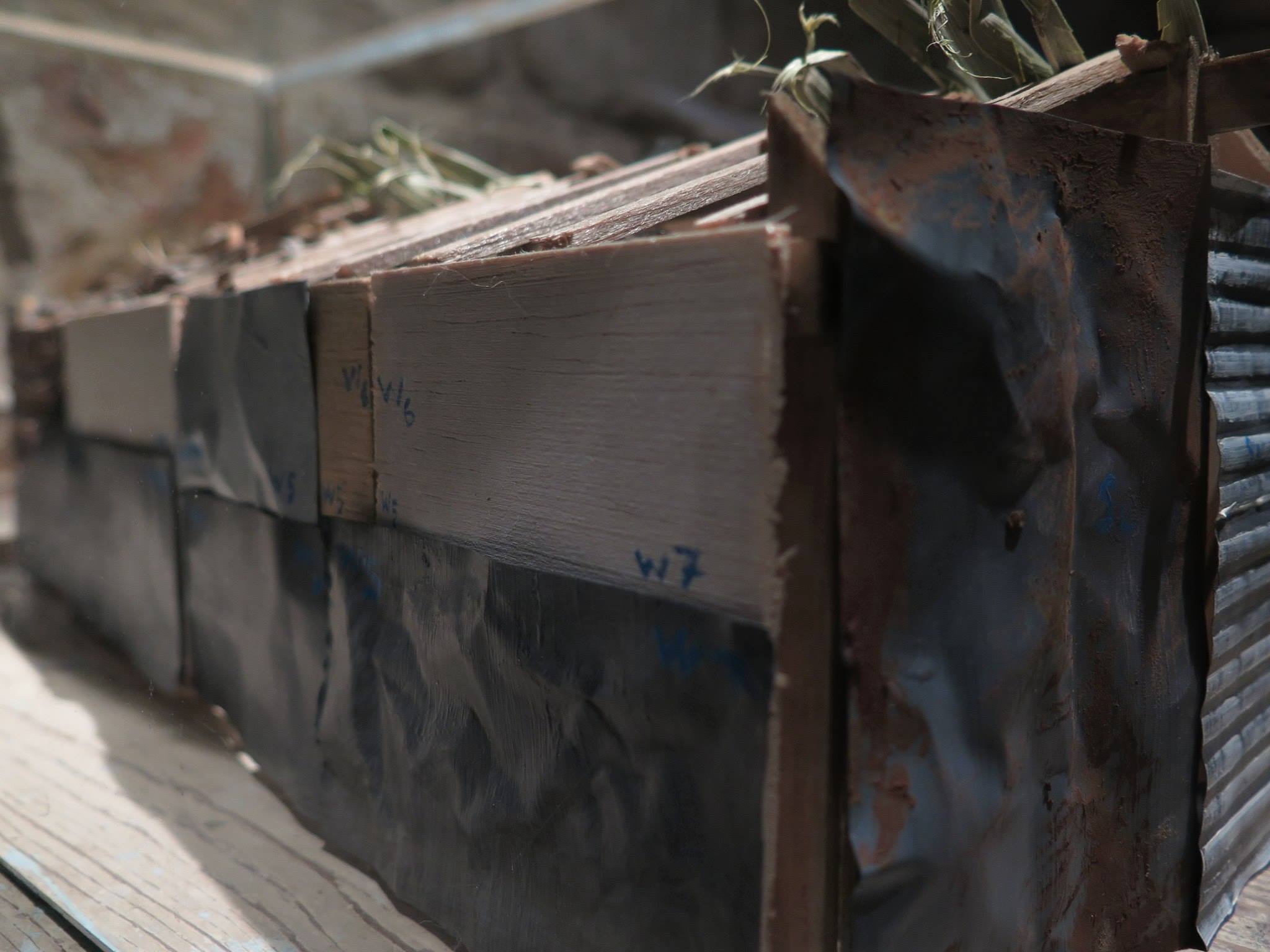
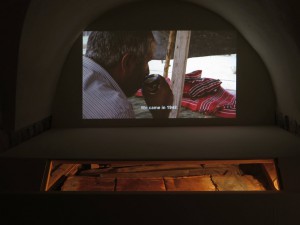 The Ethnographic Department addresses the link between an art museum and an ethnographic museum, between “fine” art and “folk” art, and the tension that exists between original, restoration, copy and adaptation. All of these are aspects central to the curatorial thinking that has guided the Museum of the Contemporary since its onset.
The Museum was founded in December 2009 at the Mamuta Center in Ein Kerem, in the home of Daniela Passal, formerly the home of Palestinian researcher Issa Manun and in the interim “absentee property”. 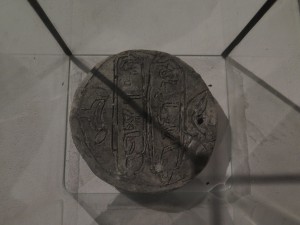 The first exhibition dealt with the museum as an institution, with the topography of Israeli memory, with the local historiography of the village Ein Karem and and with the home of the museum – the home of Daniela Passal. The Museum also developed a digital storage room of exhibitions which are not viewable on the net but are offered for downloading – each exhibition as a “package” for printing, exhibiting or re-installing – according to the physical and economic possibilities of the downloading body.
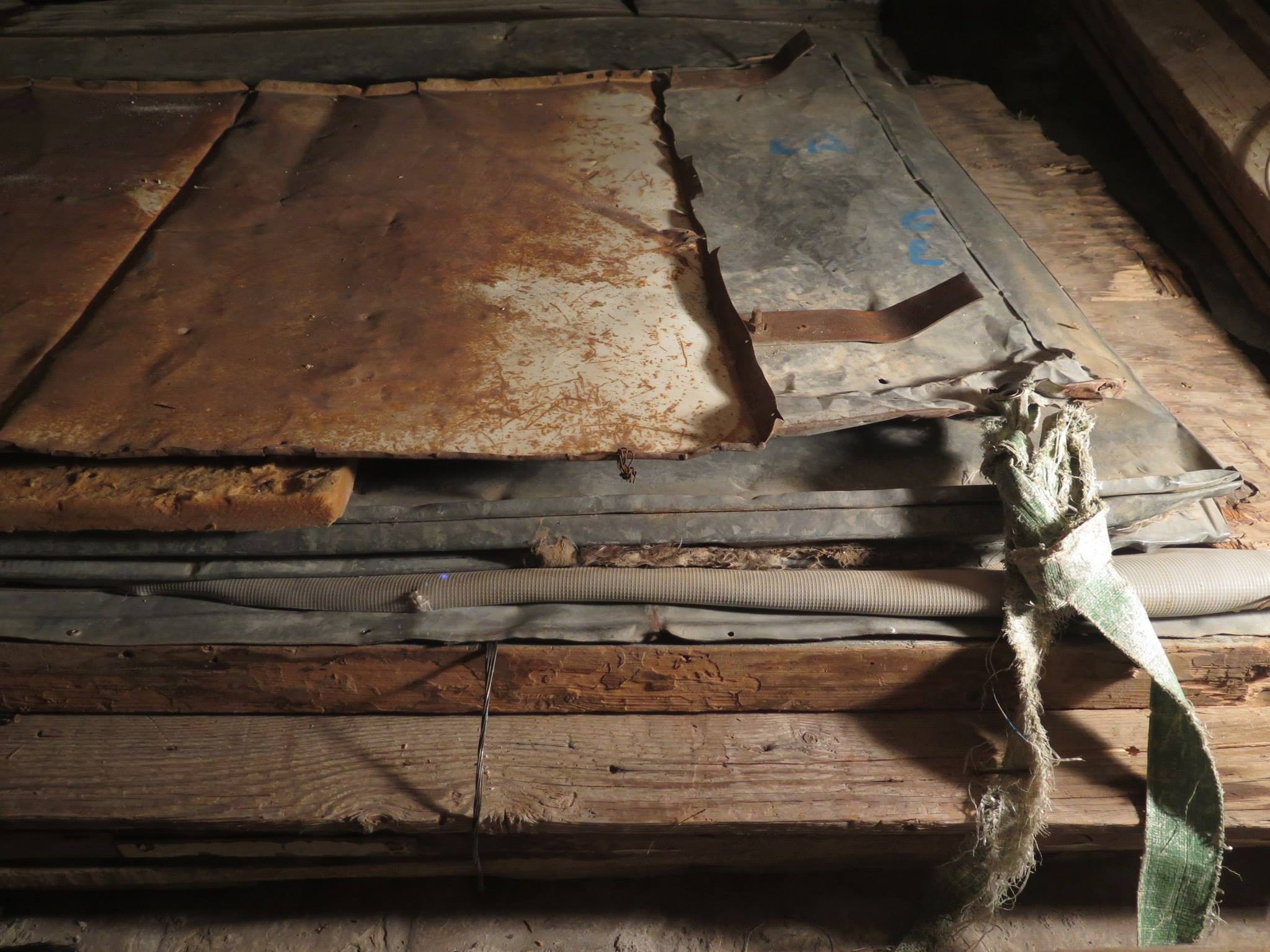
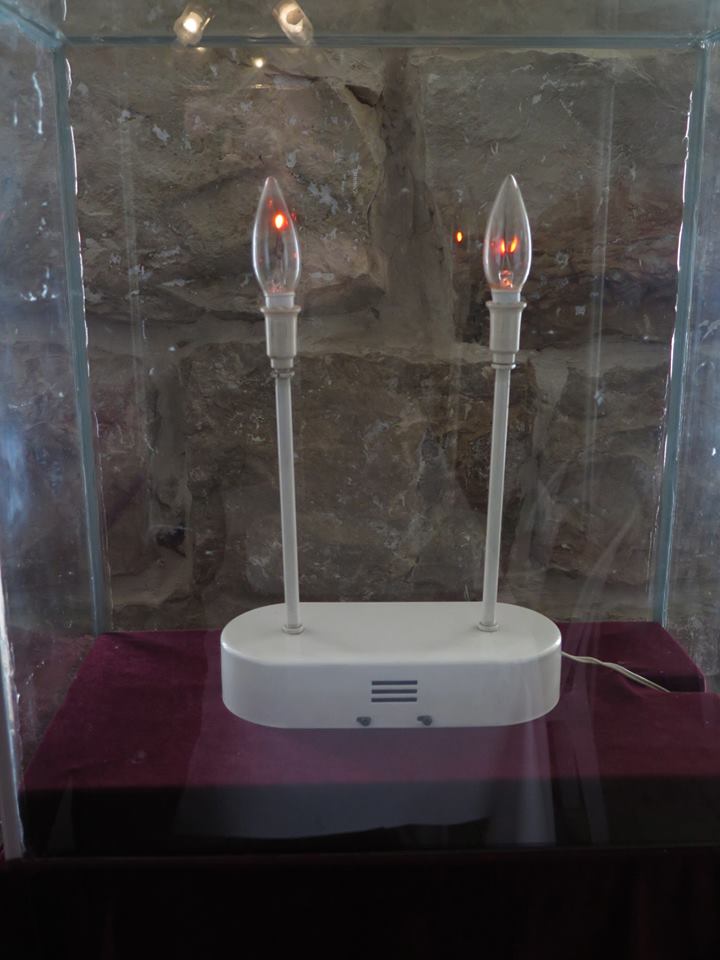 The Ethnographic Department also deals in part with the history of the structure in which it dwells. This is the Leprosarium Jesus Hilfe , founded as an isolatedrefuge for leprosy patients.
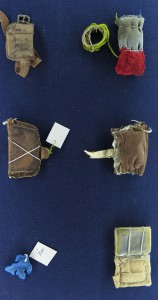
It was created by the German-Protestant Moravian community in 1867 and operated for twenty years in a building on today’s Agron Street, Jerusalem. In 1887 the institute moved to a new building in the Talbiya neighborhood of Jerusalem, planned by Konrad Shick. 
Press:
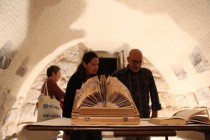
The Underground Academy, Open Studio, 2014
The Underground Academy – The Academy of the Contemporary
Open Studio Exhibition in the frame of Manofim 2014
Artists: Chen Cohen, Ktura Manor, Itamar Mendes-Flohr, Sala-Manca, Yeshaiau Rabinowitz, Yoel Regev, Maytal Rotenberg, Ayelet Zohar
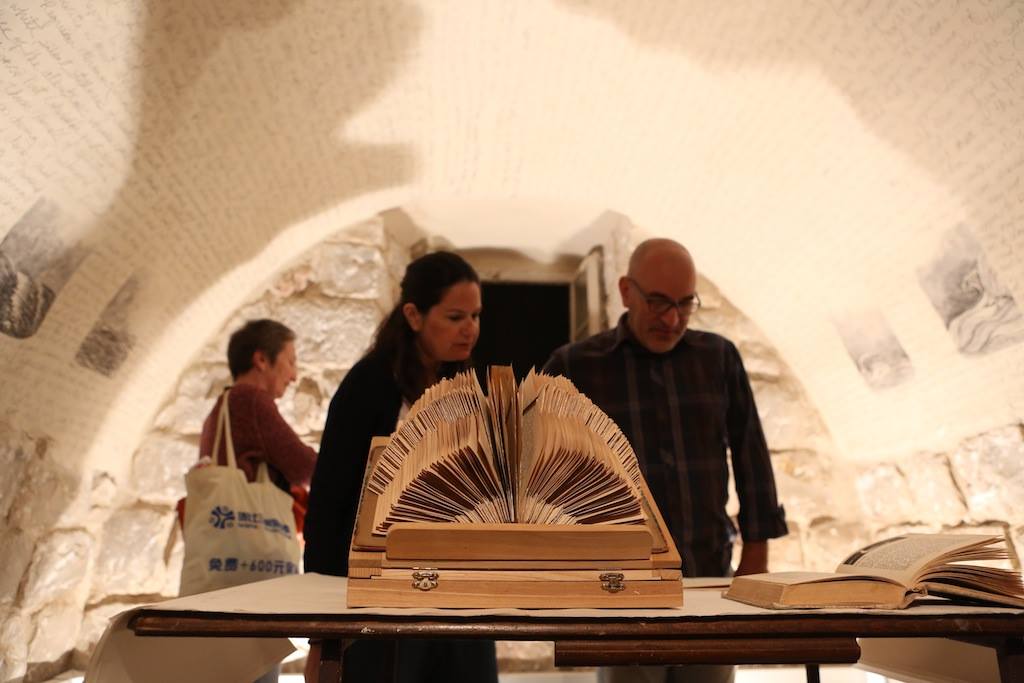
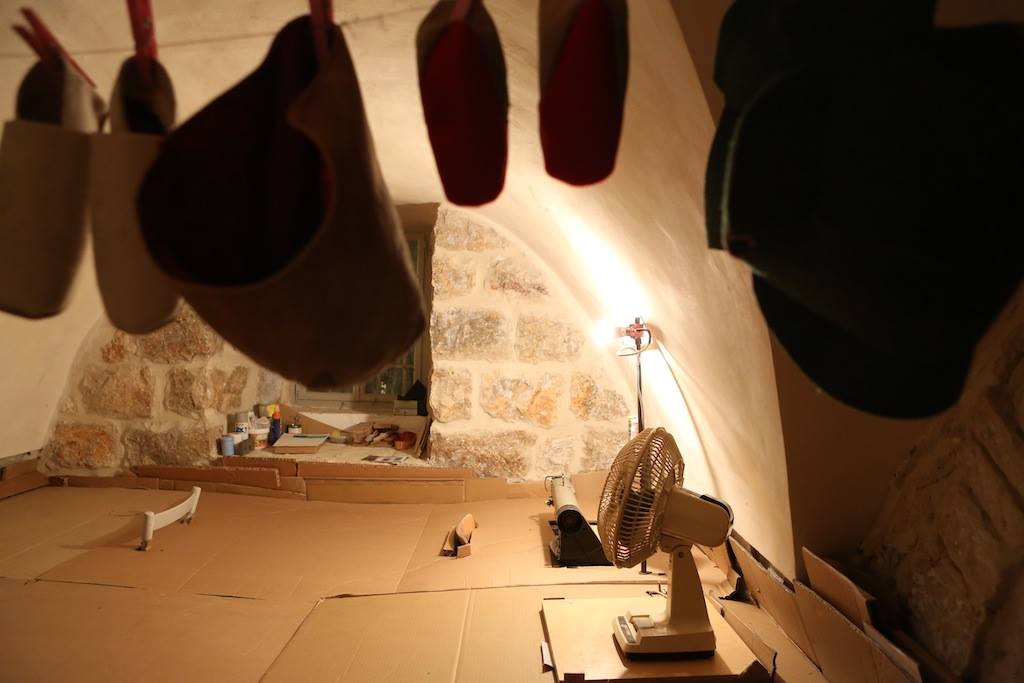
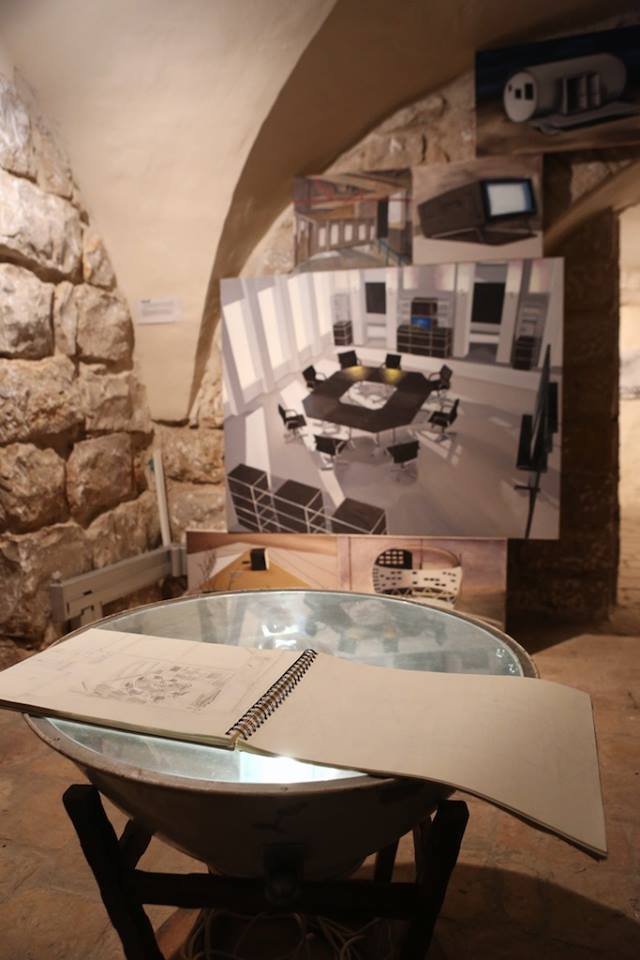
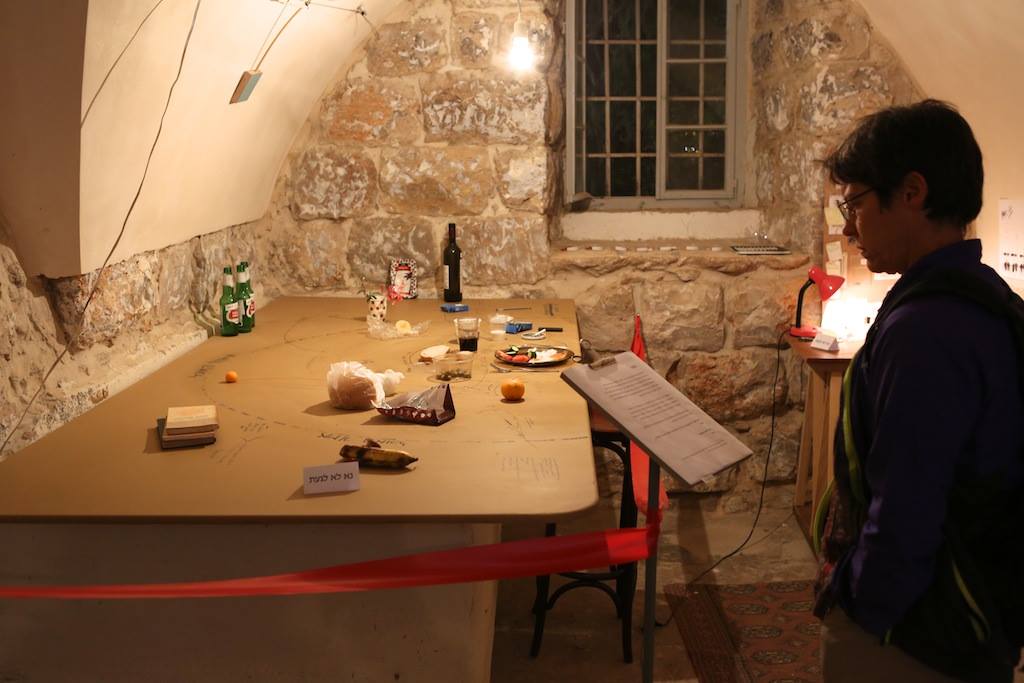
In 1963 Portuguese poet João DelgadoIn wrote, in an unpublished manifesto, that all museums, universities and sports clubs should be closed for at least one year, in order to reopen a year later. After Delgado locked two municipal museums with his own locks, he was arrested. In jail he wrote the outlines for The Academy of the Contemporary.
Real Time in the Age of Lie, JFF, 2004
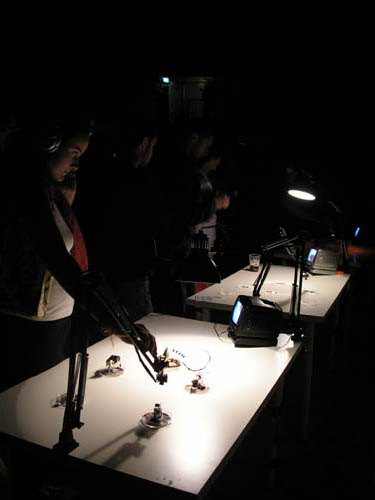
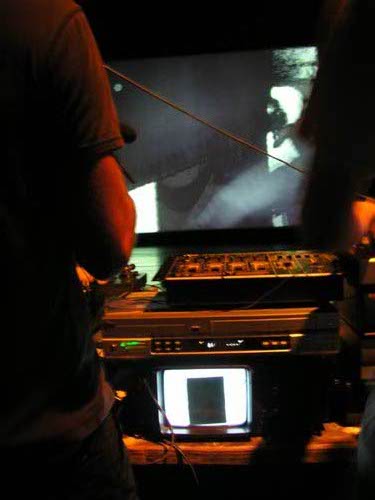
Real Time in the Age of Lie | Intersection Festival for Experimental Video | 21st Jerusalem Film Festival, Hazira Performance Art, Jerusalem Cinematec | July 2004
“In an age when lie predominates – the moment is an
aesthetic revolution. Or not.”
(Marianne Loop)
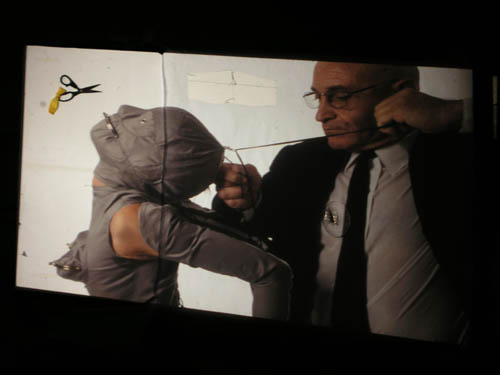
In “Real Time in the Age of Lie”, video art in its plastic and performative context is at the stage center. “Real Time” as the point of departure for an experimental video event, where Real-Time (live broadcasting), Image, and the Immediate, are examined from different angles, through a variety of art fields which make use of the mediums of video and/or photography.
In our present-day visual reality, crucially shaped by the mass media, the art of video in its various manifestations (video art, documentary video, V.J., home video, etc.) has become a central medium for the representation and molding of an-other reality, and for the expression of the counter voice.
In this evening, video works that deal with documenting and processing reality in a poetic, sculptural, conceptual, and/or political way, offer either an alternative for the common visual reality, or supplementing it, or hiding it.
It is an attempt to present one moment – of the real in time.
Curator: Sala-manca
Artists: Amnon Illuz, Sheri Arnon, Shira Borer, Tamy Ben-Tor, Jan Tichy, Eden Ofrat, Yonatan Vinitsky, Marcelo Lauber, Ran Slavin, Davide Grassi, No-org, Sala-manca, Audio Visual Station for Remixing and Recycling