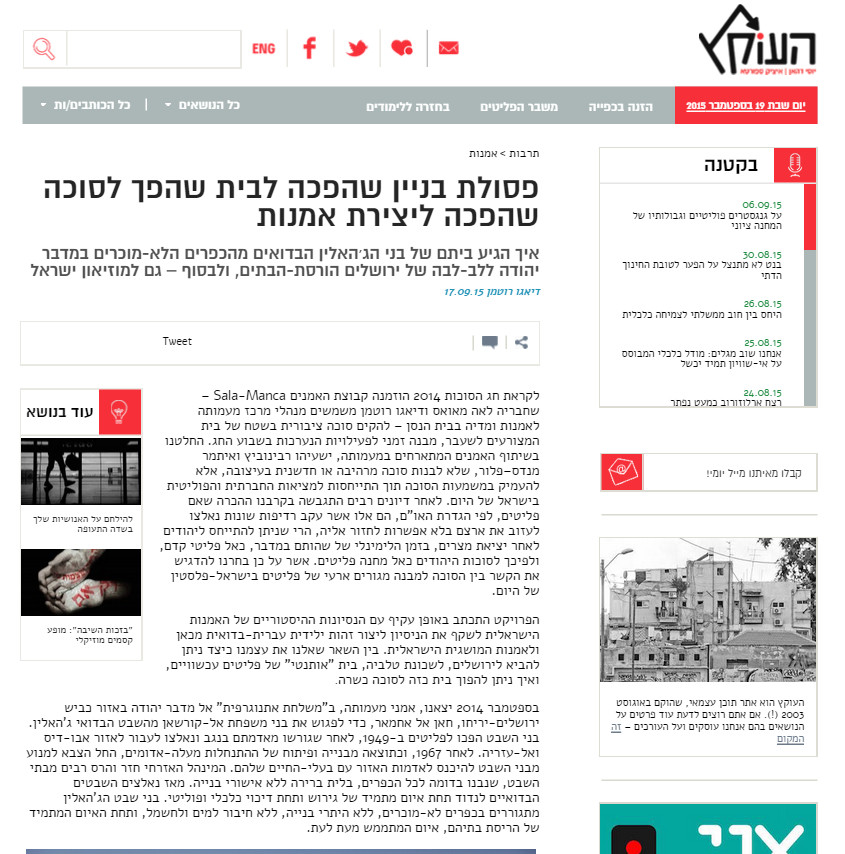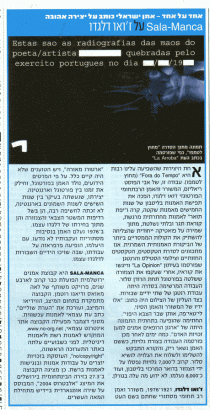
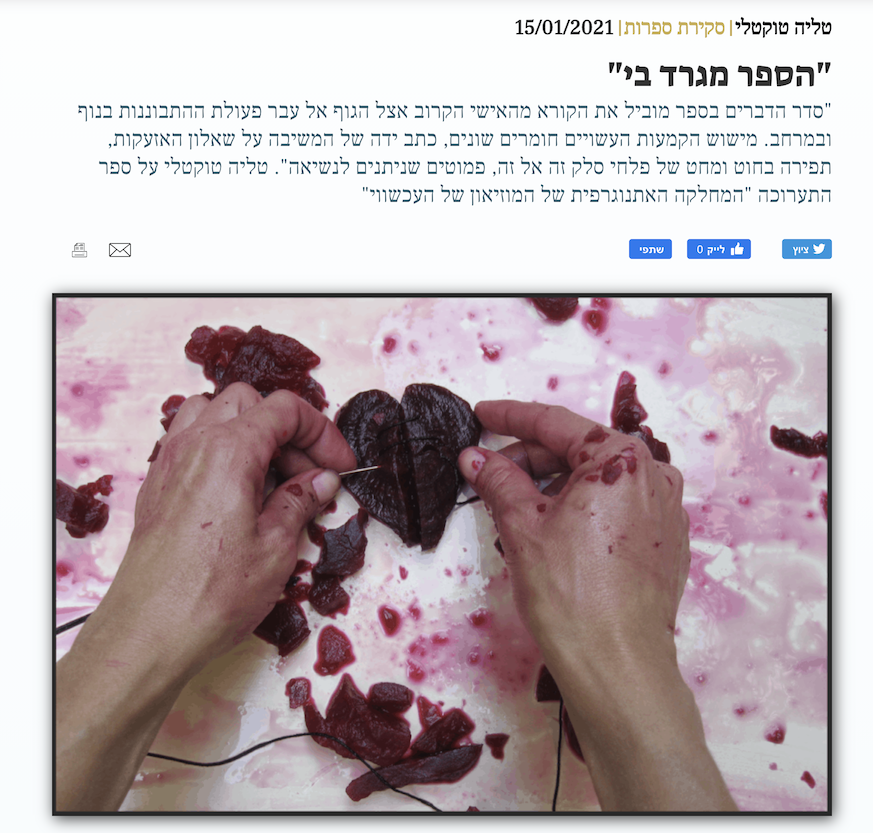
link to the review (in Hebrew): https://www.erev-rav.com/archives/52219
WordPress database error: [DELETE command denied to user 'sala-manca'@'localhost' for table `sala_manca_net`.`wp_options`]DELETE FROM `wp_options` WHERE `option_name` = '_site_transient_wp_theme_files_patterns-3e81fb819c0831df69203ee558a709b9'
WordPress database error: [DELETE command denied to user 'sala-manca'@'localhost' for table `sala_manca_net`.`wp_options`]DELETE FROM `wp_options` WHERE `option_name` = '_site_transient_timeout_wp_theme_files_patterns-3e81fb819c0831df69203ee558a709b9'
WordPress database error: [INSERT, UPDATE command denied to user 'sala-manca'@'localhost' for table `sala_manca_net`.`wp_options`]INSERT INTO `wp_options` (`option_name`, `option_value`, `autoload`) VALUES ('_site_transient_timeout_wp_theme_files_patterns-3e81fb819c0831df69203ee558a709b9', '1792699162', 'off') ON DUPLICATE KEY UPDATE `option_name` = VALUES(`option_name`), `option_value` = VALUES(`option_value`), `autoload` = VALUES(`autoload`)
WordPress database error: [INSERT, UPDATE command denied to user 'sala-manca'@'localhost' for table `sala_manca_net`.`wp_options`]INSERT INTO `wp_options` (`option_name`, `option_value`, `autoload`) VALUES ('_site_transient_wp_theme_files_patterns-3e81fb819c0831df69203ee558a709b9', 'a:2:{s:7:\"version\";s:3:\"4.0\";s:8:\"patterns\";a:0:{}}', 'off') ON DUPLICATE KEY UPDATE `option_name` = VALUES(`option_name`), `option_value` = VALUES(`option_value`), `autoload` = VALUES(`autoload`)
WordPress database error: [INSERT, UPDATE command denied to user 'sala-manca'@'localhost' for table `sala_manca_net`.`wp_options`]INSERT INTO `wp_options` (`option_name`, `option_value`, `autoload`) VALUES ('_transient_doing_cron', '1792697362.6555109024047851562500', 'on') ON DUPLICATE KEY UPDATE `option_name` = VALUES(`option_name`), `option_value` = VALUES(`option_value`), `autoload` = VALUES(`autoload`)
link to the review (in Hebrew): https://www.erev-rav.com/archives/52219
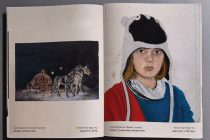
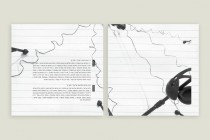
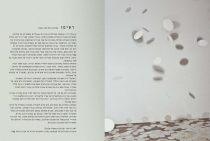
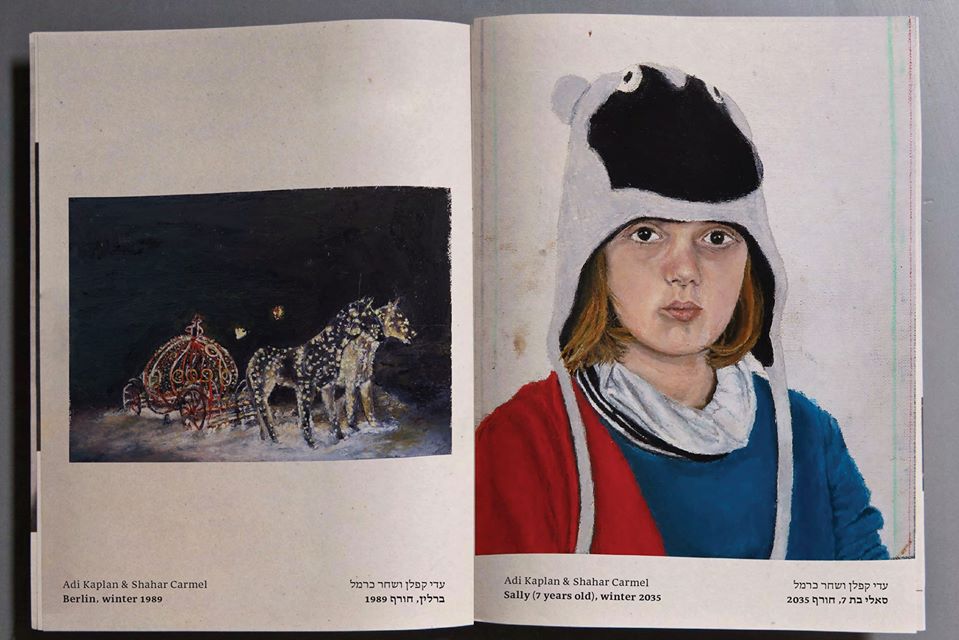
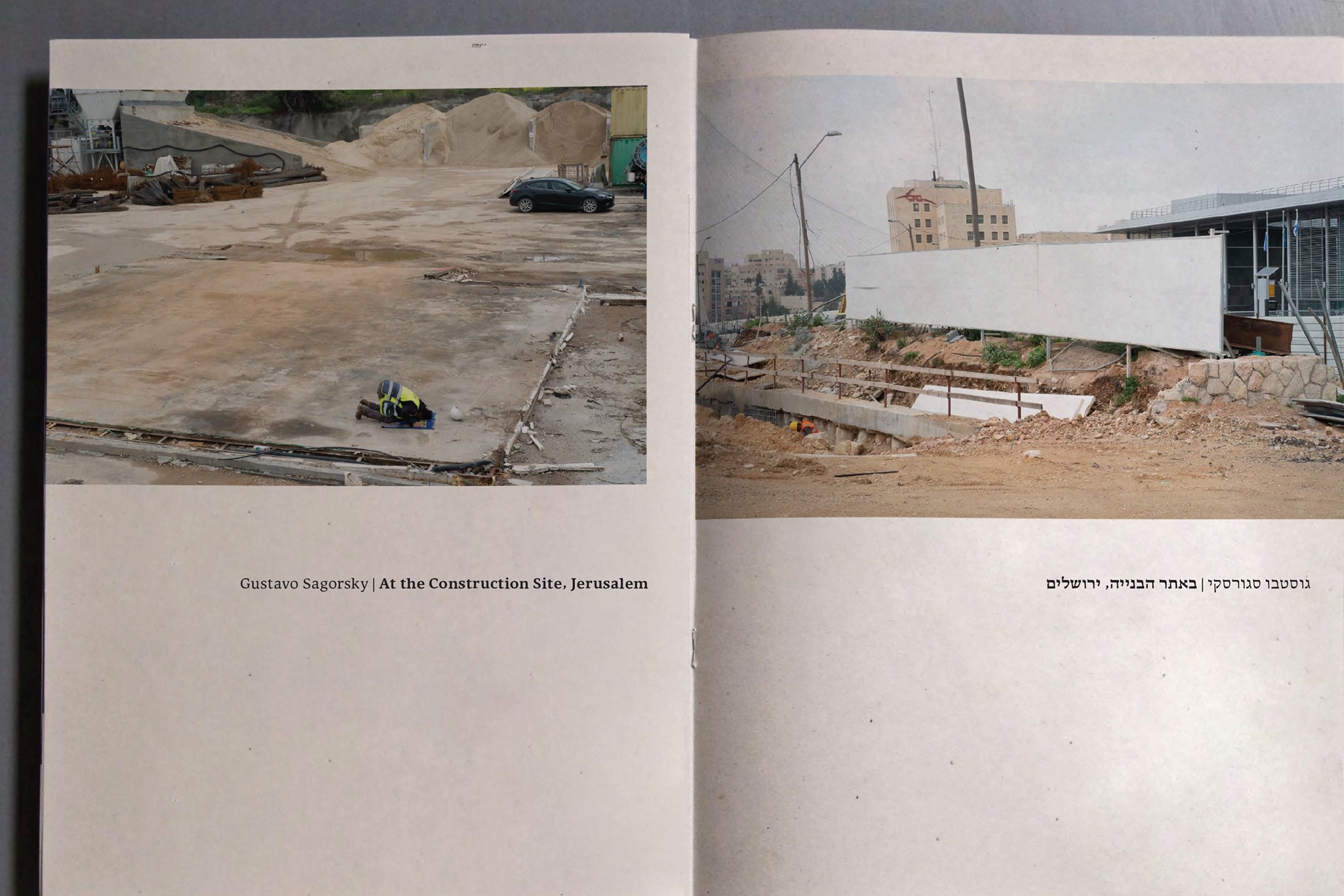
New Issue of Hearat Shulaym Independent Art Journal edited independently by Sala-manca.
The issue was produce during the Covid-19 isolation time (April 2020) with contributions by (unfinished list) :Shoshke Engelmayer, Rotem Engelmayer, Tal Mor Sinai, Josef Sprinzak, Merav Shinn Ben-Alon, Ofri Cnaani, Gilad Meiri, Sagit Mezamer, Gustavo Sagorsky, Nino Biniashvilli, Adi Kaplan and Shahar Carmel, Ira Shalit and Galit Hasan-Rokem.
Link to read the journal on-line

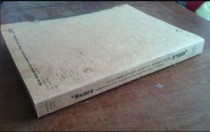
 Ronen Eidelman, Lea Mauas, Diego Rotman (eds.), *Heara – Independent Art in Jerusalem at the Beginning of the 21st Century, 2014, Jerusalem: Hearat Shulaym, 2014 [English and Hebrew | Book, 352 p.]
*Heara is a collection of testimonies, reflections, interpretations and documentations of Heara events, as well as images from issues of Hearat Shulaym (Note in the Margin), an independent contemporary art and literature journal published together and as an inherent part of the events. The book includes articles published in Hearat Shulaym and additional articles written especially for the book by Israeli artists and scholars, as well as artworks which were part of the Heara art project. The art events and journal were active in divided, grief-stricken Jerusalem of the Second Intifada, outside conventional art venues and without any cooperation or funding by the government or private corporations. Nevertheless, the events managed to form fascinating connections between artists operating in different media ־ visual art, theater, poetry, video and sounds, and created a platform of growth and articulation for hundreds of artists, producing exciting, unpredictable, inspiring and thought-provoking pieces.
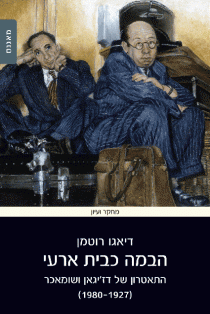
The Stage as a Temporary Home [in Hebrew] takes us through the fascinating stages in the life and career of the duo Shimen Dzigan and IsroelShumacher, over the course of half a century – from the beginning of their work at the Ararat avant-garde Yiddish theater in Łodz, Poland, and to their Warsaw theater, where they produced bold, groundbreaking political satire. The book further discusses their wanderings through the Soviet Union during the Second World War and their attempt to revive Jewish culture in Poland after the Holocaust, and finally describes their arrival in Israel, first as guest performers and later as permanent residents. Despite the restrictions on Yiddish actors in Israel, the duo insisted on performing in their own language and succeeded in translating the new Israeli reality into unique and timely satire. In the 1950s, they voiced a political and cultural critique of a kind that was not heard on any of the Hebrew stages. After they parted ways, and following the death of Shumacher in 1961, Dzigan continued to perform on his own and with other Israeli artists until his death in 1980.
The book is based on rare recordings, transcriptions, programs, personal diaries, letters, photographs, oral testimonies, and critical articles, all of which come together to create the first critical portrait of this extraordinary duo. The book also examines their art, the connection between theater and politics, and the complex relationship between majority culture and minority language.
The study includes several valuable indexes: of titles of programs and plays, of the artists who participated in them, of writers and the drafts they wrote, of actors and the programs in which they participated, and a general name index. The book also includes a facsimile of the manuscript Der Nayer Dybbuk [The New Dybbuk].
Launching event, Hansen House, 19.2.2018
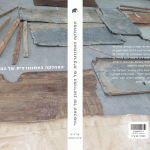
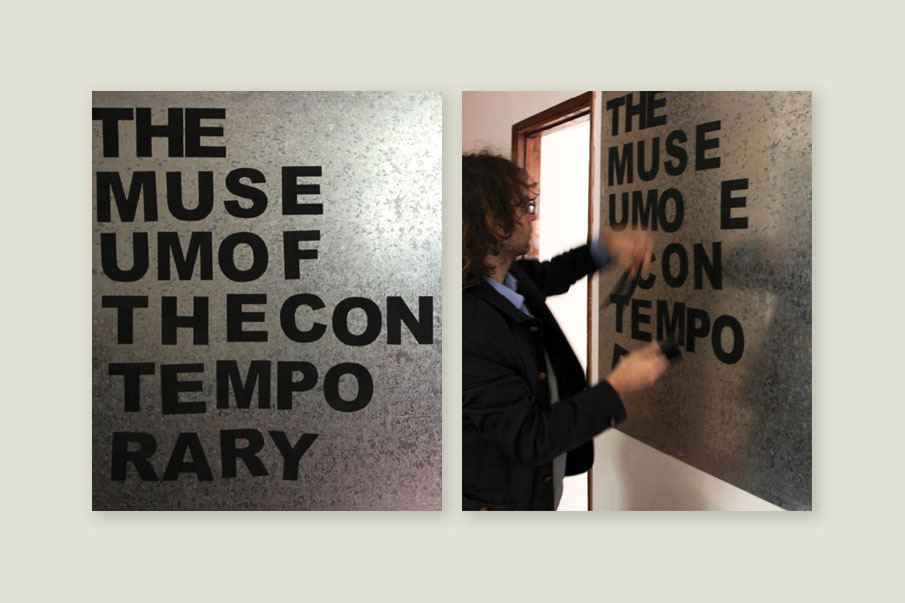
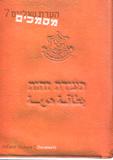
The Ethnographic Department of the Museum of the Contemporary [Hebrew]| Edited by Sala-manca (Lea Mauas, Diego Rotman) |
Book Hebrew [English coming soon]
Texts by: Galit Hasan-Rokem, Daphna Ben-Shaul, Rachel Elior, Shalom Sabar, Freddie Rokem, Sala-manca, Diego Rotman
Works by: Adi Kaplan and Shachar Carmel, Yeshaiahu Rabinowitz, Itamar Mendes-Flohr, Ktura Manor, Pessi Komar, Chen Cohen, Hannan Abu Hussein, Reuven Zahavi, Sala-manca, Nir Yahalom and more
“Visiting the house of the Oxer family in Buenos Aires, a middle-class Jewish family, I was amazed to discover in their living room the Mona Lisa” by Leonardo. That was my first visit to the Museum of the Contemporary” (Joao Delgado)We are glad to announce that the Hebrew version of the Ethnographic Department of the Museum of the Contemporary is already printed! Soon the English version.
“En una visita a la casa de los Oxer en Buenos Aires, una familia Judía de clase media, me soprendi al encontrar en el salon comedor a la Mona Lisa de Leonardo. Aquella fue mi primer visita al Museo de lo Contemporáneo”. (Joao Delgado)
Pronto en las librerías de su barrio!
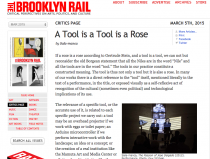
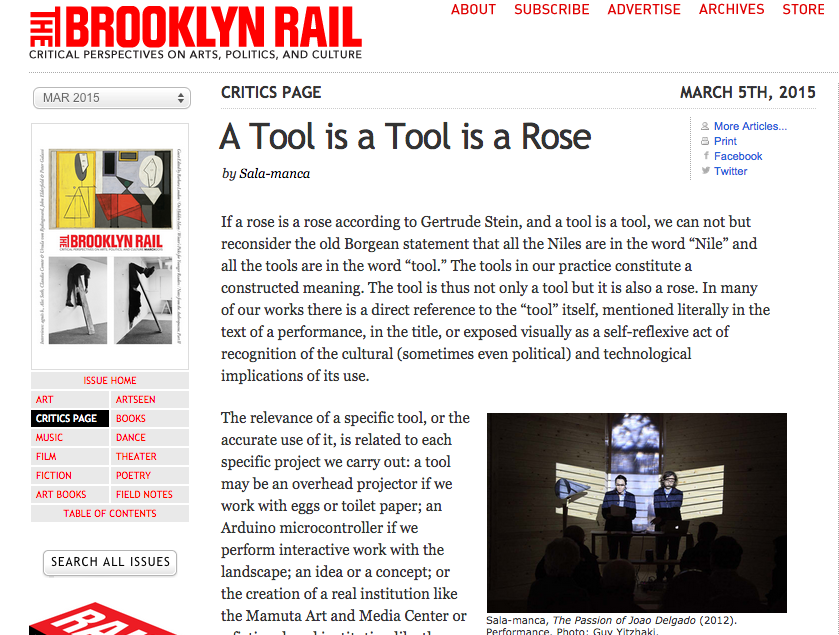
A new text by us (A Tool is a Tool is a Rose), published as part of the “Tools and Contemporary Art” by Barbara London in the Guest Art Editor section of The Brooklyn Rail
Ronen Eidelman, Lea Mauas, Diego Rotman (eds.), *Heara – Independent Art in Jerusalem at the Beginning of the 21st Century, 2014, Jerusalem: Hearat Shulaym, 2014 [English and Hebrew | Book, 352 p.]
*Heara is a collection of testimonies, reflections, interpretations and documentations of Heara events, as well as images from issues of Hearat Shulaym (Note in the Margin), an independent contemporary art and literature journal published together and as an inherent part of the events. The book includes articles published in Hearat Shulaym and additional articles written especially for the book by Israeli artists and scholars, as well as artworks which were part of the Heara art project. The art events and journal were active in divided, grief-stricken Jerusalem of the Second Intifada, outside conventional art venues and without any cooperation or funding by the government or private corporations. Nevertheless, the events managed to form fascinating connections between artists operating in different media ־ visual art, theater, poetry, video and sounds, and created a platform of growth and articulation for hundreds of artists, producing exciting, unpredictable, inspiring and thought-provoking pieces.
Catalogue of Guy Yitzhaki and Einat Amir joint exhibition at Mamuta in Ein Karem. Curators: Sala-manca
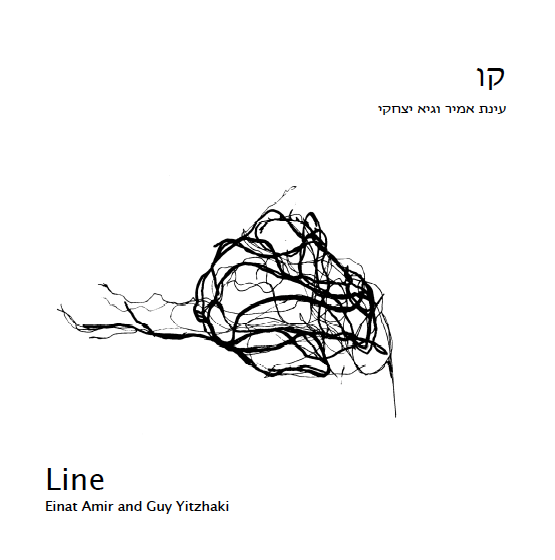
Click to read the catalogue: KAV’s texts_Final for print
The End of the Landscape, Ilana Zukerman & Sala-manca, CD + Booklet | Sound works by Ilana Zukerman and Sala-manca together with Ilana Zukerman | Desing: Anat Vaknin
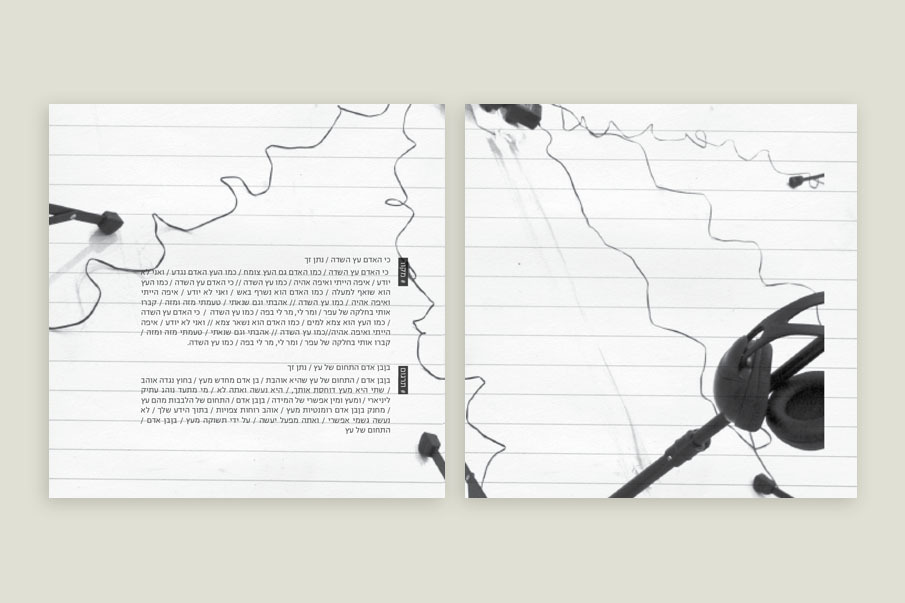
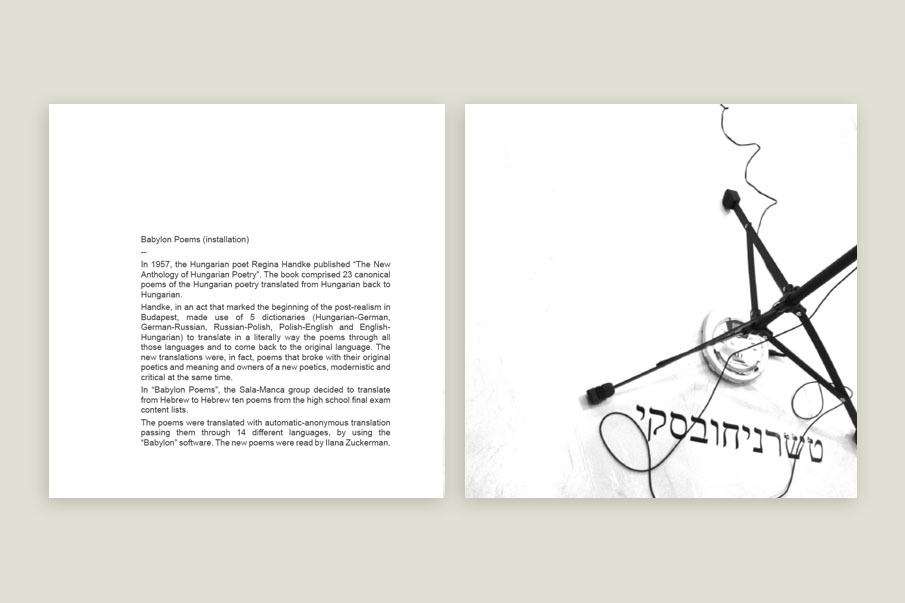
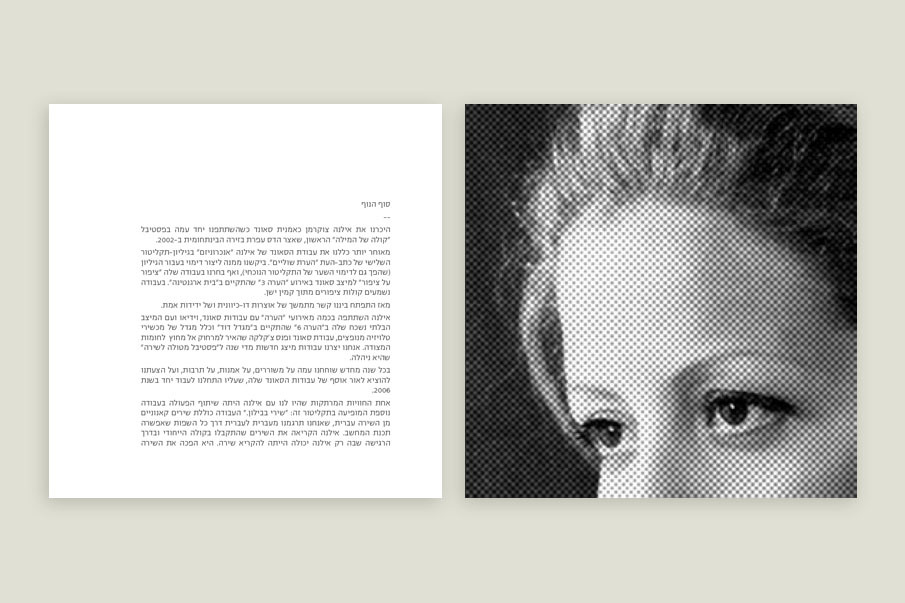
The CD is available at mamuta.org [booklet]
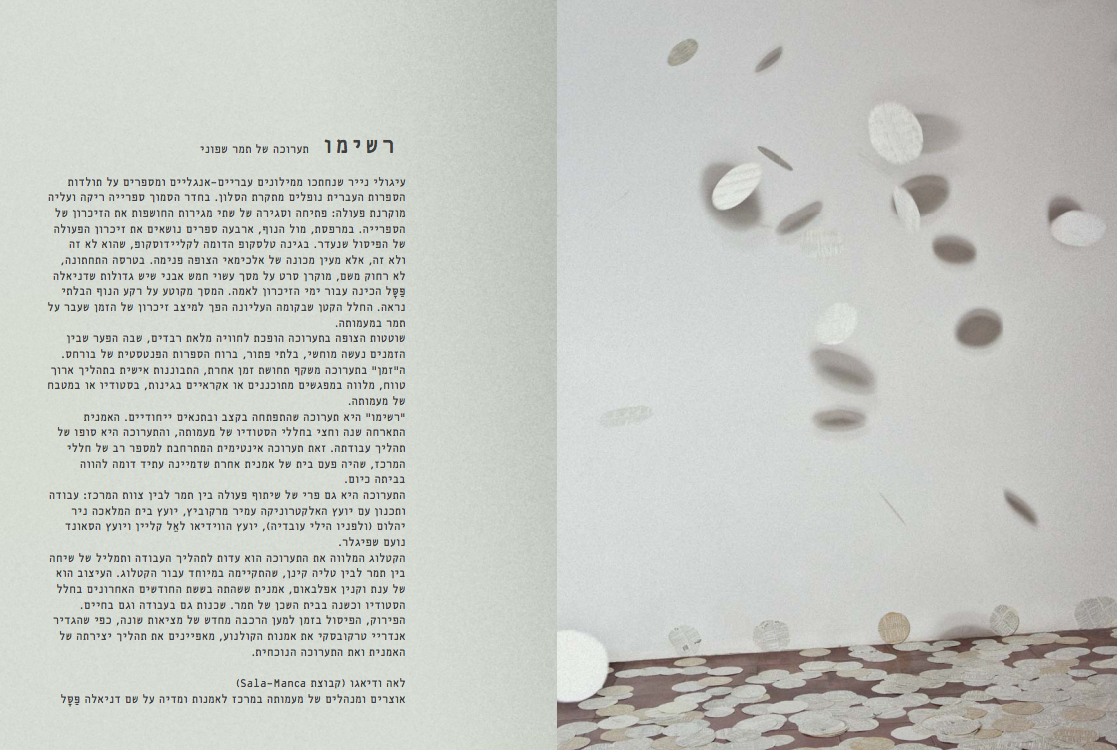
Catalogue of Tamar Shippony’s exhibition “Reshimu” | Curators: Sala-manca | Design: Anat Vaknin
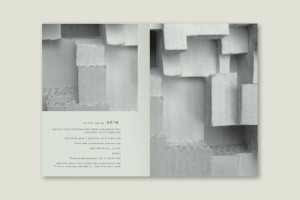
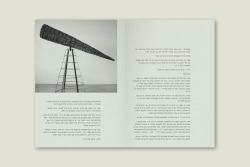
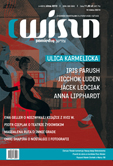
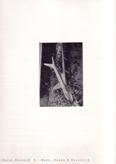
Diego Rotman, Między Wschodem a Zachodem. Jidysz i performens, CWISZN, 2010
About Yiddish Contemporary Performance, published in Polish in Cwiszn
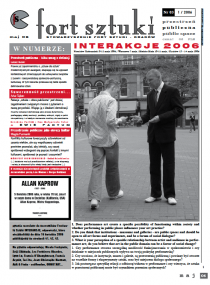
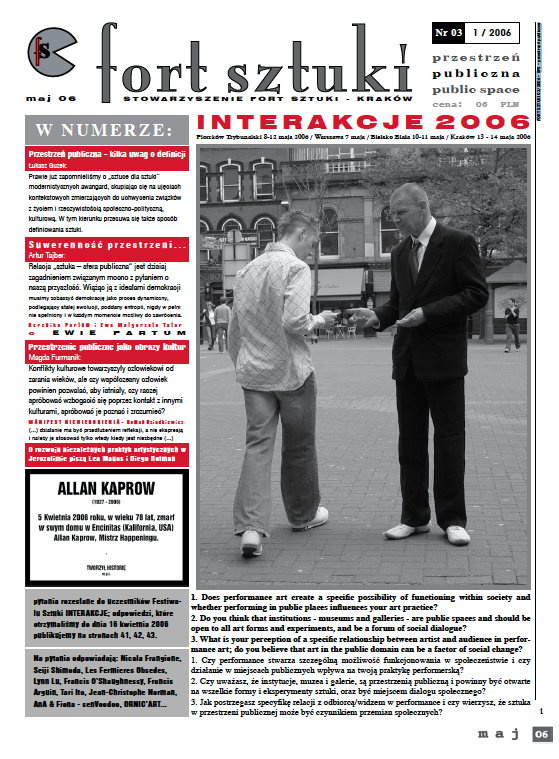
Tymczasowe obszary sztukirozwój niezaleznych praktyk artystycznych w Jerozolimie, Lea Mauas, Diego Rotman, Fort Sztuki, 2006
Note in the Margin (a text for Hadas Ophrat catalogue, 2006)
*
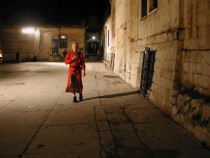
HO walks on a thin wire. Red (the clothing, the moment). An underground
prisoner sings a traveling song one moment before his hanging, an echo of
yesterday’s underg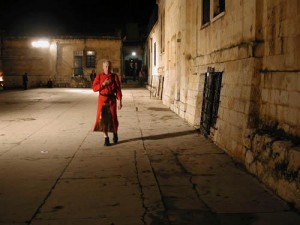 round prisoners, today’s political prisoners (we are all political
prisoners). The installation is placed in the exercise yard of the Museum of
Underground Prisoners (“March”, ‘Heara 4′, Jerusalem 2002). The artist walks
alone, in the yard, and disrupts the declination of nouns (“my cradle, your cradle,
his cradle, her cradle, our land, your land, their land…”). Time stretches to the
edge of the gallows of time. On his back he wears a bag, sticking out from which
is a pile of eggs arranged to look like a house. This is a private ritual, naked,
before the crowd that has gathered abound him. From time to time it seems as if
everything is falling, time runs out – an egg falls from the prisoner’s back on to
the stone floor of the yard. The yard is grateful. “And the secret is not to let the
eggs break,” someone says, quoting something someone else once told him.
And he was wrong. Winter. Cold. A perfect day for carrying out the future
sentence of the Israeli artist in the courtyards of the Ministry of Defense. HO’s
sentence is not carried out in public.
**
The artist takes sleeping pills and chooses to escape from the reality of Israeli art
at the power station (“Insomnia”, Tel Aviv 2003). Art, in its meager dress for the
tasteless event, the artist in a symbolic, fragile and unforgettable act of sleeping
– perhaps forgotten for him the way a dream is forgotten. He warns us about
what is going on inside. Action that is minimalistic, internal, silent. Cycles of sleep
and death in 21st century Israel.***
Another type of walking was his walking blind in the Seidoff Courtyard (“Naked
Eye”,’Heara 2′, Jerusalem 2002). Here the artist portrays a figure from a Baroque
carving. He walks with his eyes covered, with the aid of two canes. The pain of
the blind man and the construction of a place in a temporary state of blindness,
an act of identifying boundaries, of losing one’s way. That same day there was a
bombing in the Mahane Yehuda market, 100 meters away. A dead-end situation,
constantly returning, time stretching out, walking in the dark.
****
And we shared with him his sleep in the power station, we walked with him along
the thin wire at the Underground Prisoners’ Museum, and we understood the
danger that understood him and us. Invitations to reflect on the minimal, the
basic: walking, death, the body, time, words. And the video documentation of
these works is, perhaps, an expression of another loneliness, an archive of
memory, an alternative text, a note on the heart of the matter.
Lea Mauas and Diego Rotman / Sala-Manca
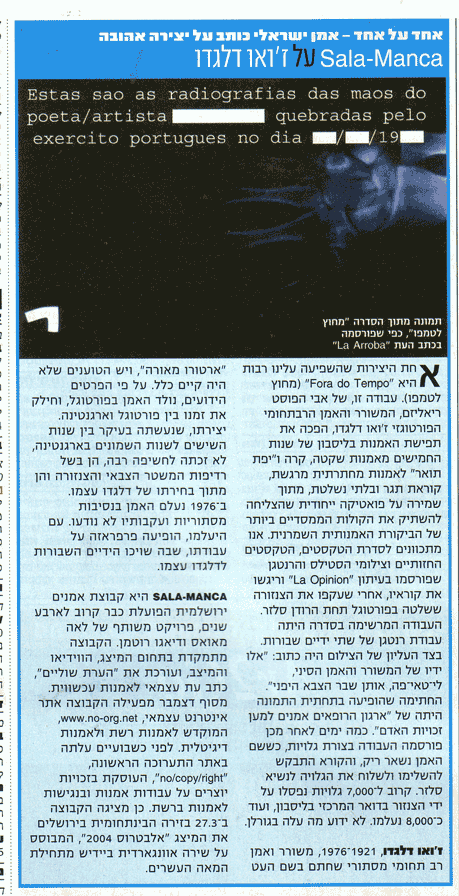
Sala-manca about Joao Delgado, Time Out, 3.2004
click to enlarge
Temporary Artistic Zones, Diego Rotman & Lea Mauas, 2004
Published first in English in Maarav-Art Journal, in Hebrew in “Daka 4”, reprinted in *Heara – Independent Art in Jerusalem at the Beginning of the 20th Century, Ronen Eidelman, Lea Mauas, Diego Rotman (eds.), Jerusalem: Hearat Shulaym, 2014, pp. 334-341
Temporary Artistic Zones1
Developing Independent Artistic Practices in Jerusalem
Lea Mauas, Diego Rotman2
As in Pascal’s universe, the centre is everywhere and the circumference nowhere
—Juan Mestre, anarchist and compass maker
November 2001 marked the start of a series of multidisciplinary art events under the name of Heara (Comment) and held at various East and West Jerusalem sites.. These events are site-specific, incorporating a thematic reference to the space where they take place. They occur over a set period of time—generally eight hours—and are organized around the launching of each new issue of Hearat Shulaym – Independent Art Journal.
From the very beginning we, as curators and producers of this independent project, sought to develop an active platform for art exhibition which, as we explained in the inaugural editorial of Hearat Shulaym, would “temporarily shift the gaze of the reader from the dominant culture, which, for the group members, is mostly marginal. The aim is to expose projects and texts that were conceptualized far from main existing trends” (November 2001: 3).
We wanted to comment on various aspects of the local reality, art politics, and the relationship between art and Jerusalem urban space. As such, we found ourselves constructing a model of artistic action, as an alternative to the established artistic centers; rejecting the idea of Jerusalem as an artistic periphery; and also the idea of Jerusalem (the “holy city”) as an untouchable, unalterable urban space. This project was intentionally produced without any external official, political or economic support, which kept us free of institutional interference, free of political considerations, and free of the need to ally ourselves with local and international organs and institutions whose policies and interests we don’t agree with.
The first event took place in November 2001, under the name “Potemkin Village:3 Reconstruction of a Never-Performed Performance” at The Interdisciplinary Arena (Ha-zira Ha-beintchumit), a multidisciplinary art space in the industrial area of Jerusalem, which up to the year 2002 played a central role in experimental art circles.1 “Potemkin Village” was intended as a political and poetic critique of this exhibition and performance space, and invited reconsideration of the space, its uses and its history. The cover of the journal’s first issue, incorporated with the performance, represented the state of things at that time: it was a blank space with a note in the margin quoting the Portuguese-Argentinian poet Joao Delgado: “One day the flowers will reveal and cut off the gardeners’ heads. One day the Indians will rise and will discover America.” These joined mediums initiated our platform of action and model of acting. The next step was to expand the proportions to other spaces in Jerusalem.
In April 2002, we invited 15 artists whose works would be published in the second issue of Hearat Shulaym to step forward. Our feeling was that the journal alone, although well-received, was not enough to make a meaningful statement in the city. Many artists were working in Jerusalem, but with little exchange and exhibition. As such, we and the artists planned an art-intervention event simultaneously with the magazine’s launching.
This second event was organized in Saydoff Courtyard, which was then comprised of artists’ studios and artisans’ workshops, located in the city’s heart and neighboring its Jewish Ultra-Orthodox neighborhoods. The event took place on a Friday at 8:00 p.m., just after the start of the Sabbath and a controversial time according to the usual Jerusalem schedule. Twenty artists presented works created for the event.4 But four hours before the opening, reality struck: a suicide attack at the Jerusalem market just 100 meters away from Saydoff Courtyard left five dead. The city emptied; mourning and the Sabbath encroached. In spite of this, it was decided that the event would not be canceled and some 300 people eventually turned up. One of the artworks, “Car for the People” by Guy Briler, referred to the complex and indissoluble relationship between art, politics and the media: a suspicious abandoned car in the middle of the courtyard hid a television broadcasting the news, which, due to that day’s events, was broadcasting the latest on the nearby attack. Three years later, only the historic façade of Saydoff Courtyard remains. The artists and artisans have been made to leave the site, and a modern office building is soon to be built in their place.
From that event on, we began to develop an organizational infrastructure. This infrastructure allows a quick and direct artistic response to the surrounding reality in times of social, political and economical crisis. This infrastructure is intermittent and nomadic and comprised of an open community of artists The network is open, flexible, and in continuous flux. It derives no part of its budget from business or political concerns that could try to influence the character of the network and its productions. More than 400 artists have taken part since its inception.2 .
In December 2002, eight months after the Saydoff event, Heara 4 was held. The number of participating artists had grown from 25 to 60, marking a turning point. The journal doubled its circulation to 1,000 copies, and the attendance of the public tripled.
Heara 4 was held at the Underground Prisoners Museum. This little-known building was originally constructed by the Russians to house nineteenth century pilgrims, but later served as a British Mandate prison. Situated in the Musrara Quarter, it neighbors East Jerusalem. Today it belongs to the Ministry of Defense. In spite of and because of the site’s political -affiliation, we proposed to the director of the museum that our next art event be held there. Our principal concern was assuring that decisions concerning the works and their care would remain in our hands, and this condition was accepted.5 The concept of the event was to address the historical and political meaning of the site, a museum for political prisoners of the past sitting in front of an active lock-up where also sit Palestinian political prisoners.
Most of the artworks, due to the site-specific character of our events, adopted the prison and its political implications as a central theme. Each artist worked inside a cell. In the sound installation, “The Shout of Antonio Negri,“ Eran Sachs recorded echoes of the empty cells symbolizing echoes of the political prisoners in homage to Negri6. In her cell, Adva Drori toasted slices of bread with national symbols, spreading butter on them and offering them to the public. The Institute for Contemporary Archeology, an artists’ collective, gathered in the rebuilt director’s cell to conduct the annual meeting of the “International Pain and Suffering Corporation,” devoted to the planning of new methods of torture and pain—a private meeting, broadcasted by CCTV to the public standing in the corridor. The courtyard of the prison was the site of a performance by Hadas Ofrat, who paced agonizingly reciting the words of a lullaby/death song and wearing garments reminiscent of those worn by prisoners condemned to the gallows during the Mandate period
The event was viewed as exceptional, not only by the public, art critics and the artists, but also by the curators of Artfocus, the Israel International Art Biennale. Two days after Heara 4, the Biennale curators contacted the director of the museum, requesting to hold the coming Biennale there using a similar site-specific concept. Rather than being inspired by Heara 4, however, the curators were appropriating an independent art activity. We answered using the internet, buying up the domain name “artfocus.co.il” which someone at the biennale had neglected to renew.3
It was an exchange: they had taken our physical site, while we appropriated their site online. On this website, The Cultural Art Front Collective denounced the eventual artistic censorship to take place at Artfocus. The organizers and artists of the Biennale were asked to sign a contract accepting the supervision of Ministry of Defense officials, who insisted that the artworks be cleansed of political content. Thus, thousands of people all over the world searching the web in December 2003 for Artfocus Biennale saw, instead of official information, a denunciation and information intended to be kept secret, The former official website had become a center for criticizing the policies of the Biennale curators and organizers.
Heara 6 was held at the Tower of David Citadel, a symbol of power over Jerusalem throughout history. This citadel, comprised of various constructions beginning in Herodian times, served as a base for the Jordan army until 1967 and housed the first exhibits of the Bezalel Art School in the 1920s and ‘30s. Aside from its role as a historic site, today the Citadel houses a museum for the history of Jerusalem prior to 1948. In light of this historiography, Heara 6 dealt with architecture of power and rethinking representations of Jerusalem that exist in the Israeli ethos. We were given carte blanche to intervene for a day in one of the most controversial sites of Jerusalem, currently a symbol of Israeli supremacy over the city since 1967.
Some of the works and interventions included Lior Friedman and Nevet Yichhak’s mock documentary video about the fortress, which played instead of the official documentary film. The artists manipulated old documentaries to construct a new historiography of the city, including a plane crashing into the Citadel itself. The institute for Contemporary Archeology played a golf tournament on the lawn of the Citadel; the colonial game was an ironic reminder of the colonial culture which characterizes the history of the city. Amir Rubin replaced the three flags that usually flutter from the east tower of the Citadel—flags representing Israel, Jerusalem and the museum—with only one white flag marking a single day of truce. Thus, representations of conquest vanished for a day. To close the official exhibition on a note of continuation, a sculpture made by Hannan Abu Hussein and Ariane Littman-Cohen replicated the Abu-Dis wall that Israel is constructing through Jerusalem’s neighborhoods.
Through Heara events, more than 300 artists have worked in urban spaces as an alternative to traditional art spaces. New artists’ groups have returned to the original sites to propose new projects, or have discovered other spaces to develop this type of practice. The regular discourse of the city and its structures was undermined thanks to the collaboration between artists and institutions which opened their doors to this practice. Paradoxically, this very conservative city was host to an extraordinary artistic critique.4
Architect Liat Savin characterized the Heara events (Winter 2004-2005) by comparing them to the Temporary Autonomous Zone (TAZ), a place constructed for a specific span of time which initially expands only to vanish later on, and which serves as a critique of the establishment. The strength of a TAZ, according to Hakim Bay who minted the term, is its transience and its tendency to disappear, only to reappear somewhere else. In this way, the TAZ prevents the system from possessing it, allowing for completely autonomous and independent actions. It is this temporality, this autonomy, which could be said to characterize the Heara events. These are sporadic incursions into the city, nomadic comments, and an alternative exegesis on the urban space.
Bibliography
Faber, Jack. May 21, 2004. “Yerushalaim of the Underground,” Kol Hazman.
Keinar, Gad, Chayim Nagid. February 2004. “Nisioniim….moschim amonim…,” Teatron – An Israeli Quarterly for Contemporary Theater vol 2.
Savin, Liat Ben-Shoshan. Winter 2004-5. “Sala-manca: Likut, Isuf ve tfistat makom beomanut,” Terminal 23.
Tausig, Shuki, Jack Faber, Hedva Shemesh & Raban Tamar. November 5, 2004. “Wide Margins,” Kol Hair (Hebrew).
Imposible City, Gilerman, Dana / Haaretz 25.04.02
Night Comment on Oranges and Compasses, Shefi Smadar/ Haaretz, 19.5.03
Tzur, Ouzi. October 1, 2003. “Heara 4: a big comment,” Haaretz.
Yogev, Tamar. 2004. Lihiot Batmuna: Ilutzim mivniim veestrategio nayot besde ha-omanut biIsrael, M.A. Thesis, Haifa University.
1 This text was commissioned by Grenzgeographien-geographies of collision’, November 2005.
2 Lea Mauas and Diego Rotman are the Sala-Manca Group, which is a collective of independent Jerusalem-based artists, Argentinean-born, which since its 2000 inception has worked in various mediums: performance, video, installation & new media.
3 Purportedly, Potemkin villages were fake settlements erected at the behest of Russian minister Grigori Aleksandrovich Potemkin to fool Empress Catherine II during her visit to Crimea in 1787. Modern historians, however, consider this scenario of self-serving deception to
5
be, at best, an exaggeration, and quite possibly simply malicious rumors spread by Potemkin’s opponents. In any case, “Potemkin village” has come to mean, especially in a political context, any hollow or false construct, physical or figurative, meant to hide an undesirable or potentially damaging situation.
4 The event was financed by magazine sales. Admission consisted, from that moment on, of the purchase of the published magazine, a financing system that allowed us to develop the project to the present day. Promotion was done through e-mail lists and flyers; by cooperating and using our own resources, we strove for inclusiveness in the organization.
5 At all the sites, we insist on complete autonomy. To date, curators have agreed; only in one instance did a curator ask us to remove two works of art, but when we refused, she acquiesced. It is rather remarkable that these places, which usually carry such a strong state narrative, have been open to our artistic intervention.
6 Antonio Negri (1933- ) is an Italian philosopher and was a leading member of the Autonomia Marxist group. He spent a period in exile in France before returning to Italy to complete a prison sentence in 1997.
Hearat Shulaym (Note in the Margin) was an Independent Journal of Contemporary Art and Literature published by the group of artists Sala-Manca. The purpose of the magazine “is to temporaly shift the gaze of the “reader” from the dominant culture, which, for the group members is mostly a marginal culture. The aim is to expose works from artists from different fields that were conceptualized far from main existing trends. This magazine is published without advertisments and without any official support”.
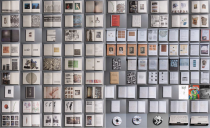
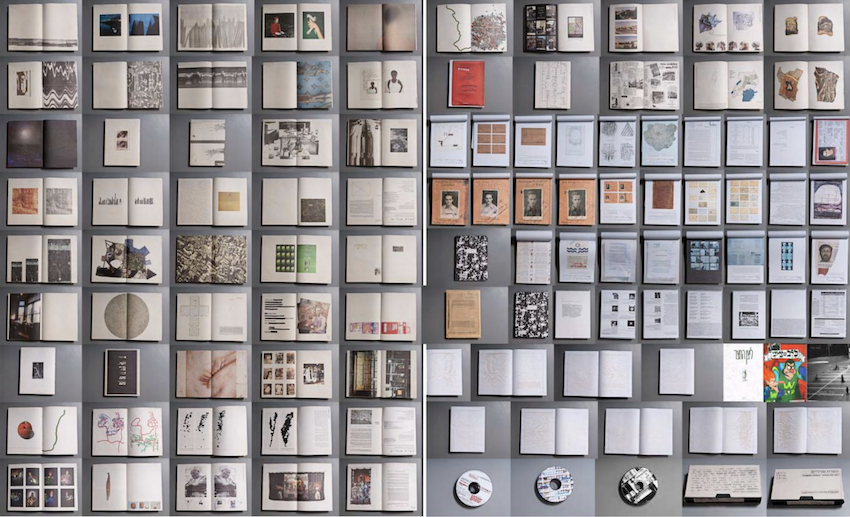
(H)earat shulaym archives (1-11)
A video documental about Heara Independent Art Events and Hearat Shulaym Art Journal (Hebrew and English) | Edited by Amitai Arnon