WordPress database error: [DELETE command denied to user 'sala-manca'@'localhost' for table `sala_manca_net`.`wp_options`]
DELETE FROM `wp_options` WHERE `option_name` = '_site_transient_wp_theme_files_patterns-3e81fb819c0831df69203ee558a709b9'

WordPress database error: [DELETE command denied to user 'sala-manca'@'localhost' for table `sala_manca_net`.`wp_options`]
DELETE FROM `wp_options` WHERE `option_name` = '_site_transient_timeout_wp_theme_files_patterns-3e81fb819c0831df69203ee558a709b9'

WordPress database error: [INSERT, UPDATE command denied to user 'sala-manca'@'localhost' for table `sala_manca_net`.`wp_options`]
INSERT INTO `wp_options` (`option_name`, `option_value`, `autoload`) VALUES ('_site_transient_timeout_wp_theme_files_patterns-3e81fb819c0831df69203ee558a709b9', '1792699164', 'off') ON DUPLICATE KEY UPDATE `option_name` = VALUES(`option_name`), `option_value` = VALUES(`option_value`), `autoload` = VALUES(`autoload`)

WordPress database error: [INSERT, UPDATE command denied to user 'sala-manca'@'localhost' for table `sala_manca_net`.`wp_options`]
INSERT INTO `wp_options` (`option_name`, `option_value`, `autoload`) VALUES ('_site_transient_wp_theme_files_patterns-3e81fb819c0831df69203ee558a709b9', 'a:2:{s:7:\"version\";s:3:\"4.0\";s:8:\"patterns\";a:0:{}}', 'off') ON DUPLICATE KEY UPDATE `option_name` = VALUES(`option_name`), `option_value` = VALUES(`option_value`), `autoload` = VALUES(`autoload`)

WordPress database error: [INSERT, UPDATE command denied to user 'sala-manca'@'localhost' for table `sala_manca_net`.`wp_options`]
INSERT INTO `wp_options` (`option_name`, `option_value`, `autoload`) VALUES ('_transient_doing_cron', '1792697364.0242691040039062500000', 'on') ON DUPLICATE KEY UPDATE `option_name` = VALUES(`option_name`), `option_value` = VALUES(`option_value`), `autoload` = VALUES(`autoload`)

Installation & Media Based (selected) – Sala-Manca

Yiddish Silence – A Puppet’s reconstruction of an Academic Lecture in the frame of Mame-Loshn show, Labyrinth Gallery, Lublin

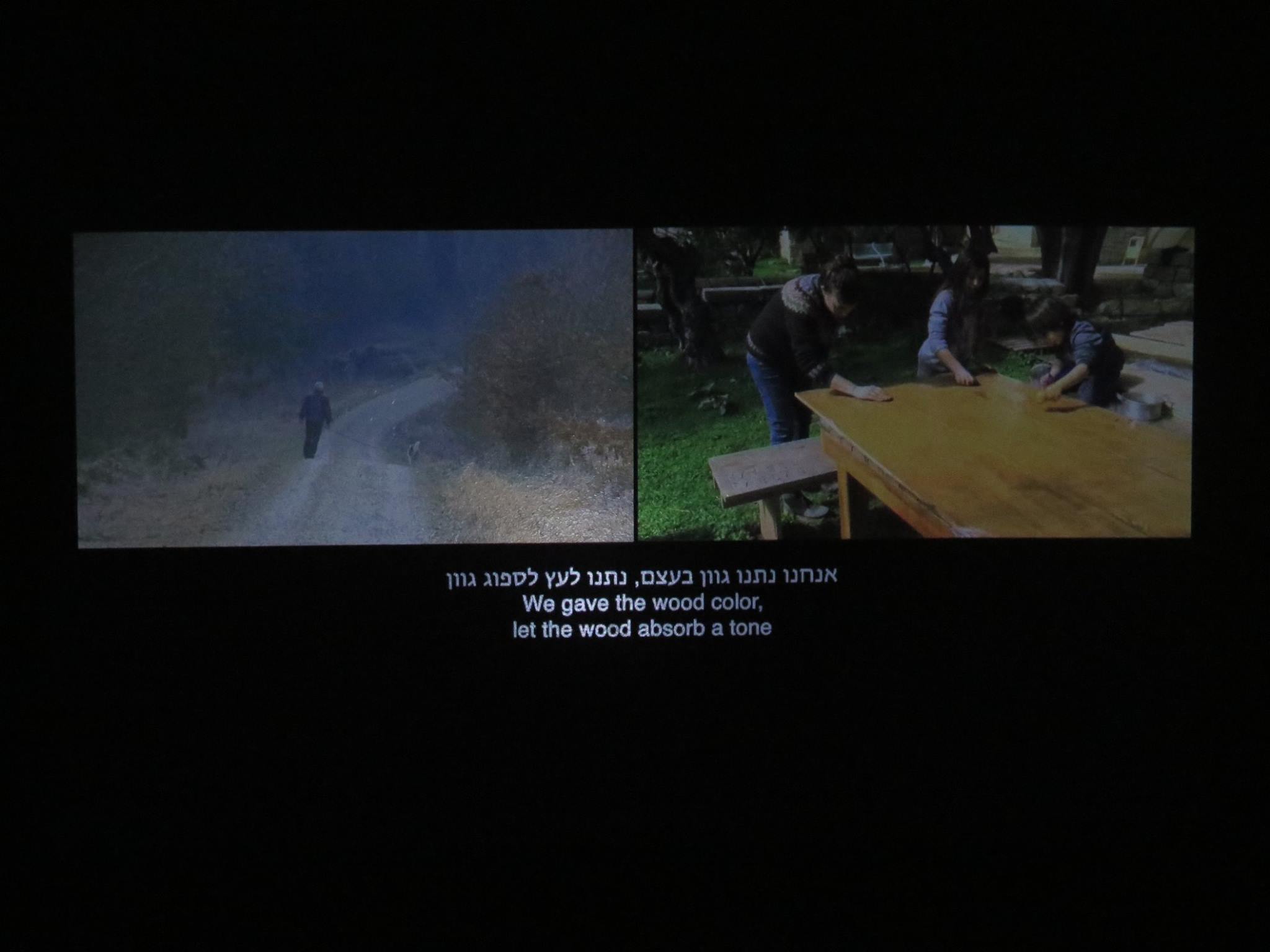
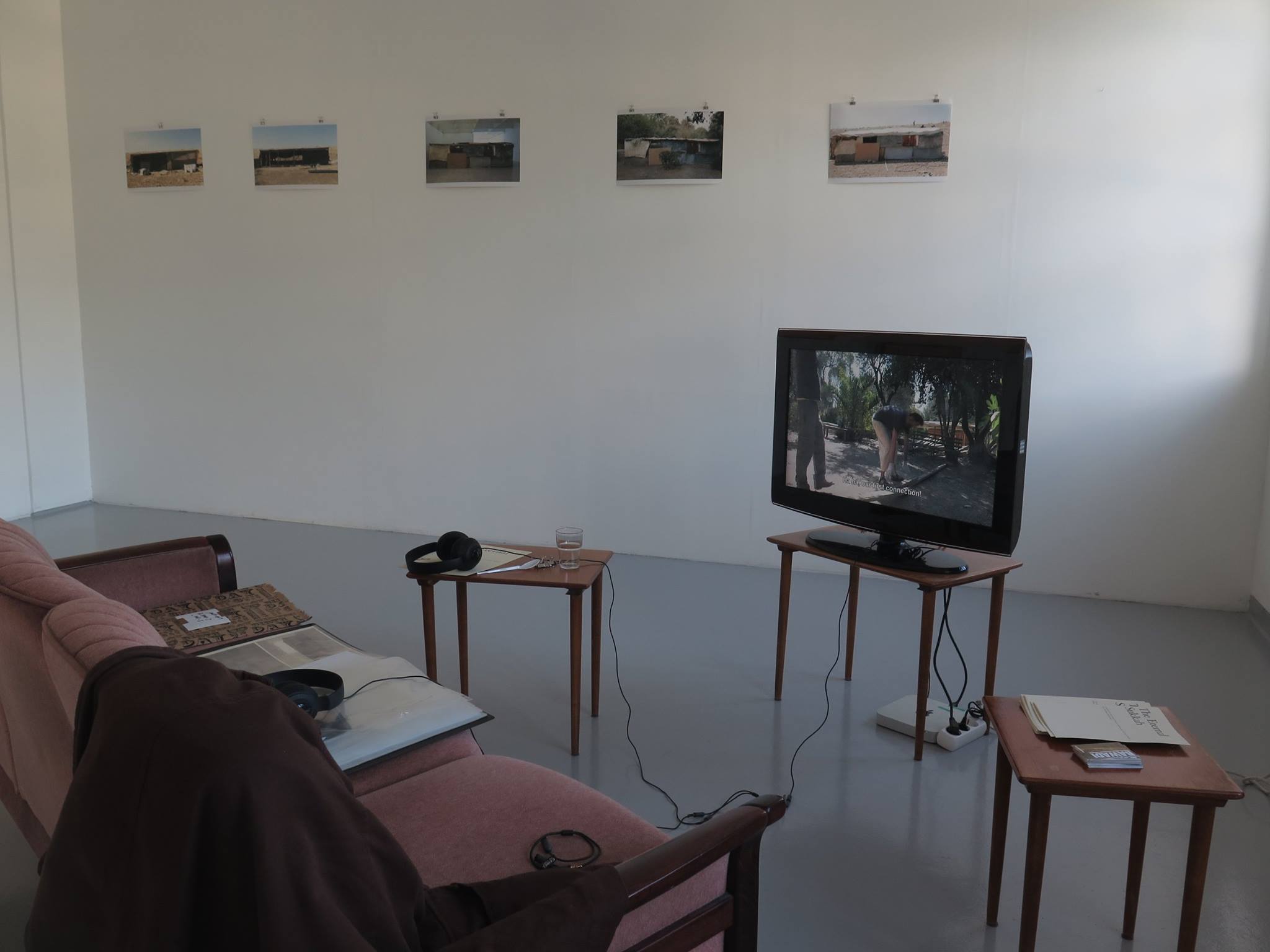
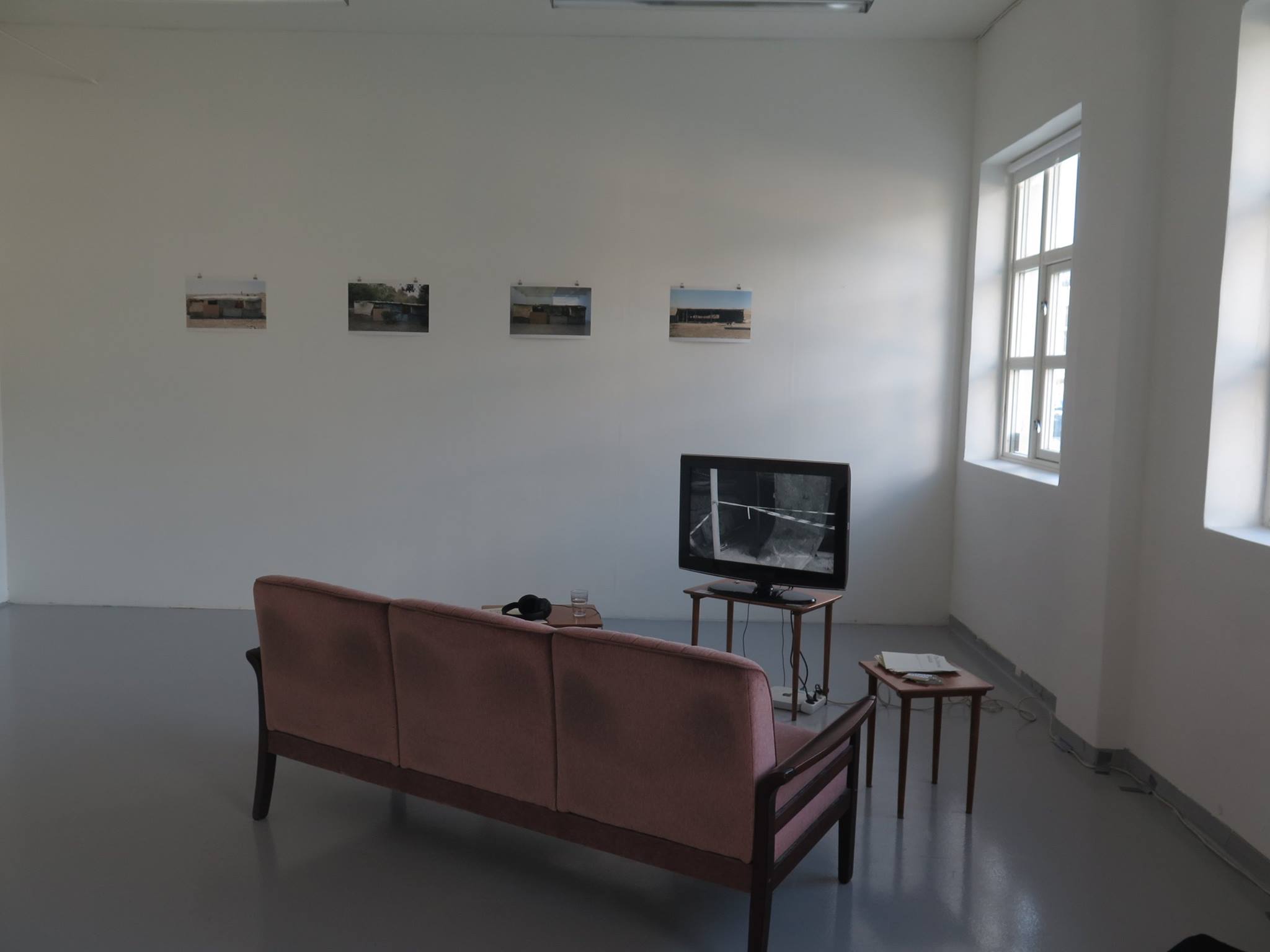
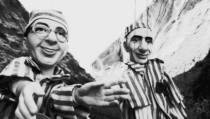
A reconstruction by the Sala-manca’s puppets group of one of Diego Rotman’s lecture on Dzigan and Shumacher. The film is beign exhibited as part of the Mame-Loshn exhibition at the Labyrinth Gallery, Lublin, Poland, curated by Drorit Gur Arie and Tal Schwartz.

A project by the Sala-manca Group (Lea Mauas and Diego Rotman) in collaboration with Ayelen Coccoz (puppets and painting of Sala-manca’s puppets).

Natalia Rozenthal (painting of Dzigan and Shumacher puppets), Yeshaiahu Rabinowitz (Clothes), Adi Kaplan and Shachar Carmel (paintings),  Dan Lahiani

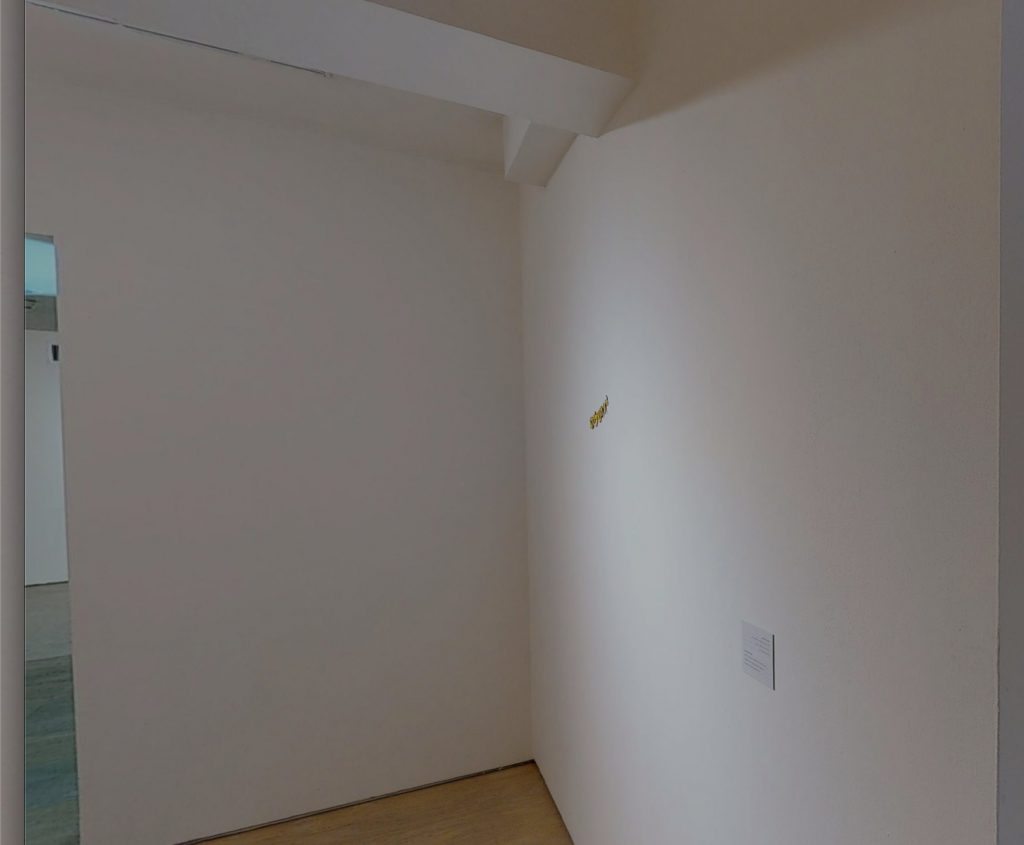
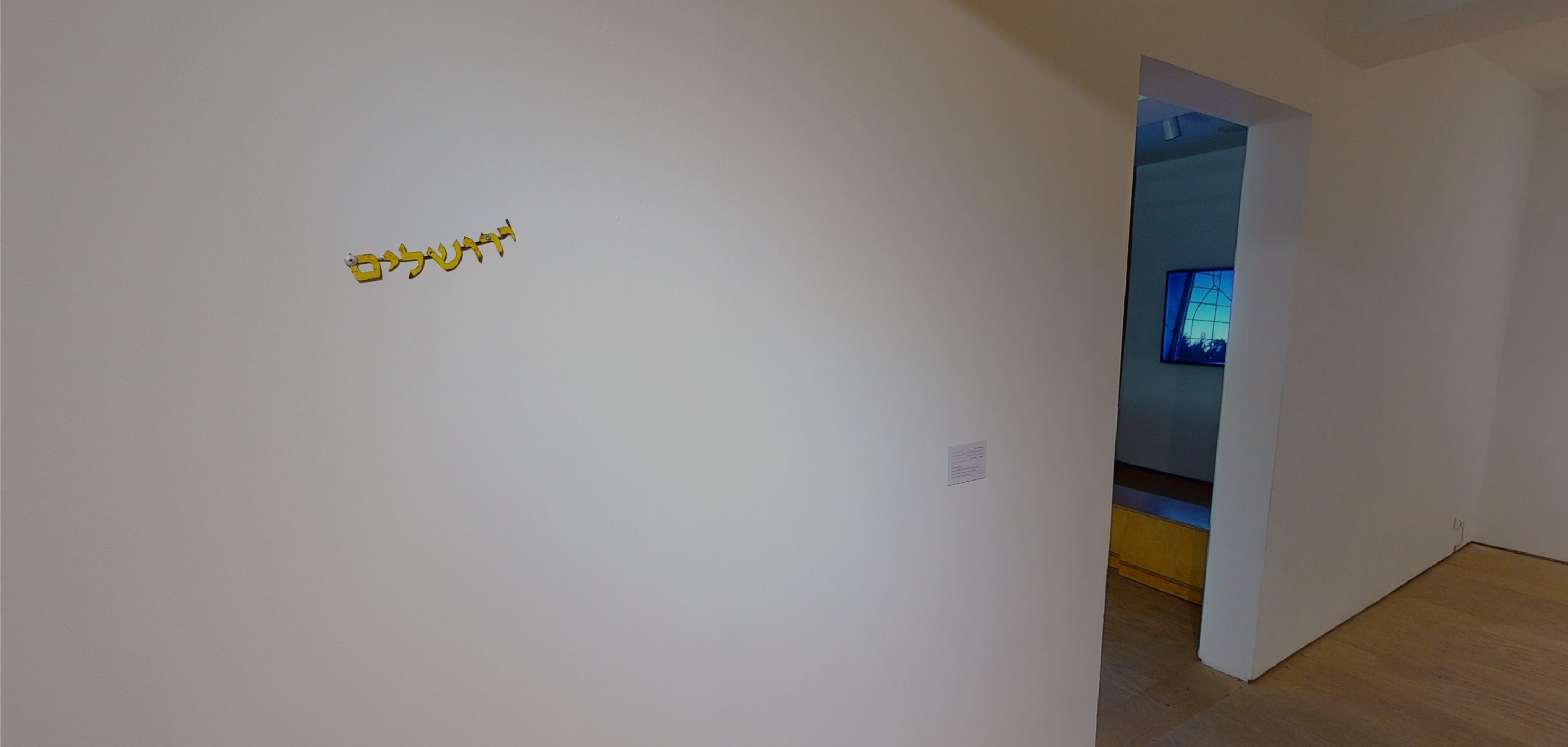
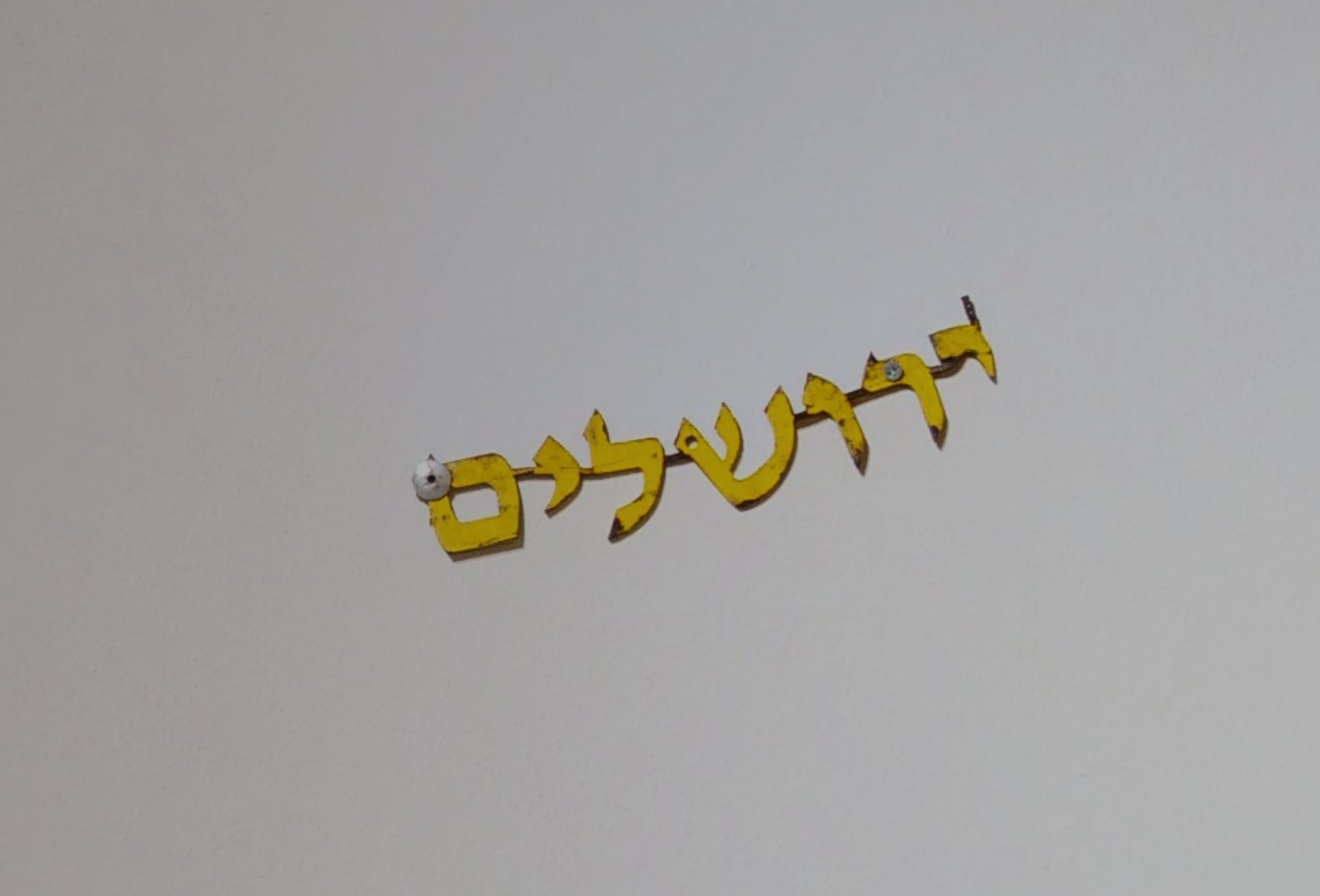
“Jerusalem” at the Tel Aviv Museum of Art

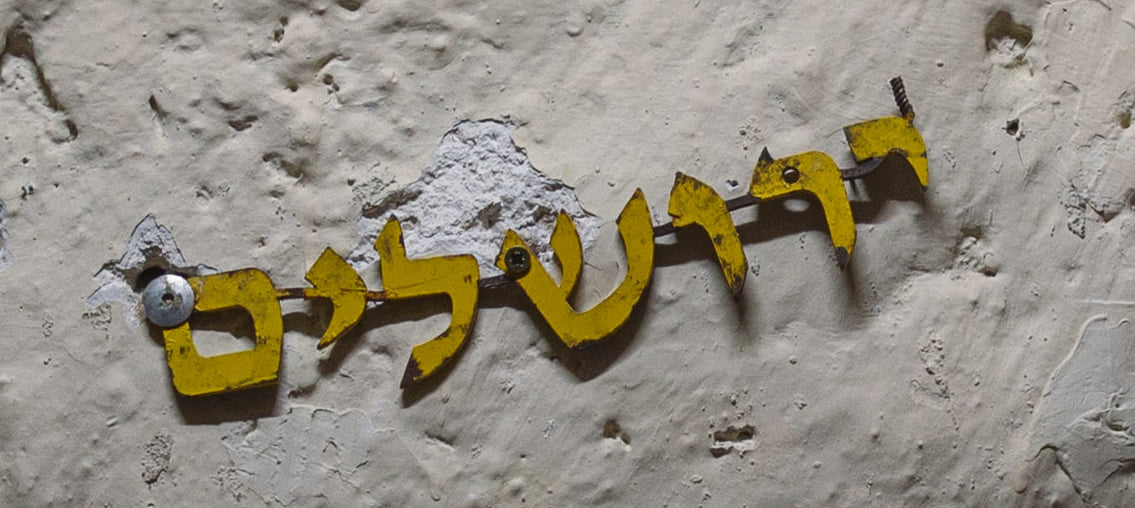
“Jerusalem” a work by Sala-manca (Lea Mauas and Diego Rotman) at “Skein: New Acquisitions for the Bruce and Ruth Rappaport Israeli Art Collection”

Curation: Dalit Matatyahu Assistant Curator: Amit Shemma, 13/8/21​-​31/12/21

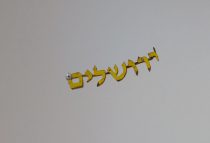
Jerusalem (2019) | Sala-manca

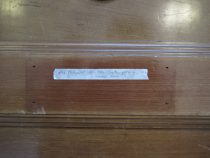
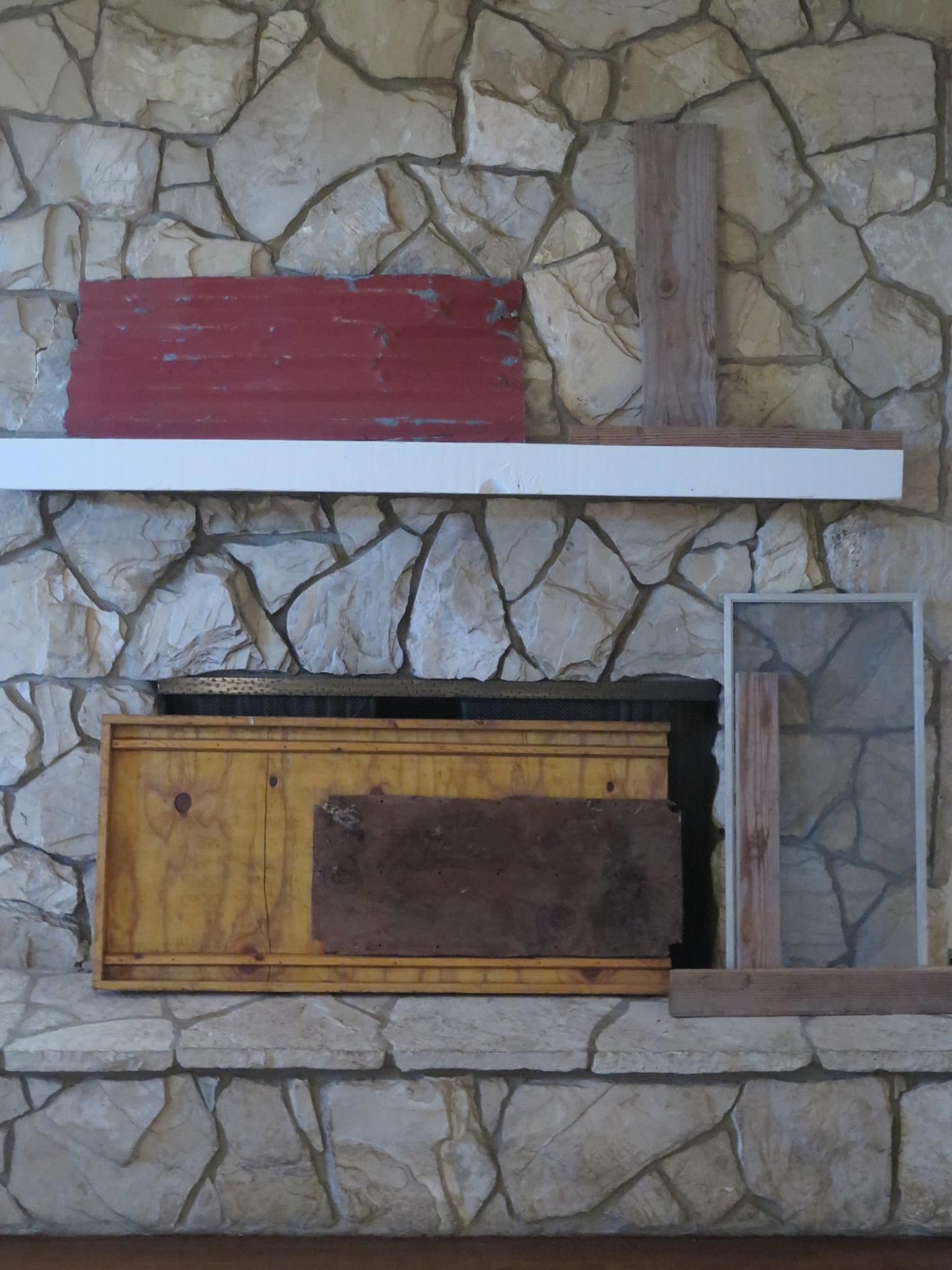
Iron sign from a garbage municipal container at Mishmarot st, Musrara, Jerusalem.

This exhibition marks a significant moment in an extensive acquisition of works by Israeli artists for the permanent collection of Tel Aviv Museum of Art. The Israeli art collection is an accumulation of works assembled from the moment the Museum was founded to the present, and their varying exhibition over the years reflects the different perceptions of them. The collection’s historical scope depicts a wide view of an archival and conservational project, both symbolical and real.

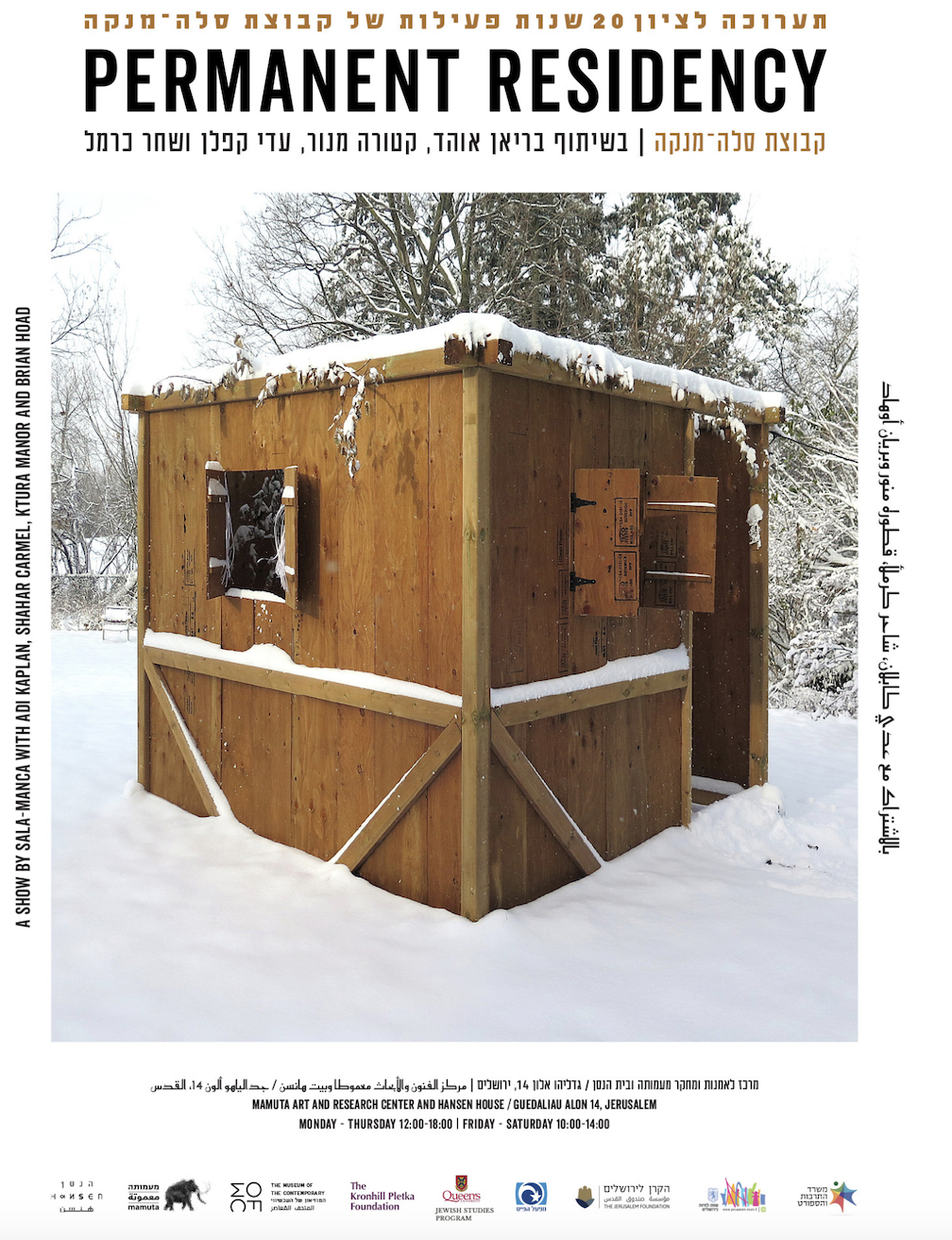
Permanent Residency | New show by Sala-manca in collaboration with Adi Kaplan, Shahar Carmel, Ktura Manor and Brian Hoad

Link to the website: https://museumofthecontemporary.com/

20 years of the Sala-Manca Group
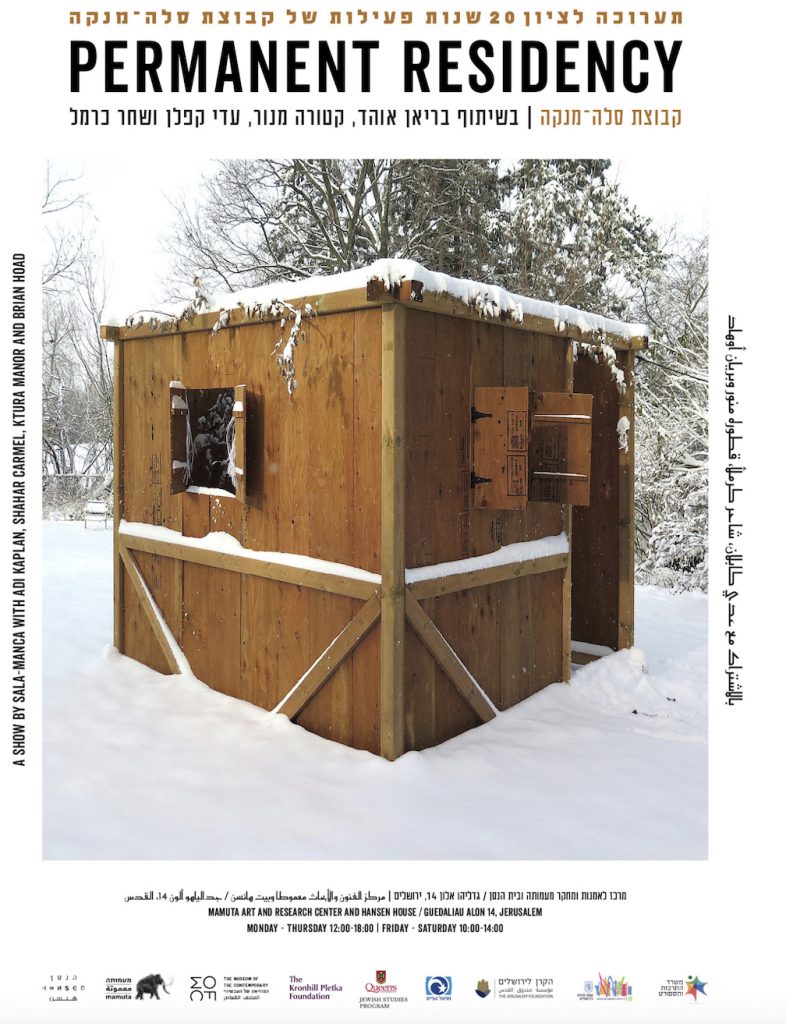
Permanent Residency
An exhibit with footnotes and performative actions
with the collaboration of Adi Kaplan and Shahar Carmel, Ktura Manor and Brian Hoad
Hansen House and Mamuta Art & Research Center
Over the past six years we have acquired, dismantled, assembled, and transported various temporary structures, created unauthorized replicas, searched for doubles of ourselves, and relocated our home in our search for a temporary homeland. In August 2018 we moved to Canada for an indefinite period of time, to continue this search.We began the transition with a garage sale to sell off our personal objects, as our departure approached; the sale took the form of an exhibit at the Kfar Saba Urban Gallery and explored the connection between economy, art, and life (the video Garage Sale is a documentation of the opening of the exhibit).
In Kingston, Ontario, we rented the only furnished house we could find. The Sobermans, the owners of the house, had died at the beginning of the previous decade, and their children had put the home up for long-term rental “as-is” — a kind of “family museum,” with a 1960s decor, just as their parents had left it. We lived in the house for a year, inside the set of another family. A video work in the exhibition (Permanent Residency 1) documents fragments of day-to-day family life in Kingston: our children’s cultural acclimation, forays out into nature, and musings about migration and identity.
The Soberman’s art collection included more than 40 paintings — mostly reproductions of well-known artworks, and some originals by non-canonical artists. When we returned to Israel, we commissioned Adi Kaplan and Shahar Carmel to reproduce the paintings from the collection, down to their frames. The new collection (the Soberman Collection) will become one of the permanent exhibits of the Museum of the Contemporary, of which we are the curators. In the present exhibition the Soberman Collection is presented in the framework of an installation reproducing the Soberman family living room. The installation also includes a piano, which our daughter will practice on occasionally during the exhibition opening.
Approaching the Jewish holiday of Sukkot, near the beginning of our time in Kingston, we built a Sukkah in the yard. Contrary to the custom of dismantling the Sukkah after the end of the holiday, we left our Sukkah standing throughout the entire year, exposed to the extreme changes in weather. At the end of the winter we invited Canadian painter Brian Hoad to paint the snowy landscape on the walls of the Sukkah and thus to commemorate the frozen Lake Ontario on the wall traditionally designated for an image of Jerusalem. We shipped the Sukkah with the Canadian landscapes to Jerusalem as a Gazebo, in order to install it as an ethnographic object (The Kingston Sukkah) at Hansen House, alongside the source of its inspiration: a replica of the german Deller Sukkah (1840-2017). This time we commissioned Ktura Manor to build a smaller replica of the Kingston Sukkah for the collection of the Museum of the Contemporary.
Additional works from the Ethnographic Department of the Museum of the Contemporary are presented as a “footnote” to the new works: A Geography of Cracks (documentary film, Sala-manca, 2017); Deller Sukkah (replica, Sala-manca, Ktura Manor, and Nir Yahalom, 2017); Eternal Shabbes candlesticks (object, Samuel Rotman, 1998); Deller Sukkah model (Adi Kaplan and Shahar Carmel, 2017), Eternal Sukkah model  (Ktura Manor, 2017), Eternal Sukkah – documentation (short film, Sala-manca, 2018); Amulets from the Tawfiq Kna’an Collection (Yishayahu Rabinovitch, 2014); Heim (Short film, Adi Kaplan and Shahar Carmel, 2014); Curators (Wall painting, Itamar Mendes-Flohr, 2019); Jerusalem (Ready-made, Sala-manca, 2019).
Lea and Diego (Sala-manca Group)
The exhibit was made possible thanks to the generous support of the Pais Cultural Council, Hansen House, the Ministry of Culture, the Jerusalem Foundation, the Jewish Studies Program and Cultural Studies Program at Queen’s University in Ontario, The Regina Rosen Visiting Artist Fellowship – Queen’s University, the Jerusalem Municipality, Rose Ostrovsky and the Kronhill-Pletka Foundation.
Pulke’s Visit (2004/2020) (video work)

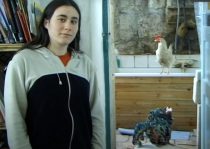
Pulke’s visit (a sculptor by Pesach Slabosky z”l) at the Sala-Manca’s house in Nachlaot in 2004,  his chance to encounter a rooster and  his first visit to the Israel Museum . The materials were filmed in 2004 and we edited them for the first time in honor of the exhibition “The Story of Pesach” in honor of Pesach Slabosky curated by  Naomi Tenhaus and Uri Holben, Barbur  Gallery and Koresh 14.
https://barbur.org/new-exhibition-opening-the-story-of-pesach/

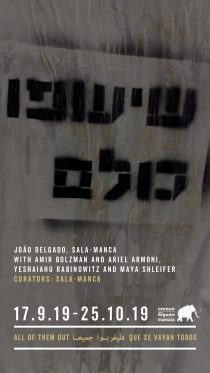
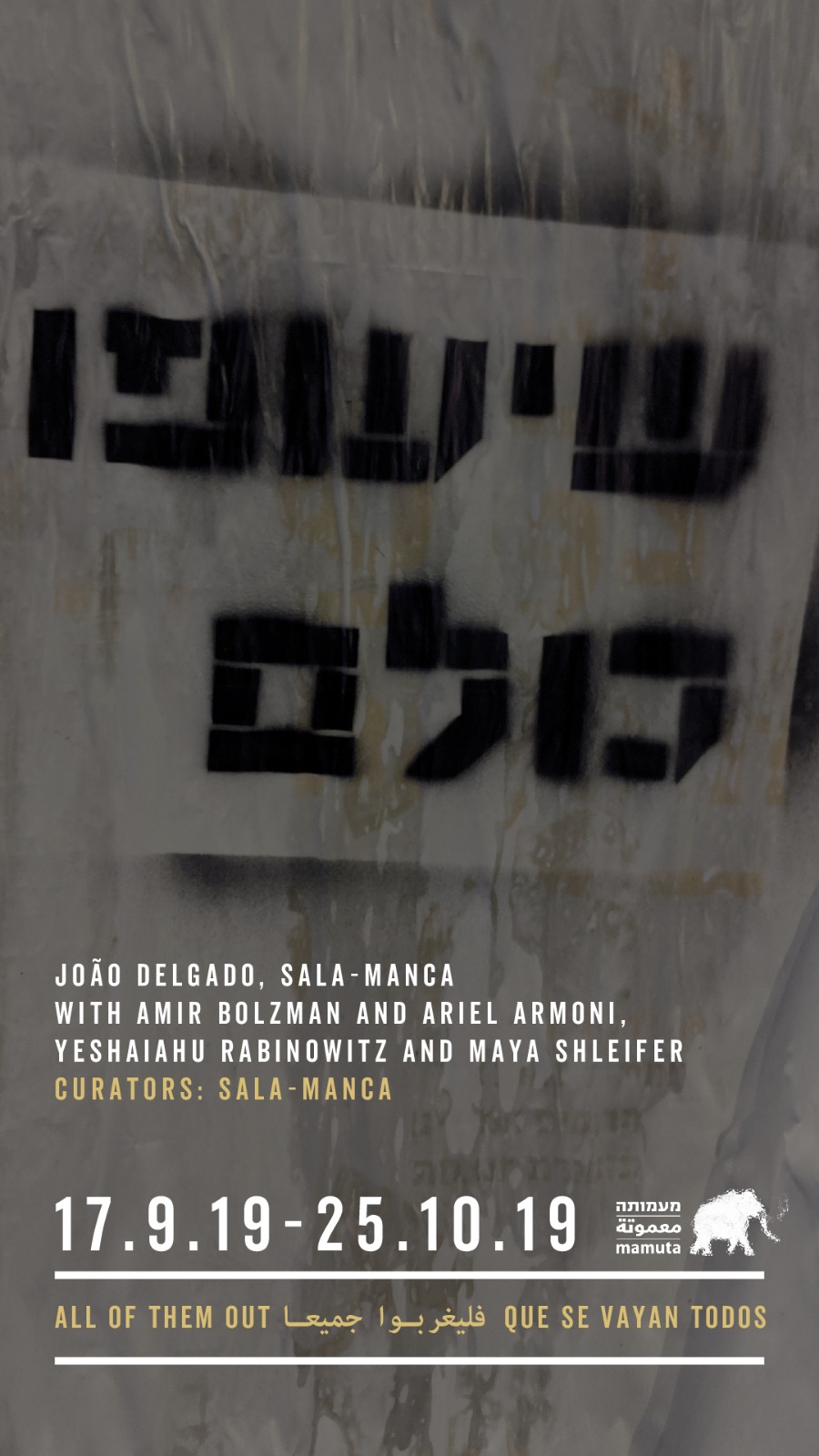
Que se vayan todos! New Exhibition at Mamuta at the Hansen House

17.9.19-25.10.19

All of them must go! Sala-Manca group, João Delgado, in cooperation with Amir Bolzman and Ariel Armoni, Yeshayahu Rabinowitz and Maya Shleifer Reconstruction of Que Se Vayan Todos! procession: Las Piratas Piratas & Sala-Manca Video of Delgado’s poetry: Collaboration with Dulce (Augusto Zaquetti and Gabi Luraschi)

Que se vayan todos! is a series of art interventions and an exhibition evoking the Argentinian civilian protests of late 2001, in which tens of thousands took to the streets across Argentina to protest the political, economic, and social situation in the country, resulting in changing the regime. The demonstrations came to a head in December 2001, prompting President Fernando de la Rúa to resign and flee in his helicopter from the “Pink House” (the President’s office), across from which the protests were taking place. The spontaneous mobilizations, which gave voice and strength to the citizens, had striking aesthetic, textual, visual, and acoustic manifestations. These aspects are the starting point of the exhibit, whose title, Que se vayan todos! (All of them must go!), is taken from the slogan that expressed the people’s frustration at their lack of representation in the government and the great disappointment from the political leadership. The mobilization and the slogan that came to represent it ultimately led to a change in government in Argentina in 2001 and have inspired popular movements across South America and around the world since then. The series of artistic events begins before the public opening of the exhibit, with two interventions in the public space. The first intervention is the hanging of posters with the slogan Que se vayan todos! . This action straddles genre, being simultaneously a citation, a call for change, and a teaser for the exhibit. The second action is a reenactment of the popular processions known as “cacerolazo” (casserole protest), which took place in Argentina during that period. In these processions, citizens with no specific political affiliation converged spontaneously into a civic carnival. Their kitchen pots (cacerolas) were transformed into the musical instruments that accompanied them in their calls for change. Unknowingly, the citizens were “cooking up” the downfall of the regime. In these processions, they consciously or unconsciously alluded to a different act of civic protest in which, according to Argentinian lore, the residents of Buenos Aires overcame the threat of British occupation by spilling hot oil from their kitchen pots on the conquering British army. Thus a basic kitchen utensil became emblematic of the demand for change, combining the political with the domestic space and being at once a sign of hunger and the sound of revolution. The exhibition includes: A sound installation tribute to the cacerolazo (a collaboration between Sala-Manca and Amir Bolzman together with Ariel Armoni) A reconstruction of the cardboard helicopter displayed at a demonstration in Argentina in 2017 by the artist-activist group Erroristas. The establishment interpreted it as an unequivocal call for toppling the regime, leaving no room for the complex and poetic interpretations intended by the artists. The reproduction is a collaboration between Sala-Manca with Yeshayahu Rabinowitz. A room dedicated to the Portuguese-Argentinian artist João Delgado, who aspired in his works to bring about change through poetry and a variety of artistic projects. Additional events, as well as a series of screenings of films and video, works throughout the exhibition period. The project is an extension of Sala-Manca group’s engagement with the subject of exorcism, which began with the Dybbuk project at the 14th Kola Shel Mila Festival. The project continues with the film-performance The Dybbuk 1937-2017 and in the exhibit There is no Place More Exalted than My Present Refuge.


No Confidence, new video by Sala-manca and Amir Bolzman

In the frame of the exhibition “Barbarians” at Mamuta at the Hansen House, curated by Sagit Mezamer, Yehudit Shlosberg-Yogev, Nurit Dreamer, Ein Kristal and Amir Bolzman

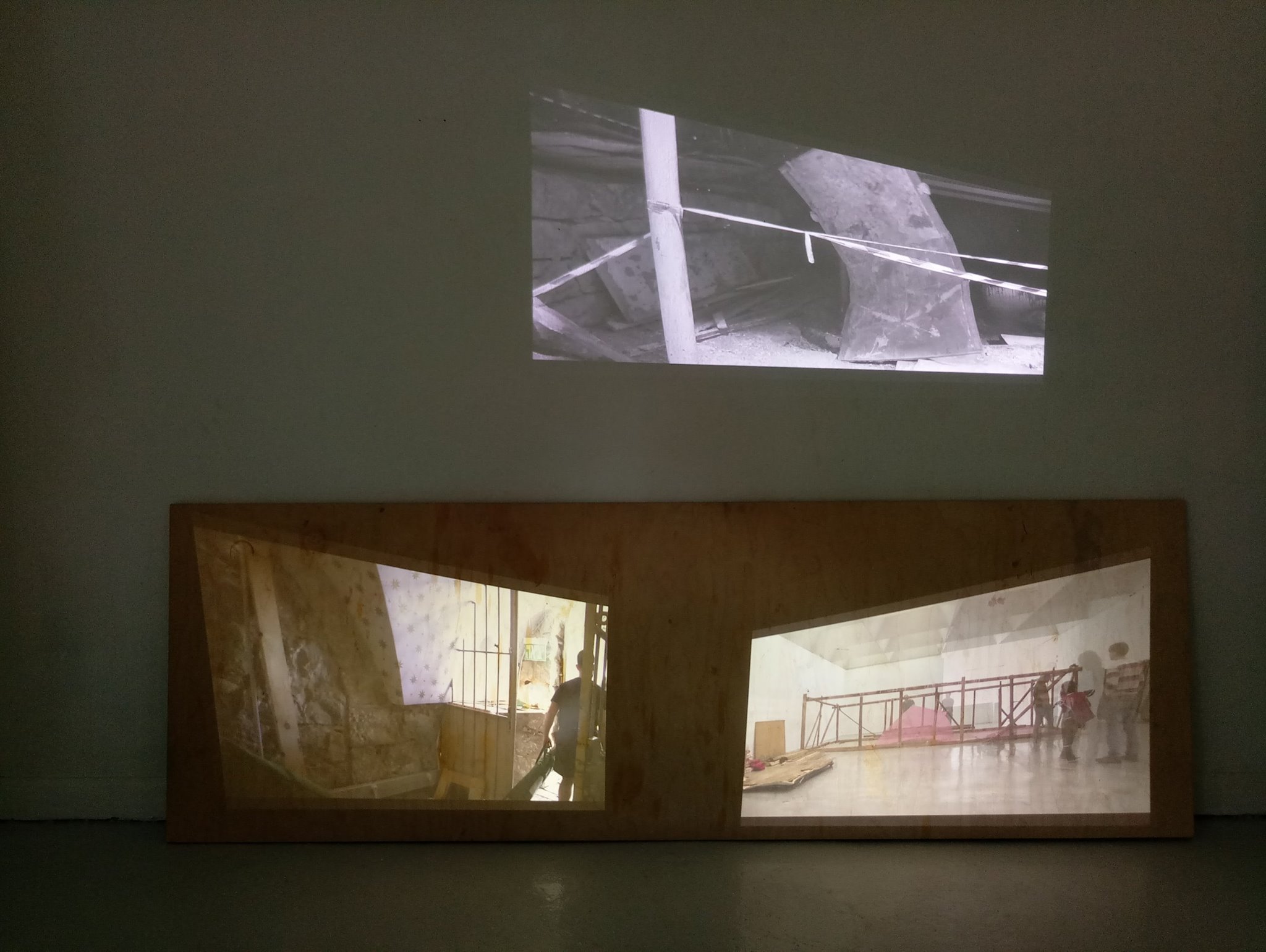
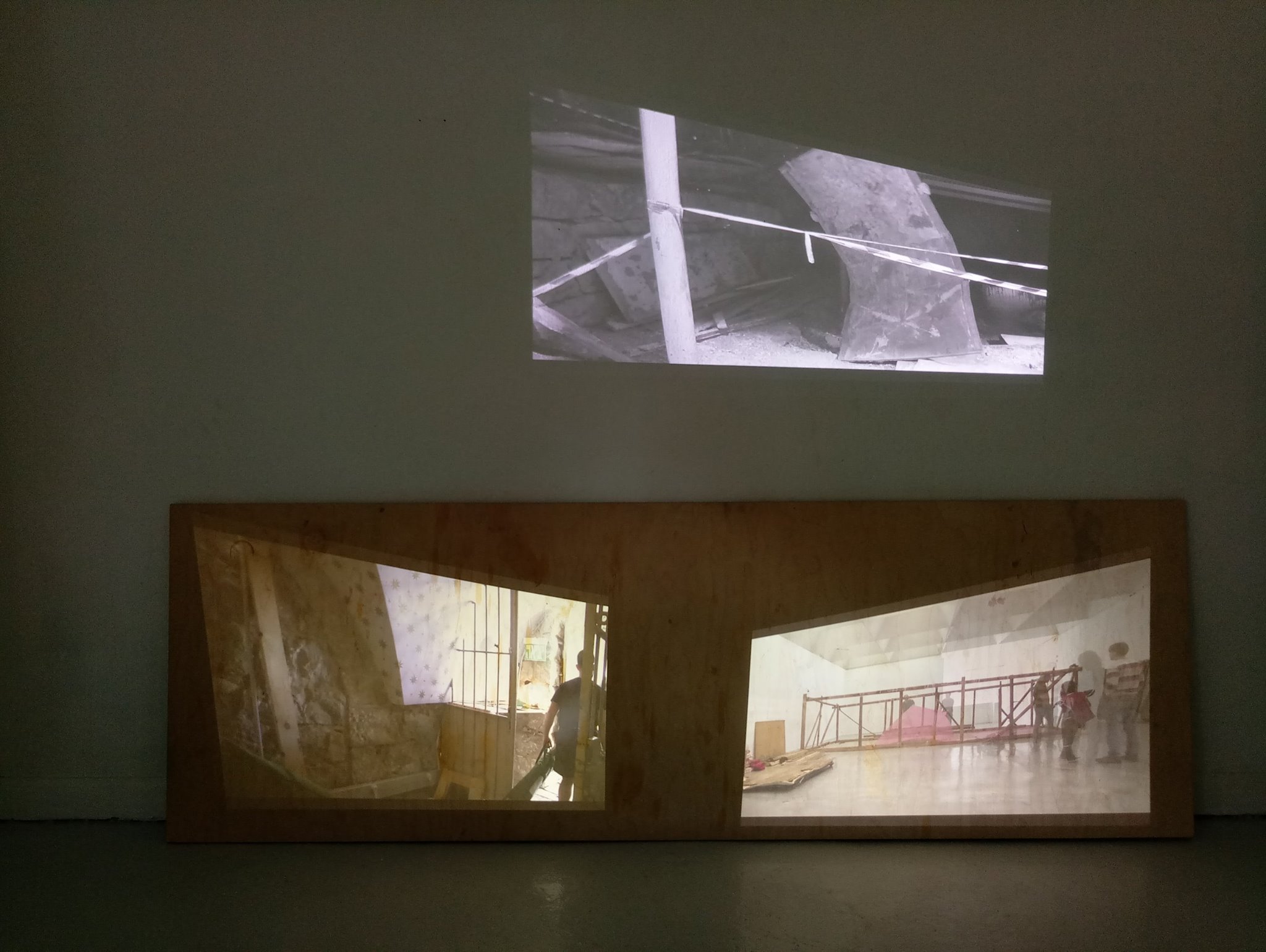
No Confidence by the Sala-Manca group in collaboration with Amir Boltzman—including a recreation of Havilio’s speech in the Municipality’s court case against the Barbur Gallery. It is several years now that Barbur has been operating in the Mazkeret Moshe neighborhood in Jerusalem, and since 2005 it has had to contend with political persecution over its hosting of “controversial” political activity.  On August 30, 2018, a hearing was held at the Jerusalem Magistrate’s Court in the matter of the Jerusalem Municipality’s lawsuit against the gallery. In the video clip, at the artists’ request, the gallery’s attorney, Yossi Havilio, recreates the essence of his arguments at that historic hearing, in which Judge Amir Dahan ruled that the gallery must vacate its premises.

Link to the entire video work

video fragment

link to the exhibition


Preserved myself at the Imaginary Republic, Kunsthall 3.14, Bergen

The Imaginary Republic | ​18.10. – 16.12.2018  | Kunsthall 3.14, Bergen, Norway

Tatiana Fiodorova | Brandon LaBelle / Octavio Camargo | Sala-manca group | Joulia Strauss

Curator: Brandon Labelle

https://www.kunsthall314.art/upcoming

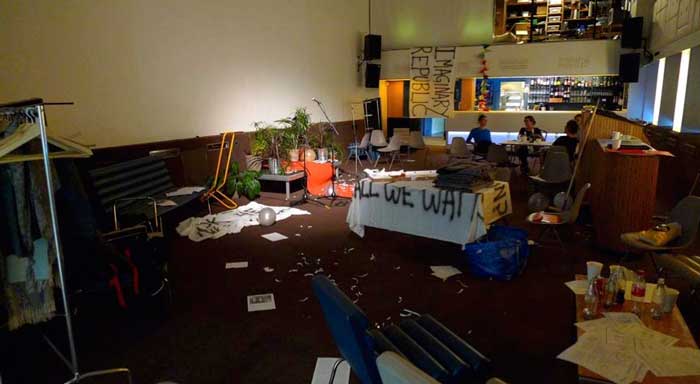
​The Imaginary Republic looks at questions of public life and civic culture in today’s globally fraught environment. It questions ongoing social and political unrest and how this has led to an intensification of grass-roots initiatives, artistic activism, and practices of commoning. In particular, the project considers the creative expressions and dissident imaginaries of contemporary political subjectivity.

The exhibition features participating artists whose works and practices engage with communities of struggle, transitional zones and the drive of autonomous cultures. It brings into play forms and fictions by which emergent social configurations work as solidarity machines. As such, it sets out to dialogue with what Stavros Stavrides calls “communities in movement”. These act as expressions of social thresholds, where borders function less as fortifications and more as points of contact with others. Communities in movement suggest new lines of collective power and imagination by traversing and upsetting demarcations of the managed self. Such configurations of sociality may rework patterns of neoliberal life described by Isabell Lorey as “governing through insecurity”. Instead, they bring forward a culture of co-existence and poetic world making that often hovers in the gaps of political life. The works presented in the exhibition dialogue with these larger issues and realities, articulating fragile meetings and temporary dwellings, imaginary journeys and the creative resistances found in small gestures of care. As such, they document and point toward ways of figuring an art of survival.

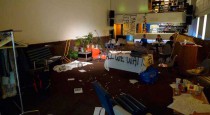
Sala-manca’s Garage Sale | Solo (selling) Exhibition

P80515-155634

Sala-manca’s Garage Sale | Solo (selling) Exhibition

Kfar Saba Municipal Gallery | Curator: Meira Perry-Lehmann |24.5-24.7

The last exhibition presented at the Kfar Saba City Gallery during the current school year is also the last show – for the time being – by the Jerusalem-based Sala-Manca Group, whose members, Lea Mauas and Diego Rotman, are about to travel to Canada, to study there for one year. The Sala-Manca Group, active for the past eighteen years, is known for subversive, independent, dynamic artistic creation in different fields: performance, video, installation, and new media. In 2009 Mauas and Rotman founded the Mamuta Art and Media Center, which offers creators in a variety of fields a framework for encounters, research and exhibition. The Center was first situated at the Jerusalem home of the artist Daniela Passal, and since 2013 has a space at Hansen House in the city. Over the years, Sala-Manca Group activities have taken place mainly in Jerusalem, only occasionally showing elsewhere.
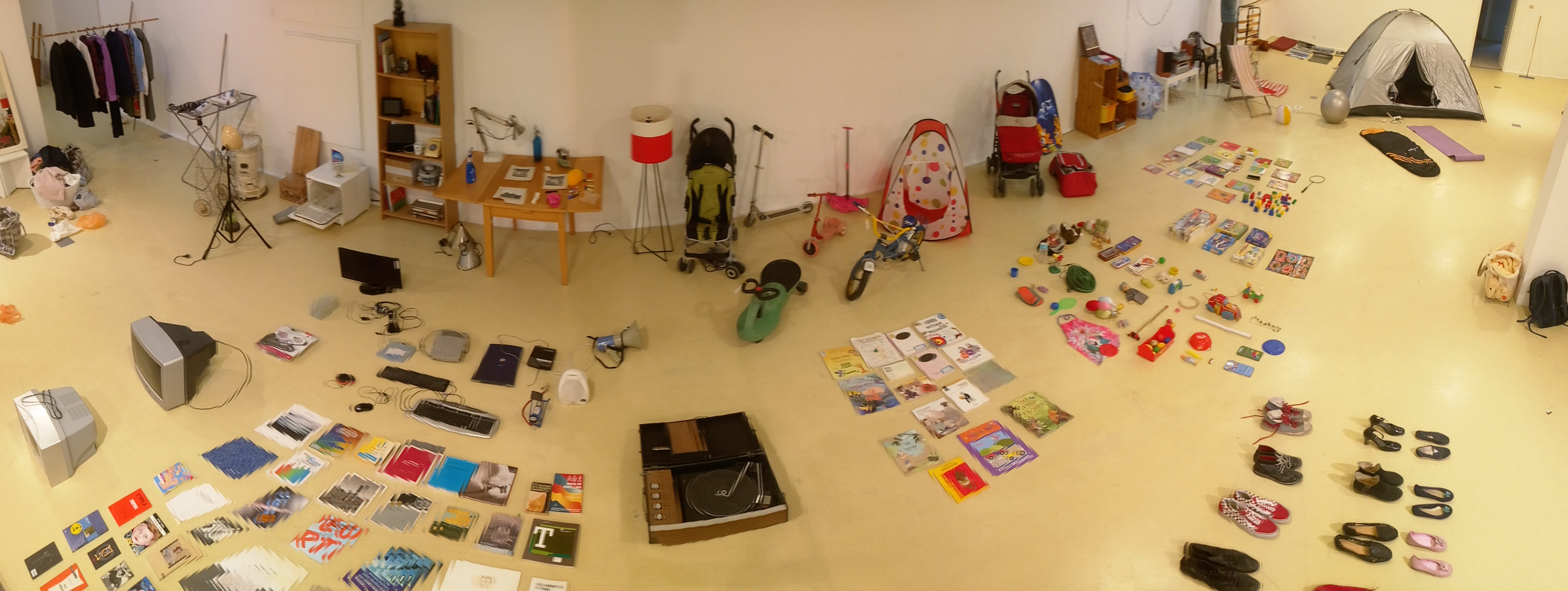
The Sala-Manca Garage Sale at the gallery blurs and examines, as is the group’s wont, the fine line between art and life. It gives visitors an opportunity to buy objects that belong to the artists, and in doing so exposes elements of their personal lives. The sale – an ironic take both on art auctions and on garage sales when moving house – features different kinds of items: objects that had served as props in the group’s artworks; works of art or fragments thereof; and sundry items from the family home, whose emotional history is connected to the artists’ lives or works. The commercial aspect of the show accentuates the artists’ ambivalence toward the artistic establishment, including the art gallery. Rather than finished artworks, they seek to expose in the gallery the creative process, which in this case includes travel abroad which destabilizes their artistic and domestic space. The gallery is turned into the artists’ proverbial garage, where the display may be assembled or disassembled while on view.

All proceeds from the “garage sale” will be used to produce the next chapter in the “Argentinian-Israeli telenovela” The Story of Batya M, which the Sala-Manca Group created for the 2006 Bat Yam International Festival for Theater and Street Art. A telenovela is a genre of serial drama produced mainly in Latin America, characterized by melodramatic story lines that aim to evoke strong emotions in the viewer. Typically shorter than the soap opera of the English-speaking world, events in the telenovela are usually set within the span of a year or less, and are faster-paced. The first chapter of The Story of Batya M, which is 40 minutes long, was screened with live dubbing by the actors who portray the telenovela’s main protagonists – that is, the couple Mauas and Rotman, who comprise the Sala-Manca Group. Featured alongside them are their daughter, Ashu, friends, and other family members. The work straddles the gamut between live show and TV program, between mass communication culture and avant-garde performance, between melodrama and social commentary. By producing a sequel whose events take place seven years later the artists intend to turn the work into a slower, postmodern telenovela.

Meira Perry-Lehmann

Hamavdil 1&2 [sound intervention]

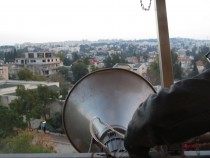
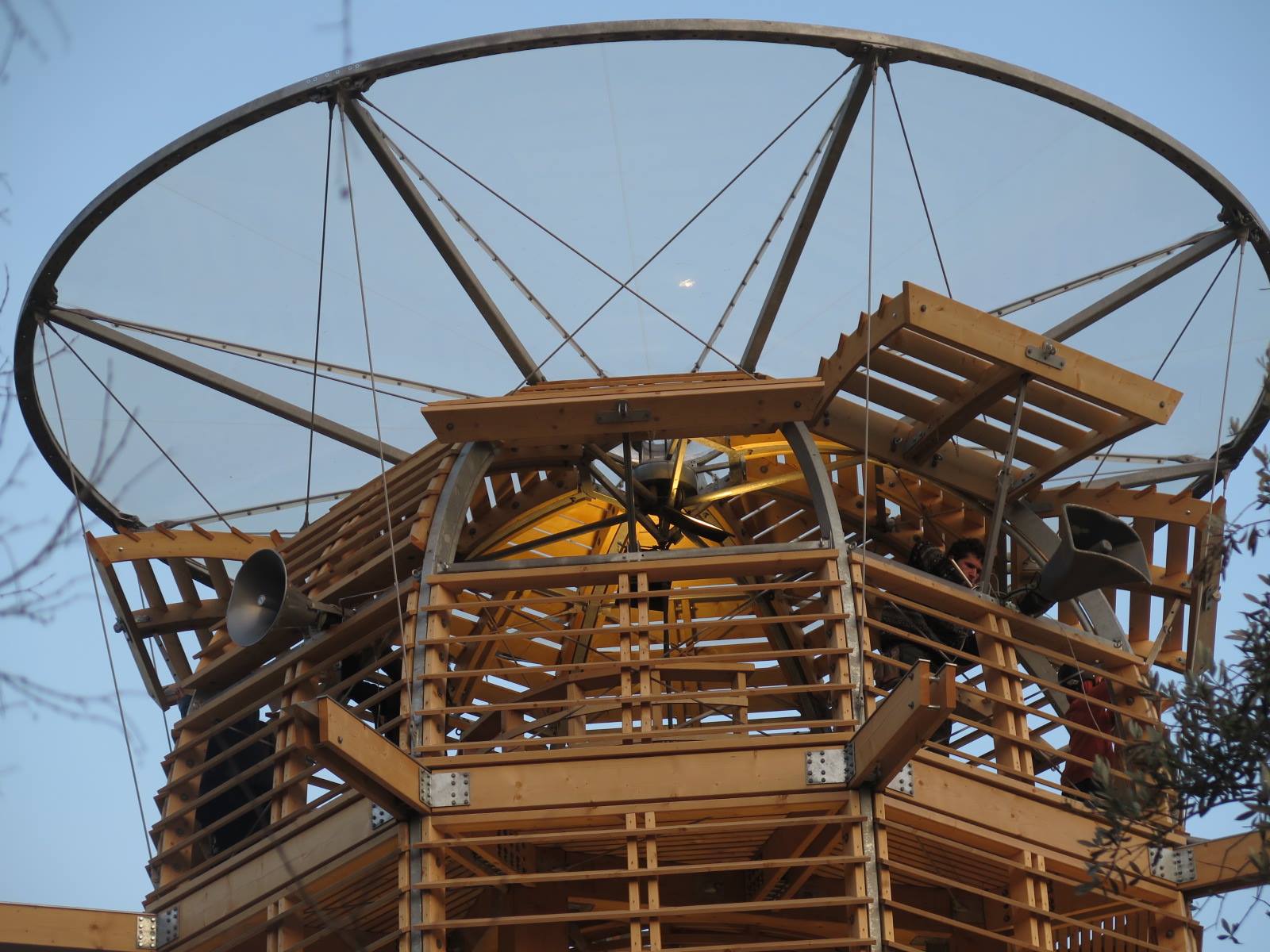
“Hamavdil 1” is a sound intervention in the West Jerusalem soundscape from a temporary tower built at Hansen House by the Czech architecht Martin Rainisj.
“Havdala” [Differenciation] is a ritual prayer and ceremony that marks the end of the Jewish Sabbath and the beginning of the week.
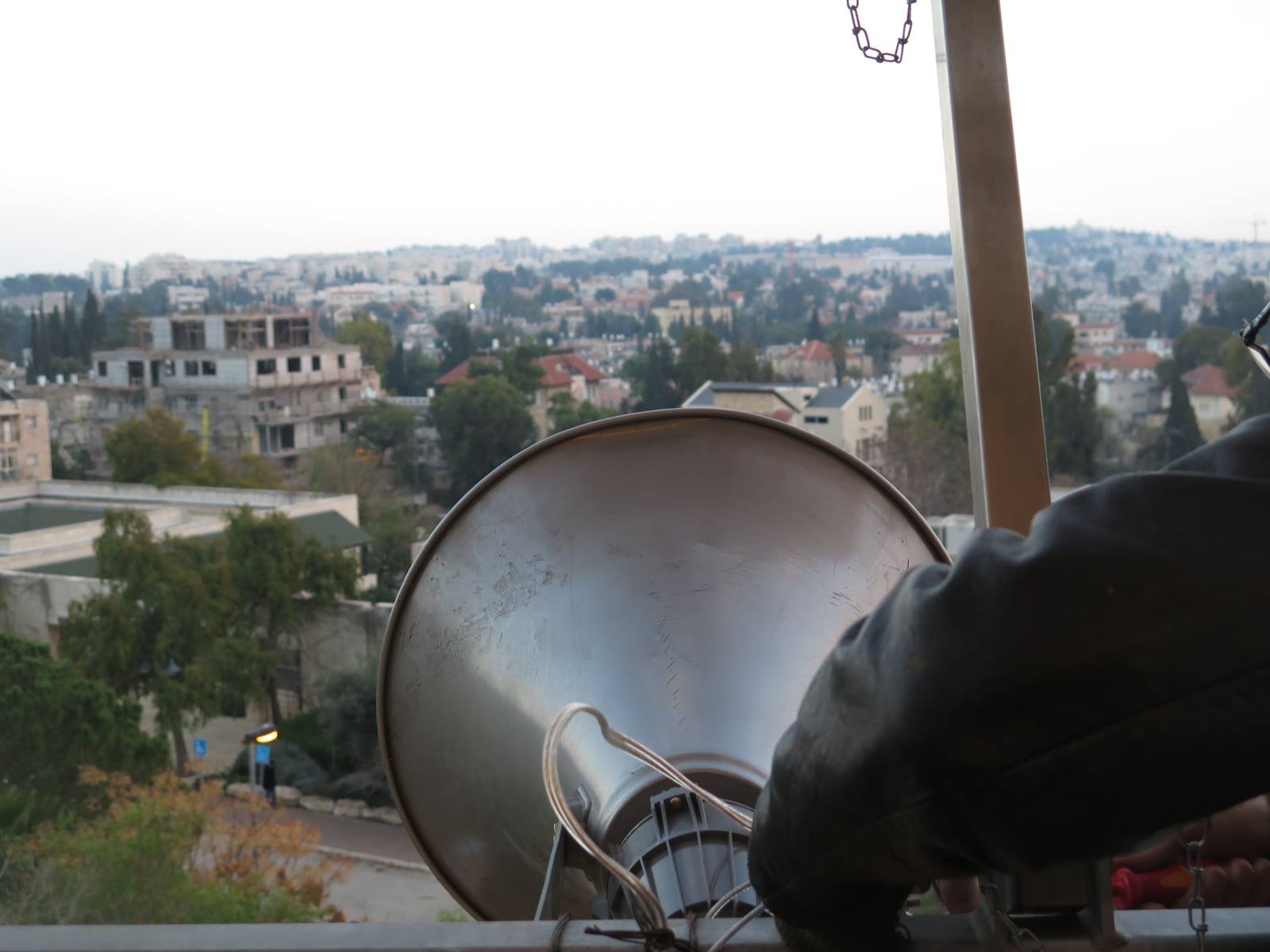
Amir Bolzman and the Sala-Manca artists group blurred the soundscape of the neighborhoods of Talbyeh, Katamon, and the German Colony, playing a Jewish Havdalah prayer in the Arab-Jewish style. At first instance, this traditional Makam music coming from a tower using this particular type of speaker, appears to be a Muezzin. The Muslim call to prayer and the voice of the Muezzin, played with similar technology from mosques, has been the focus of a “sound conflict” in Israel and Jerusalem, with Jewish citizens complaining of the “contamination” of the soundscape and leading to the advancement of the “Muezzin Law” in the Israeli Knesset, a law that aims at restricting the scope of those prayers.
From another direction, the Arab-Jewish sound was suppressed from the Israel soundscape for ideological reason for many years.
The work challenges notions of identity and orientation regarding the local soundscape, and propose us to imagine another possible present or future.
30.12.2017


המבדיל هَمَڤديل Hamavdil Ymca Jerusalem, 3.2.2018
סלה-מנקה ואמיר בולצמן سالا-مانكا وأمير بولزمان Sala-Manca and Amir Bolzman

“Hamavdil 2” is a sound intervention in the West Jerusalem soundscape from the Jerusalem International YMCA Tower.

26170450_1926037637409652_4080703821350012493_o

26170860_1926037077409708_6568953042087575053_o


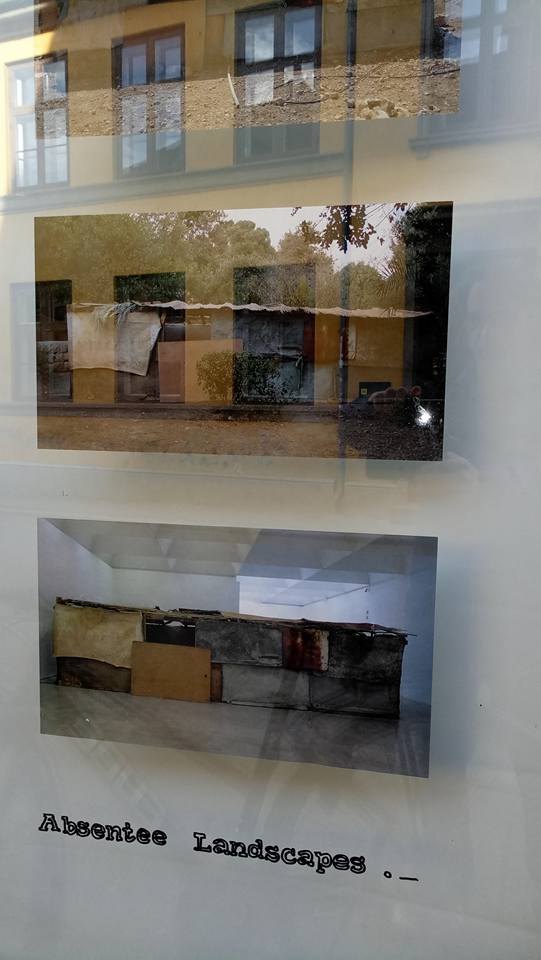
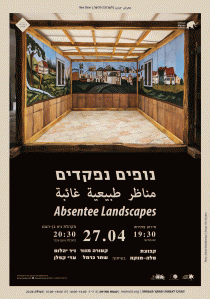
Absentees Landscapes at The Hive, Encinitas, San Diego


The Hive, Leichtag Foundation | Encinitas, San Diego | October 2017

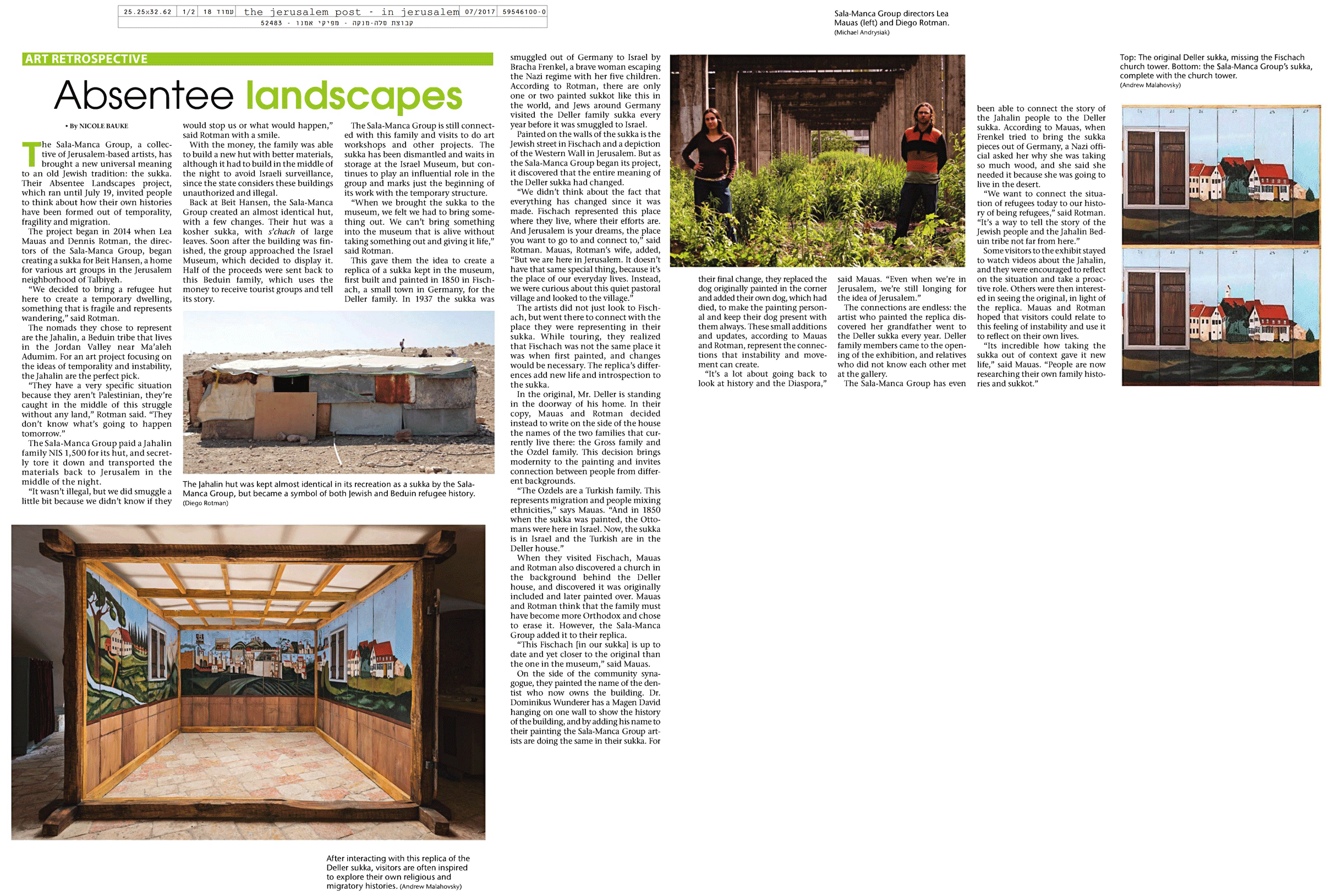
In the winter of 2017, a group of artists (the SalaManca Group, Nir Yahalom, Ktura Manor and Max Epstein) began building an unauthorized but accurate replica of a painted wooden sukkah from Germany (dating to 1850), which is on display in the permanent collection of the Israel Museum and is known as The Deller Sukkah.
The artists photographed the original sukkah at the museum, read articles about it, and even traveled to Fischach—a small town in Bavaria—where the original sukkah had been built and subsequently, with the outbreak of World War II, smuggled to Palestine to save it from the Nazis. At Fischach, some of the artists met with the local mayor, visited the graves of the Deller family members (owners of the original sukkah), toured the local synagogue (which now serves as a dental clinic), and documented at all on video.
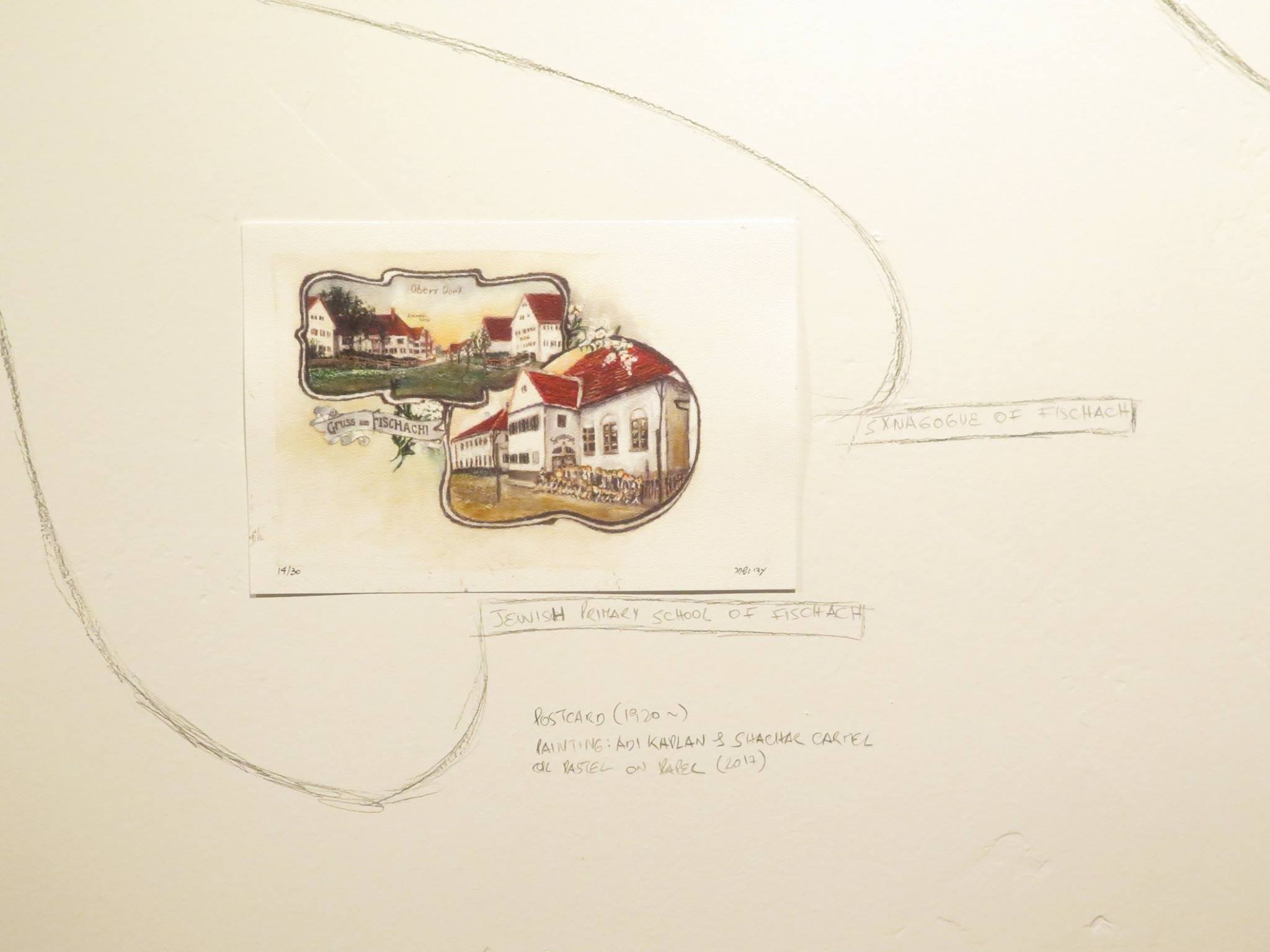
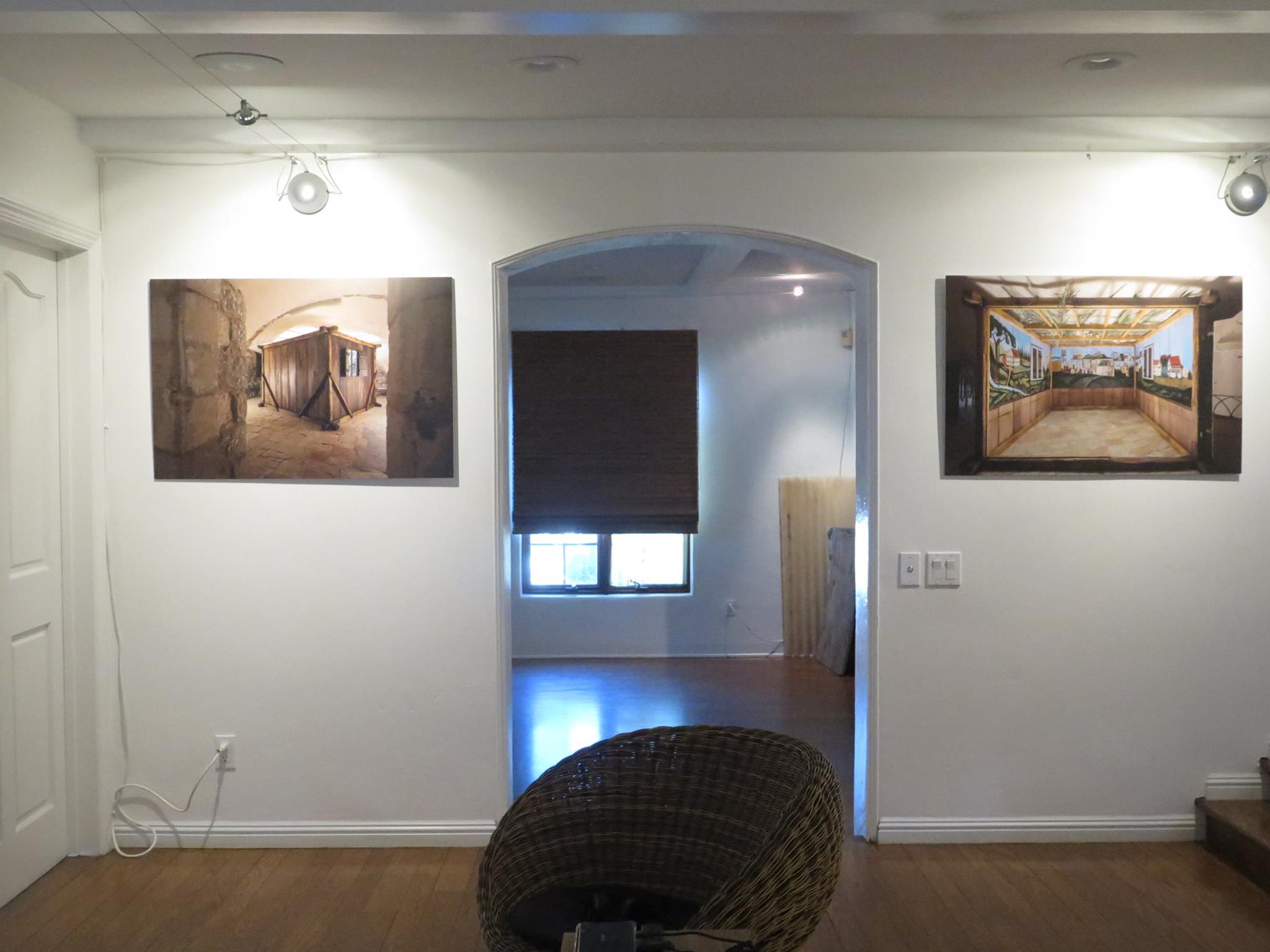
At the same time, back in Jerusalem, the artists Adi Kaplan and Shahar Carmel created replicas of postcards from the town from 1920 (circa), and, in the bowels of the basement of the old leper colony building in Jerusalem, reconstructed one of the most beautiful sukkot in the world. The replica is a perfect copy of the original, but for a few deliberate differences between it and the original—some substantive and some symbolic.
As a consequence of the replication process, the paintings on the walls of the sukkah subtly transformed: the image of Jerusalem on one of the walls, which in the original was an object of yearning, became a kind of proprietary statement; the scenes of the pastoral German village on the three other walls, which used to provided a kind of visual record of the original landscape, became a wistful memorial of a community and a time that no longer exist. Other changes that were made to the replica effectively rendered it a new original: while the sukkah at the Museum is an ethnographic object that can be viewed but not entered, its replica, as created by contemporary artists, is an artwork into which entry is not only allowed, but encouraged, and can even serve as a bona fide sukkah.
The paintings themselves have also undergone small but significant changes: in them, the walls of the synagogue feature graffiti inscriptions that attest to its transformation into a clinic, and the house of the Deller family (the former owners of the sukkah) now bears the names of the two families who live in it today—one German, the other Turkish.
The replica sukkah is on display at the Absent Landscapes exhibition at Hansen House in Jerusalem (the former leper colony/hospital). The exhibition also features a film titled Eternal Sukkah—a past project by the group—which tells the story of how a hybrid Bedouin/Jewish sukkah became an exhibit at the Israel Museum in 2015, heralding the idea of transporting a sukkah from the museum into real life. A complex dialogue takes place between the Bedouin/Jewish “Eternal Sukkah” and the physical, metaphorical, and historical composite that is the “Deller Sukkah” at the Absent Landscapes exhibition. It is a dialogue between a nomadism and ownership; between enforced transience and transience as a religious value; between absentee landscapes and present ones; and between individual artistic endeavors of different historical periods, each of which, in its own way, exemplifies the drama of its time
22291349_1834728289873921_4045180845929945892_o 22256695_1834728366540580_8138188397227178973_o 22289995_1834727743207309_2558647355129866189_o 22291544_1834727956540621_3939739382037295549_o 22338911_1834728209873929_2831594937352342714_o 22339491_1834728296540587_4951143493997396272_o 22384212_1834728049873945_3209888114289457852_o

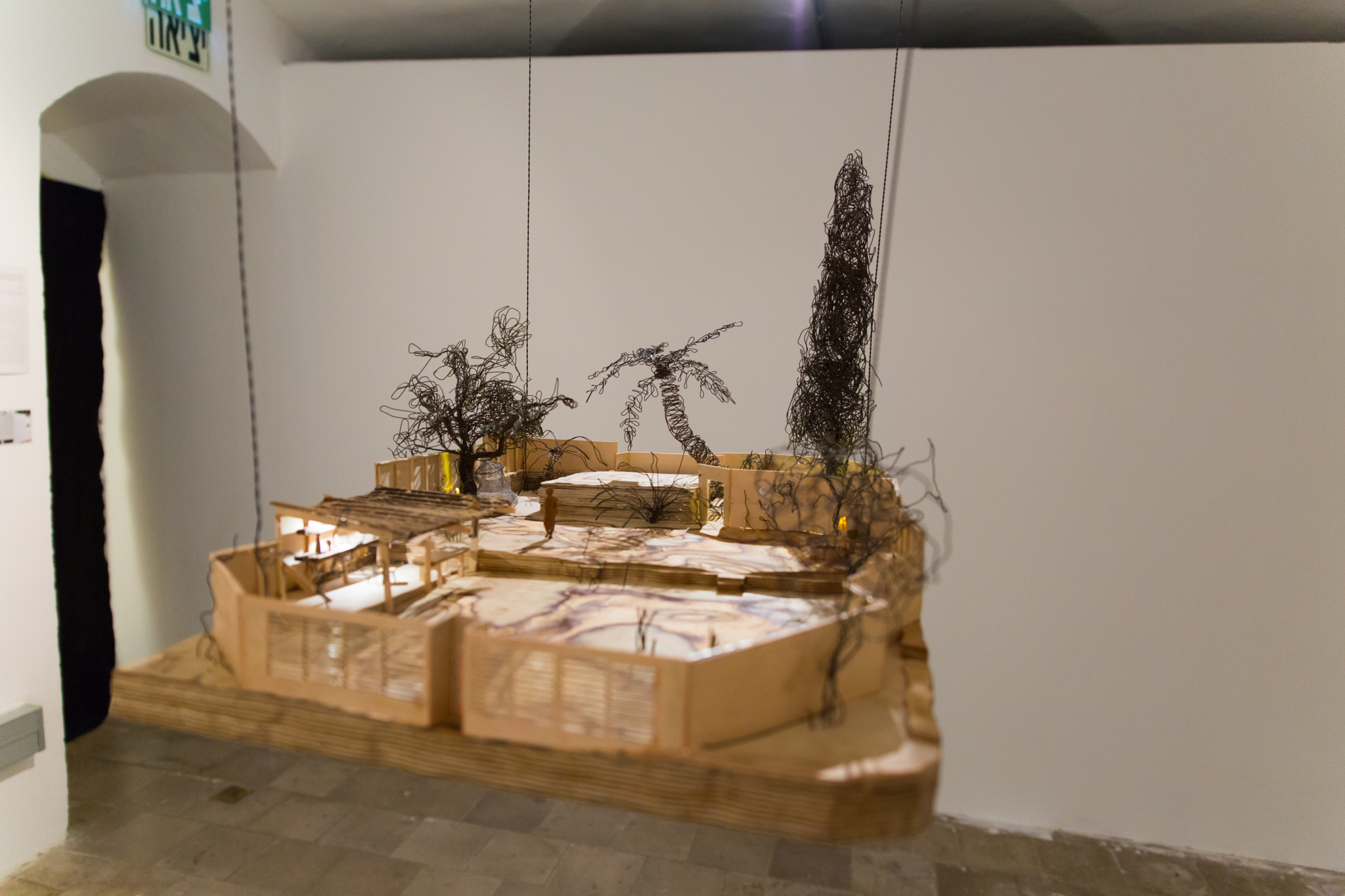
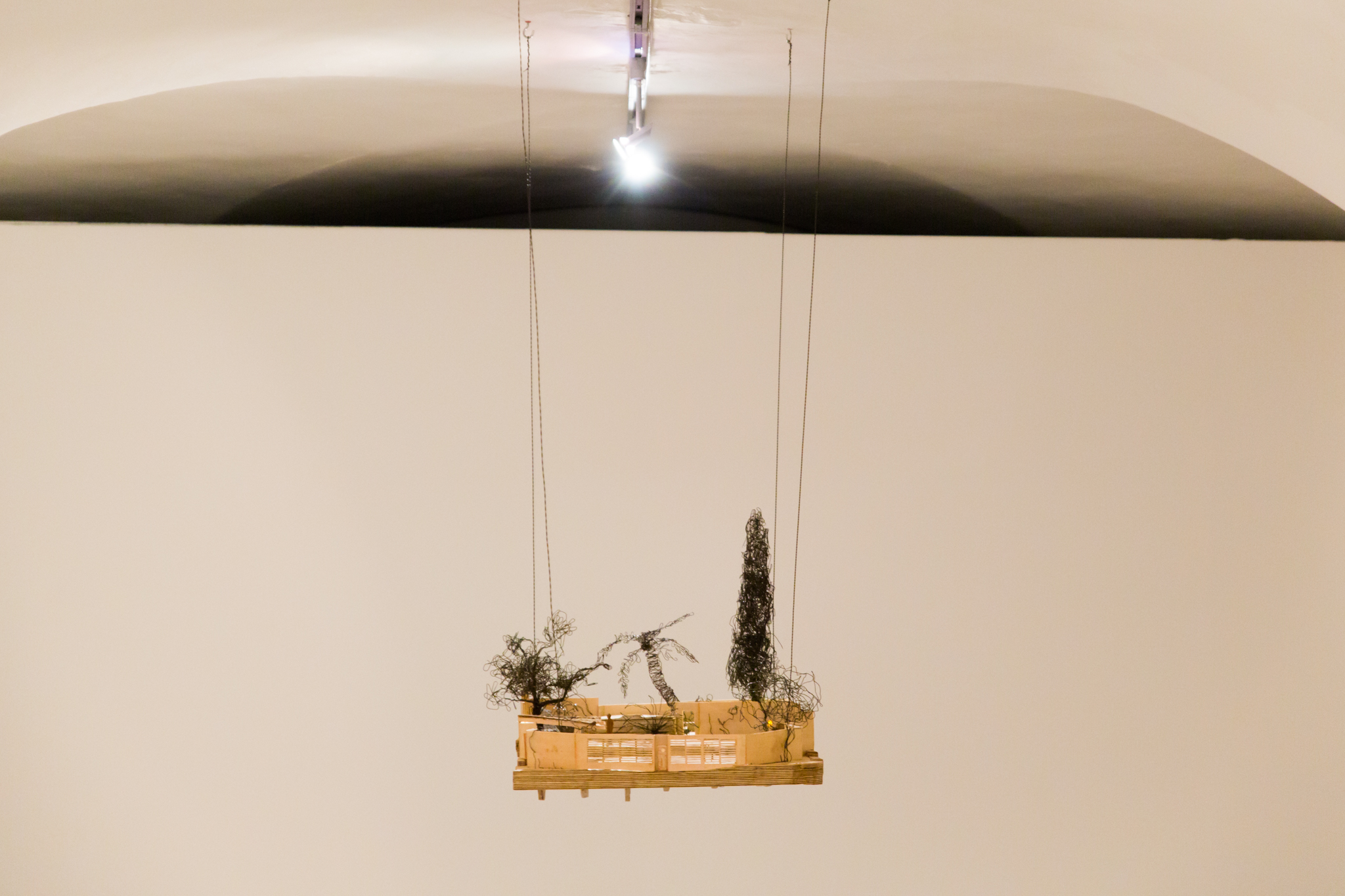
Paradise Inn (The Model) by Itamar Mendes-Flohr and Sala-manca

On Paradise Inn Hotel (model)

curated by Yaakov Israel, in the frame of “Autarkic Economy”, Hansen House, September-October 2017

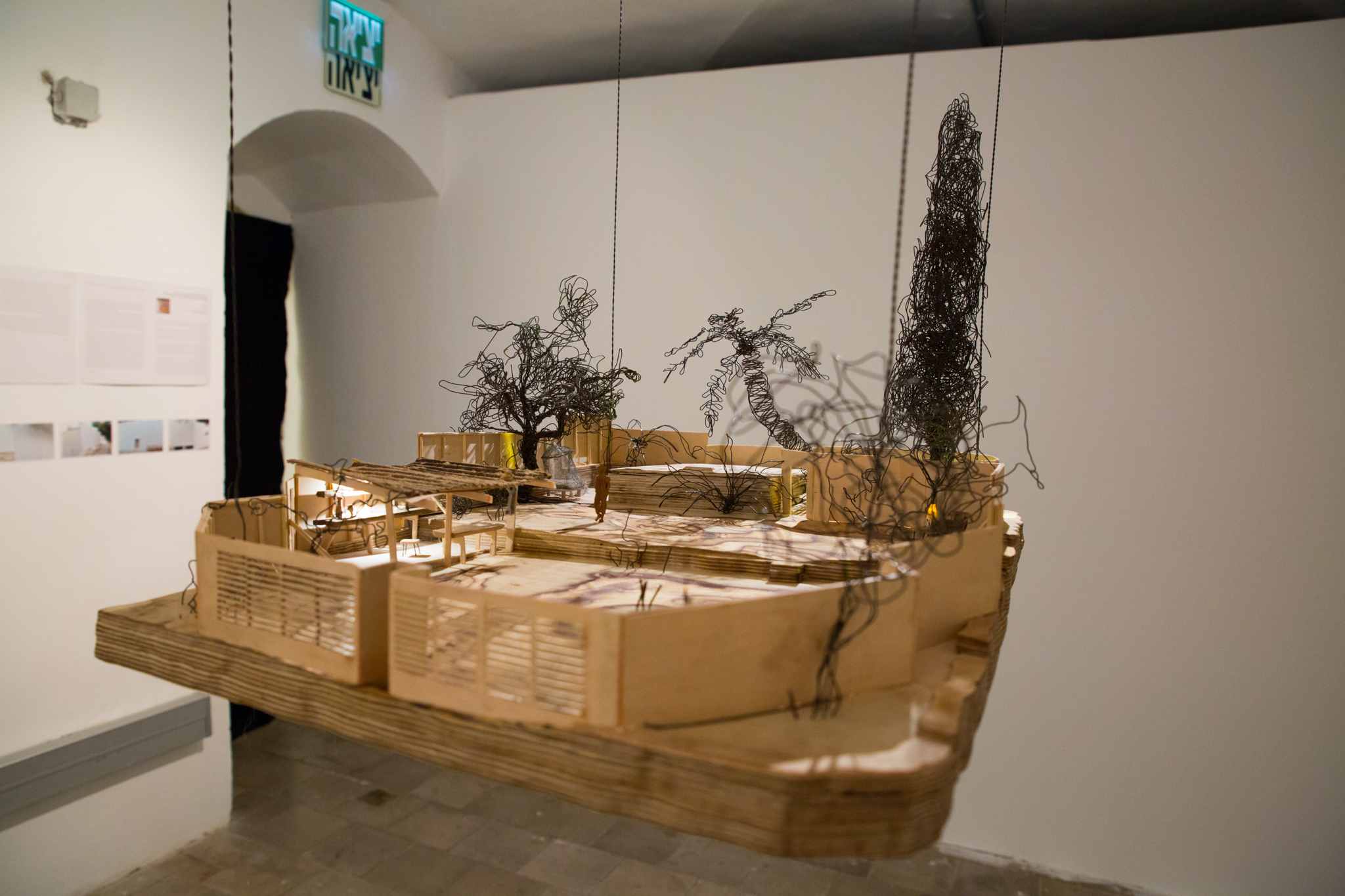
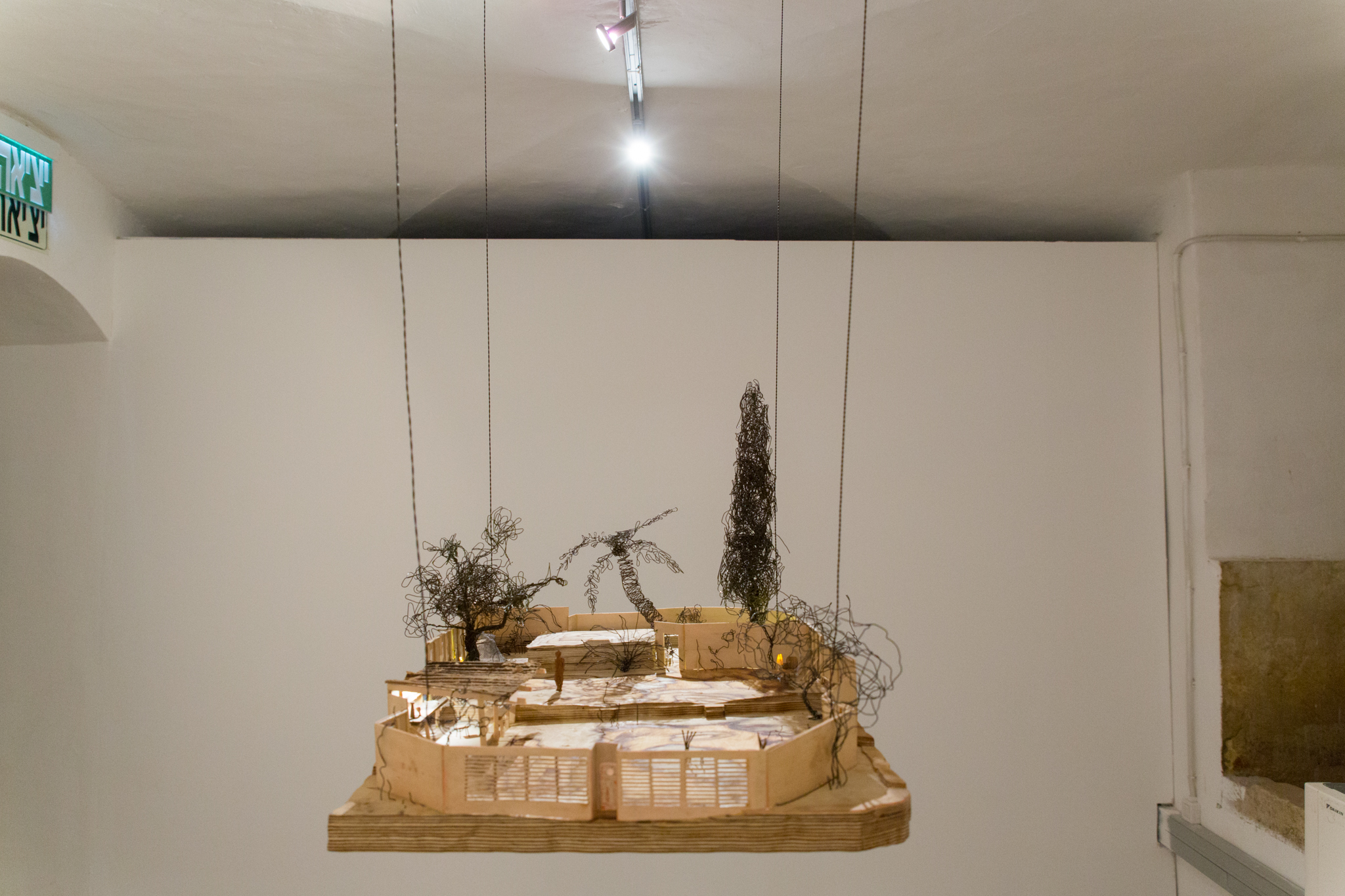
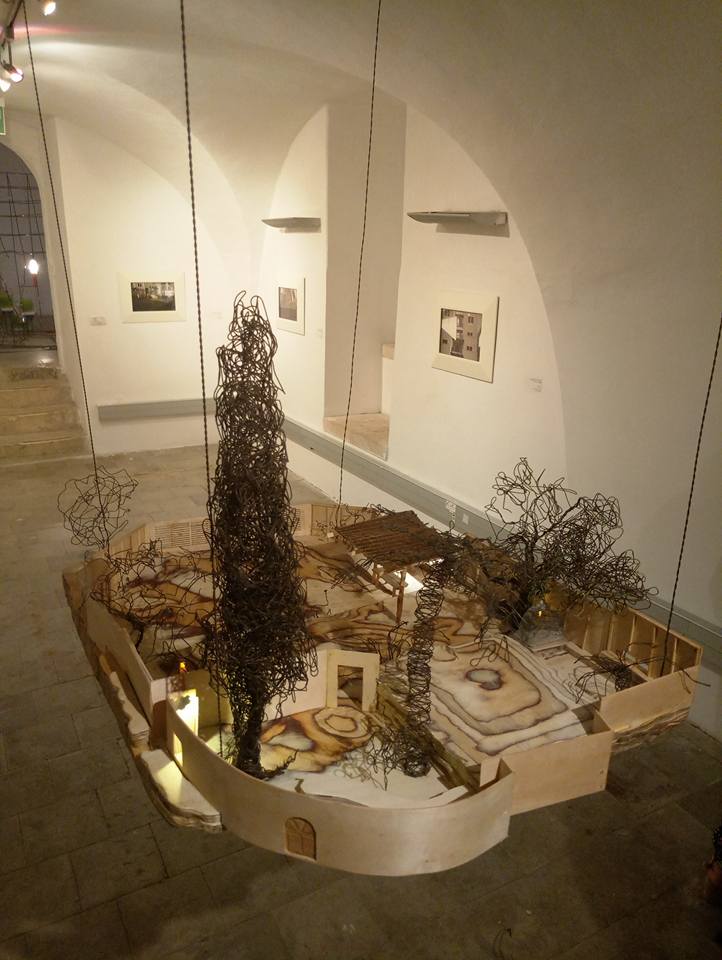
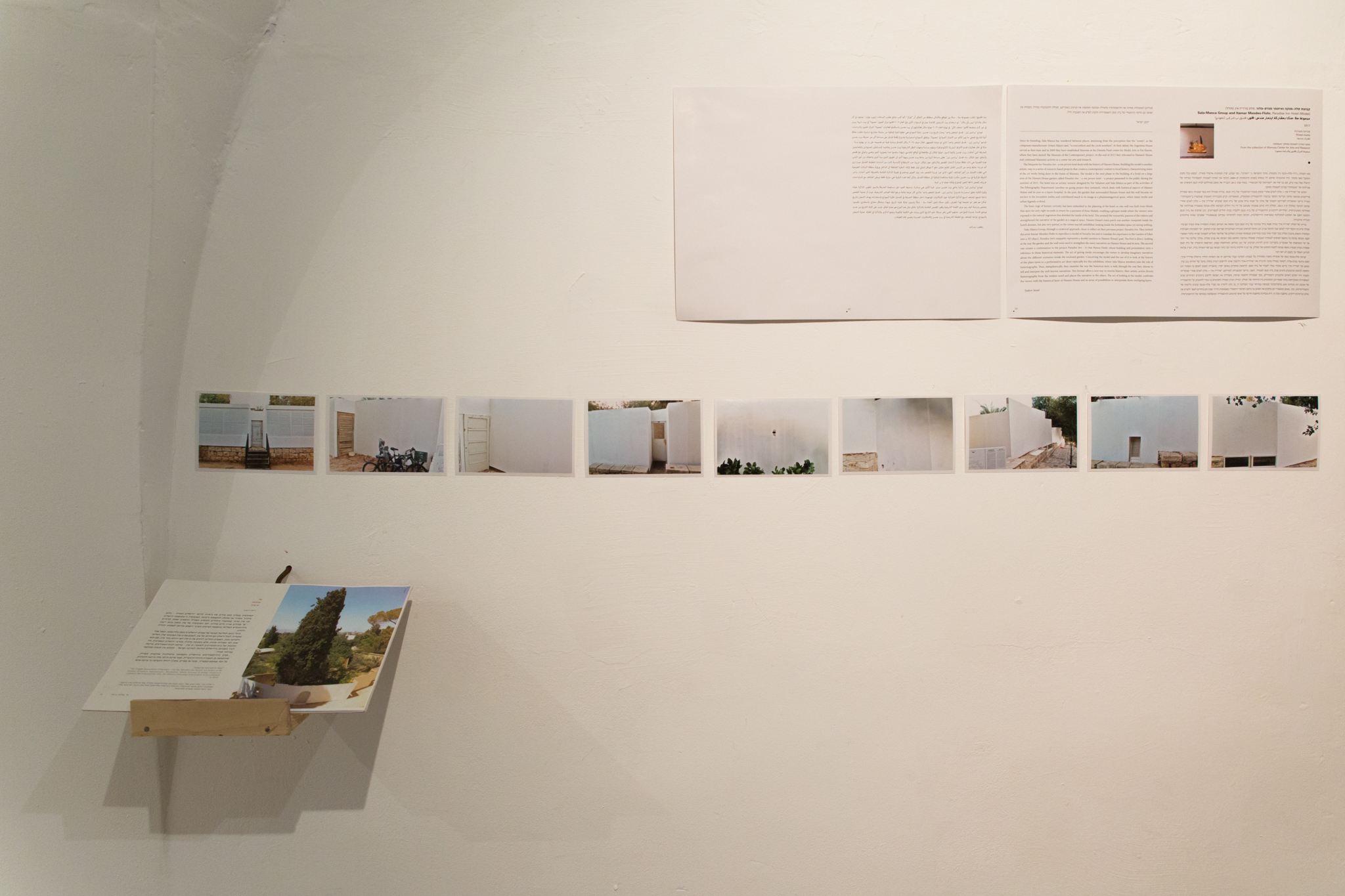
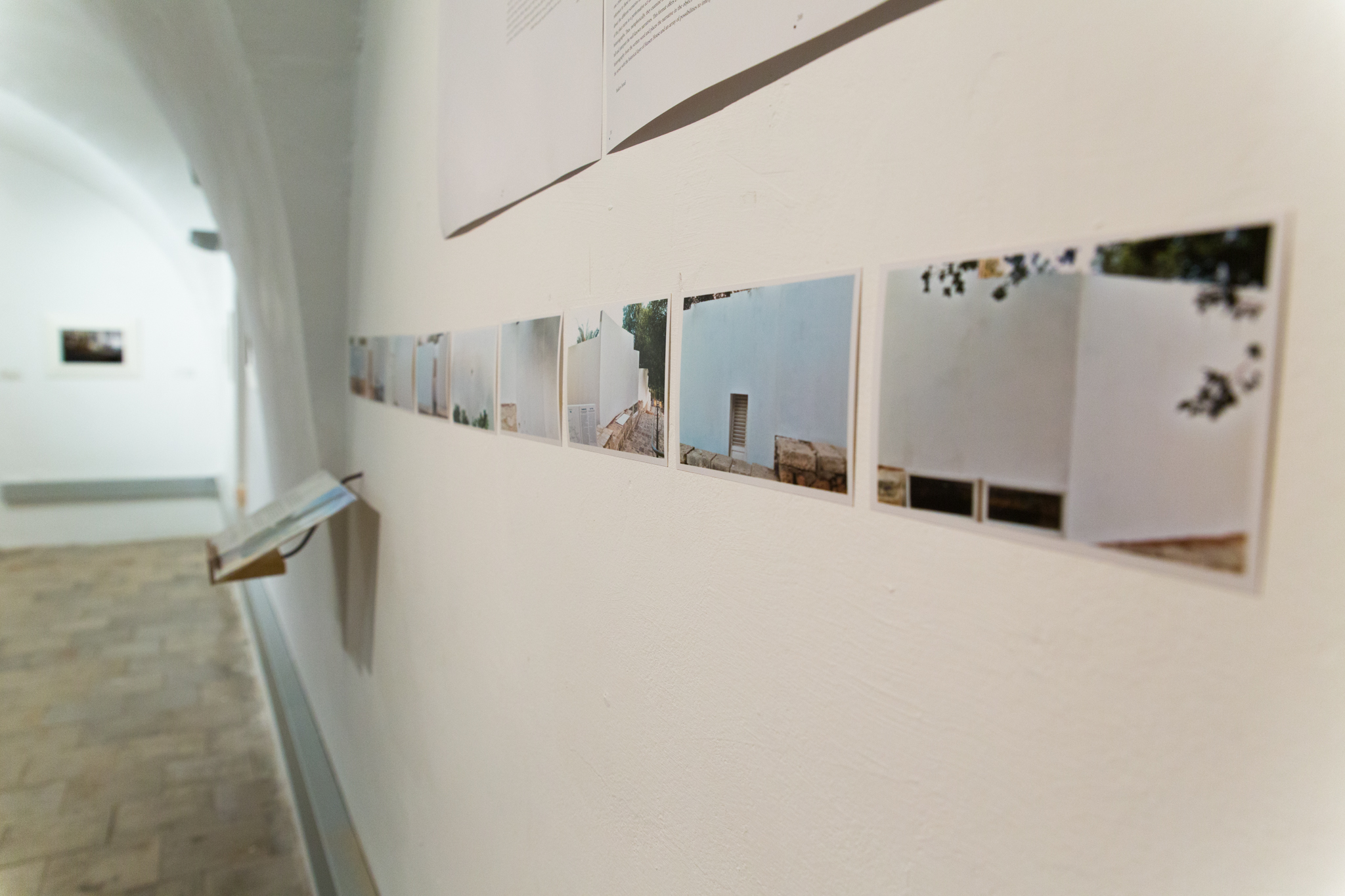
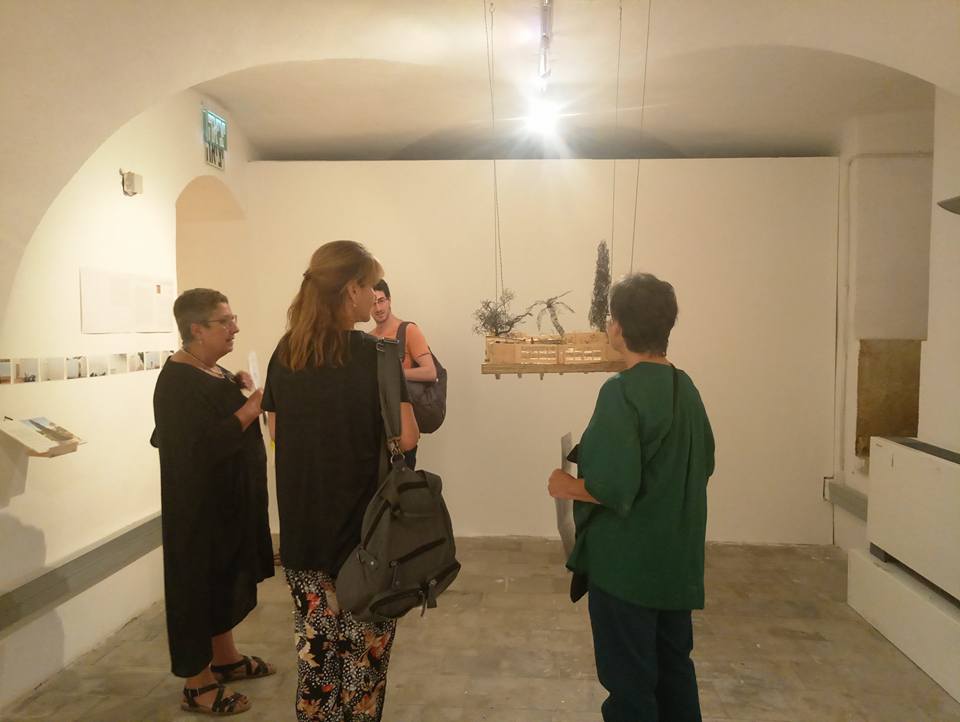
Since its founding, Sala-Manca has wandered between places, stemming from the perception that the “center”, as the compasses manufacturer Arturo Maura said, “is everywhere and the circle nowhere”. At their debut, the Argentina House served as their base and in 2009 they have established Mamuta at the Daniela Pasal center for Media Arts in Ein Karem, where they have started The Museum of the Contemporary project. At the end of 2013 they relocated to Hansen’s House and continued Mamuta’s activity as a center for arts and research. The Maquette for Paradise Inn – a one person hotel deals with the history of Hansen House. Building the model is another artistic step in a series of research-based projects that creates a contemporary context to local history, characterizing many of the art works being done in the frame of Mamuta. The model is the next phase to the building of a hotel on a large area of the Hansen House garden called Paradise Inn – a one person hotel – a project presented to the public during the summer of 2015. The hotel was an artistic venture designed by Nir Yahalom and Sala-Manca as part of the activities of The Ethnographic Department (another on-going project they initiated), which deals with historical aspects of Hansen House and its past as a lepers hospital. In the past, the garden that surrounded Hansen house and the wall became an enclave in the Jerusalem reality, and contributed much to its image as a phantasmagorical space, where many myths and urban legends evolved. The basic urge of human curiosity has been embedded in the planning of the hotel, so one wall was built from blinds that open for only eight seconds in return for a payment of three Shekels, enabling a glimpse inside where the viewers were exposed to the natural vegetation that shielded the inside of the hotel. This aroused the voyeuristic passion of the visitors and strengthened the narrative of the garden as a magical space. Hansen House’s main porch was another viewpoint inside the hotel’s domain, but also very partial, so the viewer was left unfulfilled, looking inside the forbidden space yet seeing nothing. Sala-Manca Group, through a curatorial approach, chose to reflect on their previous project Paradise Inn. They invited the artist Itamar Mendes-Flohr to reproduce a model of Paradise Inn and to translate his experience in the Garden of Eden into a 3D object. Paradise Inn’s maquette represents a double mention to Hansen House’s past. The first is direct, looking at the way the garden and the wall were used to strengthen the many narratives on Hansen House and its area. The second one creates a continuation to the project Paradise Inn – A One Person Hotel, whose building and presentation were a reference to these historical elements. The act of gazing inside encourages the viewer to develop imaginary narratives about the different scenarios inside the enclosed garden. Conceiving the model and the use of it to look at the history of the place turns to a performative act done especially for this exhibition, where Sala-Manca members take the role of historiographs. Thus, metaphorically, they examine the way the historical story is told, through the way they choose to tell and interpret the well-known narratives. This format offers a new way to rewrite history: their artistic action diverts historiography from the written word and places the narrative in the object. The act of looking at the model, confronts the viewer with the historical layer of Hansen House and an array of possibilities to interpretate these overlaping layers.
Yaakov Israel

Link to the Paradise-Inn project: http://old.sala-manca.net/?p=973 and review: http://old.sala-manca.net/?p=995

Pics by Yaakov Israel


untitled (77 of 108) untitled (78 of 108) untitled (79 of 108) untitled (81 of 108) untitled (82 of 108) untitled (89 of 108)


Pics by Sala-manca:

21432729_1803455666334517_8449392277387164540_n 21314788_1803455399667877_4945460019891797445_n 21462604_1803455369667880_7358886929959993310_n

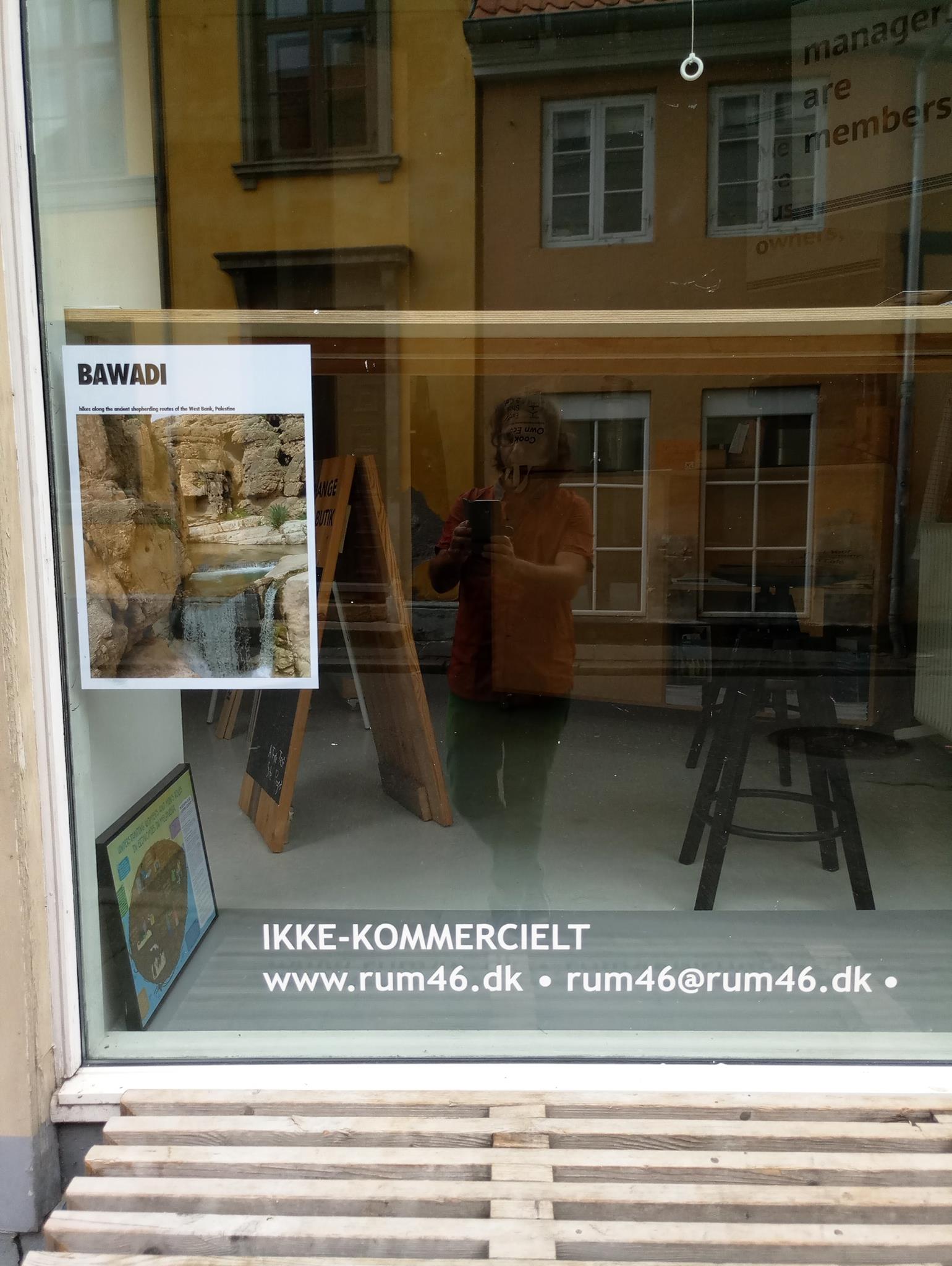
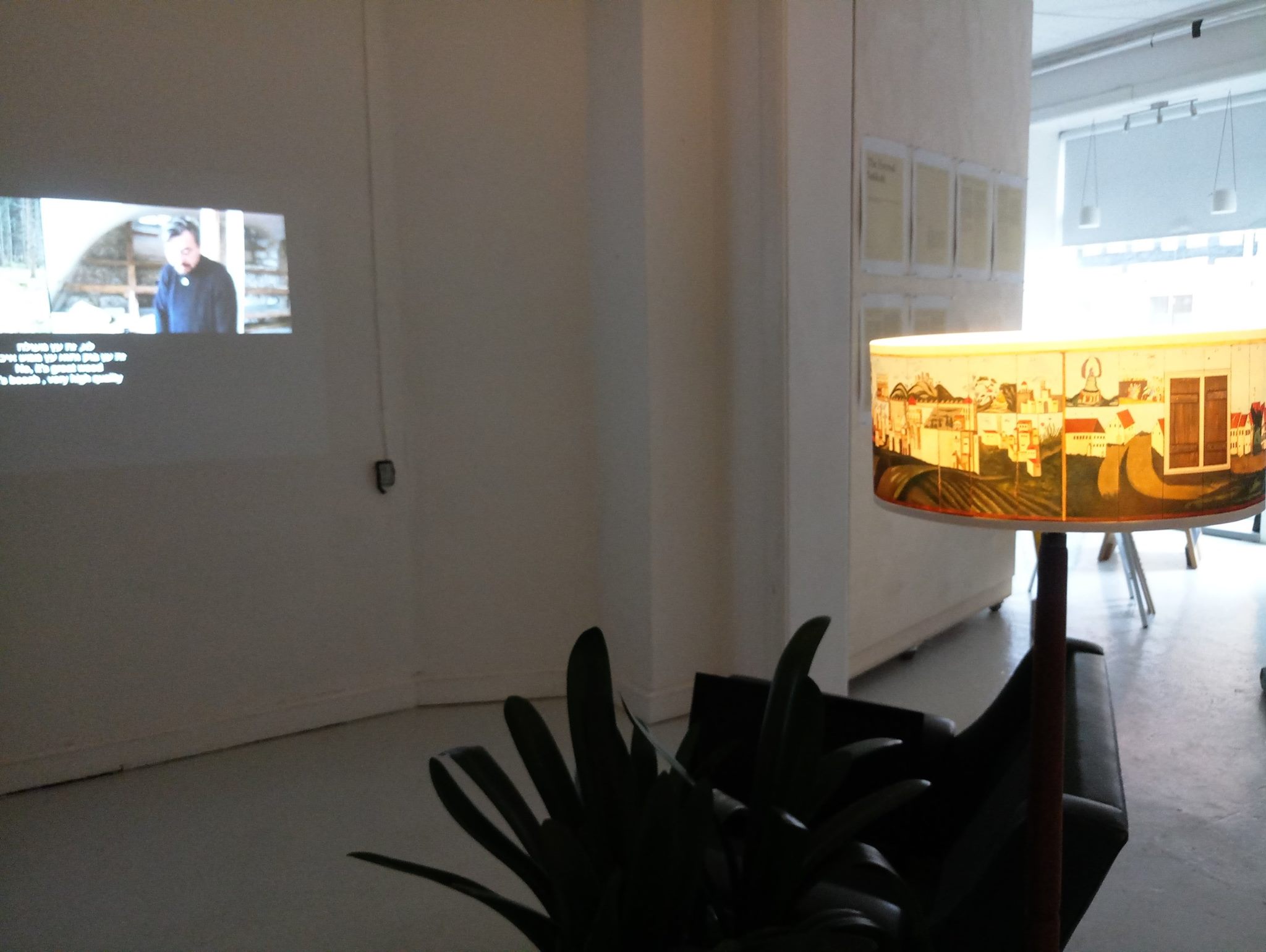
Absentees Landscapes and the Eternal Sukkah at Rum 46, Aarhus

Absentees Landscapes & Eternal Sukkah Documents

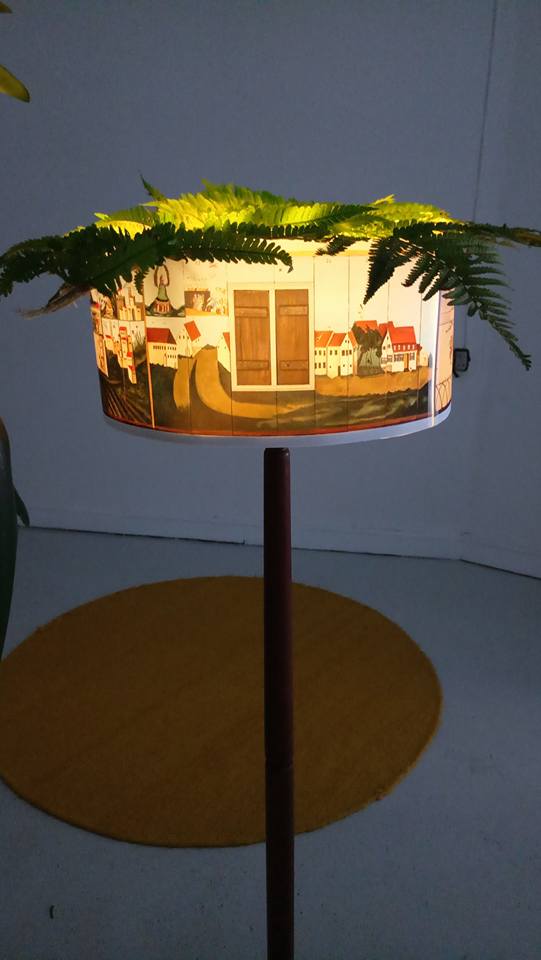
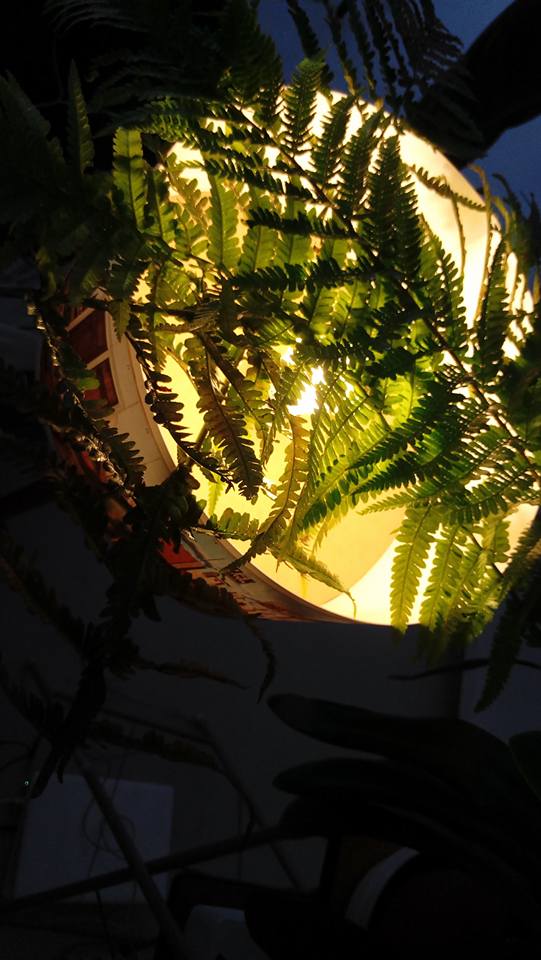
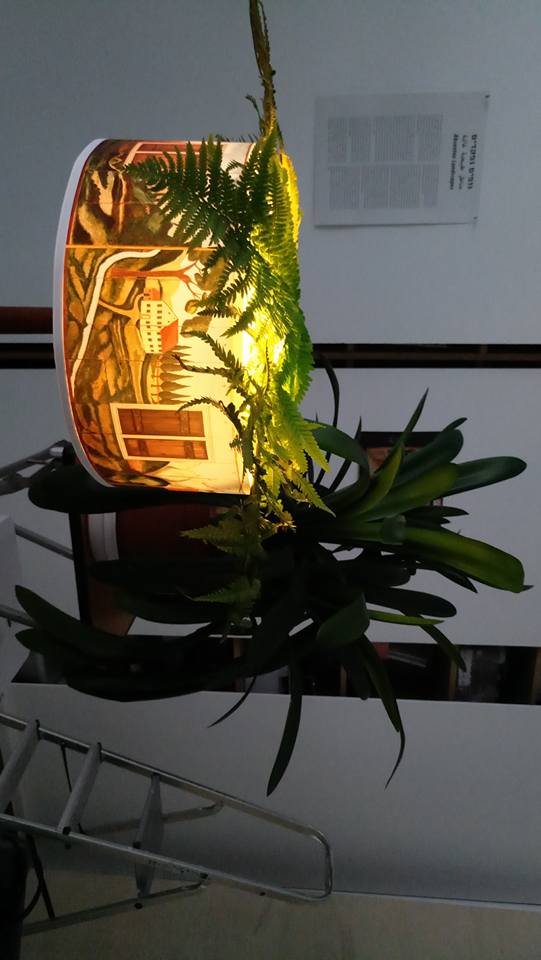
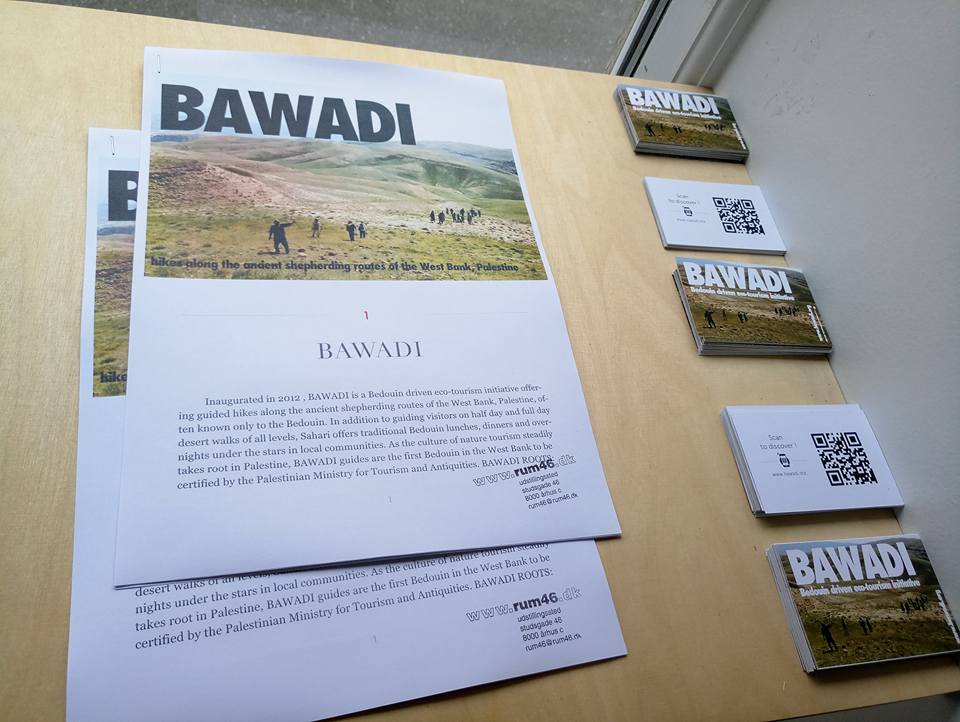
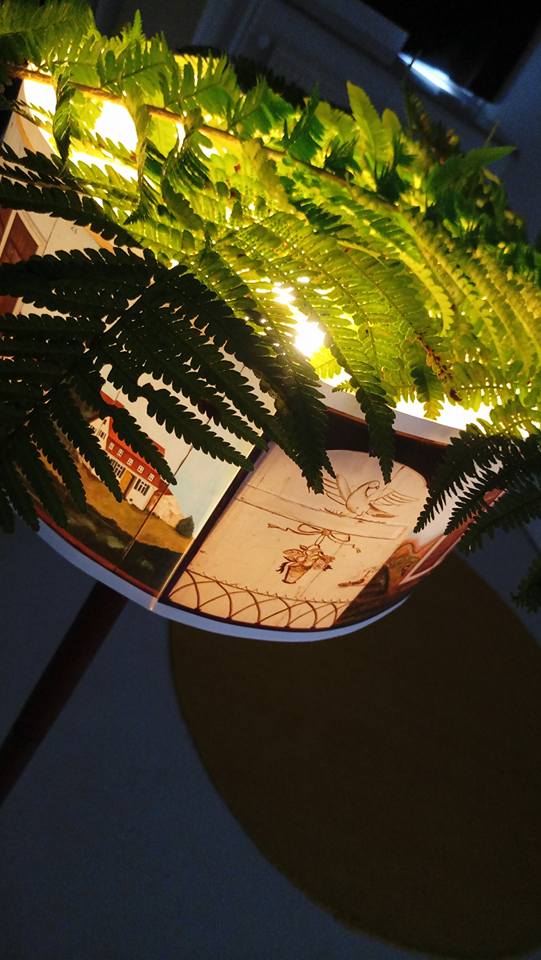
in the frame of “Room for Improved Futures” curated by Agnieszka Wołodźko and Grete Aagaard. Presentation of video materials, prints, documents and a “Sukkah Lamp”.

for more info on the projects:

Absentee Landscapes | A project by Sala-Manca in collaboration with Nir Yahalom, Ktura Manor, Adi Kaplan and Shachar Carmel

http://old.sala-manca.net/?cat=274

21231972_1801160833230667_4924133511495449912_n 21317533_1801160879897329_2773161808581326035_n 21314695_1801160903230660_698816185124207973_n 21314529_1801160943230656_8802809683941841104_n 21369289_1801160779897339_5486621519545010053_n 21314375_1801160809897336_7402250449133945459_n 21248512_1800266003320150_2403072606789758799_o 21248512_1800266003320150_2403072606789758799_o-1 21316158_1800266169986800_7586217883965827360_o 21272784_1800265986653485_5182947386362669200_o

Absentee Landscapes | A project by Sala-Manca in collaboration with Nir Yahalom, Ktura Manor, Adi Kaplan and Shachar Carmel

Finals

In the winter of 2017, a group of artists (the SalaManca Group, Nir Yahalom, Ktura Manor and Max Epstein) began building an unauthorized but accurate replica of a painted wooden sukkah from Germany (dating to 1850), which is on display in the permanent collection of the Israel Museum and is known as The Deller Sukkah.
The artists photographed the original sukkah at the museum, read articles about it, and even traveled to Fischach—a small town in Bavaria—where the original sukkah had been built and subsequently, with the outbreak of World War II, smuggled to Palestine to save it from the Nazis. At Fischach, some of the artists met with the local mayor, visited the graves of the Deller family members (owners of the original sukkah), toured the local synagogue (which now serves as a dental clinic), and documented at all on video.
At the same time, back in Jerusalem, the artists Adi Kaplan and Shahar Carmel created replicas of postcards from the town from 1920 (circa), and, in the bowels of the basement of the old leper colony building in Jerusalem, reconstructed one of the most beautiful sukkot in the world. The replica is a perfect copy of the original, but for a few deliberate differences between it and the original—some substantive and some symbolic.
As a consequence of the replication process, the paintings on the walls of the sukkah subtly transformed: the image of Jerusalem on one of the walls, which in the original was an object of yearning, became a kind of proprietary statement; the scenes of the pastoral German village on the three other walls, which used to provided a kind of visual record of the original landscape, became a wistful memorial of a community and a time that no longer exist. Other changes that were made to the replica effectively rendered it a new original: while the sukkah at the Museum is an ethnographic object that can be viewed but not entered, its replica, as created by contemporary artists, is an artwork into which entry is not only allowed, but encouraged, and can even serve as a bona fide sukkah.
The paintings themselves have also undergone small but significant changes: in them, the walls of the synagogue feature graffiti inscriptions that attest to its transformation into a clinic, and the house of the Deller family (the former owners of the sukkah) now bears the names of the two families who live in it today—one German, the other Turkish.
The replica sukkah is on display at the Absent Landscapes exhibition at Hansen House in Jerusalem (the former leper colony/hospital). The exhibition also features a film titled Eternal Sukkah—a past project by the group—which tells the story of how a hybrid Bedouin/Jewish sukkah became an exhibit at the Israel Museum in 2015, heralding the idea of transporting a sukkah from the museum into real life. A complex dialogue takes place between the Bedouin/Jewish “Eternal Sukkah” and the physical, metaphorical, and historical composite that is the “Deller Sukkah” at the Absent Landscapes exhibition. It is a dialogue between a nomadism and ownership; between enforced transience and transience as a religious value; between absentee landscapes and present ones; and between individual artistic endeavors of different historical periods, each of which, in its own way, exemplifies the drama of its time

The Eternal Sukkah and Bawadi Documents at the Imaginary Republic, Bergen

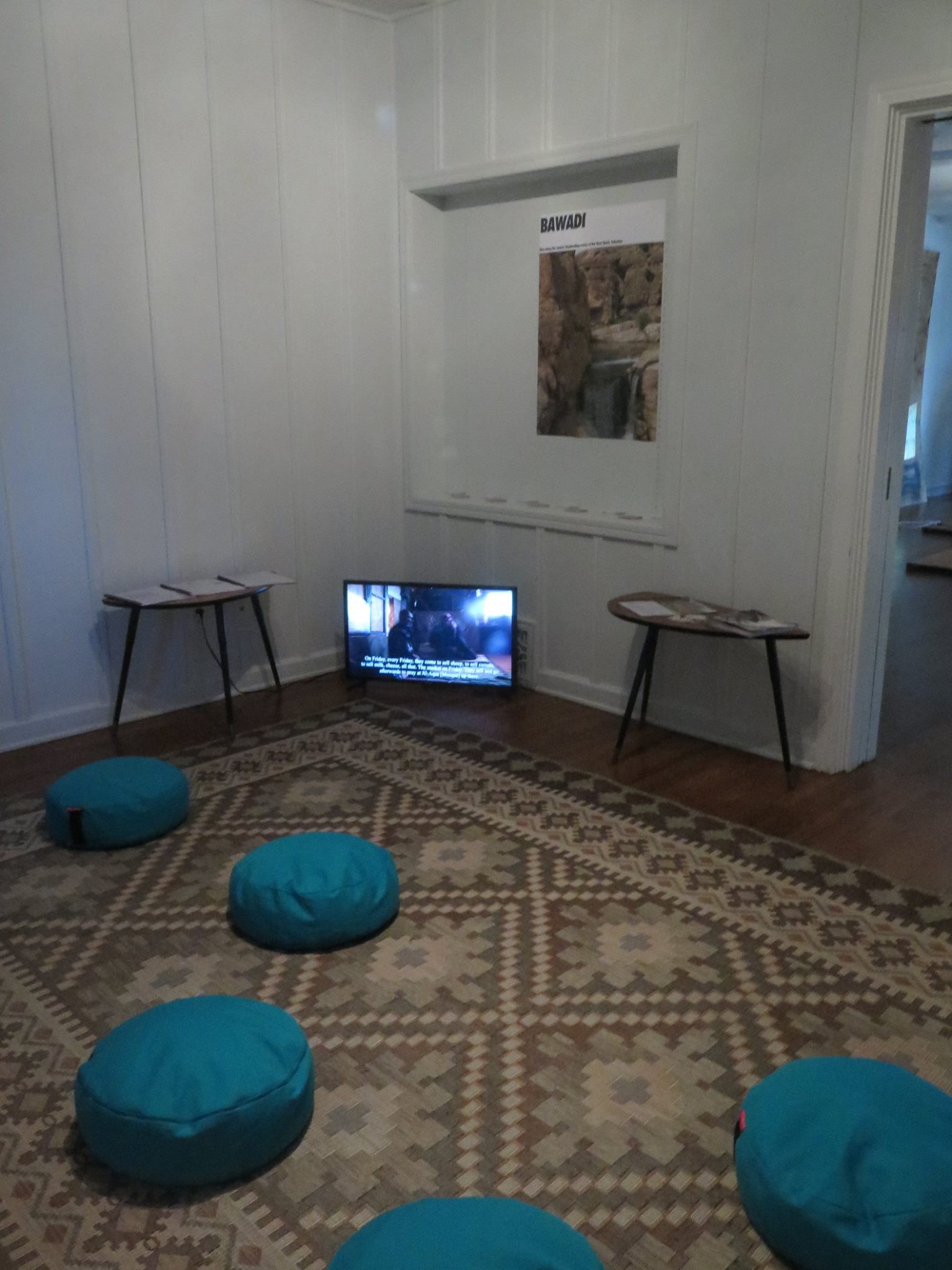
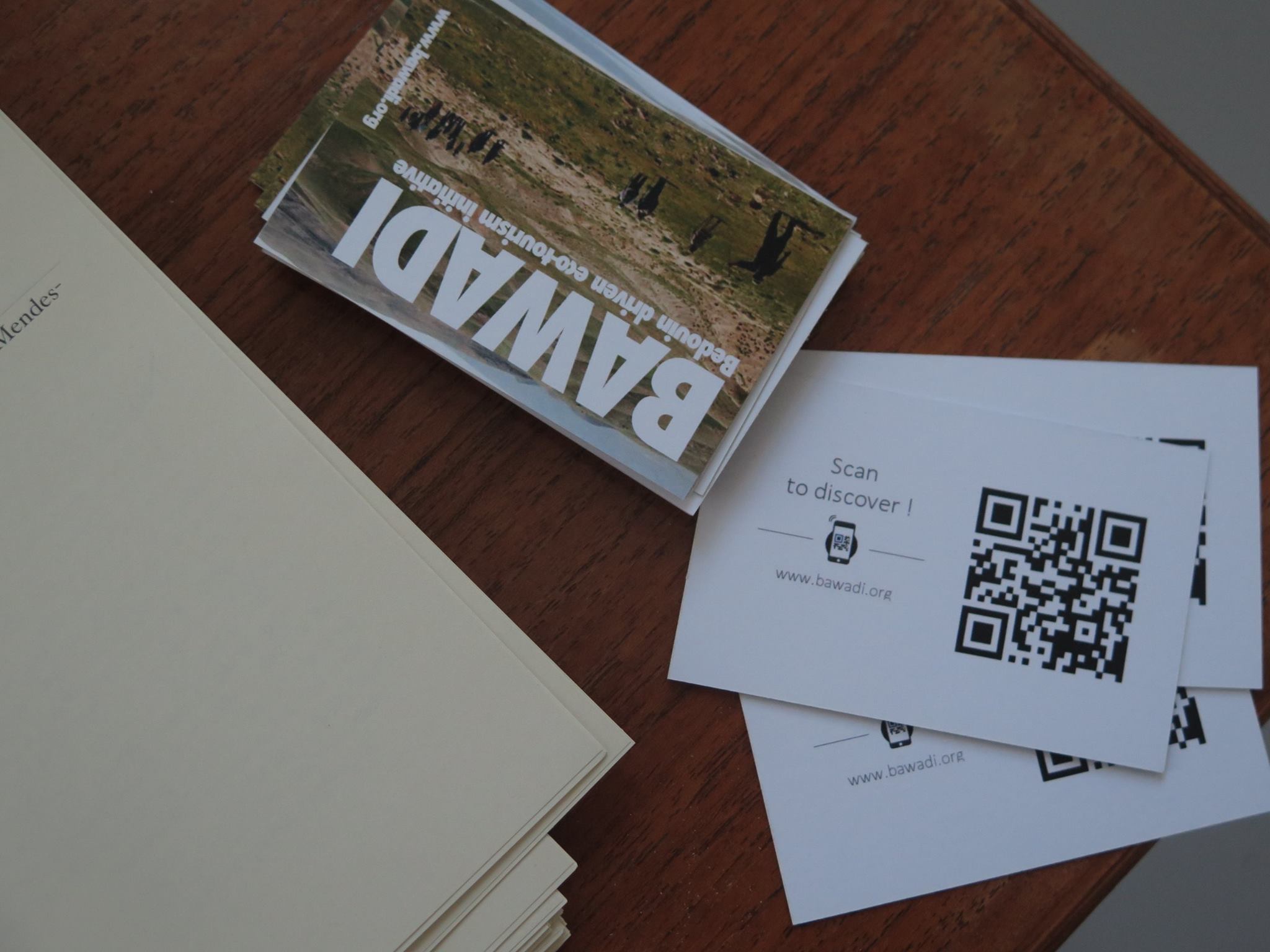
The Eternal Sukkah project (developed by us in collabortion with Itamar Mendes-Flohr and Yeshaiahu Rabinowitz) and the www.bawadi.org development project by the Jahalin Community at Tag Team Studio in Bergen, in a project runed by Brandon LaBelle in the frame of the Bergen Assembly 2016.

“The Imaginary Republic is a research project developed by Brandon LaBelle. During September and October the project takes the form of a group exhibition at Tag Team Studio, showing works by national and international artists. Through propositional and speculative works the exhibition, presented in two editions, focuses on questions and experiences of public life and culture.”

The artists showing works in Part 2 of The Imaginary Republic are Hélène Frichot, Marianne Heier, Marysia Lewandowska, Sala-manca and Lise Skou.

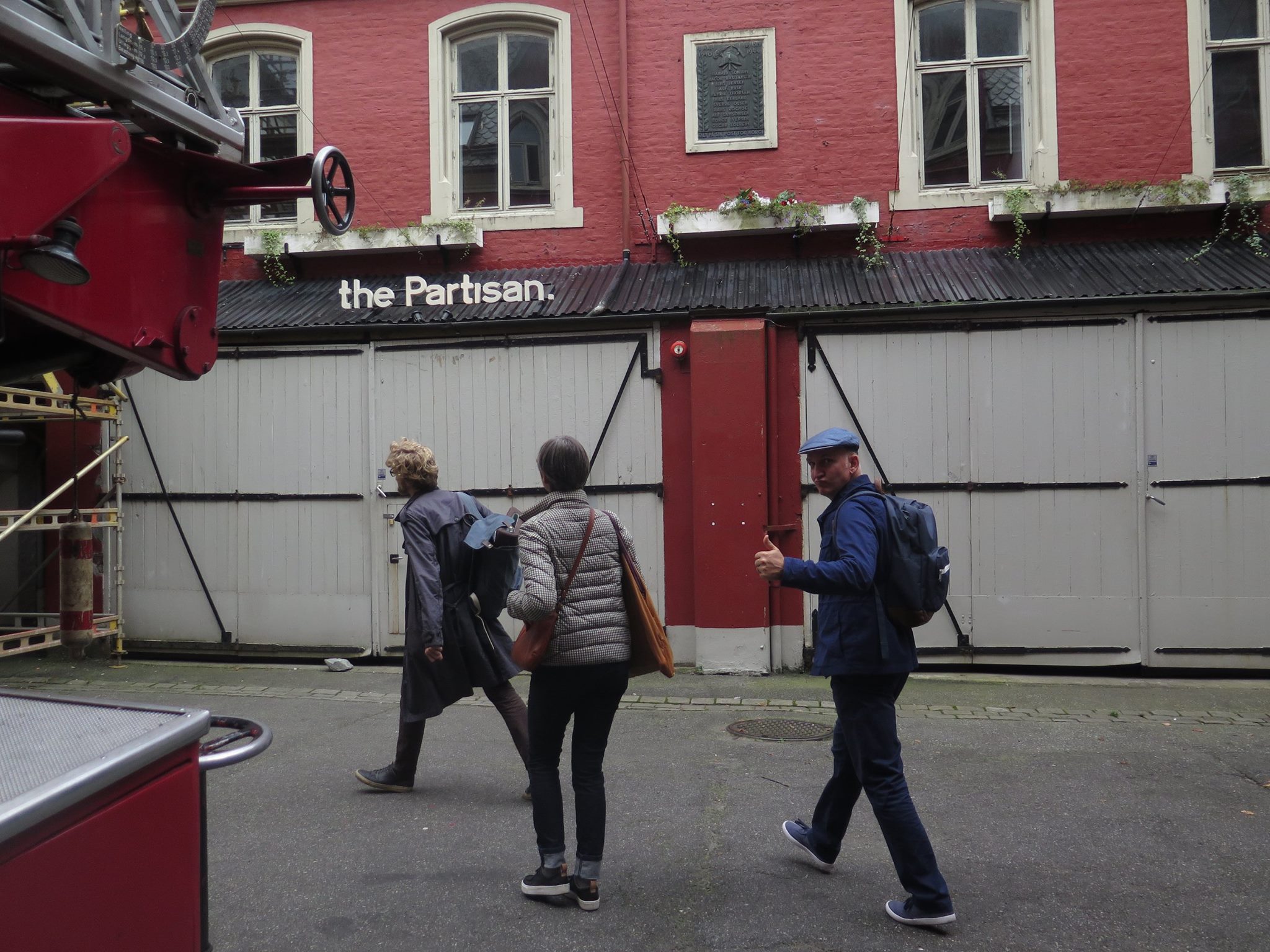
This Saturday 24.9, a talk a the Partisan Cafe, from the Bergen Assembly with Brandon Labelle (http://bergenassembly.no/en/freethought/the-partisan-cafe/)


14424791_1395531040460317_9136606917699090240_o 14362562_1395530967126991_3000948064674473815_o 14362555_1395530890460332_4948964286279990243_o 14361191_1395530950460326_5271309808786812236_o 1_imaginary-republicpress

The Imaginary Republic (Part 2)

22/09/2016 – 16/10/2016

Sat–sun kl. 12:00–17:00  Vernissage: 22/09 kl. 19:00 – 23:00

OPENING: The Imaginary Republic (Part 2)

HÉLÈNE FRICHOT
MARYSIA LEWANDOWSKA
DIEGO ROTMAN (Sala-Manca Group)
LISE SKOU

September 22nd – October 16th

Welcome to the opening of the second part of The Imaginary Republic, Thursday September 22nd at 19:00h!

The Imaginary Republic is a research project developed by Brandon LaBelle. During September and October the project takes the form of a group exhibition at Tag Team Studio, showing works by national and international artists. Through propositional and speculative works the exhibition, presented in two editions, focuses on questions and experiences of public life and culture.

The artists showing works in Part 2 of The Imaginary Republic are Hélène Fright, Marisa Lewandowska, Sala-manca (Diego Rotman) and Lise Skou.

Opening hours:
Saturdays & Sundays: 12:00 – 17:00h
Weekdays: by appointment

The exhibition is held in conjunction with the Partisan Café event program. Two talks will be held at the café (at the old fire station in Bergen) by artists from The Imaginary Republic (Part 2):
Marysia Lewandowska, Lise Skou / September 23rd – 17:00h
Diego Rotman, Brandon LaBelle / September 24th – 17:00h

Tag Team Studio

Møllendalsveien 17, 5009 Bergen

www.tag-team.no

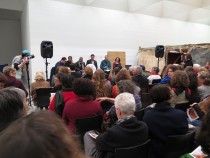
Video Documentation: On Hybridization, Transience, and Refugees | Israel Museum | 2.2.16

Video Documentation [Hebrew. Arabic& Hebrew]
2.2. 2016 | On Hybridization, Transience, and Refugees | Israel Museum
Entire documentation of a discussion focusing on The Eternal Sukkah by the Sala-Manca group, together with Itamar Mendes-Flohr and Yeshaiau Rabinowitz.
For more info on the project: http://old.sala-manca.net/?cat=274
Featuring: Amitai Mendelsohn, Abu Suleiman – Jahalin Tribe, Rachel Elior, Daphna Ben-Shaul, Alon Cohen-Lipshitz, and the artists.

About the Eternal Sukkah Project, 2014-2015 | סוכת נצח

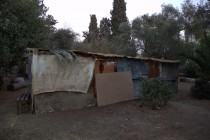
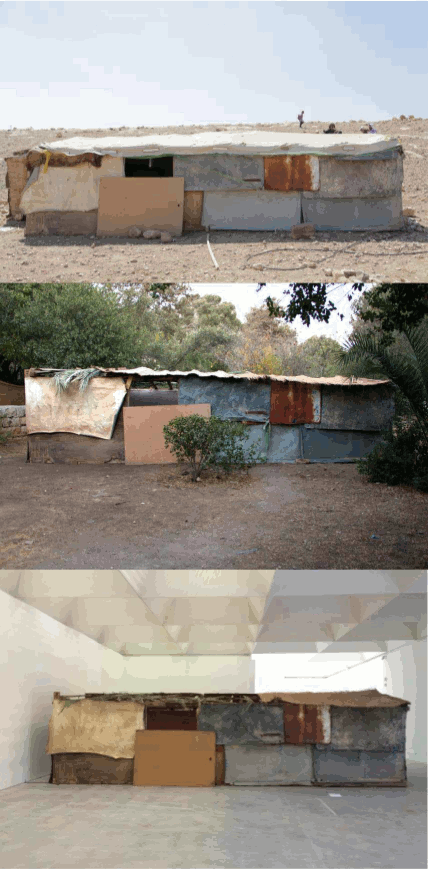
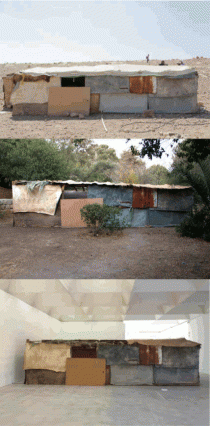
sukkot 2015An illegal shanty structure from the Jahalin Bedouin community on the Jerusalem-Jericho Road  purchased, dismantled, and reassembled in the as a Jewish Sukkah at the Jerusalem Hansen House for Art, Design and Technology in October 2014 was purchased by the Israel Museum  for part of their art collection and going to be reensambled and exhibit from September 20, at the Israel Museum.

In the lead-up to the 2014 Sukkot holiday, the Sala-Manca Group (Lea Mauas and Diego Rotman), directors of the Mamuta Art and Media Center at Hansen House, decided to create a public Jewish Sukkah on the Hansen grounds, a temporary dwelling for its activities during the holiday. Rather than construct an extravagant or innovatively designed Sukkah, the artists chose to delve into the sukkah’s charged meaning in the Israeli context and to highlight the temporary nature of the structure and its associations with exile – thus evoking associations not only with Jewish history but also with the modern Israeli context, and proposing a contemporary reading of the sukkah, both as a concrete object and as a symbol. A structure from the Jahalin Bedouin community on the Jerusalem-Jericho Road is purchased, dismantled, and reassembled in the Hansen House for Art, Design and Technology.

The Jahalin first became refugees in 1949 when they were expelled from their lands in the Negev desert. They migrated to the region of the Judean Desert, where transience continues to be a part of their daily lives. The artists met members of one of the families and listened to their stories. They then proposed to purchase a structure from them, with the idea of dismantling it and reassembling it in the garden of the Hansen House and thus transplanting a piece of one reality within another one. Not only is the sukkah structure itself transplanted to the center of Jerusalem, but with it a different story of exile and desert-dwelling. The adopted sukkah proposes a re–reading of Jewish history, an observation of the state of exile, a search for a new ethnic-national-social space, a pursuit of freedom, and an exposure to the diversity of Israeli reality and the paradoxes of history.

The next step in the project was merchandising the Sukkah as an art piece. The artists decided to intent to sell the Eternal Sukkah charging for it ten times the price paid for the original dwelling giving half of this sum would be turned over to the Al-Korshan as “copyright fee” for the design. Last June the Israel Museum decided to acquire the piece of their collection. The museum is going to build with the acquisition a precise map of instructions for the dismantling and reassembling this emblematic puzzle. What was formerly construction waste would become the object of a process of cataloguing and conservation meant to prevent the deterioration of this object of cultural heritage. Such preservation efforts would be among the most obsessive and meticulous processes of conservation and canonization of an illegal building ever undertaken; the Sukkah, further eternalized by the Museum, would stand as an iconic symbol of Israeli ethnic politics,  a canonization process of the ephemeral.