WordPress database error: [DELETE command denied to user 'sala-manca'@'localhost' for table `sala_manca_net`.`wp_options`]
DELETE FROM `wp_options` WHERE `option_name` = '_site_transient_wp_theme_files_patterns-3e81fb819c0831df69203ee558a709b9'

WordPress database error: [DELETE command denied to user 'sala-manca'@'localhost' for table `sala_manca_net`.`wp_options`]
DELETE FROM `wp_options` WHERE `option_name` = '_site_transient_timeout_wp_theme_files_patterns-3e81fb819c0831df69203ee558a709b9'

WordPress database error: [INSERT, UPDATE command denied to user 'sala-manca'@'localhost' for table `sala_manca_net`.`wp_options`]
INSERT INTO `wp_options` (`option_name`, `option_value`, `autoload`) VALUES ('_site_transient_timeout_wp_theme_files_patterns-3e81fb819c0831df69203ee558a709b9', '1792702955', 'off') ON DUPLICATE KEY UPDATE `option_name` = VALUES(`option_name`), `option_value` = VALUES(`option_value`), `autoload` = VALUES(`autoload`)

WordPress database error: [INSERT, UPDATE command denied to user 'sala-manca'@'localhost' for table `sala_manca_net`.`wp_options`]
INSERT INTO `wp_options` (`option_name`, `option_value`, `autoload`) VALUES ('_site_transient_wp_theme_files_patterns-3e81fb819c0831df69203ee558a709b9', 'a:2:{s:7:\"version\";s:3:\"4.0\";s:8:\"patterns\";a:0:{}}', 'off') ON DUPLICATE KEY UPDATE `option_name` = VALUES(`option_name`), `option_value` = VALUES(`option_value`), `autoload` = VALUES(`autoload`)

WordPress database error: [INSERT, UPDATE command denied to user 'sala-manca'@'localhost' for table `sala_manca_net`.`wp_options`]
INSERT INTO `wp_options` (`option_name`, `option_value`, `autoload`) VALUES ('_transient_doing_cron', '1792701155.1063799858093261718750', 'on') ON DUPLICATE KEY UPDATE `option_name` = VALUES(`option_name`), `option_value` = VALUES(`option_value`), `autoload` = VALUES(`autoload`)

Yeshaiau Rabinowitz. – Sala-Manca

About the Eternal Sukkah Project, 2014-2015 | סוכת נצח

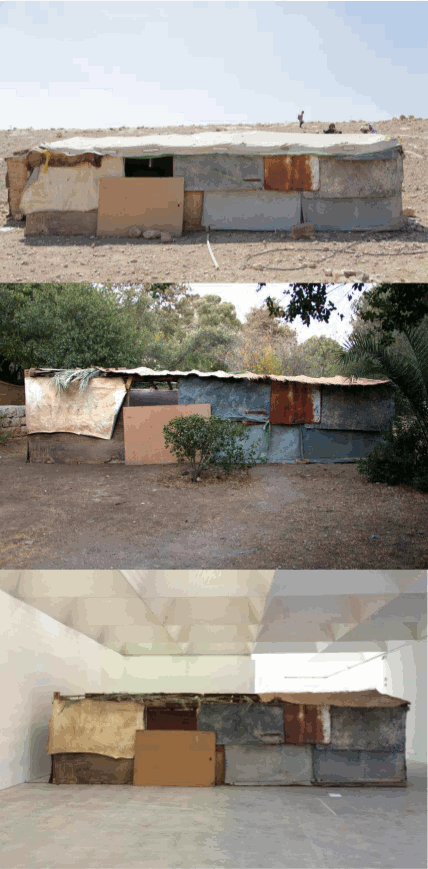
sukkot 2015An illegal shanty structure from the Jahalin Bedouin community on the Jerusalem-Jericho Road  purchased, dismantled, and reassembled in the as a Jewish Sukkah at the Jerusalem Hansen House for Art, Design and Technology in October 2014 was purchased by the Israel Museum  for part of their art collection and going to be reensambled and exhibit from September 20, at the Israel Museum.

In the lead-up to the 2014 Sukkot holiday, the Sala-Manca Group (Lea Mauas and Diego Rotman), directors of the Mamuta Art and Media Center at Hansen House, decided to create a public Jewish Sukkah on the Hansen grounds, a temporary dwelling for its activities during the holiday. Rather than construct an extravagant or innovatively designed Sukkah, the artists chose to delve into the sukkah’s charged meaning in the Israeli context and to highlight the temporary nature of the structure and its associations with exile – thus evoking associations not only with Jewish history but also with the modern Israeli context, and proposing a contemporary reading of the sukkah, both as a concrete object and as a symbol. A structure from the Jahalin Bedouin community on the Jerusalem-Jericho Road is purchased, dismantled, and reassembled in the Hansen House for Art, Design and Technology.

The Jahalin first became refugees in 1949 when they were expelled from their lands in the Negev desert. They migrated to the region of the Judean Desert, where transience continues to be a part of their daily lives. The artists met members of one of the families and listened to their stories. They then proposed to purchase a structure from them, with the idea of dismantling it and reassembling it in the garden of the Hansen House and thus transplanting a piece of one reality within another one. Not only is the sukkah structure itself transplanted to the center of Jerusalem, but with it a different story of exile and desert-dwelling. The adopted sukkah proposes a re–reading of Jewish history, an observation of the state of exile, a search for a new ethnic-national-social space, a pursuit of freedom, and an exposure to the diversity of Israeli reality and the paradoxes of history.

The next step in the project was merchandising the Sukkah as an art piece. The artists decided to intent to sell the Eternal Sukkah charging for it ten times the price paid for the original dwelling giving half of this sum would be turned over to the Al-Korshan as “copyright fee” for the design. Last June the Israel Museum decided to acquire the piece of their collection. The museum is going to build with the acquisition a precise map of instructions for the dismantling and reassembling this emblematic puzzle. What was formerly construction waste would become the object of a process of cataloguing and conservation meant to prevent the deterioration of this object of cultural heritage. Such preservation efforts would be among the most obsessive and meticulous processes of conservation and canonization of an illegal building ever undertaken; the Sukkah, further eternalized by the Museum, would stand as an iconic symbol of Israeli ethnic politics,  a canonization process of the ephemeral.
Building the Eternal Sukkah, Graham Lawson, Jerusalem Post

Print Edition

Photo by: Courtesy
Building ‘The Eternal Succa’
By GRAHAM LAWSON
09/08/2015
Israeli artists Sala-manca construct a succa from the materials of a Beduin home. The structure goes on view at the Israel Museum this month
In July 2014 Diego Rotman and Lea Mauas, two Israeli artists who operate under the alias Sala-manca, began a process that involved the purchase of a Beduin house, the materials of which they intended to use for the building of a succa.The structure came to be named “The Eternal Succa” and was recently acquired by the Israel Museum.

for the enitre artice:

on-line:

http://www.jpost.com/Israel-News/Culture/Building-The-Eternal-Succa-415620

pdf:

Building ‘The Eternal Succa’

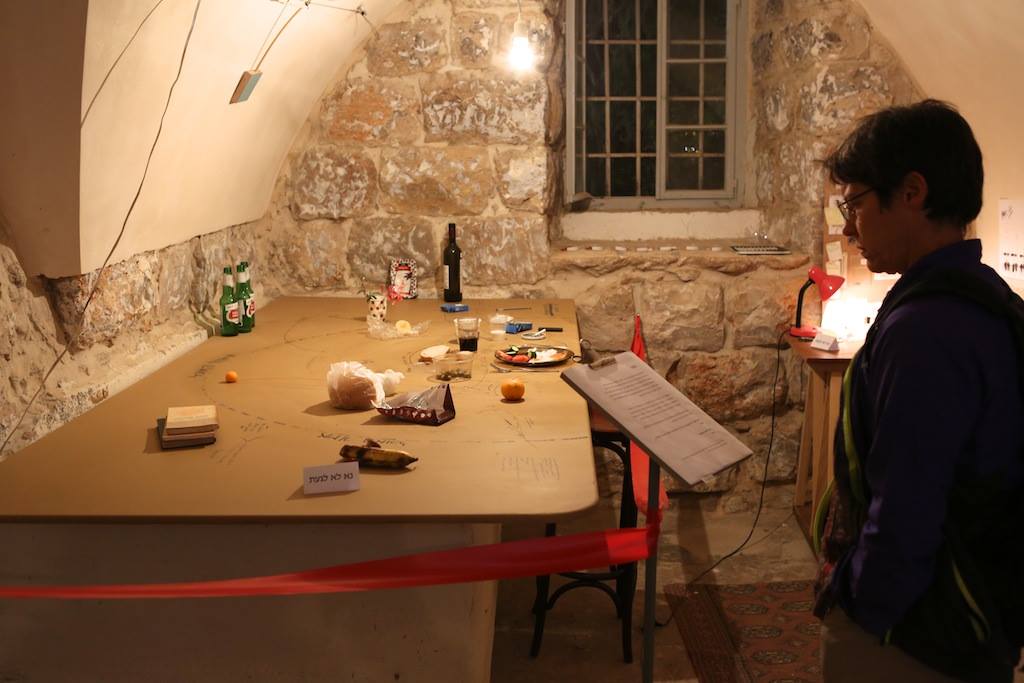
The Underground Academy, Open Studio, 2014

The Underground Academy – The Academy of the Contemporary

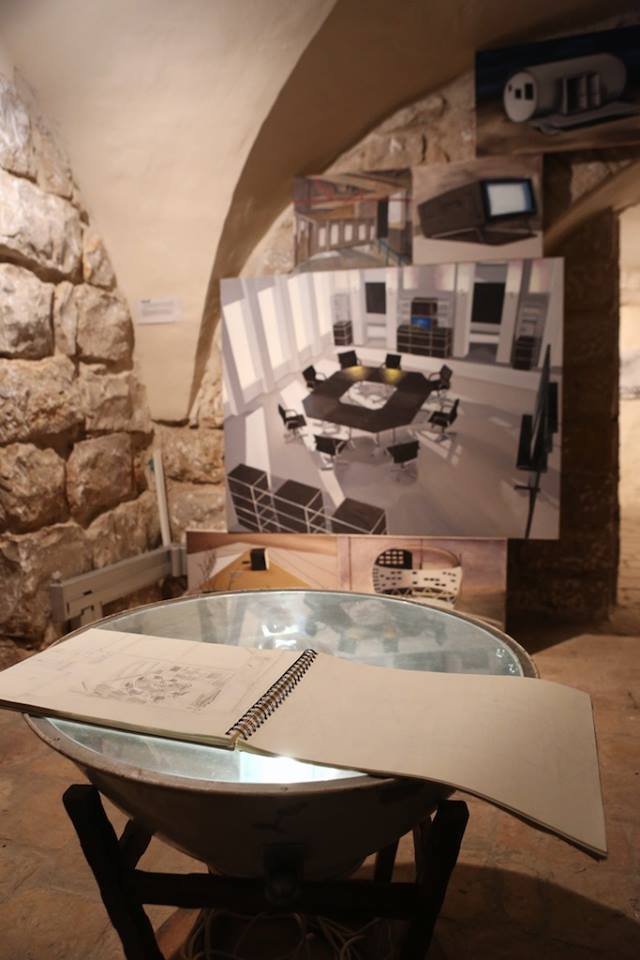
Open Studio Exhibition in the frame of Manofim 2014

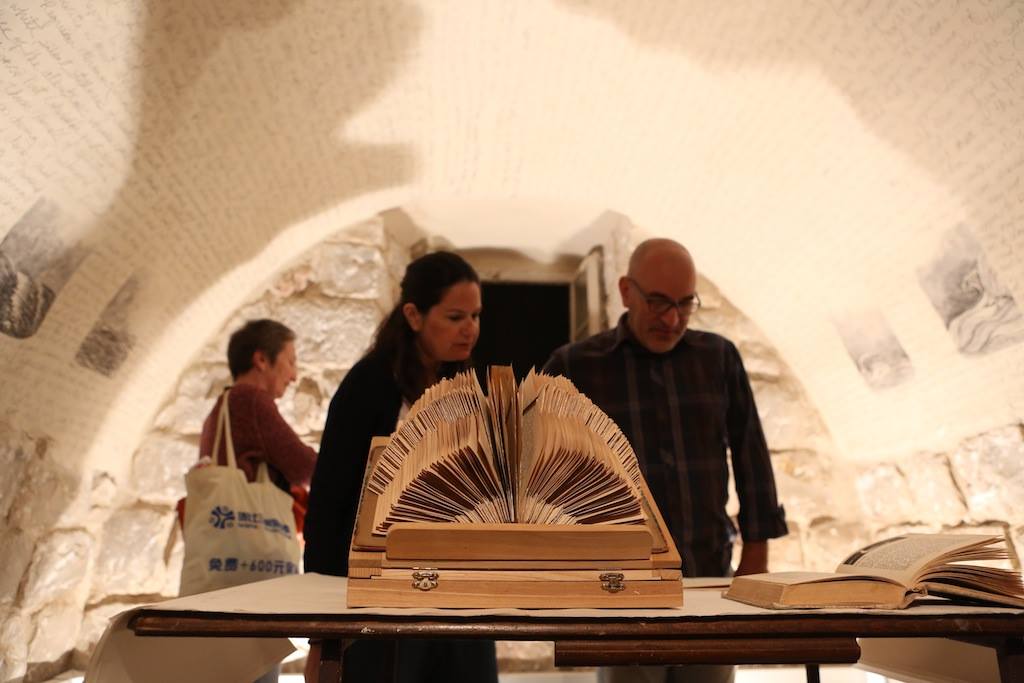
Artists: Chen Cohen,  Ktura Manor, Itamar Mendes-Flohr,  Sala-Manca, Yeshaiau Rabinowitz, Yoel Regev, Maytal Rotenberg, Ayelet Zohar

10547754_823629837679754_952350159024582472_o
Ayelet Zohar
10733767_823630177679720_4776509276133093047_o
Yeshaiau Rabinovitz
1920602_823628297679908_7569762044895922254_n
Ktura Manor
10379511_823631551012916_4169108278609574908_o
Maytal Rotenberg

In 1963 Portuguese poet João DelgadoIn wrote, in an unpublished manifesto, that all museums, universities and sports clubs should be closed for at least one year, in order to reopen a year later.  After Delgado locked two municipal museums with his own locks, he was arrested.  In jail he wrote the outlines for The Academy of the Contemporary.