Elephants in the Nights of Metula (2005-2010)
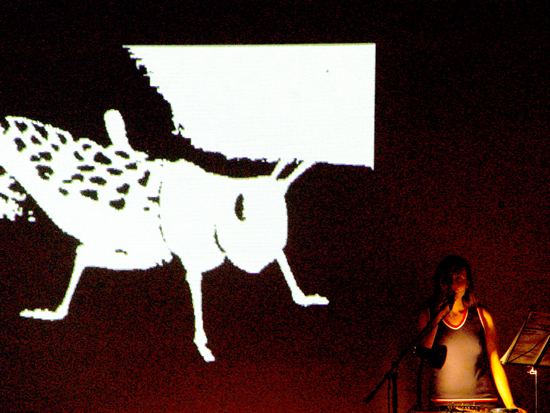
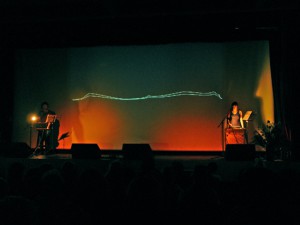
Performance (Yiddish/English/Polish/Hebrew)Presented at The Neighbour Next Door Festival (Sasiedzi dla Sasiadów – edycia V), Warsaw, Poland / Jewish Film Festival, Jerusalem / Belfast Exposed – Interface – Ullster University, Belfast,-24.5.06 / CCA – Tel-AVIV/ ForumStadtPark, Graz, Austria – In the frame of Under_Ctrl Project, curated by Basak Senova – 31.3-2..4.06/ NYU, New York, February, 2006/ The Upgrade International, Eybeam, New York, September, 2005 / Blurrr 5- Bienniale of Performance Art, November, 2005/ Jewish Film Festival, Jerusalem Cinematec, December 2005/ 8 Metula’s Poetry Festival; Metula, June 2005 /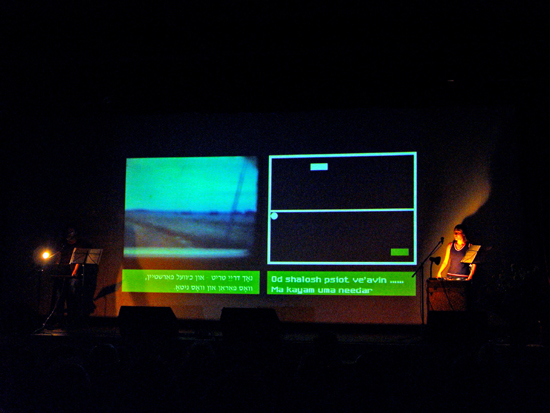 As an installation was presented as part of “Eclipsed Voices”, OpenSpace, Vienna | Curator: Basak SenovaElephants in the Nights of Metula is an performance and installation that includes video, digital slides, film, animation, and dual audio in Yiddish and English. The performance is based on the texts of the Yiddish poet Avrom Sutzkever (1913-2010), re-contextualizing his poetry in the historiography of Israeli literature from a contemporary perspective. The story told in the installation deals with the harsh Israeli cultural control policies with respect to the Jewish diaspora cultures existing in the 50’s, and which in its turn represented a process of hegemonization of resulting in a new Hebrew culture. This project is a continuation of our performance work dealing with texts and poetry. The piece also relates to our research on the gap between the written letter (the text), its voiced expression, the body and the icon, and visual, cultural and sound translations. Avrom Suzkever, who passed away last January at the age of 96 years, was indeed one of the greatest poets in the Yiddish language, and was also recognized as of the most prominent poets of the 20th Century. Despite his talent and originality, Since his writings were in Yiddish; he remained almost unknown in Israel.
[“Elephants in the Nights of Metula” text by Sala-Manca] |
 The poems in this booklet are in 4 different writings:
|
ECLIPSED VOICES The “off-the-record” narratives have the potential to generate voids in the vortex of registered histories. As an ever-changing representation of the past, “memory” constructs new patterns to read history. Collective memories alter their content with social, political, and economical changes in time. Thus, individual memory develops in interaction with the diverse realities of social inputs. Our memory shapes our lifestyles, political and ideological positions. Yet, in the process of remembering, each time, we reconstruct a memory by adding or changing details. Therefore, memories are never stable. At the same time, the acts of confrontation, integration, and adaptation are possible only through these ephemeral and fragmented memories since they indicate the construction of defence mechanisms for us to cope with life. |
|||||||||||||||
 |
|
||||||||||||||
|
In any case of political and economical imposition and repression, identities have systematically been lost and fragmented. At personal levels, identities are re-constructed with fragmentation of the narrations -as memory extracts- and the disconnected temporality of multiple realities.
With each work, we clearly witness such narratives in different verbal and visual levels –in every possible layer: political, territorial, spatial, psychological, economical, social –in every possible layer: political, territorial, spatial, psychological, economical, social– in each work. This collection of works touches upon the issues of the control of the memory as each work clearly manifests how individual stories about the past interact with existing narratives and other forms of remembrance. It is inevitable that these memories will continue to change, once there is no one alive to tell the tale from their own experience. For this project, this fact activates the motivation behind the obsessive attempt to document personal narratives as eclipsed voices. Text by Basak Senova |
||||||||||||||


Real Time in the Age of Lie, JFF, 2004
Real Time in the Age of Lie | Intersection Festival for Experimental Video | 21st Jerusalem Film Festival, Hazira Performance Art, Jerusalem Cinematec | July 2004
“In an age when lie predominates – the moment is an
aesthetic revolution. Or not.”
(Marianne Loop)
In “Real Time in the Age of Lie”, video art in its plastic and performative context is at the stage center. “Real Time” as the point of departure for an experimental video event, where Real-Time (live broadcasting), Image, and the Immediate, are examined from different angles, through a variety of art fields which make use of the mediums of video and/or photography.
In our present-day visual reality, crucially shaped by the mass media, the art of video in its various manifestations (video art, documentary video, V.J., home video, etc.) has become a central medium for the representation and molding of an-other reality, and for the expression of the counter voice.
In this evening, video works that deal with documenting and processing reality in a poetic, sculptural, conceptual, and/or political way, offer either an alternative for the common visual reality, or supplementing it, or hiding it.
It is an attempt to present one moment – of the real in time.
Curator: Sala-manca
Artists: Amnon Illuz, Sheri Arnon, Shira Borer, Tamy Ben-Tor, Jan Tichy, Eden Ofrat, Yonatan Vinitsky, Marcelo Lauber, Ran Slavin, Davide Grassi, No-org, Sala-manca, Audio Visual Station for Remixing and Recycling
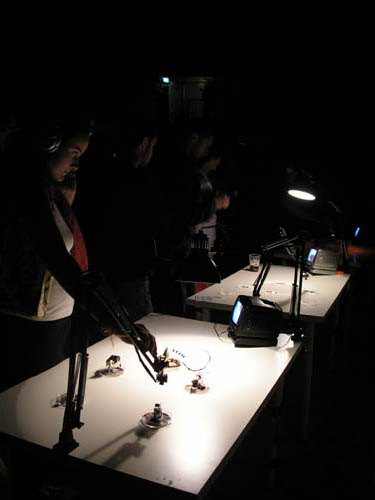
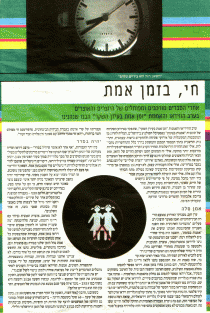
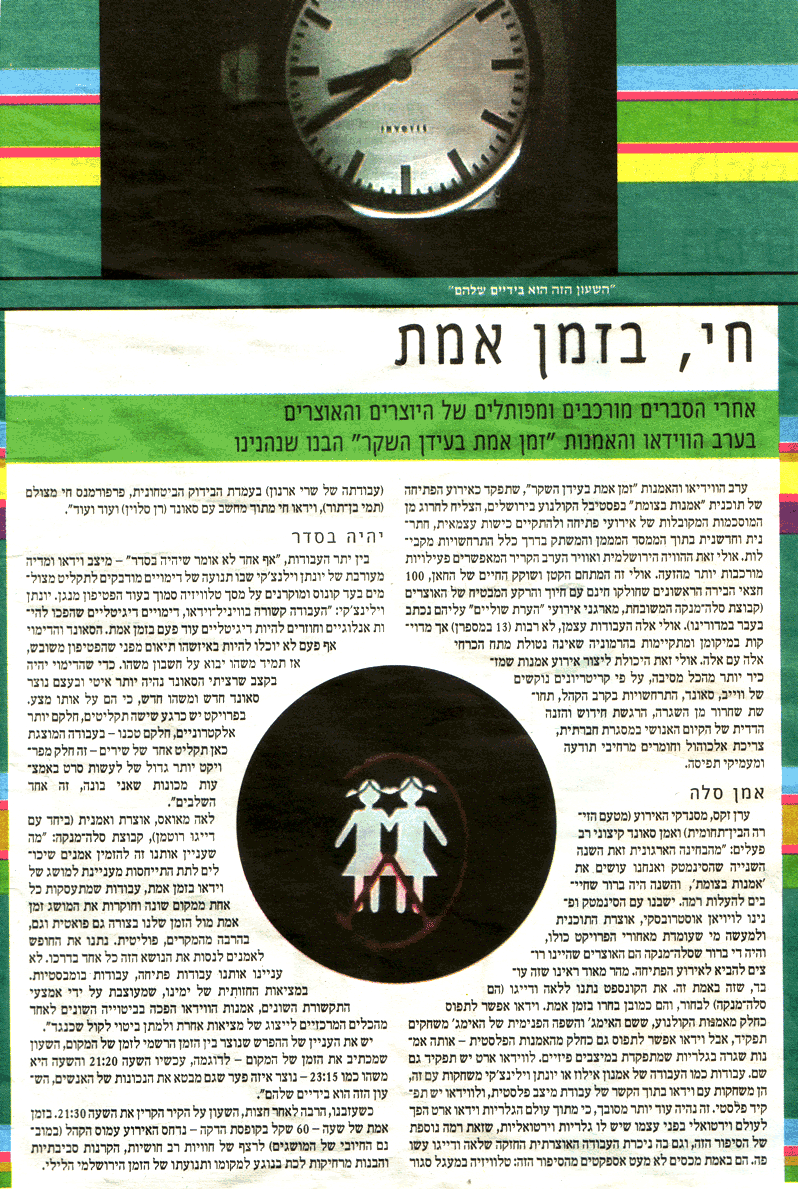
To Live in Real Time, Jack Faber, 2004
To Live in Real Time, Jack Faber, Kol Hazman, July 2004
 ,
click to enlarge
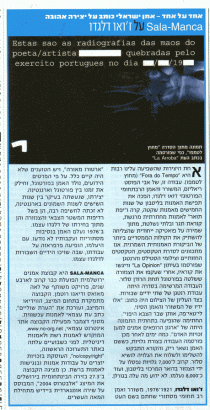
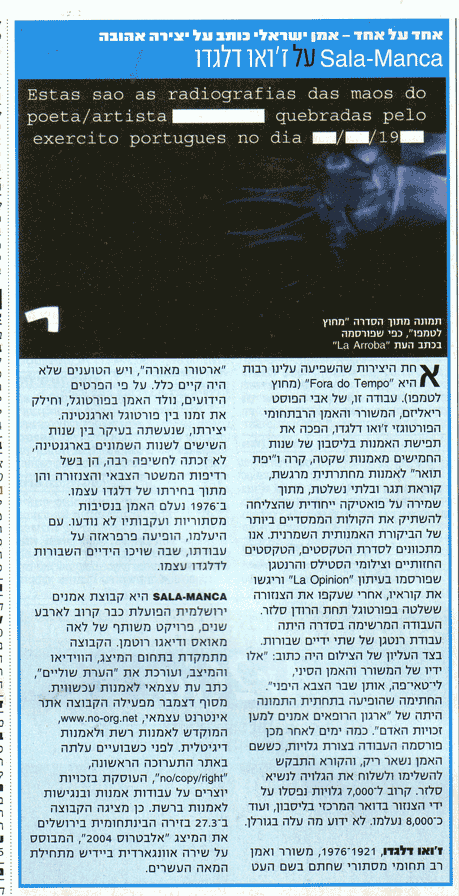
Sala-manca about Joao Delgado, 3.2004
Sala-manca about Joao Delgado, Time Out, 3.2004
click to enlarge
Kinra.Zip, 2004
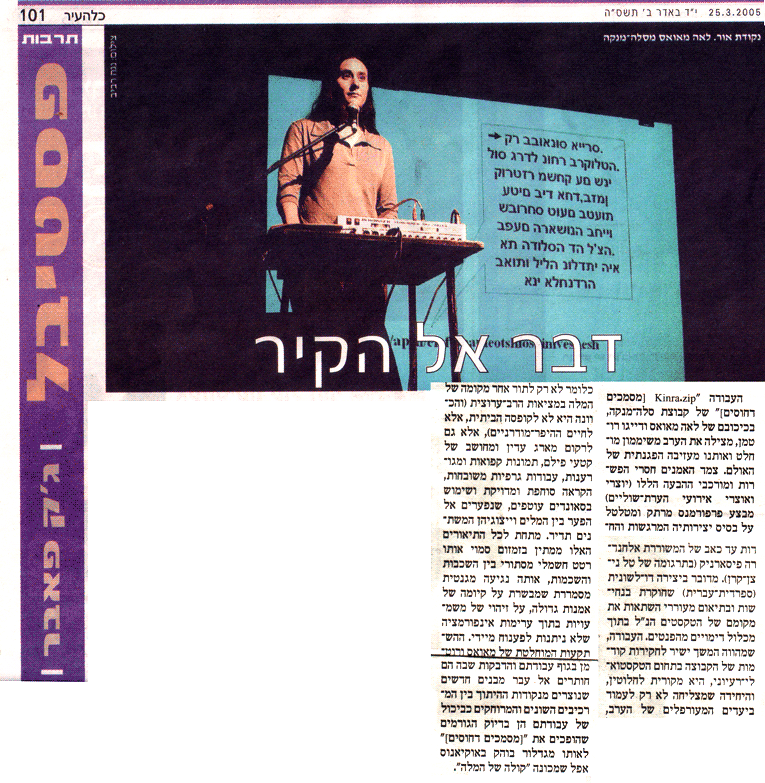
Performance |Comisioned by the Metula’s Poetry Festival, 2004 |Showna at VideoBardo VideoPoetry Festival, November 2004 |Kola shel hamila / Jerusalem, March 2005
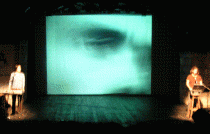
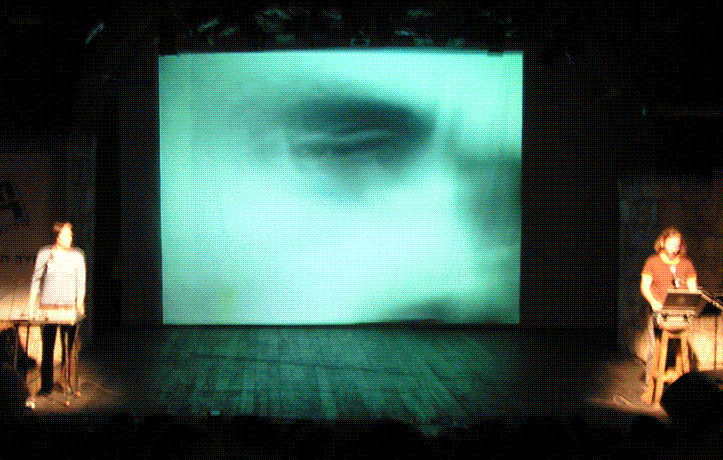
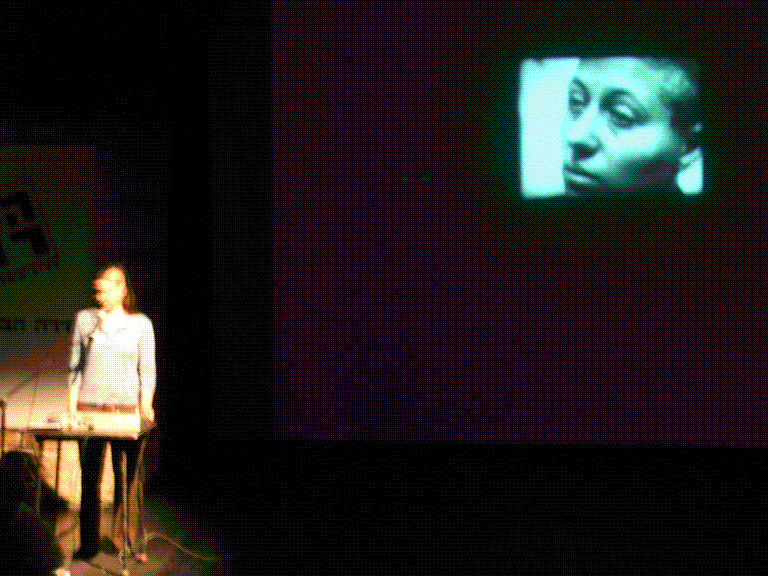
kinra.zip is a performance for digital slides, video, two voices in spanish and hebrew with ladino script. The performance is based on texts of the argentinean poet and writer Alejandra Pizarnik (1936-1972), and on Tal Nitzan-Keren’s translations into hebrew.
The performance continues our performances-research work on the aesthetics of the difference and on visual, cultural and sound translations.
|
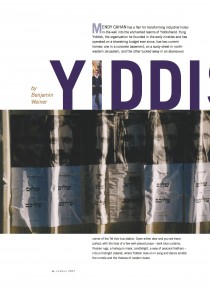
Yiddish on Israeli Streets, Benjamin Weiner, 2004
Yiddish on Israeli Streets, Benjamin Weiner, Pakn-Treger, 2004
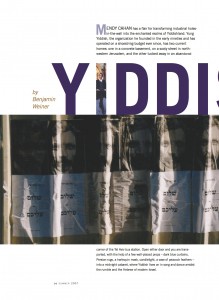
click image to get the pdf
Over Memory- Jaffa, 2004
Jaffa‘s Over Memory/Archives & Invisible Performance | Blurrr, The 4th Biennial for Performance Art, Jaffa, November, 2004 | Curator: Sergio Edelstein
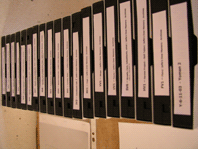
Documentation as a “flea.” Memory as an item. Memory creation as a purpose in itself – dialogue with the overflow of documentation (in art, tourism, family events). Documentation instead of performance. Archive as a quotation of a city. The artistic act (city documentation) is completed before the action (the biennial) begins, and only its memory (ca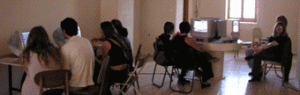 talog-diary) and the spectator’s action remain: watching the action memory as reconstruction of the city and the artistic action. Documentation of seemingly irrelevant aspects of history and constructing place memory, in an attempt to create poetics of the city’s Over Memory*.
* The concept Over Memory, coined by the Portuguese scholar Joao Delgado, refers to areas in individual and collective memory that are conceived as meaningless and purposeless even though they are central to pertinent mapping. See: Maure, A., “Paradigma de la memoria y sobrememoria – Bocetos para una arqueologia del olvido”, Ruptura Nro. 123, 1993, pp. 23-28
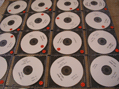
Archives at the Bienniale of Performance Art
The Over Memory Archive of Jaffa is the outcome of our (namely: external artists) efforts to document and catalog the city. We set to catalog the irrelevant, “marginal,” as it were, aspects of the city (cross-documentation), in an attempt to construct other, different, poetic representation and memory, believing that what we conceive as irrelevant might unveil an additional facet of the city and thus complement the relevant which is always relative.
In the context of the biennial, we wanted to create an action that would not take place in front of an art audience (the biennial spectators), but rather chose to act vis-a-vis the city inhabitants. The artistic act was an ambivalent act of encounter and estrangement: day in, day out, for about a week, city inhabitants were exposed to the documentation of, inter alia, locks, vegetation, sky, zebra crossings, cars passing by, walking rhythm, urban air-conditioning sounds, street names, graffitis.
In place of the action, we chose to present the documentation to the biennial audience, believing that sometimes the documentation – the material on-, the discourse about- – is more meaningful than the actual artistic act. And since we had decided at the beginning of our field-work not to document the “artistic act” itself, we brought with us a catalog (along with documentation items) qua action memories, travel journal (including times, dates, locations and descriptions), activity log, that allowed us to reconstruct the artistic act by tracing our movement in the city and simultaneously revisit the city and our encounters with it as we were watching over memory items.
How to Use the Archive
The archival material is cataloged thematically (Category), chronologically (Date), temporally (Time), geographically (Address), and descriptively (Description), as well as providing the original location of the item (Master) and its place in the catalog (Shelf). In addition, each item has a catalogic entry that includes information about the respective media: P – stills, V – video clips, S – soundtracks.
One can search and arrange the items according to the divisions in the librarians’ catalog, or look for them in the printed edition according to date and category.
In addition, there are maps that map the documentation activity according to date and theme, see: Atlas.
(It is worth mentioning that the catalogic items were not edited or elaborated in any way.)
Jaffa – Over Memory: Project Schedule
a. November 5-14, 2003
Documentation in stills, video and sound of seemingly irrelevant aspects of Jaffa.
b. November 15-19, 2003
Classification and cataloging the material within a catalog that refers readers chronologically and thematically to the documentation, and provides them with information about the media.
Inviting the general public to use the archive during the festival. The exercise’s aim: writing and creating material for electronic book: Over Memory ñ I – Outlines for an Over Historiography of Jaffa.
c. November 20-22, 2003
Founding Jaffa’s Over Memory Archive. The archive was open to the general public, researchers, artists, intellectuals, tourists and inquisitive people.
Closing the archive – locking the archival material with an index. The archive would be destroyed along with the publication of the electronic book (stage d).
d. November 23 to December 31, 2003
Preparing the electronic book.
e. January 1, 2004 (tentative date), without time limit
Publication of Over Memory ñ I – Outlines for an Over Historiography of Jaffa (various authors), and its dissemination in libraries throughoutIsrael, and in research institutions dedicated to the study of Jaffa.
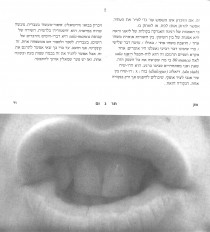
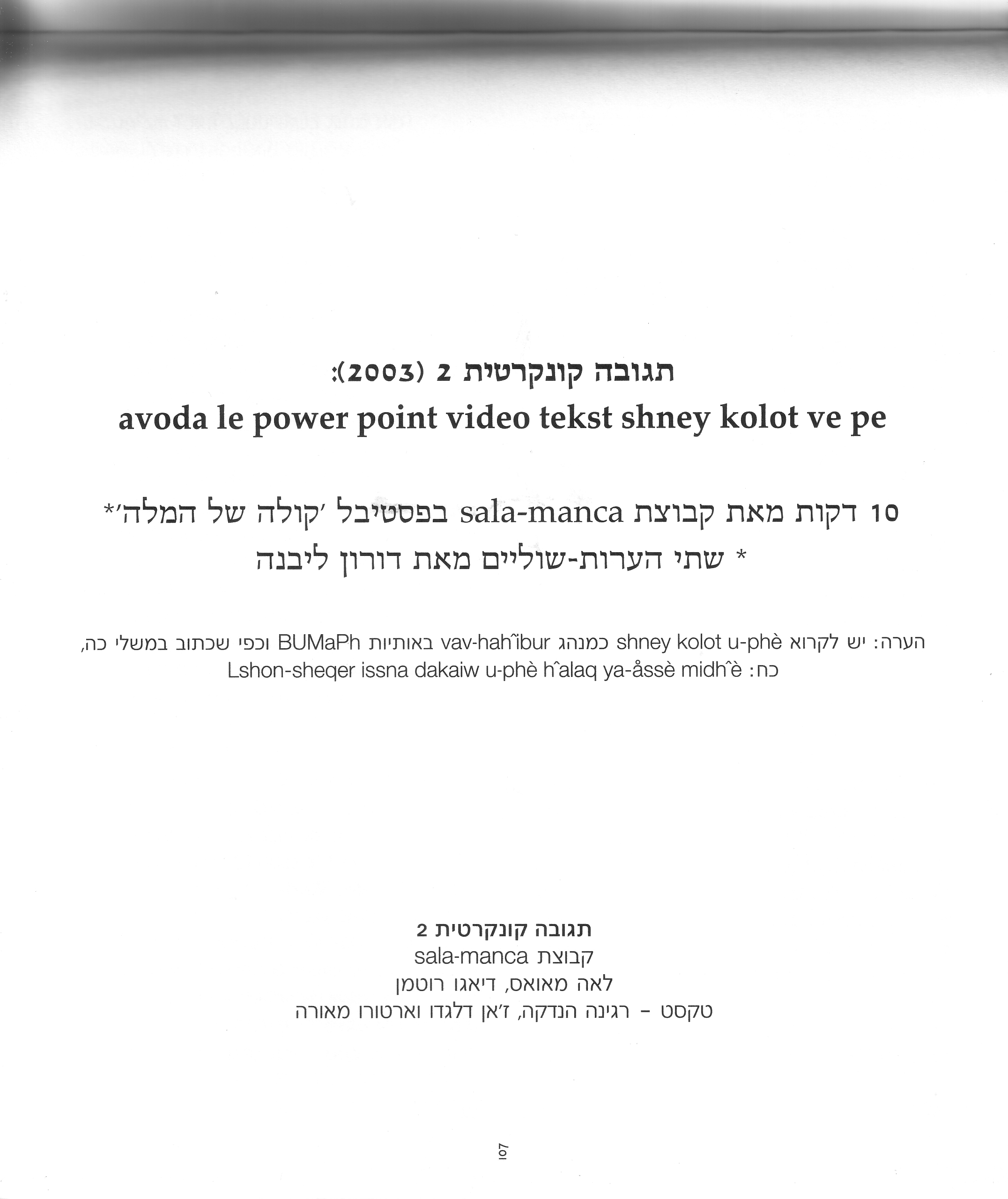
Concrete Response 2, Doron Livne, 2004
Doron Livne, Concrete Response 2, 2004
Click to enlarge
Minute Box Machine, 2004-2008
Exhibited in the frame of “Speed of Light”, Digital Art Lab, Holon | Curators: Galit Eilat, Eyal Danon | VideoZone 2008
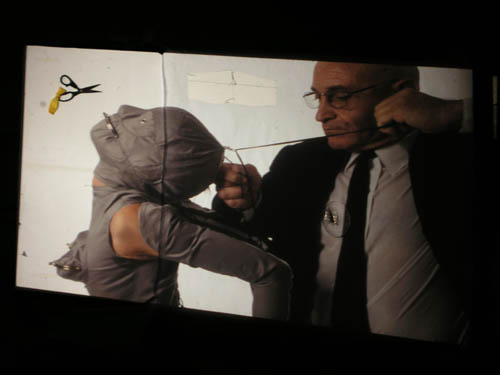
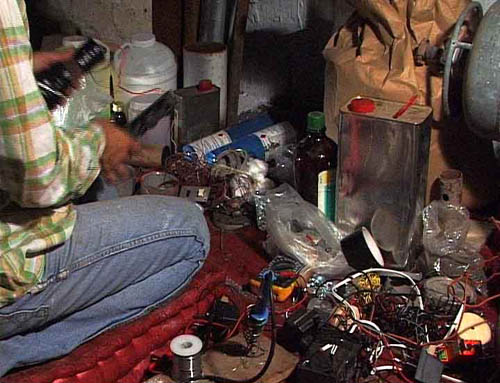
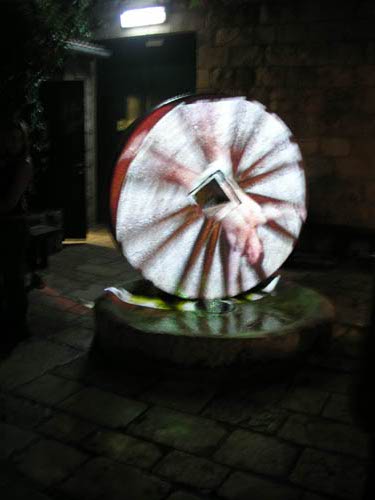
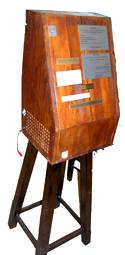
Minute Box Machine: A Reconstruction of Marian Loop’s Time Machine enables viewers to play with time. The Minute Box Machine invites the public to acquire a product—in this case, one minute. Inserting a one Shekel coin into the machine activates a clock inside the Box for 60 seconds. The clock is being filmed in real time by a surveillance camera, and the footage is projected from inside the Minute Box Machine onto a central wall at the open space, showing the minute running. After 60 seconds the purchased time is finished, and the clock stops. Time stops until another coin is inserted into the machine. The projection of the clock for 60 seconds becomes a visual representation of the economic transaction (the purchased minute), concurrently converting the private minute into a public one. At the same time, since the clock in not activated continuously, a gap is generated between the ”real” time and the time of the clock, ”degenerating” the local time where the Minute Box is installed. The backside of the box, from where the projection is screened, is transparent, showing the dark side of time generation to the curious public, juxtaposing the old-looking wooden machine with the electronic devices suggesting a homemade bomb. The Minute Box is an attempt to reconstruct Marian Loop’s (1920-1985) machine destroyed.
Electronics: Amir Marcovich
Temporary Artistic Zones, Diego Rotman & Lea Mauas, 2004
Temporary Artistic Zones, Diego Rotman & Lea Mauas, 2004
Published first in English in Maarav-Art Journal, in Hebrew in “Daka 4”, reprinted in *Heara – Independent Art in Jerusalem at the Beginning of the 20th Century, Ronen Eidelman, Lea Mauas, Diego Rotman (eds.), Jerusalem: Hearat Shulaym, 2014, pp. 334-341
Temporary Artistic Zones1
Developing Independent Artistic Practices in Jerusalem
Lea Mauas, Diego Rotman2
As in Pascal’s universe, the centre is everywhere and the circumference nowhere
—Juan Mestre, anarchist and compass maker
November 2001 marked the start of a series of multidisciplinary art events under the name of Heara (Comment) and held at various East and West Jerusalem sites.. These events are site-specific, incorporating a thematic reference to the space where they take place. They occur over a set period of time—generally eight hours—and are organized around the launching of each new issue of Hearat Shulaym – Independent Art Journal.
From the very beginning we, as curators and producers of this independent project, sought to develop an active platform for art exhibition which, as we explained in the inaugural editorial of Hearat Shulaym, would “temporarily shift the gaze of the reader from the dominant culture, which, for the group members, is mostly marginal. The aim is to expose projects and texts that were conceptualized far from main existing trends” (November 2001: 3).
We wanted to comment on various aspects of the local reality, art politics, and the relationship between art and Jerusalem urban space. As such, we found ourselves constructing a model of artistic action, as an alternative to the established artistic centers; rejecting the idea of Jerusalem as an artistic periphery; and also the idea of Jerusalem (the “holy city”) as an untouchable, unalterable urban space. This project was intentionally produced without any external official, political or economic support, which kept us free of institutional interference, free of political considerations, and free of the need to ally ourselves with local and international organs and institutions whose policies and interests we don’t agree with.
The first event took place in November 2001, under the name “Potemkin Village:3 Reconstruction of a Never-Performed Performance” at The Interdisciplinary Arena (Ha-zira Ha-beintchumit), a multidisciplinary art space in the industrial area of Jerusalem, which up to the year 2002 played a central role in experimental art circles.1 “Potemkin Village” was intended as a political and poetic critique of this exhibition and performance space, and invited reconsideration of the space, its uses and its history. The cover of the journal’s first issue, incorporated with the performance, represented the state of things at that time: it was a blank space with a note in the margin quoting the Portuguese-Argentinian poet Joao Delgado: “One day the flowers will reveal and cut off the gardeners’ heads. One day the Indians will rise and will discover America.” These joined mediums initiated our platform of action and model of acting. The next step was to expand the proportions to other spaces in Jerusalem.
In April 2002, we invited 15 artists whose works would be published in the second issue of Hearat Shulaym to step forward. Our feeling was that the journal alone, although well-received, was not enough to make a meaningful statement in the city. Many artists were working in Jerusalem, but with little exchange and exhibition. As such, we and the artists planned an art-intervention event simultaneously with the magazine’s launching.
This second event was organized in Saydoff Courtyard, which was then comprised of artists’ studios and artisans’ workshops, located in the city’s heart and neighboring its Jewish Ultra-Orthodox neighborhoods. The event took place on a Friday at 8:00 p.m., just after the start of the Sabbath and a controversial time according to the usual Jerusalem schedule. Twenty artists presented works created for the event.4 But four hours before the opening, reality struck: a suicide attack at the Jerusalem market just 100 meters away from Saydoff Courtyard left five dead. The city emptied; mourning and the Sabbath encroached. In spite of this, it was decided that the event would not be canceled and some 300 people eventually turned up. One of the artworks, “Car for the People” by Guy Briler, referred to the complex and indissoluble relationship between art, politics and the media: a suspicious abandoned car in the middle of the courtyard hid a television broadcasting the news, which, due to that day’s events, was broadcasting the latest on the nearby attack. Three years later, only the historic façade of Saydoff Courtyard remains. The artists and artisans have been made to leave the site, and a modern office building is soon to be built in their place.
From that event on, we began to develop an organizational infrastructure. This infrastructure allows a quick and direct artistic response to the surrounding reality in times of social, political and economical crisis. This infrastructure is intermittent and nomadic and comprised of an open community of artists The network is open, flexible, and in continuous flux. It derives no part of its budget from business or political concerns that could try to influence the character of the network and its productions. More than 400 artists have taken part since its inception.2 .
In December 2002, eight months after the Saydoff event, Heara 4 was held. The number of participating artists had grown from 25 to 60, marking a turning point. The journal doubled its circulation to 1,000 copies, and the attendance of the public tripled.
Heara 4 was held at the Underground Prisoners Museum. This little-known building was originally constructed by the Russians to house nineteenth century pilgrims, but later served as a British Mandate prison. Situated in the Musrara Quarter, it neighbors East Jerusalem. Today it belongs to the Ministry of Defense. In spite of and because of the site’s political -affiliation, we proposed to the director of the museum that our next art event be held there. Our principal concern was assuring that decisions concerning the works and their care would remain in our hands, and this condition was accepted.5 The concept of the event was to address the historical and political meaning of the site, a museum for political prisoners of the past sitting in front of an active lock-up where also sit Palestinian political prisoners.
Most of the artworks, due to the site-specific character of our events, adopted the prison and its political implications as a central theme. Each artist worked inside a cell. In the sound installation, “The Shout of Antonio Negri,“ Eran Sachs recorded echoes of the empty cells symbolizing echoes of the political prisoners in homage to Negri6. In her cell, Adva Drori toasted slices of bread with national symbols, spreading butter on them and offering them to the public. The Institute for Contemporary Archeology, an artists’ collective, gathered in the rebuilt director’s cell to conduct the annual meeting of the “International Pain and Suffering Corporation,” devoted to the planning of new methods of torture and pain—a private meeting, broadcasted by CCTV to the public standing in the corridor. The courtyard of the prison was the site of a performance by Hadas Ofrat, who paced agonizingly reciting the words of a lullaby/death song and wearing garments reminiscent of those worn by prisoners condemned to the gallows during the Mandate period
The event was viewed as exceptional, not only by the public, art critics and the artists, but also by the curators of Artfocus, the Israel International Art Biennale. Two days after Heara 4, the Biennale curators contacted the director of the museum, requesting to hold the coming Biennale there using a similar site-specific concept. Rather than being inspired by Heara 4, however, the curators were appropriating an independent art activity. We answered using the internet, buying up the domain name “artfocus.co.il” which someone at the biennale had neglected to renew.3
It was an exchange: they had taken our physical site, while we appropriated their site online. On this website, The Cultural Art Front Collective denounced the eventual artistic censorship to take place at Artfocus. The organizers and artists of the Biennale were asked to sign a contract accepting the supervision of Ministry of Defense officials, who insisted that the artworks be cleansed of political content. Thus, thousands of people all over the world searching the web in December 2003 for Artfocus Biennale saw, instead of official information, a denunciation and information intended to be kept secret, The former official website had become a center for criticizing the policies of the Biennale curators and organizers.
Heara 6 was held at the Tower of David Citadel, a symbol of power over Jerusalem throughout history. This citadel, comprised of various constructions beginning in Herodian times, served as a base for the Jordan army until 1967 and housed the first exhibits of the Bezalel Art School in the 1920s and ‘30s. Aside from its role as a historic site, today the Citadel houses a museum for the history of Jerusalem prior to 1948. In light of this historiography, Heara 6 dealt with architecture of power and rethinking representations of Jerusalem that exist in the Israeli ethos. We were given carte blanche to intervene for a day in one of the most controversial sites of Jerusalem, currently a symbol of Israeli supremacy over the city since 1967.
Some of the works and interventions included Lior Friedman and Nevet Yichhak’s mock documentary video about the fortress, which played instead of the official documentary film. The artists manipulated old documentaries to construct a new historiography of the city, including a plane crashing into the Citadel itself. The institute for Contemporary Archeology played a golf tournament on the lawn of the Citadel; the colonial game was an ironic reminder of the colonial culture which characterizes the history of the city. Amir Rubin replaced the three flags that usually flutter from the east tower of the Citadel—flags representing Israel, Jerusalem and the museum—with only one white flag marking a single day of truce. Thus, representations of conquest vanished for a day. To close the official exhibition on a note of continuation, a sculpture made by Hannan Abu Hussein and Ariane Littman-Cohen replicated the Abu-Dis wall that Israel is constructing through Jerusalem’s neighborhoods.
Through Heara events, more than 300 artists have worked in urban spaces as an alternative to traditional art spaces. New artists’ groups have returned to the original sites to propose new projects, or have discovered other spaces to develop this type of practice. The regular discourse of the city and its structures was undermined thanks to the collaboration between artists and institutions which opened their doors to this practice. Paradoxically, this very conservative city was host to an extraordinary artistic critique.4
Architect Liat Savin characterized the Heara events (Winter 2004-2005) by comparing them to the Temporary Autonomous Zone (TAZ), a place constructed for a specific span of time which initially expands only to vanish later on, and which serves as a critique of the establishment. The strength of a TAZ, according to Hakim Bay who minted the term, is its transience and its tendency to disappear, only to reappear somewhere else. In this way, the TAZ prevents the system from possessing it, allowing for completely autonomous and independent actions. It is this temporality, this autonomy, which could be said to characterize the Heara events. These are sporadic incursions into the city, nomadic comments, and an alternative exegesis on the urban space.
Bibliography
Faber, Jack. May 21, 2004. “Yerushalaim of the Underground,” Kol Hazman.
Keinar, Gad, Chayim Nagid. February 2004. “Nisioniim….moschim amonim…,” Teatron – An Israeli Quarterly for Contemporary Theater vol 2.
Savin, Liat Ben-Shoshan. Winter 2004-5. “Sala-manca: Likut, Isuf ve tfistat makom beomanut,” Terminal 23.
Tausig, Shuki, Jack Faber, Hedva Shemesh & Raban Tamar. November 5, 2004. “Wide Margins,” Kol Hair (Hebrew).
Imposible City, Gilerman, Dana / Haaretz 25.04.02
Night Comment on Oranges and Compasses, Shefi Smadar/ Haaretz, 19.5.03
Tzur, Ouzi. October 1, 2003. “Heara 4: a big comment,” Haaretz.
Yogev, Tamar. 2004. Lihiot Batmuna: Ilutzim mivniim veestrategio nayot besde ha-omanut biIsrael, M.A. Thesis, Haifa University.
1 This text was commissioned by Grenzgeographien-geographies of collision’, November 2005.
2 Lea Mauas and Diego Rotman are the Sala-Manca Group, which is a collective of independent Jerusalem-based artists, Argentinean-born, which since its 2000 inception has worked in various mediums: performance, video, installation & new media.
3 Purportedly, Potemkin villages were fake settlements erected at the behest of Russian minister Grigori Aleksandrovich Potemkin to fool Empress Catherine II during her visit to Crimea in 1787. Modern historians, however, consider this scenario of self-serving deception to
5
be, at best, an exaggeration, and quite possibly simply malicious rumors spread by Potemkin’s opponents. In any case, “Potemkin village” has come to mean, especially in a political context, any hollow or false construct, physical or figurative, meant to hide an undesirable or potentially damaging situation.
4 The event was financed by magazine sales. Admission consisted, from that moment on, of the purchase of the published magazine, a financing system that allowed us to develop the project to the present day. Promotion was done through e-mail lists and flyers; by cooperating and using our own resources, we strove for inclusiveness in the organization.
5 At all the sites, we insist on complete autonomy. To date, curators have agreed; only in one instance did a curator ask us to remove two works of art, but when we refused, she acquiesced. It is rather remarkable that these places, which usually carry such a strong state narrative, have been open to our artistic intervention.
6 Antonio Negri (1933- ) is an Italian philosopher and was a leading member of the Autonomia Marxist group. He spent a period in exile in France before returning to Italy to complete a prison sentence in 1997.

Stretching the Memorial, 2004
Site specific installation, in the frame of “Heara 5”, Sergey Courtyard, Jeursalem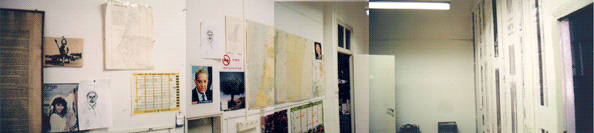
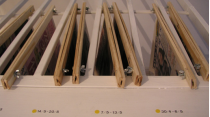
Stretching the Memorial is a fax installation done in a state burocratic office which was abandoned in year 2000 remaining untoched till today. The whole wall designed by the clerk (posters of politicians, drawings, maps…) was copyed by fax stretching the original. A new wall, a memorial of th |
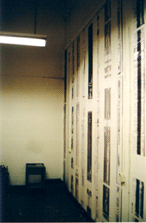
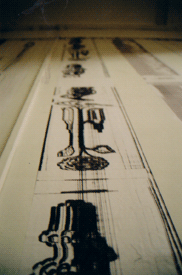 e office was built. A memorial which was – because of the nature of the thermal paper – destined to dissapear before the original clerk’s office.
Urban Overmemory Archives 2 – The Periphery of the Center -Holon, 2004
The “Urban Over Memory Archives of Holon” is a project consisting of documenting and cataloguing the Over Memory of the periphery of the Israeli Center for Digital Art, Holon. This project is the second in a series of urban archival works+2. The archives result from a process of cataloguing video, audio and motion items, generally conceived as irrelevant and dull. SALA-MANCA attempts to establish a representation of another memory, different and poetic, pertaining to a geographic-artistic space. Items usually regarded as irrelevant may reveal a different, unofficial aspect, thus complementing the ’relevancy,’ which forever is a relative concept. The “Urban Over Memory Archives of the Periphery of the Israeli Center for Digital Art” are located physically at the center, thus reversing the center-periphery relationship in a poetic and symbolic manner. Another denser, and at the same time broader, version of the archives may be found on the web, a center-less entity, which is to be the future meeting point of the Israeli Urban Over Memory.
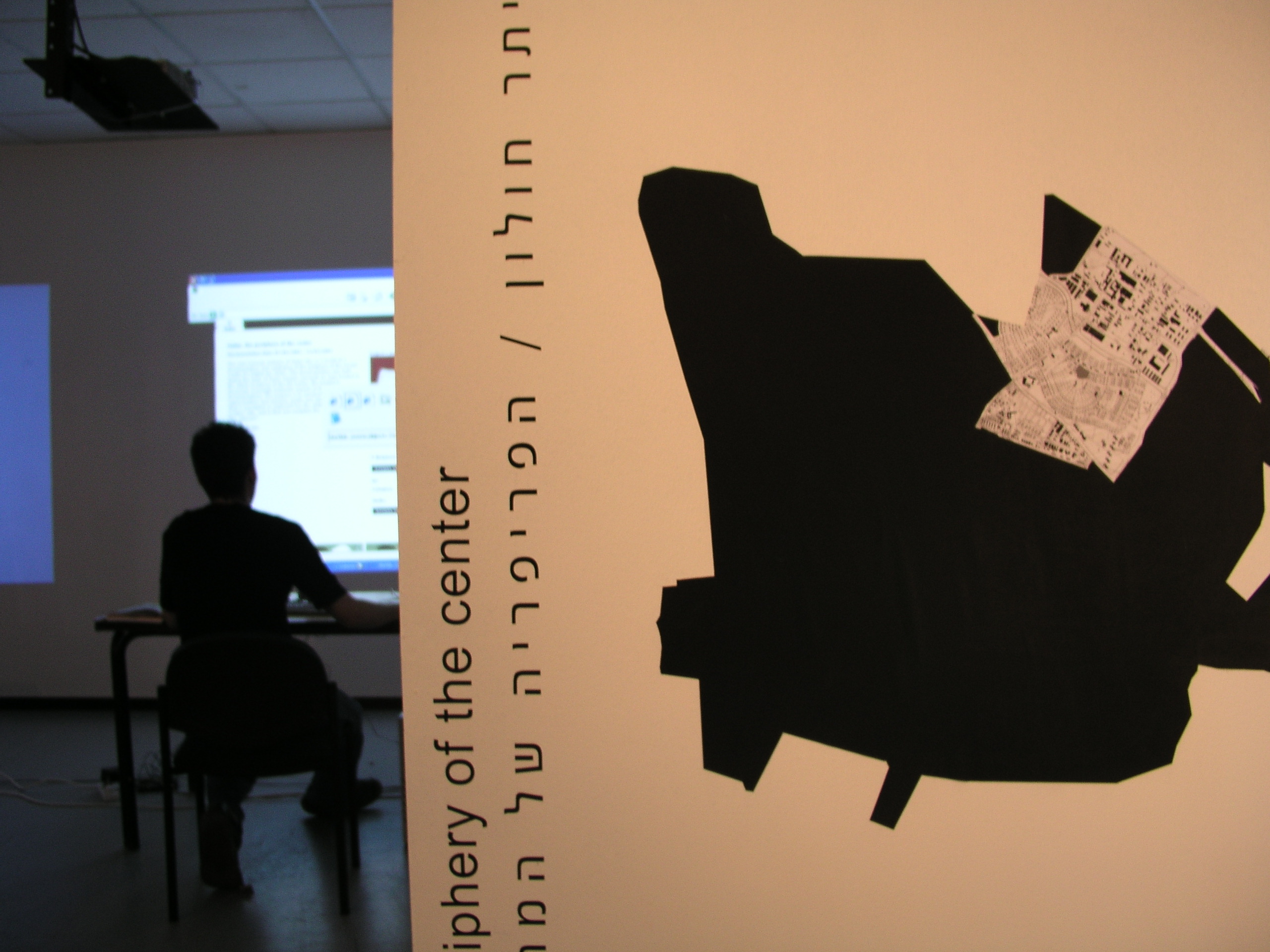
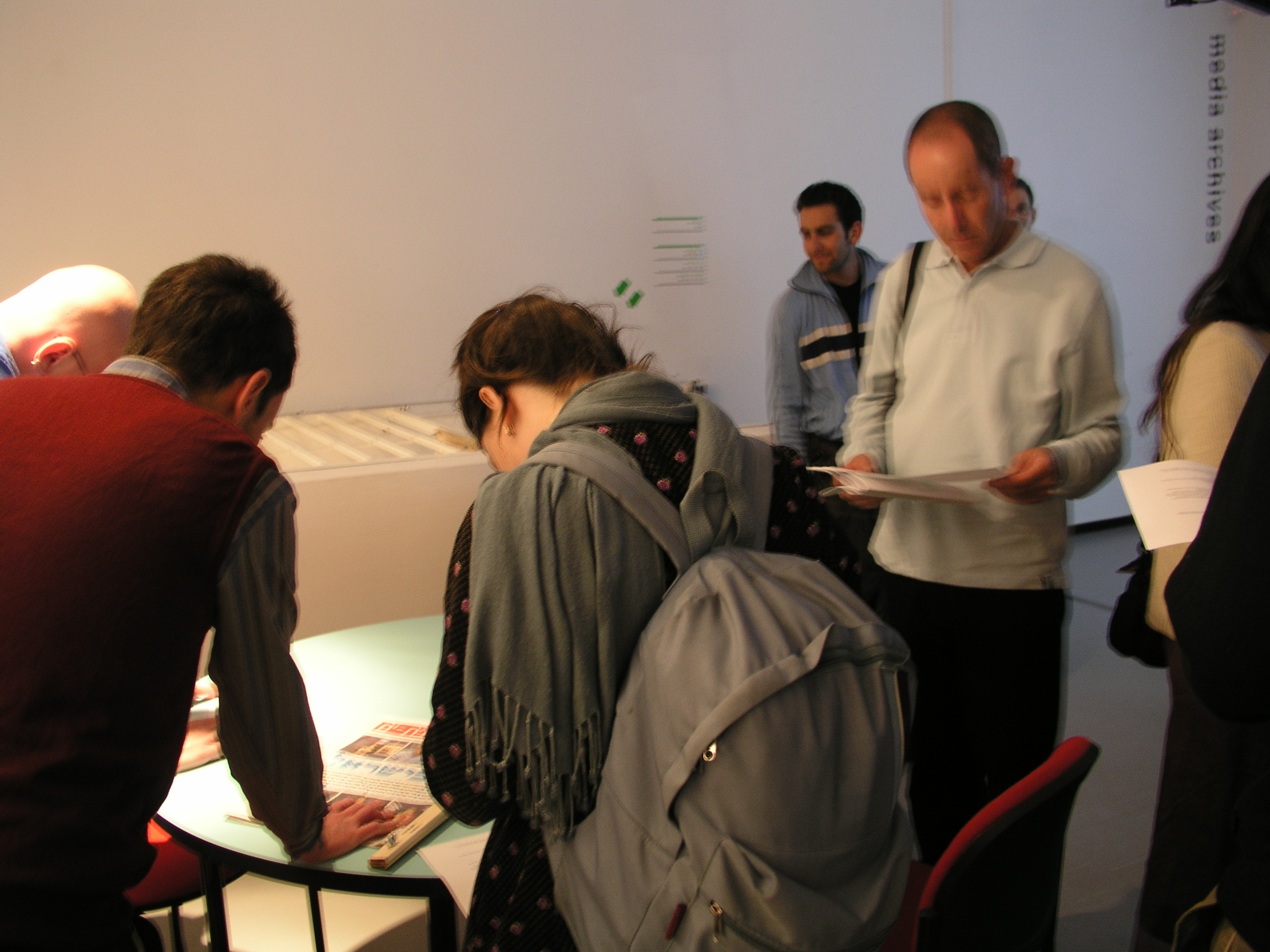
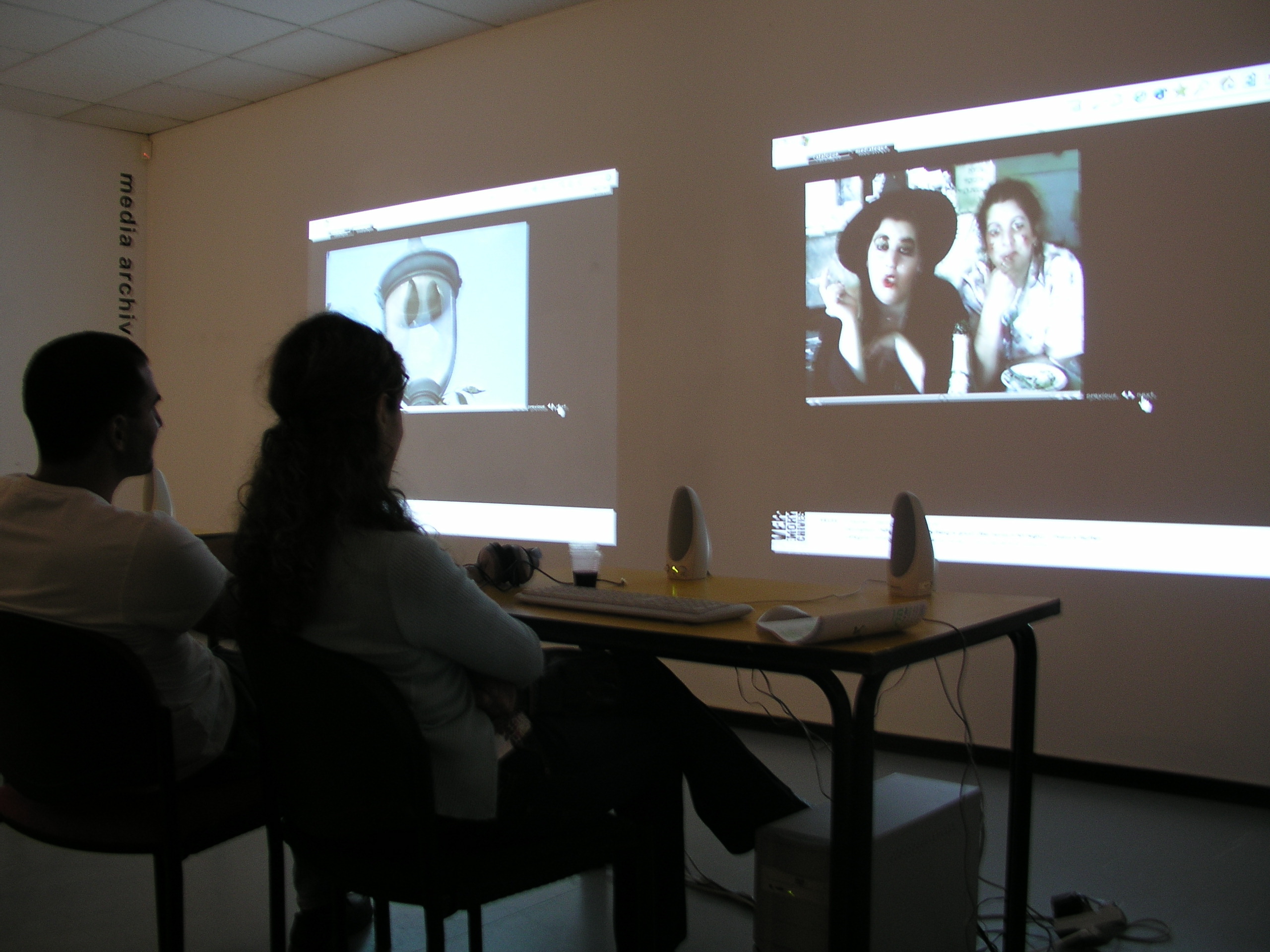
In the frame of the exhibition: “Hilchot Shcehnim, Chapter B”, 24.4.2004-24.6.2004
Curators: Galit Eilat, Eyal Danon
http://digitalartlab.org.il/ExhibitionPage.asp?id=54&path=level_1
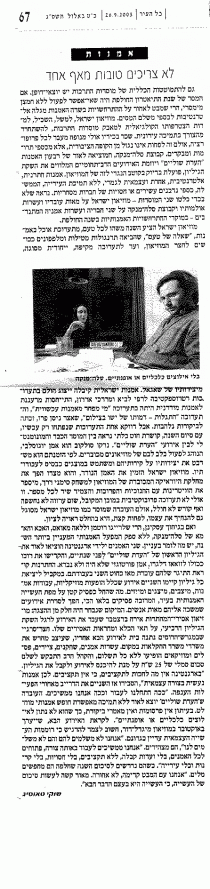
Don’t Need Any Help, Shuki Taussig, 26.9.2003
Don’t Need Any Help, Shuki Taussig, Kol Hair, 26.9.2003
click to enlarge
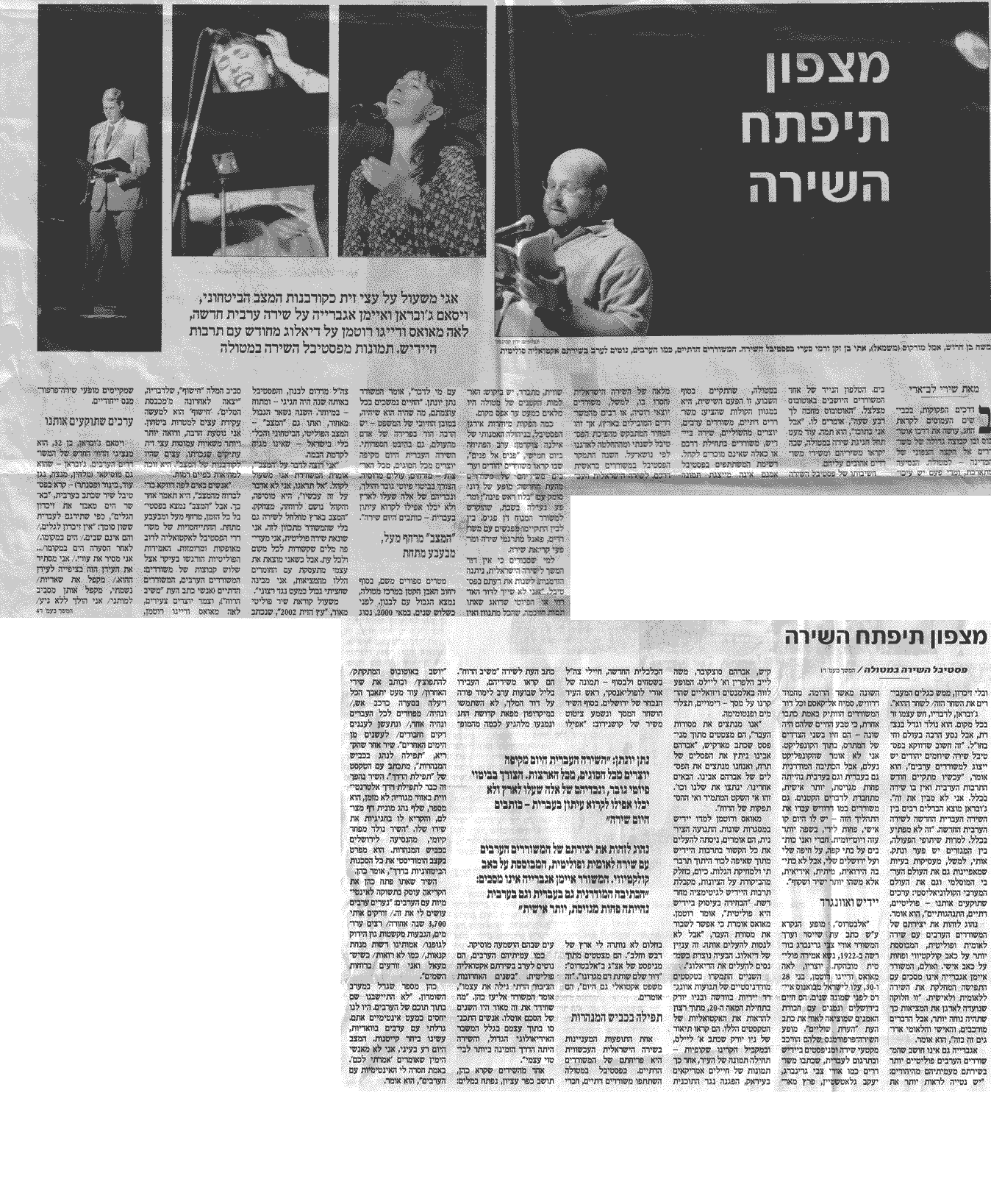
From the North, the Poetry, Shiri Lev-Ari, 9.6.03
From the North, the Poetry, Shiri Lev-Ari, Haaretz, 9.6.03
Click to enlarge
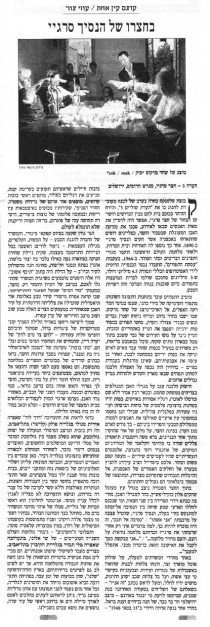
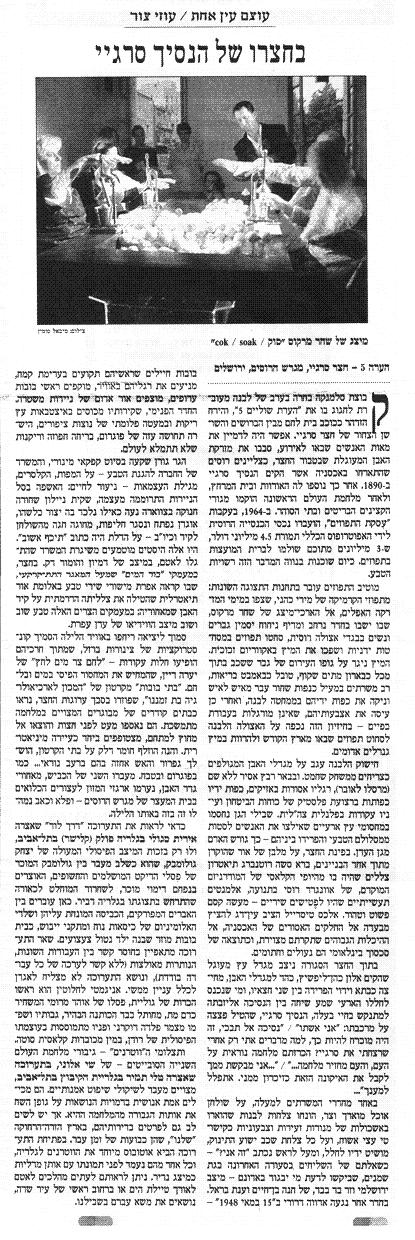
In Prince Sergey’s Courtyard, Ouzi Tsur, 26.5.03
In Prince Sergey’s Courtyard, Ouzi Tsur, Haaretz, 26.5.03
Click to enlarge
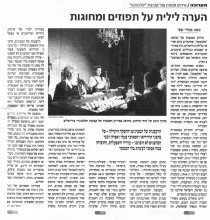
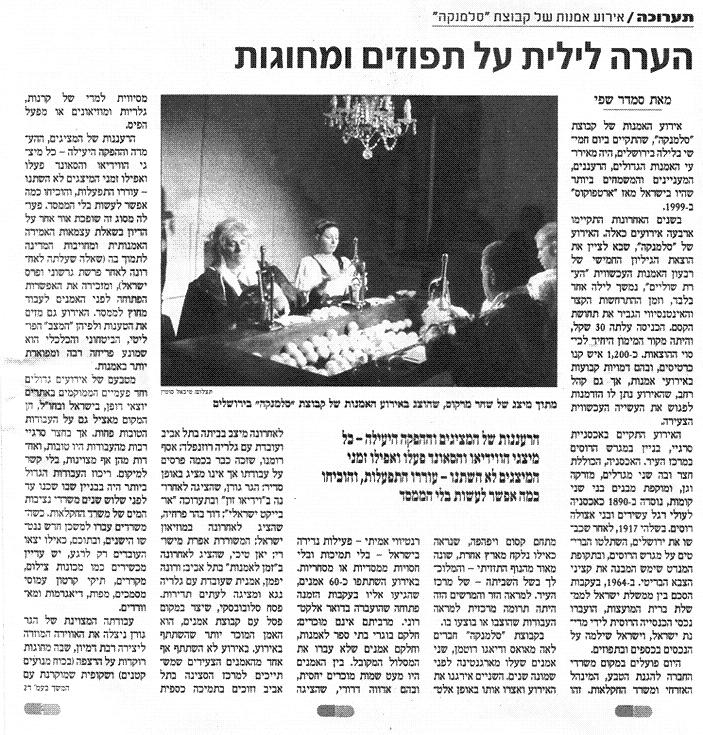
Night comment on oranges and compasses, Smadar Shefi, 9.5.2003
 click image to enlarge
Shefi, Smadar, Night comment on oranges and compasses, Haaretz, 19.5.2003
The artistic event of the group Sala-manca that took place Thursday evening in Jerusalem was one of the most important, refreshing, interesting and gladdening artistic event in Israel since “Artfocus” in 1999.
Four events of that kind took place in the last years. Sala-manca’s event, that notes the fifth issue of the quarterly magazine of contemporary art “Hearat Shulaym”, lasted only one night, and this short intensive occurrence amplified the magical feeling. The entrance fee was 30 NIS, and it was the only source to cover the event’s expenses. Among the 1200 persons that bought tickets, were the regular faces in the artistic events and also a large public, that was given the opportunity, thanks to the event, to encounter the young contemporary action.
The event took place in the Sergei Hostel, building located in the Russian Compound in the city centre. The hostel includes a courtyard and within, two towers, a fountain and a garden, which are surrounded by two-storeys buildings. It was founded in 1890 as an hostel for Russian rich pilgrims and nobles. At the end of 1917, after Jerusalem was conquered, the British occupied the Russian Compound, and during the Mandate, the building was used by British officers. In 1964, following the agreement between the Israeli and the soviet government, the properties of the Russian church passed in Israeli hands, and Israel paid for these goods with money and oranges.
Today, the place is used by the Society for the Protection of Nature in Israel, the civil administration and the Agriculture Ministry. It is a magic and very beautiful area, that seems borrowed from another country, very different from the frantic landscape of the city centre, dirtied because of the strike. This impressive and foreign appearance contributed a lot to the look of the exposed or performed worked.
Sala-manca’s members are Lea Mauas and Diego Rotman, two artists who immigrated from Argentina eight years ago. The two of them organized and curated the event in a real alternative way – which is rare in Israel – without any support nor institutional or commercial sponsorship. More than 60 artists participated to the event, following an open invitation that was transmitted by e-mail. Most of them aren’t famous; some graduated from Art schools, and some didn’t go through the conventional curriculum. Relatively few of the names of the artists were known, and among them, Adva Drori, who displayed an installation in her home in Tel Aviv, and works with the Rosenfeld Gallery; Assaf Romano, who already won some prices for his works but who isn’t displaying works in a regular way; Hagar Goren, who participated recently in “Video Zone” and to the exhibition “Israeli Object”; David Behar-Perachia, who displayed lately in the Israel Museum; the poet Efrat Mishori; Jan Tichi, who displayed recently in “Time for Art” in Tel Aviv; and Rona Yafman, who works with the Noga Gallery and who displays works regularly. Pesach Slabosky, who created a sculpture in the site with a group of artists, is the most famous artist among those who participated to the event. None of the young artists who belong to the main scene in Tel Aviv and receive massive financial support from official funds, galleries, museums or the lottery enterprise (Mifal Hapais) participated to the event.
The freshness of the performances, the efficient staging and the production aroused admiration (all the videos and the sound worked, and the timing of the performances wasn’t modified), and proved to what extend working without the establishment is possible. Such an event enlightens the discussion on the question of the independence of the artistic statement and of the state’s commitment to support it (a question that was raised recently following the Gershoni affair and the Israel Price), and reminds the artists of the possibility to work without the Establishment. The event contradicts the claims it is the political, security and economical “situation” that prevents a greater and more magnificent artistic development.
It is in the nature one-time big events located in exceptional sites, both in Israel and abroad, that the charm of the place inspires also works that are less good. But in Sergei courtyard, a lot of the works were good, even excellent, without link to the place. The most important concentration of works could be found in the building were the water commission offices of the Agriculture Ministry were until three years ago. When the offices moved into new dwellings, the previous ones were abandoned. Inside one can still find instruments such as photocopiers, refrigerators, carton files full of documents, maps, diagrams and fans – as if the workers had left only for a moment.
The excellent work of Hagar Goren used this strange atmosphere for a very inventive work, in which compasses dance on the floor (by virtue of small motors) and a slide projected on the open fridge shows part of the lower portion of the body. Assaf Romano “planted” pictures of plants from government offices in one of the offices of the building. The couple “Sala-manca” created “the bag of perpetuation”, a fax work that disappears thanks to light exposition, like the whole event. The installation of Adva Drori, “15th of May, 1948”, deals with the Palestinian “Nakba”: a television film on the “Nakba” was projected in a room where the carton files were emptied from their shelf, then the shelf was flooded with feathers.
Shachar Marcus made one of the most impressive performances: four people dressed in noble clothes (from an undefined historic period) squeezed oranges that were heaped on a board between them, and under this board, in the bath of juice, lied Marcus, naked. The scene – that makes reference to “Drowing by numbers”, from the director Peter Greenaway– succeeds in relating to the history of the site, its cruelty and its violence (today, it is still located in front of a main prison), and to the strange agreement according to which a building was bought in exchange for oranges.
Some of the works presented outside reminded an infinite number of similar festivals in the close or far past, but there were also brilliant ideas, among them, the video work of Eden Oprat, who presented a young girl either swimming or sinking in the bottom of a well, and refers to the terror and genocide regimes on the one hand, and to the legends dealing with wells on the other hand; the performance of Josef Sprinzak, who told an allegoric story about a bull who refused to fight in a “corrida”; and the sound work of P6 (Rafi Balbirsky and Moti Berger), which included a video and within, fragments of horror and pornographic movies, and video clips.
The next event will take place in another three months, and it will also last one night, as an artistic comment that flickers and disappears in the space, time and period.
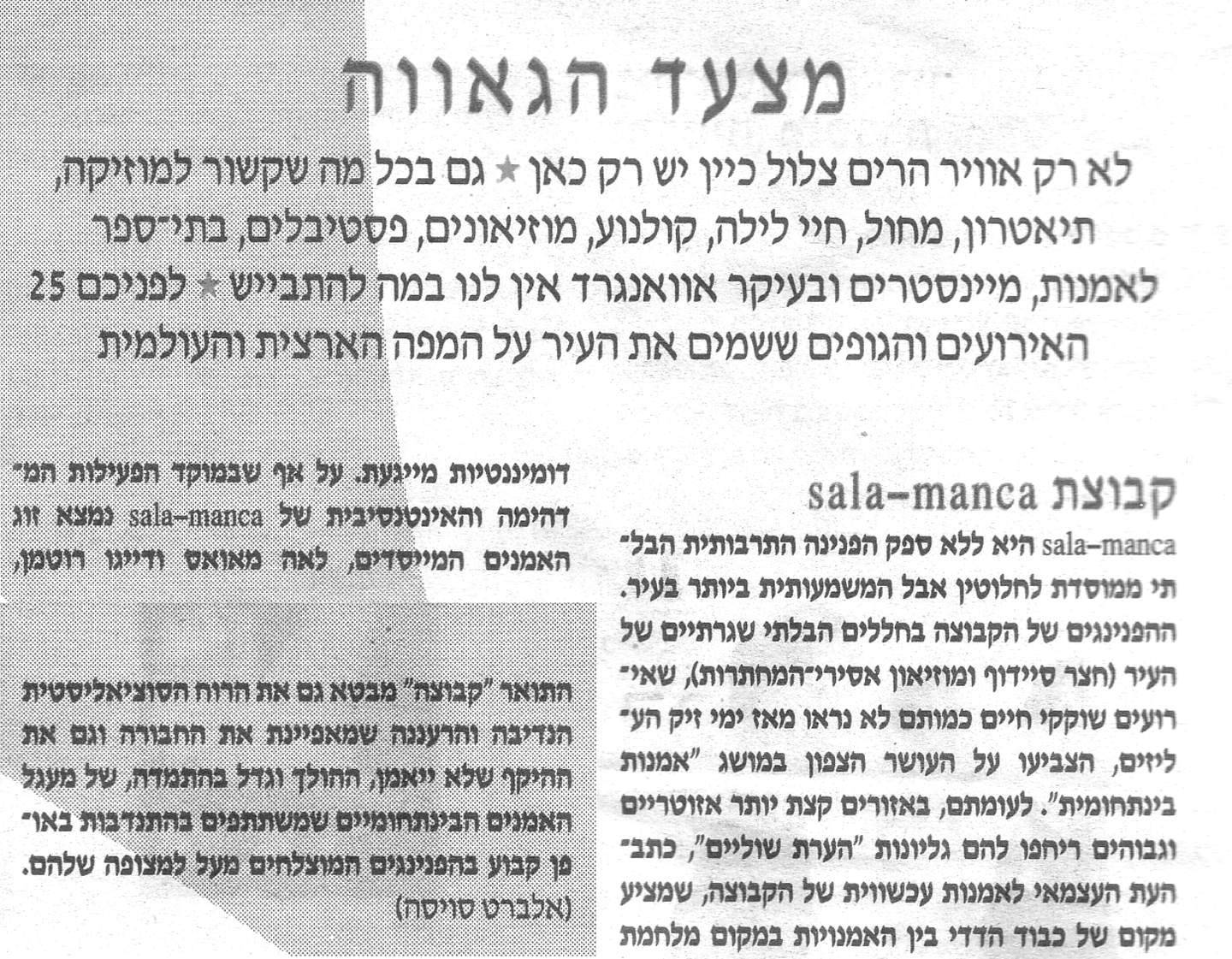
Proud Parade, Albert Suissa, 20.3.2003
Proud Parade, Albert Suissa, Kol Hair, 20.3.2003
click to enlarge
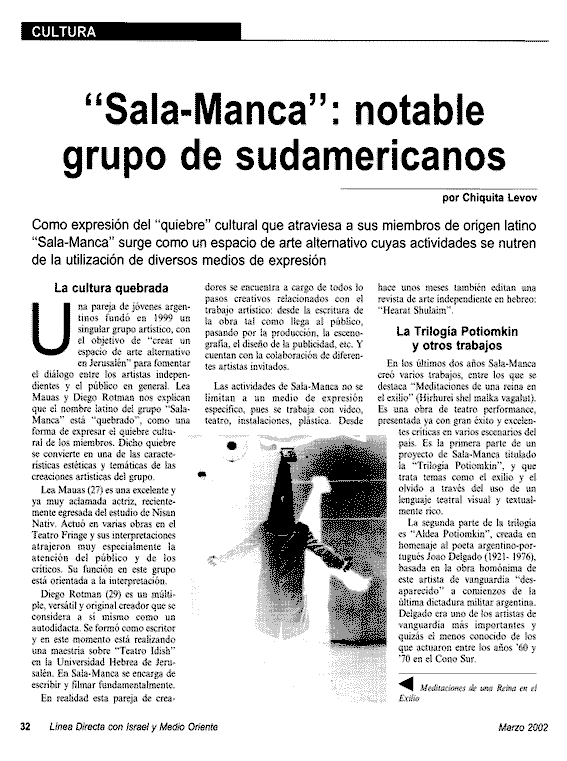
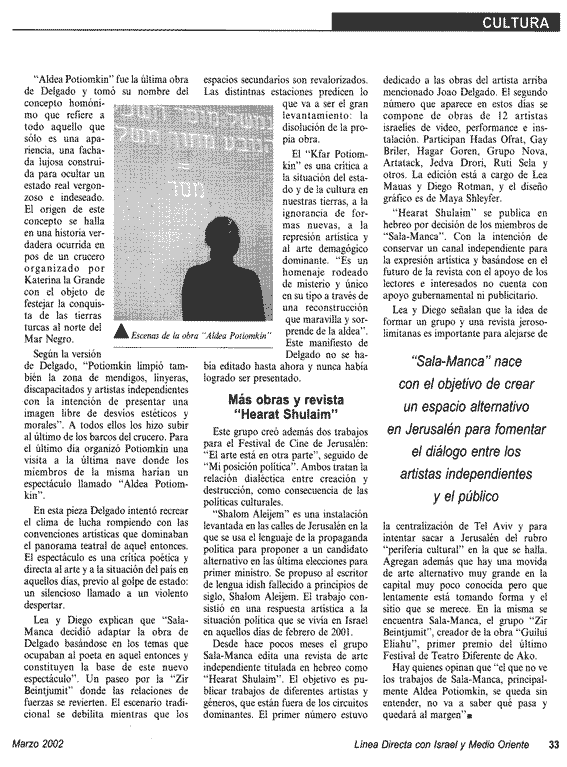
Sala-Manca: Notable grupo de Sudamericanos, Ch. Levov, 3.2003
Sala-Manca: Notable grupo de Sudamericanos, Chiquita Levov, Linea Directa, 3.2003
Haga Click para agrandar la imagen
Albatros 2003 or 2003 Albatros, 2003-2006
Metula Poetry Festival | Curator: Ilana Zukerman
Modern Lovers Exhibition, Three Colts Gallery – London | Curators: Pil and Galia Kollectiv
HaKhan Theater |
Texts and manifests of the main Yiddish poets of the 20th century (Peretz Markish,A.Leyeles,Avraham Sutzkever, Uri Tzi Grinberg, Moyshe-Leyb Halpern,Yaakov Glatshteyn, and more) live in harmony with originalyiddish texts written by Sala-Manca. The sound version was done with Finkelstein & Zax.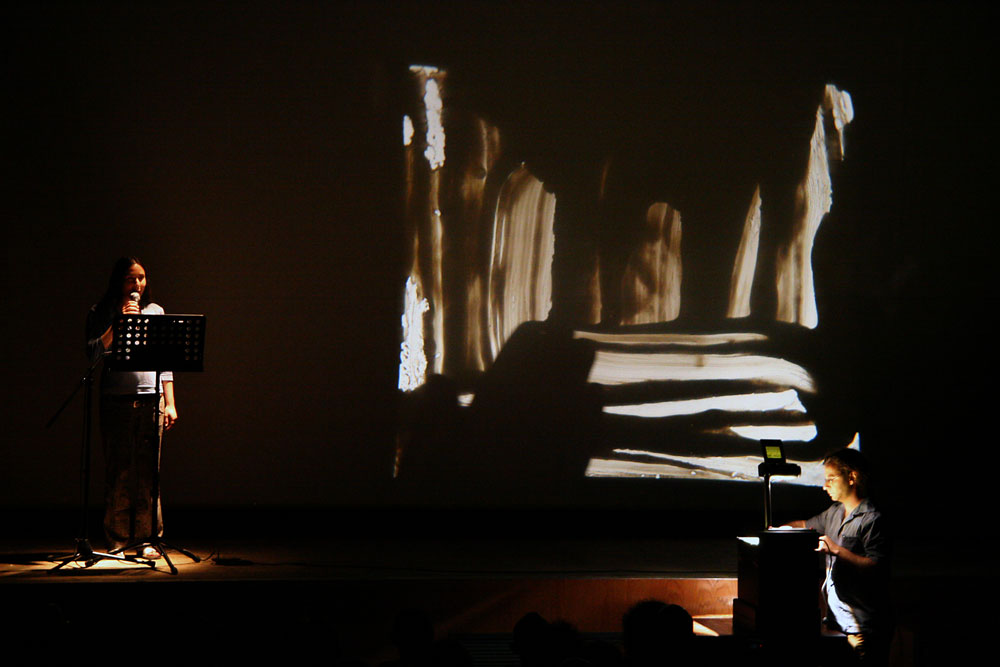
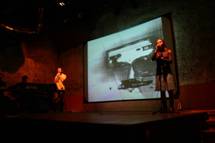
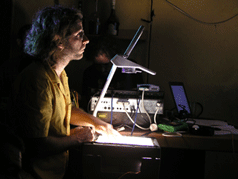
The performance “Albatros 200x oder 200x Albatros”, re-visits those texts, and pays homage to their revolutionary spirit by using cutting edge and experimental technology to process and re-use them as audio-visual material.