WordPress database error: [DELETE command denied to user 'sala-manca'@'localhost' for table `sala_manca_net`.`wp_options`]
DELETE FROM `wp_options` WHERE `option_name` = '_site_transient_wp_theme_files_patterns-3e81fb819c0831df69203ee558a709b9'

WordPress database error: [DELETE command denied to user 'sala-manca'@'localhost' for table `sala_manca_net`.`wp_options`]
DELETE FROM `wp_options` WHERE `option_name` = '_site_transient_timeout_wp_theme_files_patterns-3e81fb819c0831df69203ee558a709b9'

WordPress database error: [INSERT, UPDATE command denied to user 'sala-manca'@'localhost' for table `sala_manca_net`.`wp_options`]
INSERT INTO `wp_options` (`option_name`, `option_value`, `autoload`) VALUES ('_site_transient_timeout_wp_theme_files_patterns-3e81fb819c0831df69203ee558a709b9', '1792702874', 'off') ON DUPLICATE KEY UPDATE `option_name` = VALUES(`option_name`), `option_value` = VALUES(`option_value`), `autoload` = VALUES(`autoload`)

WordPress database error: [INSERT, UPDATE command denied to user 'sala-manca'@'localhost' for table `sala_manca_net`.`wp_options`]
INSERT INTO `wp_options` (`option_name`, `option_value`, `autoload`) VALUES ('_site_transient_wp_theme_files_patterns-3e81fb819c0831df69203ee558a709b9', 'a:2:{s:7:\"version\";s:3:\"4.0\";s:8:\"patterns\";a:0:{}}', 'off') ON DUPLICATE KEY UPDATE `option_name` = VALUES(`option_name`), `option_value` = VALUES(`option_value`), `autoload` = VALUES(`autoload`)

WordPress database error: [INSERT, UPDATE command denied to user 'sala-manca'@'localhost' for table `sala_manca_net`.`wp_options`]
INSERT INTO `wp_options` (`option_name`, `option_value`, `autoload`) VALUES ('_transient_doing_cron', '1792701074.2285940647125244140625', 'on') ON DUPLICATE KEY UPDATE `option_name` = VALUES(`option_name`), `option_value` = VALUES(`option_value`), `autoload` = VALUES(`autoload`)

Eran Sachs – Sala-Manca

In his/her Voice | The Voice of the Word Performance Festival, 2014

Participating Artists: Adi Kaplan, Shachar Carmel, Tom Soloveichik, Alex Drool, Josef Sprinzak, Carmel Bar, Li Lorian, Adam Yodfat, Victoria Hanna, Noam Inbar, Shira Borer, Jerusalem Conservatory Chamber Orchestra with Conductor Michael Klinghoffer, Ilan Volkov, Zohar Shafir, Tomer Damsky, Eran Sachs, Maya Dunitz

Curators: The Sala-Manca Group and Guy Biran
imgres-2

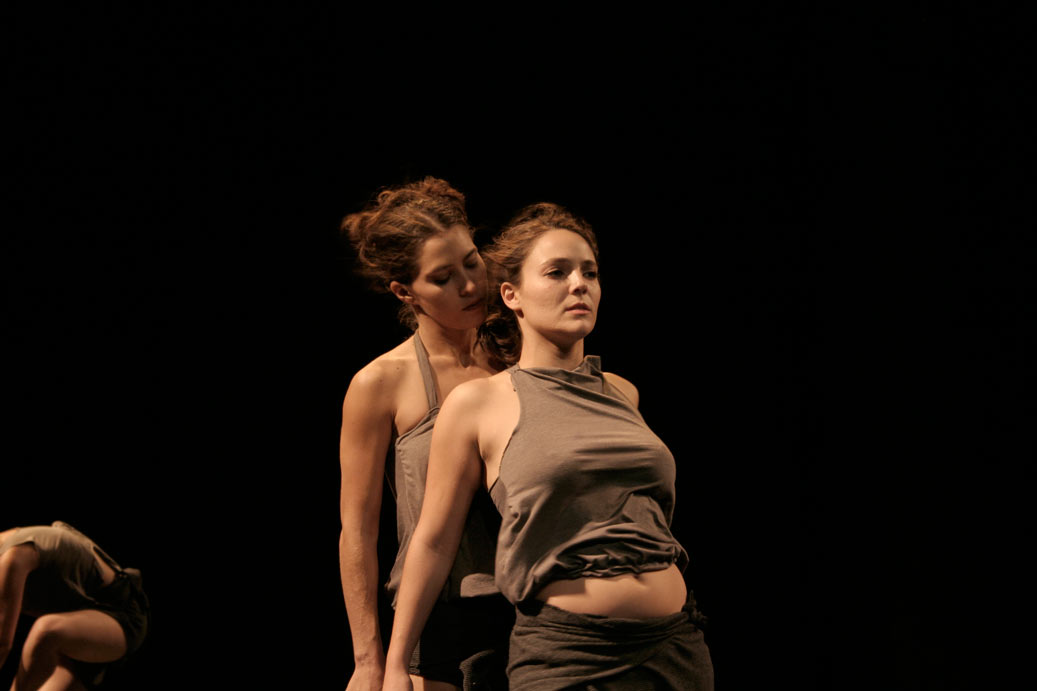
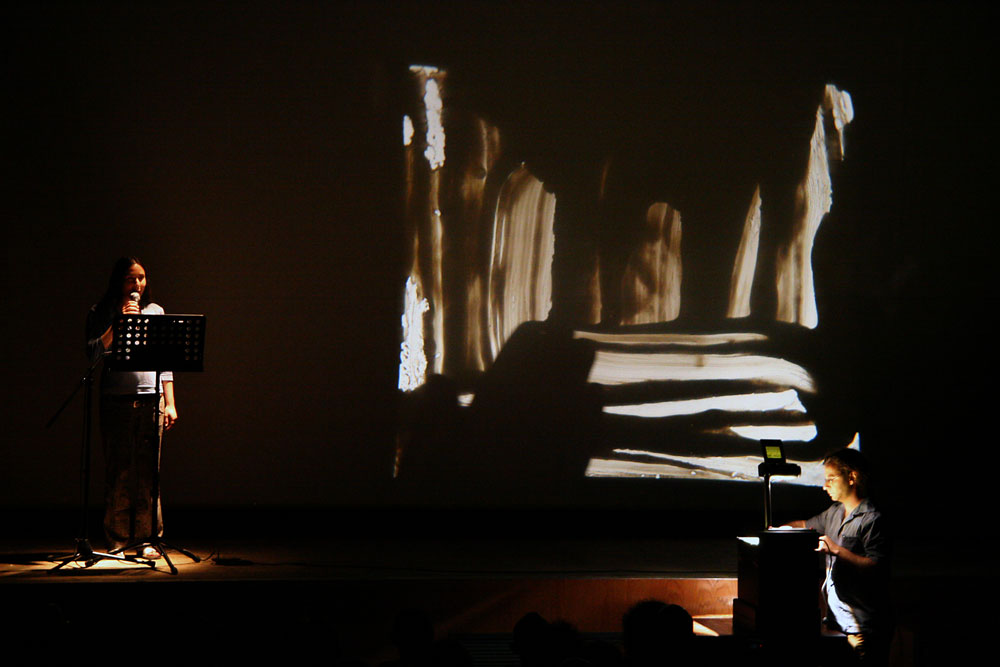
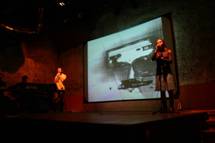
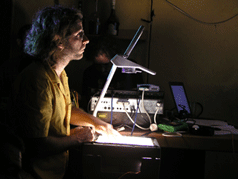
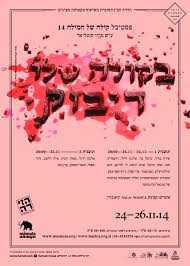
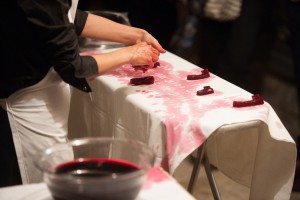
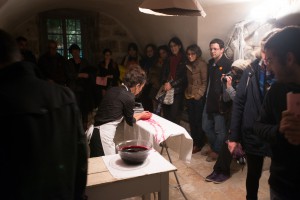
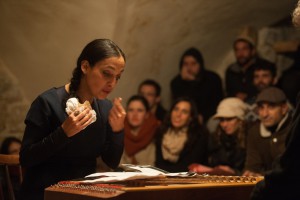
The 14 Kola Shel Ha’Mila Festival Named after Mario Kotliar Bekola Shelo Dybbuk   The Hazira Performance Art Arena’s flagship festival, now in its 14th year, examines the relationship between word/text and performance art. This year, the festival is being held in participation with the ‘Mamuta’ Center for Art and Media at Hansen House.   in the photo: Joseph Shprinzak   The dybbuk (an evil spirit in Jewish folklore) phenomenon, through Ansky’s play, is the basis and inspiration for this year’s Kola Shel Ha’Mila festival (The Voice of the Word). The Mamuta spaces at Hansen House, formerly a leper colony, are transformed into an area for challenging one’s spiritual transformation, as a metaphor for the ancient building’s newly designated mission. In Kola Shelo, Hansen House is granted the suppressed forces of experience, which connect past and present, art and ritualism, healing and performance. The dybbuk is an external force that penetrates the human body and causes it to behave erratically. According to tradition, the dybbuk is the spirit of a deceased person, which takes over a live body and speaks through it in another voice. The dybbuk is a way of coping with harsh social situations, voice dissent, for which the afflicted have no words, and reveal dark occurrences from a community’s past.
00185_0000179_00

Maybe it’s because the Leper Hospital was previously known as “Jesus Hilfe”, or,”Jesus Help Asylum”, and it reminds us of two of Jesus’ qualities – healing and banishing demons; maybe it’s because in 1950 a different, political and ideological spirit possessed the building, and it was decided to change the hospital’s persona and rename it after Dr. Hansen, who discovered Leprosy’s origin and seemed,  to  the building’s new owners (Israel’s Health Ministry) , like the right spirit for the public body they now represented; maybe it’s because the Leper Hospital lost its function, became an arts and technology center, and was named “Hansen House”, as if it is the home of the spirit that replaced Jesus; maybe it’s because today, instead of the lepers, artists and students are the ones who live in the building, and sometimes challenge the local cultural hegemony; maybe it’s because one hundred years have passed since S. An-sky’s ethnographic expedition, where he collected a part of the stories that functioned as the play’s basis, and a hundred years since the play’s first drafts were written in Russian and Yiddish; maybe it’s because of all these things, separately or together, that we decided, as a part of the “The Voice of the Word 14” festival, to return to one of the most profound traditions in Jewish culture, to dwell on an external spirit which possesses the body of a flesh and blood human being: the Dybbuk.
00062_0000061_00

“Into the body of a living human being, with an individual, distinct soul, enters at a certain point in his life another soul – the soul of a person who died prematurely and was seen as a sinner so terrible, even entering hell was deprived from him, and he remains between two worlds, haunted and tortured by angels of destruction […] the Dybbuk seeks a refuge from its persecutors and enters the living body against its will, seizing  it, sticking to it, possessing it and speaking  from the mouth of the person possessed as a distinct personality” (Rachel Elior). Yoram Bilu writes that the urges and aspirations that stand at the base of this disorder were challenges that threatened the traditional Jewish lifestyle.  The play was written during the years 1912-1917 in Russian and Yiddish, and was inspired by the traditions and stories of the Dybbuk that An-sky collected when he was the head of an ethnographical expedition to Volhynia and Podolia. The play was performed many times by different groups, and through the years became a canonical play in Jewish theater’s history, in Yiddish and in Hebrew.
00239_0000239_00

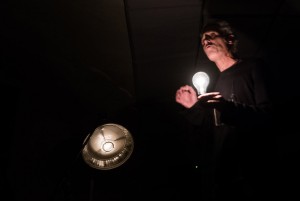
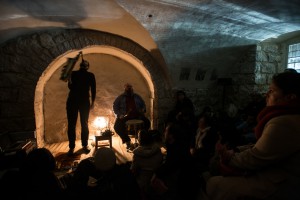
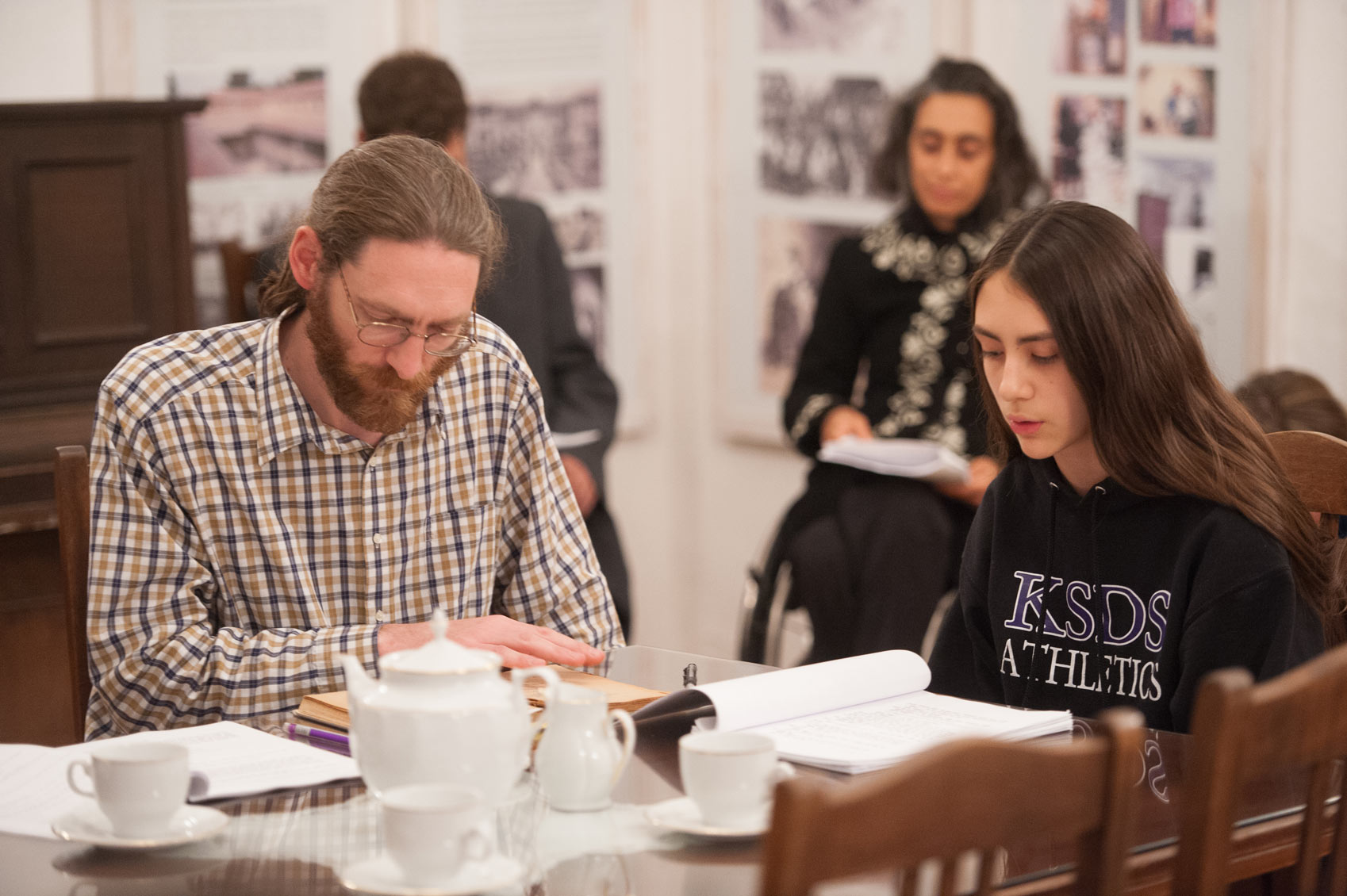
“The Voice of the Word” festival deals with the connection between the text and its performative aspects. In “His Voice in Her: Dybbuk” we suggested a refraction of the play using its motives, texts, or characters. Each of the parts the artists chose takes place in the historical building the architect Conrad Schick designed. The play, whose acts develop on a timeline, develops in the festival with its dispersal throughout the different spaces: Time becomes territory.
00269_0000220_00

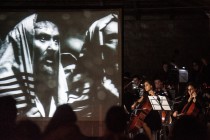
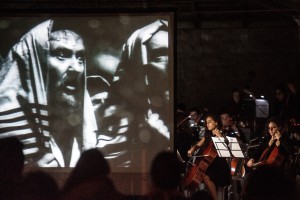
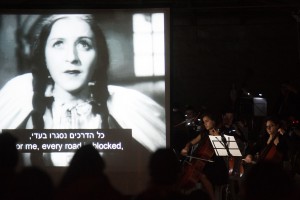
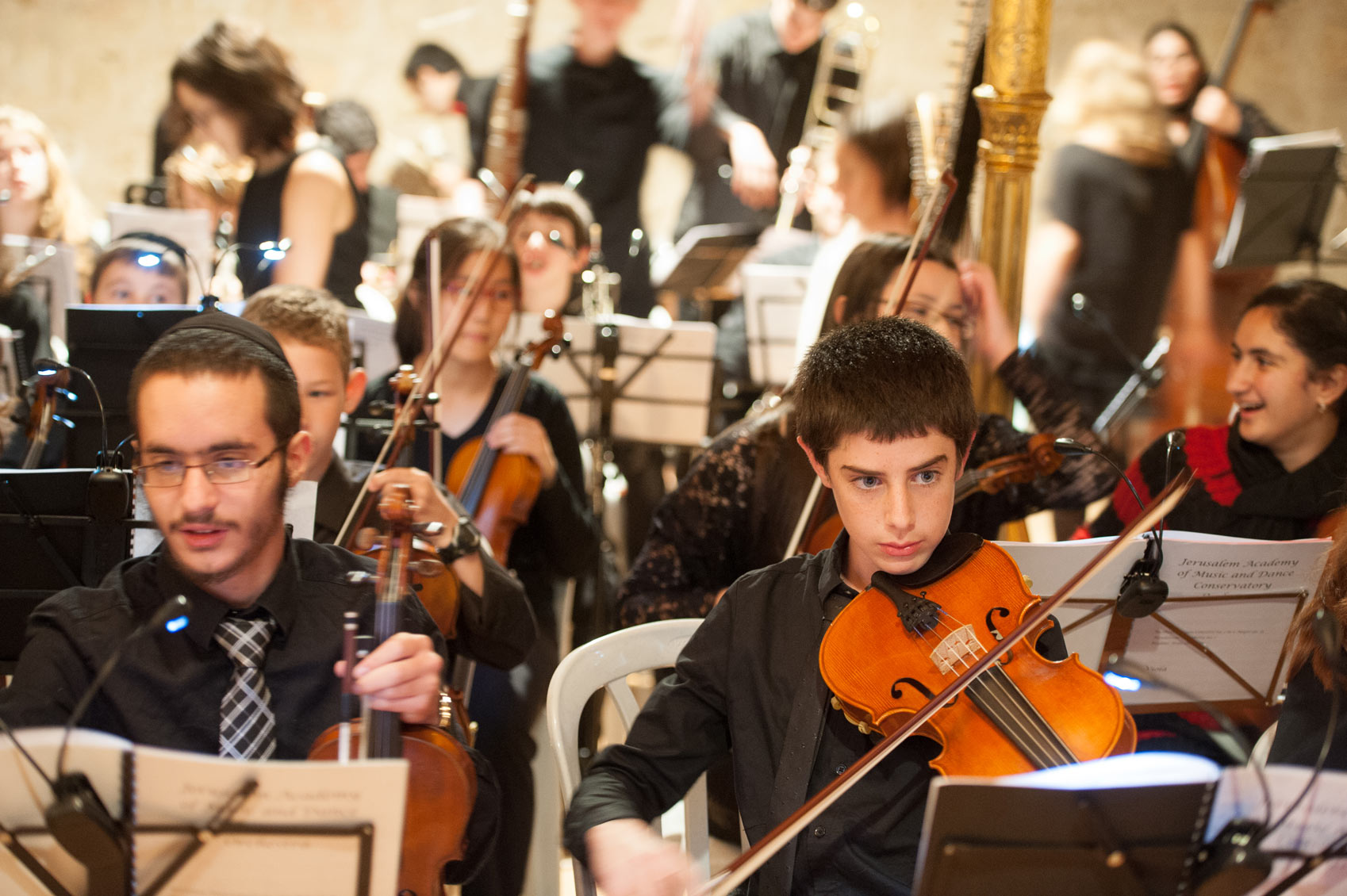
Divorce ceremonies, interpretations using auditory activities and works, mechanical theater, mixes of sounds and images, archived material and live happenings,  edits of old movies mixed with live performances of a youth orchestra – all these give one of the Jewish theater’s classic plays in Hebrew and in Yiddish a modern take. The artists once again bring up questions on ownership, on national and gender identity, on possession, on sound and spirit and on the spirit of time and convey a feeling that must be similar to the one created during the play’s performances in the 1920’s: The feeling that one world of values is disappearing, and a new one is taking its place.
 

00020_00 00160_0000170_00   00040_00

00163_00

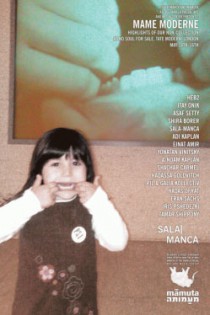
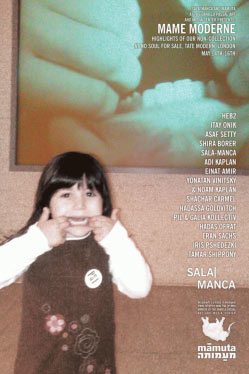
Mame Moderne at Tate Modern, 2010

MAME Moderne at No Soul For Sale, Tate Modern
Highlights from our non-collection
Curators: Sala-Manca Collective

Mame Moderne (“Modern Mother” in Yiddish) is the name of the TATE Modern translated literaly and genderly to the Yiddish language (Tate means “Father” in Yiddish). In this salon we show a series of works which don’t belong to us—non-collectors of this non-collection. Maybe a reflection on art habits and rituals, maybe a negative of Museum, maybe a gallery in the local barber shop (or maybe not).
mamemod
In our 25m2 of Tate Modern we present the Mame Moderne Salon, with its waiting room composed of works presented in different projects curated by Sala-Manca since 2000, dealing (or not) with the topic of Identity Change.

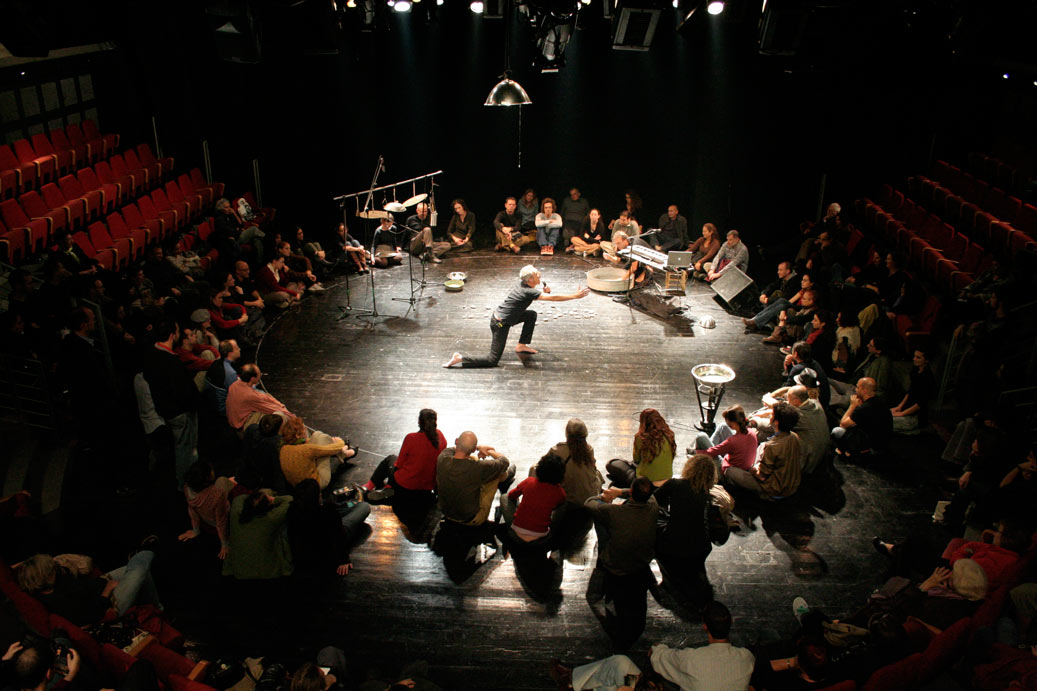
While awaiting the hairdresser to hairdress you watching the process you are passing through in someone else (performance by Shira Borer), you can watch a TV film of a “patriotic” recreation of the myths of the Golem (video by Adi Kaplan, Shahar Carmel, Yonatan Vinitsky, Noam Kaplan, and Etai Onik),  hear the story of a Palestinian refugee from Ein Kerem told in the voice of a Jewish-Israeli artist (sound work and performance by Hadas Ofrat), watch a live streaming of barber shops and transformed urban areas in the conflicted Hebron (Heb2-live steaming), see a futuristic film about a post-IKEA society (Pil&Galia Kollectiv) and a still-video work about a sound researcher (Asaf Setty), observe a reflection on cultural treasures and ownership in a video of a film as a metaphor for cultural re-appropriation (Iris Pshedezki) and a woman and a tree that became one and stand alone (Tamar Shipony), hear classical English poetry translated from English into English through Babylon software (Sala-Manca) and foreign workers in Tel Aviv speaking the “holy language” (Eran Sachs) , or buy MAME Moderne t-shirts designed by Einat Amir (einat amir)
On Sunday May 16 at 11:30, a live performance of a love story between an orthodox Jew and a secret agent of the Mossad (Sala-Manca’s live performance at the main stage 2010).

Link to Brochure

If You Listen, Ayelet Dekel, 11.3.2009

Sound stretched to the limit – Cacophony and multiculturalism come together in a joint Polish-Israeli work featured in Tel Aviv’s centennial celebrations, Haaretz, Ayelet Dekel, 11.3.2009

If You Listen, Ayelet Dekel, Midnigh East

There is no borderline, yet the demarcation between north and south Tel Aviv is clear. Concert halls, hummers and penthouses to the north, central bus station, markets and bicycles to the south. International Festivals don’t usually select venues in south Tel Aviv.

However, Contempo, the Tel Aviv International Festival of Contemporary Music and Video Art, ushered in the approaching centennial celebrations with events that extended throughout the city from a video art exhibition at the Tel Aviv Museum to a sound installation at Zimmer, a former air-conditioner factory turned studio on HaGdud HaIvri, a small street not far from the central bus station.

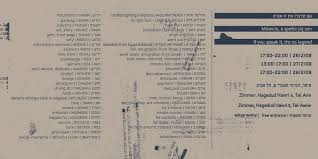
“If You Speak It, It’s No Legend”, a sound installation that took place at Zimmer from February 26 – 28th, was the result of a multi-lingual, international collaborative effort co-curated by Antoni Beksiak of the Turning Sounds Society in Warsaw and Lea Mauas and Diego Rotman of Sala-Manca in Jerusalem (co-organized by the Adam Mickiewicz Institute as part of the Polish Year in Israel). Zimmer does not announce itself loudly to the world. Its large front window is usually closed off with a metal rolling shutter. A small sign with the words “Zimmer Family” written in magic marker is taped to the wooden door, as if it were just another low-rent apartment.

On this rain-soaked Friday the window was open to the street and a large free-standing poster placed by the door announced the event. Entering a tiny kitchen, a step up to the left leads into an average size room with two mismatched rugs, a sofa, and chairs of all sorts arranged around the four walls. Books, tapes and video cassettes fill the bookshelves up to the top where a sophisticated system of six loudspeakers was strategically arranged for the installation.

Sitting in the dark winter warmth, I let myself listen. Rain, car wheels, footsteps and voices from the street merged with the sounds from the loudspeakers and did not feel like a disruption. A sound installation creates a relationship between time, sound and space. Everything that happens in the space becomes somehow part of the experience: taking coins out of a purse, whispered conversations, the closing of an umbrella. It requires a certain willingness to immerse oneself in anything that may happen.

The installation was created by sound artists XV Parowek, Wolfram, Eran Sachs and 17 Migs of Spring, each working separately; the different tracks combined by Beksiak to form a sequence in which short segments from each piece appear in rotating order. The compositions were based on recordings of foreign workers at the central bus station in Tel Aviv reading from a list of words in Hebrew, using the human voice in its different colors and timbres as “pure material for music” according to Beksiak. He explained that while his original inspiration had been the Biblical concept of “Shibboleth” (from Judges 12:5-6) –the revelation of identity through one’s manner of pronouncing words, he gave the composers complete freedom and the end result was very different from what he had imagined, “but that is where the fun begins,” he said.

imgres-1Beksiak originally had in mind a focus on the revival of the ancient Hebrew language by immigrants who arrived in Israel from all corners of the world, each bringing his or her native language to the way they expressed themselves in Hebrew. Sala-Manca’s Mauas and Rotman extended this idea to reflect the linguistic and social context of contemporary Israel and in particular Tel Aviv, where many foreign workers and refugees live and work. People for whom Hebrew is a necessity rather than an ideology, foreign workers “are not considered part of Israeli culture,” says Mauas.

The human voice exerts a compelling power. Research into language development in infants shows the importance of exposure to speech and the intensity of the infant’s response to the human voice. The boundaries between sounds in language, such as the difference between “b” and “p”, depend on very subtle changes in duration and frequency. Infants are born with the ability to sense these acoustic changes, even in languages they have never heard, yet this ability diminishes drastically in the first year of life. Dr. Patricia K. Kuhl, an expert on speech development at Washington University, claims that infants have the ability to analyze the statistical distribution of sounds that they hear in ambient language and by the end of their first year learn to reduce their response to sounds that do not belong to their native language. The distinctions between what does and does not belong are made very early in life, literally shaping our minds as neural connections are created.

Immigrants, foreign workers and refugees are linguistic outsiders, living within the context of a language that will always remain somewhat foreign. Linguistically and culturally, these outsiders have the potential to enhance and revitalize their surroundings as elements of their home cultures and languages are integrated over time, yet this potential is not always realized.

“All in all we are very detached,” said Albert Aviad, a musician and student of linguistics who together with Binya Reches made the recordings of the participants for the installation, “there is no melting pot – we don’t really encounter one another.” Mauas and Rotman attempted to engage the foreign workers whose voices were recorded as partners in the project, paying them for their time and choosing locations for both the recording and installation that would be as convenient and non-threatening as possible. Although the atmosphere during the recording sessions was relaxed and friendly, Mauas felt that the language barrier made real communication difficult.

Seeking to “introduce a voice from outside the canon”, Mauas and Rotman recorded 28 foreign workers reading words in Hebrew that were chosen from a Hebrew language textbook published in 1960. Rotman felt that the sound of these voices would “acquire a political dimension in the context of a contemporary music festival”. The words chosen were written in the flyleaf of the book by a previous owner, Dr. Edward Horowitz, the author of How the Hebrew Language Grew. The interviewers engaged the participants in conversations in an attempt to record as much Hebrew as possible. The sound artists were each given both sets of recordings to work with.

Konstantin Gervis and Natalia Gurfinkel, who create together as 17 Migs of Spring, worked only with the recorded voices, without adding other sound or instruments. As immigrants themselves and working in a very experimental form of music, Gervis says that for many years they had felt like “emissaries of a different culture from that which is here in Israel” but that today they feel very much a part of the local scene, adding, “who has changed, us or the country?” Gervis took phrases that he liked from the recordings to work with, but later noticed that some of the phrases were not in Hebrew, and therefore could not be used in the context of this project. “I use three languages interchangeably,” he explained, “and don’t really distinguish between them.”

Composer Bartek Kalinka, whose group name XV Parówek means “15 hot dogs” in Polish, played the accordion as a child, but otherwise does not have a formal background in music and is somewhat outside the mainstream. “Humor helps me keep a distance from myself,” he says in reference to the unusual name. Working with the phonetic qualities of the words, he also added some non-instrumental sounds and accordion. “I’m trying “to keep the composition very minimal, with a lot of silence and space.”

Eran Sachs, while also working with the phonetic elements, approached the project from a perspective of social-theoretical critique, making additional recordings in the neighborhood of Neve Sha’anan (surrounding the central bus station) and researching the history of the area. “There is something in the act of collecting,” he says, “that gives credence to the work…that connects the listener too…to a moment that existed…what interests me when I work with recorded materials is to preserve traces that will locate the experience of the listener in a specific realm.” His research on Neve Sha’anan, based in part on Sharon Rotbard’s White City, Black City (published in Hebrew, Babel 2005) led him to the conclusion that the neighborhood has always been characterized by ethnic diversity and has always been excluded from the main narrative in Tel Aviv’s development as a city. Established by a group of Jews, who had been driven out of Jaffa in 1921, who wished to create a self-sustaining, ethnically and socio-economically diverse community, the neighborhood never received the support of the establishment. Sachs said that the current concentration of foreign workers in the area creates “a cosmopolitan area…tensions between groups exist, but they are contained.”

Researching the phonology to learn about the acoustic characteristics of language, Sachs experimented with taking the same work spoken by different people in different accents and manipulating the sound to either bring the words closer together or increase the phonetic distance. In this sense, his work was closest to Beksiaks’s original concept. Working with a computer program that enables him to remove layers of sound from an utterance, leaving only a trace, Sachs sought to create a ghostly presence of sound in the composition, an allusive, elusive connection to a particular time and place.

When I returned to Zimmer on Saturday night, as the installation drew to a close, the room was full of people actively engaged in listening. Soon, food and drinks would be set out for a celebratory end to the weekend’s event. Closing remarks would be said and the murmurs of everyday conversations would fill the space. Yet in that space other voices were heard, and their presence remains.

A different version of this article was published in Haaretz.

Image credit: Dror Katz

HaGolem Project, 2007

HaMaabada Theater, Jerusalem

Artists: Josef Sprinzak, Ilan Green, Pharesia Group, Adi Kaplan and Shahar Karmel, Maya Levi, Eran Sachs, Adva Drori, Shaul Zemach

Curated by sala-manca together with Ofira Henig

Shaul Zemach
Shaul Zemach

The Golem project is the result of a long research and working process, which involved artists from the fields of the fine arts and the performing arts. The theme of The Golem afforded us the possibility to work on one of the most important issues in philosophy, folklore, Jewish mysticism, the arts, literature, and cinema, while also serving as a metaphor for evolving technology. It seems to us that by returning to the subject fro a contemporary viewpoint creates the possibility to examine different interpretations of The Golem. The long period of preparation for the project commenced with a seminar of two days in which artists from a wide spectrum of the arts met with researches from differentfields.After this seminar the artists were invited to send us their proposals for works that deal with the subject of The Golem and who reflect the working process and development that we sought out. The proposals we chose represent unique forms of expression.

golem-3.11-450 _MG_4939

The Lab, as a venue for the arts, which combines new media, is the fitting place and space for the production of this project, both from the point of vgolem-3.11-080iew of our desire to deal the issue of the development of technology, the role of “space” in the arts and based on the working process of The Lab as a “Laboratory” for the arts – one that attempts to illuminate different aspects of a subject without the desire to reach conclusive results.During the course of the past year, we have held lectures and exchanges between the artists and have accompanied the different projects. The Golem project serves as a crossroads in time and space, which opens the working process to the general public, through our desire to expose the public to the artist’s works and to maintain an open dialogue with it. . [to the program] / @ TheLab, Jerusalem, 29.10-4.11.2007
Seara/Storm, 2006-2007

vers 2.0 presented @ Hapzura Series, Digital Art Lab Holon | curator: Eran Sachs & Heara 10 | The Science Museum | curator: Sala-manca

Seara/Storm *

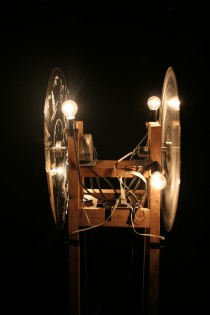
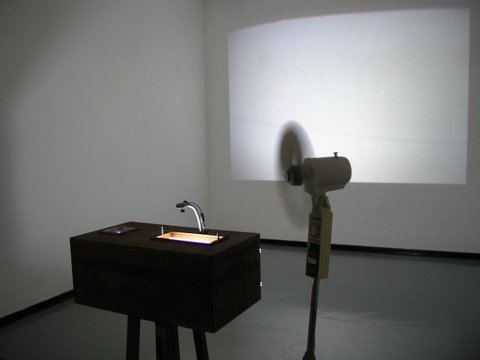
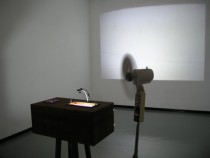
In 1950 during a party on the roof of Marian Loop, celebrating the 100 anniversary of Tomas Robinson’s invention of the wind meter, Regina Handke, Marian Loop and Joao Delgado decided to build a wind meter as a quotation to Robinson’s original machine.

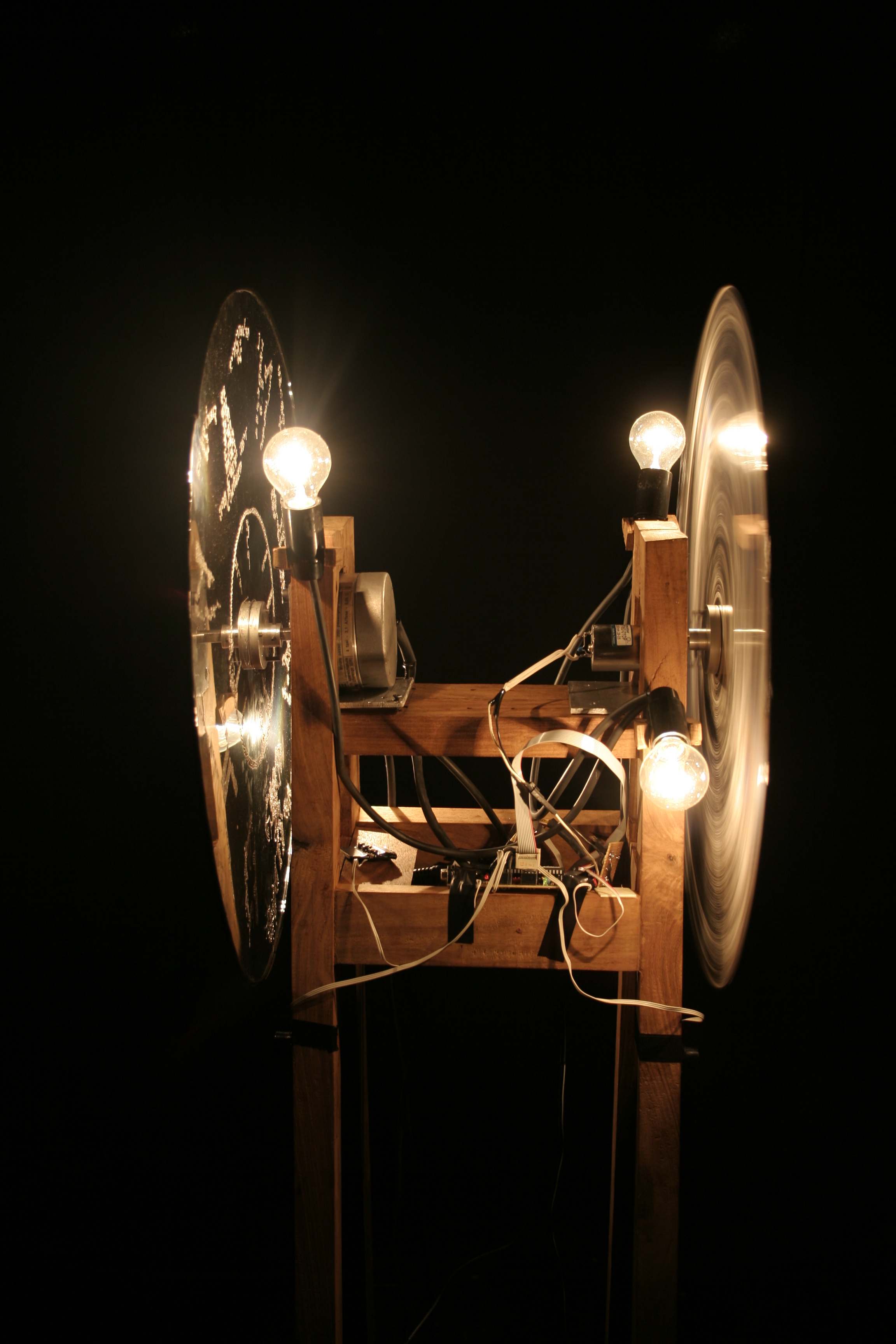
OLYMPUS DIGITAL CAMERA Regina Handke, the Hungarian-Yiddish poet, who began in those days to learn Hebrew, told her friends that in Modern Hebrew there are two meanings to the word “seara”: hair and storm**. Delgado and Loop got excited from the linguistic discovery, and decided to build a wind meter based on a hair.

In 1955 the machine was brought to Israel and activated in a symbolic and nationalistic act, using David Ben Gurion’s hair. This experiment made Ben Gurion very disappointed from his hair quality, who sent the machine away.

In 2005 the machine was exhibit for the first time in fifty years in the frame of the Jerusalem Film Festival. In 2006 the machine is exhibited again , this time not only the wind meter has been repaired but also the sound-wind visual meter.

* This machine is part of sala-manca’s collection of Joao Delgado’s works.


** She was not aware that although the pronunciation is the same, “seara” for hair and “seara” for storm have a different Hebrew spelling.

vers. 1.0 – presented at the Intersection – Jerusalem Film Festival 2005, Heara 10-The Science Museum, Jerusalem, February 2006

Albatros 2003 or 2003 Albatros, 2003-2006

Metula Poetry Festival | Curator: Ilana Zukerman

Modern Lovers Exhibition, Three Colts Gallery – London | Curators: Pil and Galia Kollectiv

HaKhan Theater |

Texts and manifests of the main Yiddish poets of the 20th century (Peretz Markish,A.Leyeles,Avraham Sutzkever, Uri Tzi Grinberg, Moyshe-Leyb Halpern,Yaakov Glatshteyn, and more) live in harmony with originalyiddish texts written by Sala-Manca. The sound version was done with Finkelstein & Zax.from albatros

image005 image007 albatros2

The performance “Albatros 200x oder 200x Albatros”, re-visits those texts, and pays homage to their revolutionary spirit by using cutting edge and experimental technology to process and re-use them as audio-visual material.