WordPress database error: [DELETE command denied to user 'sala-manca'@'localhost' for table `sala_manca_net`.`wp_options`]
DELETE FROM `wp_options` WHERE `option_name` = '_site_transient_wp_theme_files_patterns-3e81fb819c0831df69203ee558a709b9'

WordPress database error: [DELETE command denied to user 'sala-manca'@'localhost' for table `sala_manca_net`.`wp_options`]
DELETE FROM `wp_options` WHERE `option_name` = '_site_transient_timeout_wp_theme_files_patterns-3e81fb819c0831df69203ee558a709b9'

WordPress database error: [INSERT, UPDATE command denied to user 'sala-manca'@'localhost' for table `sala_manca_net`.`wp_options`]
INSERT INTO `wp_options` (`option_name`, `option_value`, `autoload`) VALUES ('_site_transient_timeout_wp_theme_files_patterns-3e81fb819c0831df69203ee558a709b9', '1792702910', 'off') ON DUPLICATE KEY UPDATE `option_name` = VALUES(`option_name`), `option_value` = VALUES(`option_value`), `autoload` = VALUES(`autoload`)

WordPress database error: [INSERT, UPDATE command denied to user 'sala-manca'@'localhost' for table `sala_manca_net`.`wp_options`]
INSERT INTO `wp_options` (`option_name`, `option_value`, `autoload`) VALUES ('_site_transient_wp_theme_files_patterns-3e81fb819c0831df69203ee558a709b9', 'a:2:{s:7:\"version\";s:3:\"4.0\";s:8:\"patterns\";a:0:{}}', 'off') ON DUPLICATE KEY UPDATE `option_name` = VALUES(`option_name`), `option_value` = VALUES(`option_value`), `autoload` = VALUES(`autoload`)

WordPress database error: [INSERT, UPDATE command denied to user 'sala-manca'@'localhost' for table `sala_manca_net`.`wp_options`]
INSERT INTO `wp_options` (`option_name`, `option_value`, `autoload`) VALUES ('_transient_doing_cron', '1792701110.0837109088897705078125', 'on') ON DUPLICATE KEY UPDATE `option_name` = VALUES(`option_name`), `option_value` = VALUES(`option_value`), `autoload` = VALUES(`autoload`)

josef sprinzak – Sala-Manca

In his/her Voice | The Voice of the Word Performance Festival, 2014

Participating Artists: Adi Kaplan, Shachar Carmel, Tom Soloveichik, Alex Drool, Josef Sprinzak, Carmel Bar, Li Lorian, Adam Yodfat, Victoria Hanna, Noam Inbar, Shira Borer, Jerusalem Conservatory Chamber Orchestra with Conductor Michael Klinghoffer, Ilan Volkov, Zohar Shafir, Tomer Damsky, Eran Sachs, Maya Dunitz

Curators: The Sala-Manca Group and Guy Biran
imgres-2

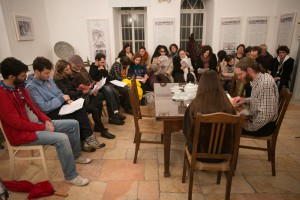
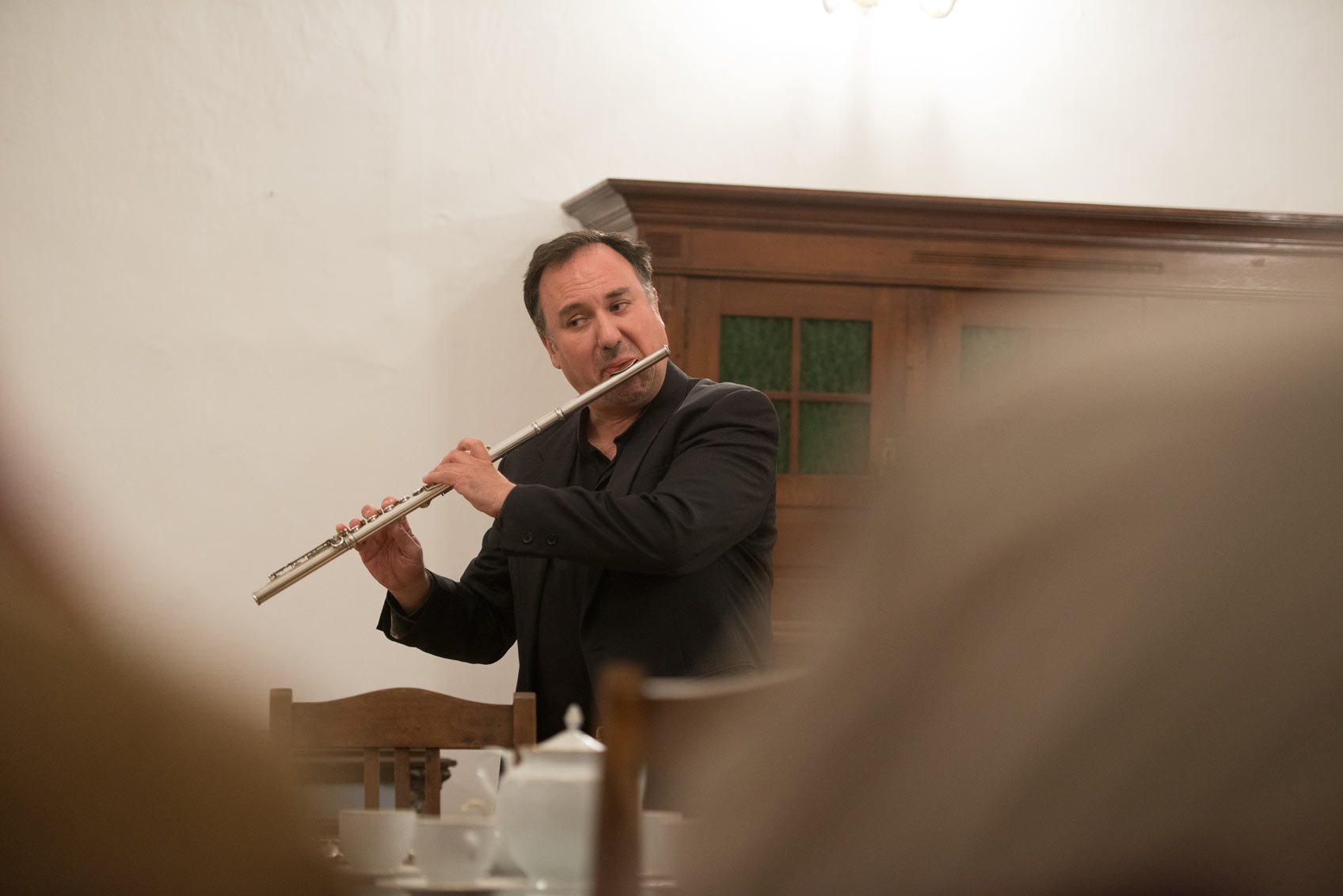
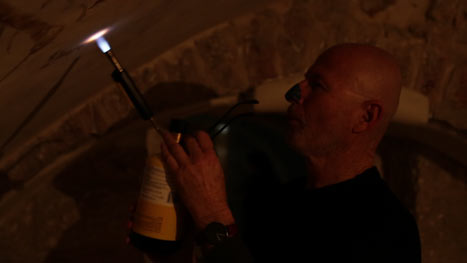
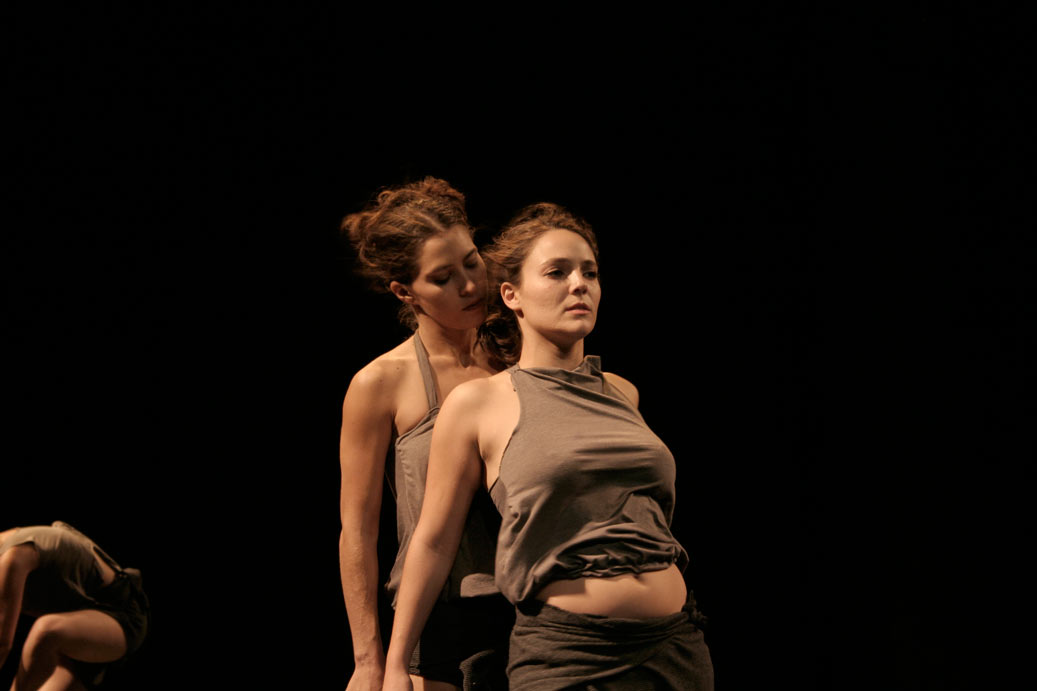
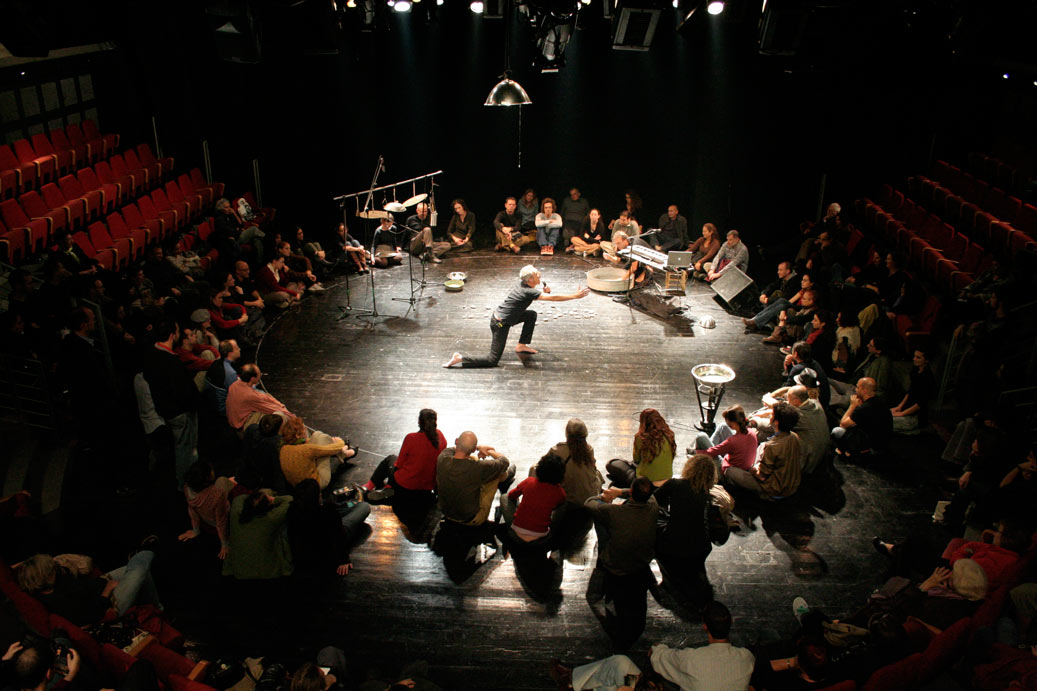
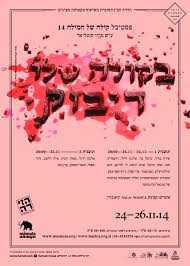
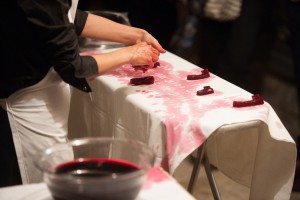
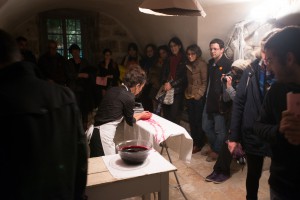
The 14 Kola Shel Ha’Mila Festival Named after Mario Kotliar Bekola Shelo Dybbuk   The Hazira Performance Art Arena’s flagship festival, now in its 14th year, examines the relationship between word/text and performance art. This year, the festival is being held in participation with the ‘Mamuta’ Center for Art and Media at Hansen House.   in the photo: Joseph Shprinzak   The dybbuk (an evil spirit in Jewish folklore) phenomenon, through Ansky’s play, is the basis and inspiration for this year’s Kola Shel Ha’Mila festival (The Voice of the Word). The Mamuta spaces at Hansen House, formerly a leper colony, are transformed into an area for challenging one’s spiritual transformation, as a metaphor for the ancient building’s newly designated mission. In Kola Shelo, Hansen House is granted the suppressed forces of experience, which connect past and present, art and ritualism, healing and performance. The dybbuk is an external force that penetrates the human body and causes it to behave erratically. According to tradition, the dybbuk is the spirit of a deceased person, which takes over a live body and speaks through it in another voice. The dybbuk is a way of coping with harsh social situations, voice dissent, for which the afflicted have no words, and reveal dark occurrences from a community’s past.
00185_0000179_00

Maybe it’s because the Leper Hospital was previously known as “Jesus Hilfe”, or,”Jesus Help Asylum”, and it reminds us of two of Jesus’ qualities – healing and banishing demons; maybe it’s because in 1950 a different, political and ideological spirit possessed the building, and it was decided to change the hospital’s persona and rename it after Dr. Hansen, who discovered Leprosy’s origin and seemed,  to  the building’s new owners (Israel’s Health Ministry) , like the right spirit for the public body they now represented; maybe it’s because the Leper Hospital lost its function, became an arts and technology center, and was named “Hansen House”, as if it is the home of the spirit that replaced Jesus; maybe it’s because today, instead of the lepers, artists and students are the ones who live in the building, and sometimes challenge the local cultural hegemony; maybe it’s because one hundred years have passed since S. An-sky’s ethnographic expedition, where he collected a part of the stories that functioned as the play’s basis, and a hundred years since the play’s first drafts were written in Russian and Yiddish; maybe it’s because of all these things, separately or together, that we decided, as a part of the “The Voice of the Word 14” festival, to return to one of the most profound traditions in Jewish culture, to dwell on an external spirit which possesses the body of a flesh and blood human being: the Dybbuk.
00062_0000061_00

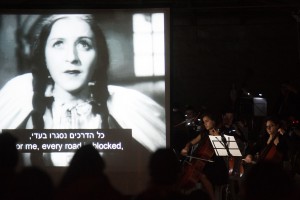
“Into the body of a living human being, with an individual, distinct soul, enters at a certain point in his life another soul – the soul of a person who died prematurely and was seen as a sinner so terrible, even entering hell was deprived from him, and he remains between two worlds, haunted and tortured by angels of destruction […] the Dybbuk seeks a refuge from its persecutors and enters the living body against its will, seizing  it, sticking to it, possessing it and speaking  from the mouth of the person possessed as a distinct personality” (Rachel Elior). Yoram Bilu writes that the urges and aspirations that stand at the base of this disorder were challenges that threatened the traditional Jewish lifestyle.  The play was written during the years 1912-1917 in Russian and Yiddish, and was inspired by the traditions and stories of the Dybbuk that An-sky collected when he was the head of an ethnographical expedition to Volhynia and Podolia. The play was performed many times by different groups, and through the years became a canonical play in Jewish theater’s history, in Yiddish and in Hebrew.
00239_0000239_00

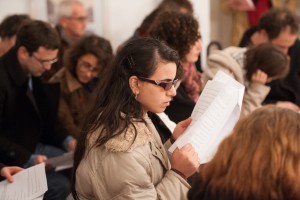
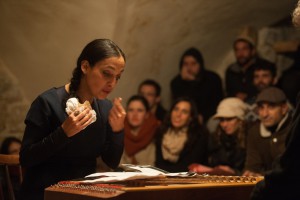
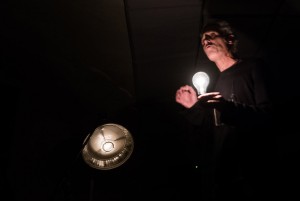
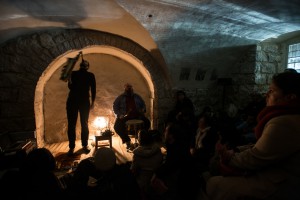
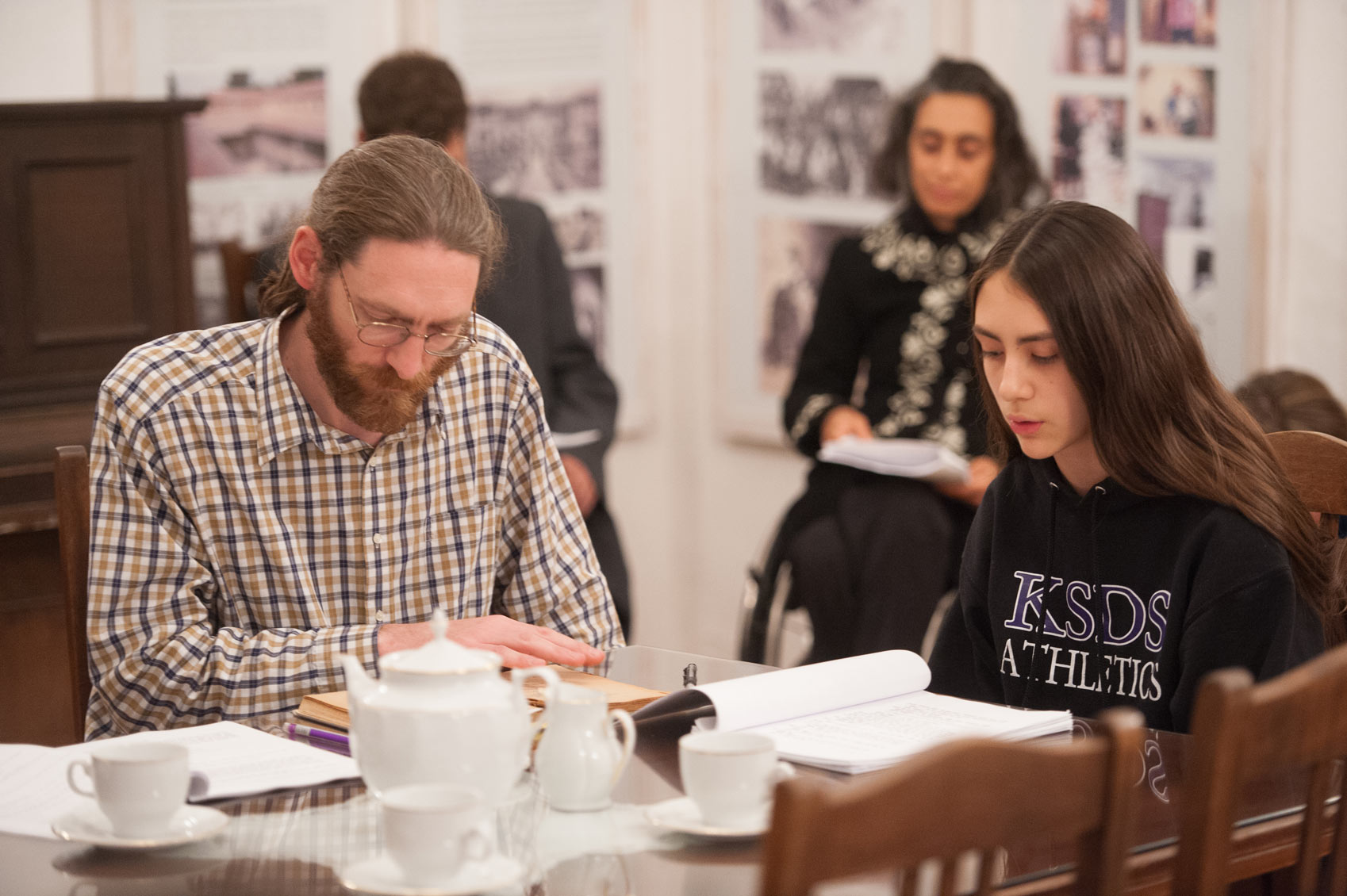
“The Voice of the Word” festival deals with the connection between the text and its performative aspects. In “His Voice in Her: Dybbuk” we suggested a refraction of the play using its motives, texts, or characters. Each of the parts the artists chose takes place in the historical building the architect Conrad Schick designed. The play, whose acts develop on a timeline, develops in the festival with its dispersal throughout the different spaces: Time becomes territory.
00269_0000220_00

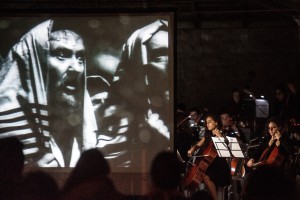
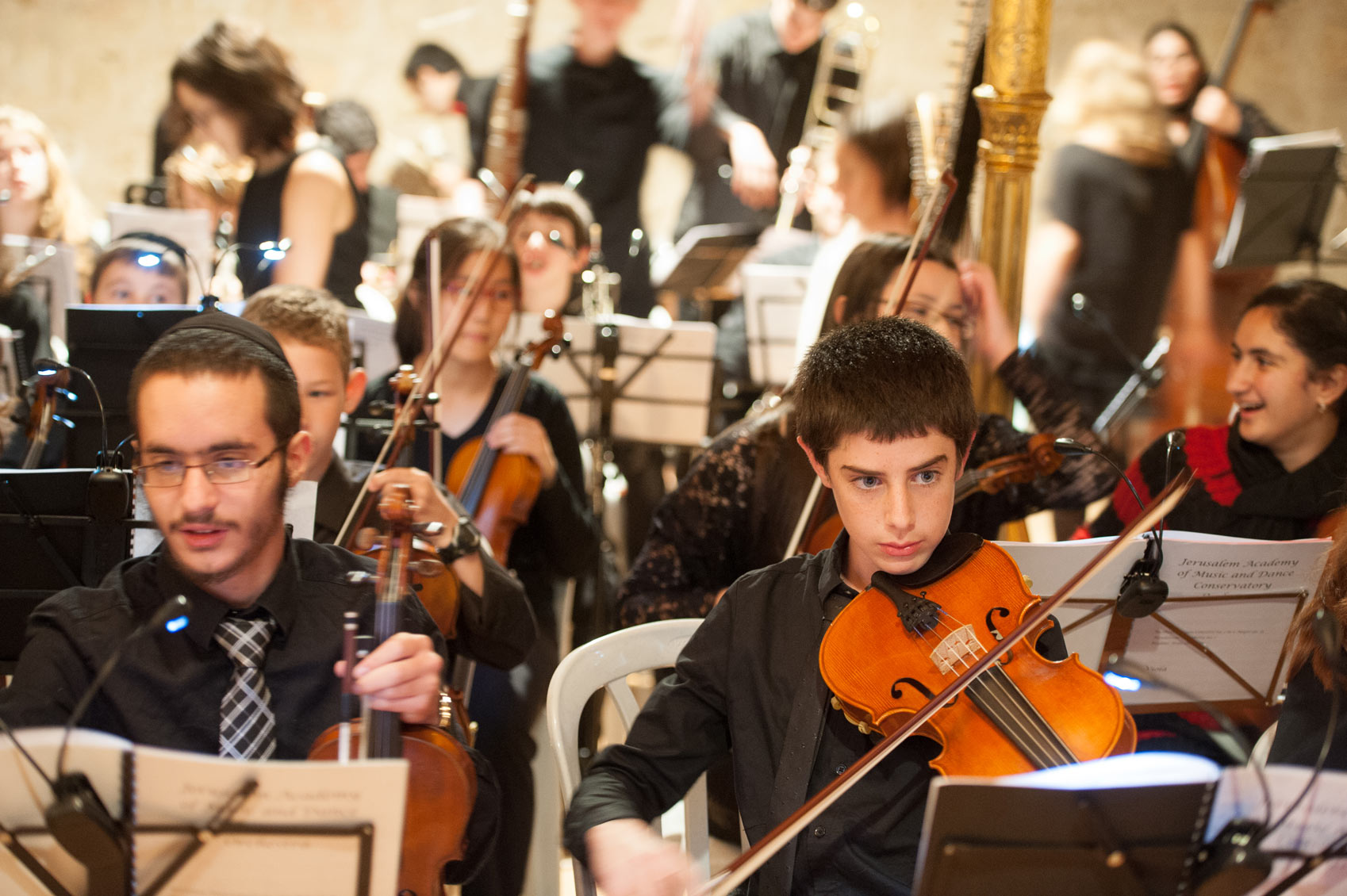
Divorce ceremonies, interpretations using auditory activities and works, mechanical theater, mixes of sounds and images, archived material and live happenings,  edits of old movies mixed with live performances of a youth orchestra – all these give one of the Jewish theater’s classic plays in Hebrew and in Yiddish a modern take. The artists once again bring up questions on ownership, on national and gender identity, on possession, on sound and spirit and on the spirit of time and convey a feeling that must be similar to the one created during the play’s performances in the 1920’s: The feeling that one world of values is disappearing, and a new one is taking its place.
 

00020_00 00160_0000170_00   00040_00

00163_00

Borderline, 2013

Borderline – Two performance events in the frame of Rashamim (drawing biennale) and with the collaboration of Daat HaMakom

Participating artists: adi kaplan and shahar carmel together with Dudu Carmel and invited musicians, shira legmann together with musica nova consort, hadas ophrat, lezli rubin-kunda, josef sprinzak.
Invited artists: Guy Yitzhaki and Dafi Sapunar, Yonatan Amir and Ronen Eidelman

Curators: Sala-manca.

“Borderline” is the title of two performance events featuring new works that address the space of the former Hansen leper house, and engage with cartography, mapping, and drawing in space.

Lezli-Rubin-Kunda-2Cartography, as a field of knowledge that encodes the space and delineates the connections between space and identity, employs the language of drawing in order to express political, economic, and social worldviews, all the while preserving and founding perceptions of identity. The works in “Borderline” will offer a different mapping of the space, whether through a revised reading of existing maps or the creation of alternative poetic maps.

The wall of Hansen House – which marked the separation between normal life and abnormal life – serves as the borderline, the initial point of departure for some of the works. The Hansen wall, residue of the outside self-defense against the inside, marks the space of a ghetto, of exile within the city, and serves as an architectural metaphor that echoes other walls. The works in the series of performances engage with the conceptual and concrete notion of the borderline: its delineation, erasure, or blurring. The borderline appears in the works as a formal or metaphorical line that separates and unifies its two sides, produces situations of passage, blockage, schism, or destination, and materializes in the encounter with agents that indicate its existence: customs, police, border crossing, conflict between different interests.Hadas-ofrat-3

The aspiration towards a utopian borderless space, a plan for a space without lines, was the dream of architect Rodriguez (the pseudonym of João Delgado), who had signed his business card “Arch. Rodriguez – Plans without Lines: an architect on a tightrope”.

http://traces.art.org.il/5/venues/mamuta?en

HaGolem Project, 2007

HaMaabada Theater, Jerusalem

Artists: Josef Sprinzak, Ilan Green, Pharesia Group, Adi Kaplan and Shahar Karmel, Maya Levi, Eran Sachs, Adva Drori, Shaul Zemach

Curated by sala-manca together with Ofira Henig

Shaul Zemach
Shaul Zemach

The Golem project is the result of a long research and working process, which involved artists from the fields of the fine arts and the performing arts. The theme of The Golem afforded us the possibility to work on one of the most important issues in philosophy, folklore, Jewish mysticism, the arts, literature, and cinema, while also serving as a metaphor for evolving technology. It seems to us that by returning to the subject fro a contemporary viewpoint creates the possibility to examine different interpretations of The Golem. The long period of preparation for the project commenced with a seminar of two days in which artists from a wide spectrum of the arts met with researches from differentfields.After this seminar the artists were invited to send us their proposals for works that deal with the subject of The Golem and who reflect the working process and development that we sought out. The proposals we chose represent unique forms of expression.

golem-3.11-450 _MG_4939

The Lab, as a venue for the arts, which combines new media, is the fitting place and space for the production of this project, both from the point of vgolem-3.11-080iew of our desire to deal the issue of the development of technology, the role of “space” in the arts and based on the working process of The Lab as a “Laboratory” for the arts – one that attempts to illuminate different aspects of a subject without the desire to reach conclusive results.During the course of the past year, we have held lectures and exchanges between the artists and have accompanied the different projects. The Golem project serves as a crossroads in time and space, which opens the working process to the general public, through our desire to expose the public to the artist’s works and to maintain an open dialogue with it. . [to the program] / @ TheLab, Jerusalem, 29.10-4.11.2007