WordPress database error: [DELETE command denied to user 'sala-manca'@'localhost' for table `sala_manca_net`.`wp_options`]
DELETE FROM `wp_options` WHERE `option_name` = '_site_transient_wp_theme_files_patterns-3e81fb819c0831df69203ee558a709b9'

WordPress database error: [DELETE command denied to user 'sala-manca'@'localhost' for table `sala_manca_net`.`wp_options`]
DELETE FROM `wp_options` WHERE `option_name` = '_site_transient_timeout_wp_theme_files_patterns-3e81fb819c0831df69203ee558a709b9'

WordPress database error: [INSERT, UPDATE command denied to user 'sala-manca'@'localhost' for table `sala_manca_net`.`wp_options`]
INSERT INTO `wp_options` (`option_name`, `option_value`, `autoload`) VALUES ('_site_transient_timeout_wp_theme_files_patterns-3e81fb819c0831df69203ee558a709b9', '1792702956', 'off') ON DUPLICATE KEY UPDATE `option_name` = VALUES(`option_name`), `option_value` = VALUES(`option_value`), `autoload` = VALUES(`autoload`)

WordPress database error: [INSERT, UPDATE command denied to user 'sala-manca'@'localhost' for table `sala_manca_net`.`wp_options`]
INSERT INTO `wp_options` (`option_name`, `option_value`, `autoload`) VALUES ('_site_transient_wp_theme_files_patterns-3e81fb819c0831df69203ee558a709b9', 'a:2:{s:7:\"version\";s:3:\"4.0\";s:8:\"patterns\";a:0:{}}', 'off') ON DUPLICATE KEY UPDATE `option_name` = VALUES(`option_name`), `option_value` = VALUES(`option_value`), `autoload` = VALUES(`autoload`)

WordPress database error: [INSERT, UPDATE command denied to user 'sala-manca'@'localhost' for table `sala_manca_net`.`wp_options`]
INSERT INTO `wp_options` (`option_name`, `option_value`, `autoload`) VALUES ('_transient_doing_cron', '1792701156.0062150955200195312500', 'on') ON DUPLICATE KEY UPDATE `option_name` = VALUES(`option_name`), `option_value` = VALUES(`option_value`), `autoload` = VALUES(`autoload`)

Victoria Hanna – Sala-Manca

In his/her Voice | The Voice of the Word Performance Festival, 2014

Participating Artists: Adi Kaplan, Shachar Carmel, Tom Soloveichik, Alex Drool, Josef Sprinzak, Carmel Bar, Li Lorian, Adam Yodfat, Victoria Hanna, Noam Inbar, Shira Borer, Jerusalem Conservatory Chamber Orchestra with Conductor Michael Klinghoffer, Ilan Volkov, Zohar Shafir, Tomer Damsky, Eran Sachs, Maya Dunitz

Curators: The Sala-Manca Group and Guy Biran
imgres-2

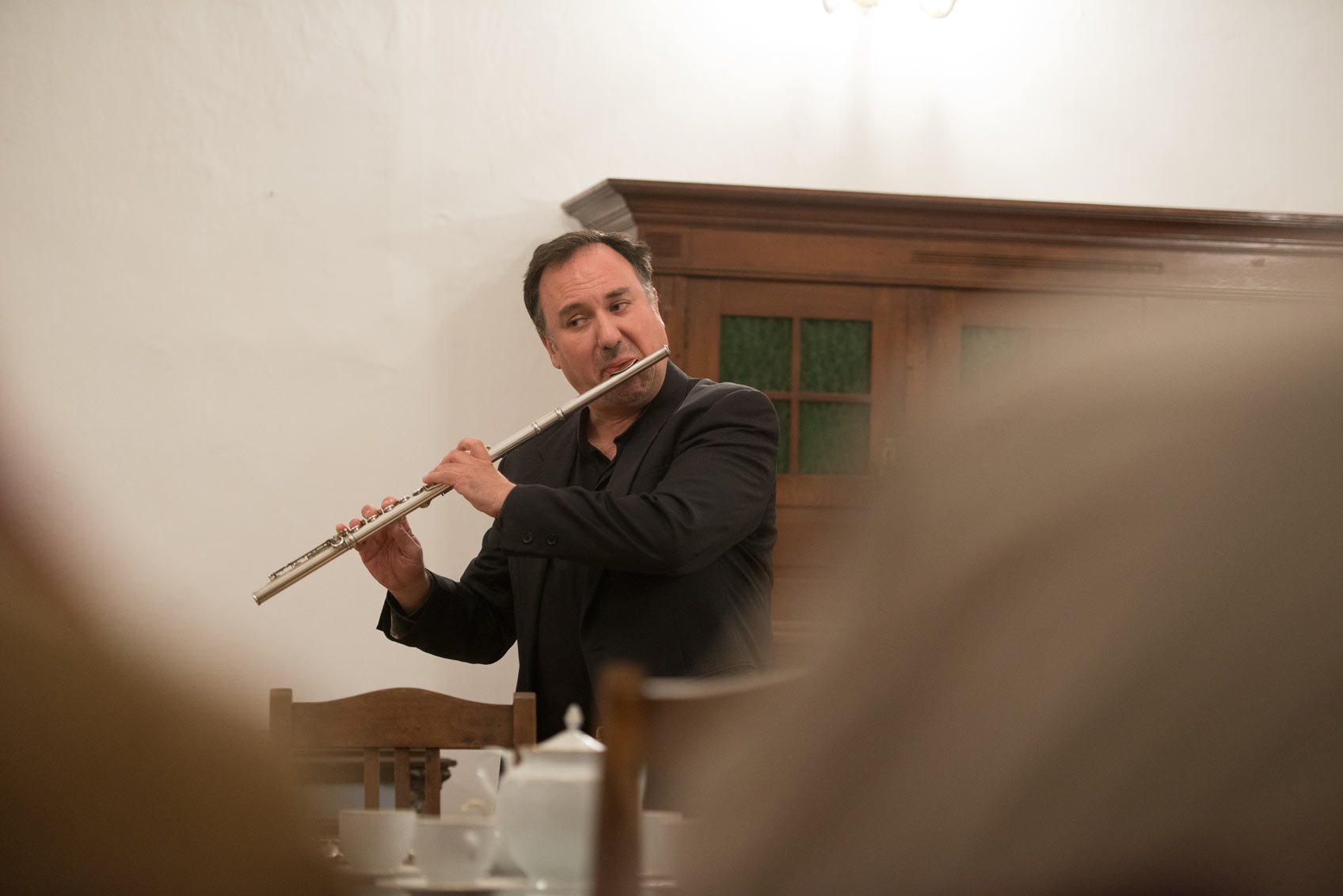
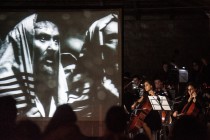
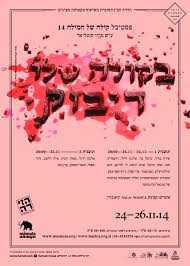
The 14 Kola Shel Ha’Mila Festival Named after Mario Kotliar Bekola Shelo Dybbuk   The Hazira Performance Art Arena’s flagship festival, now in its 14th year, examines the relationship between word/text and performance art. This year, the festival is being held in participation with the ‘Mamuta’ Center for Art and Media at Hansen House.   in the photo: Joseph Shprinzak   The dybbuk (an evil spirit in Jewish folklore) phenomenon, through Ansky’s play, is the basis and inspiration for this year’s Kola Shel Ha’Mila festival (The Voice of the Word). The Mamuta spaces at Hansen House, formerly a leper colony, are transformed into an area for challenging one’s spiritual transformation, as a metaphor for the ancient building’s newly designated mission. In Kola Shelo, Hansen House is granted the suppressed forces of experience, which connect past and present, art and ritualism, healing and performance. The dybbuk is an external force that penetrates the human body and causes it to behave erratically. According to tradition, the dybbuk is the spirit of a deceased person, which takes over a live body and speaks through it in another voice. The dybbuk is a way of coping with harsh social situations, voice dissent, for which the afflicted have no words, and reveal dark occurrences from a community’s past.
00185_0000179_00

Maybe it’s because the Leper Hospital was previously known as “Jesus Hilfe”, or,”Jesus Help Asylum”, and it reminds us of two of Jesus’ qualities – healing and banishing demons; maybe it’s because in 1950 a different, political and ideological spirit possessed the building, and it was decided to change the hospital’s persona and rename it after Dr. Hansen, who discovered Leprosy’s origin and seemed,  to  the building’s new owners (Israel’s Health Ministry) , like the right spirit for the public body they now represented; maybe it’s because the Leper Hospital lost its function, became an arts and technology center, and was named “Hansen House”, as if it is the home of the spirit that replaced Jesus; maybe it’s because today, instead of the lepers, artists and students are the ones who live in the building, and sometimes challenge the local cultural hegemony; maybe it’s because one hundred years have passed since S. An-sky’s ethnographic expedition, where he collected a part of the stories that functioned as the play’s basis, and a hundred years since the play’s first drafts were written in Russian and Yiddish; maybe it’s because of all these things, separately or together, that we decided, as a part of the “The Voice of the Word 14” festival, to return to one of the most profound traditions in Jewish culture, to dwell on an external spirit which possesses the body of a flesh and blood human being: the Dybbuk.
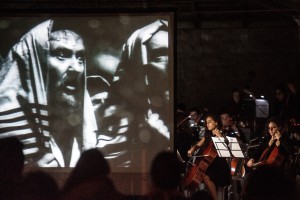
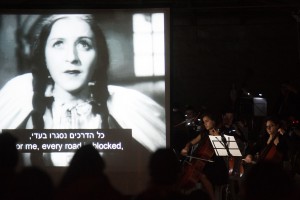
00062_0000061_00

“Into the body of a living human being, with an individual, distinct soul, enters at a certain point in his life another soul – the soul of a person who died prematurely and was seen as a sinner so terrible, even entering hell was deprived from him, and he remains between two worlds, haunted and tortured by angels of destruction […] the Dybbuk seeks a refuge from its persecutors and enters the living body against its will, seizing  it, sticking to it, possessing it and speaking  from the mouth of the person possessed as a distinct personality” (Rachel Elior). Yoram Bilu writes that the urges and aspirations that stand at the base of this disorder were challenges that threatened the traditional Jewish lifestyle.  The play was written during the years 1912-1917 in Russian and Yiddish, and was inspired by the traditions and stories of the Dybbuk that An-sky collected when he was the head of an ethnographical expedition to Volhynia and Podolia. The play was performed many times by different groups, and through the years became a canonical play in Jewish theater’s history, in Yiddish and in Hebrew.
00239_0000239_00

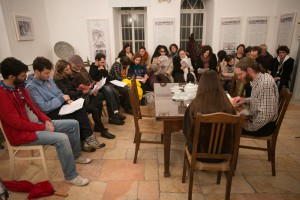
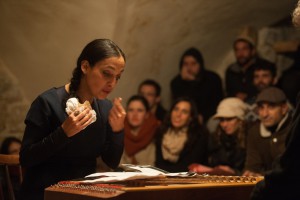
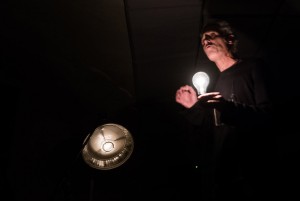
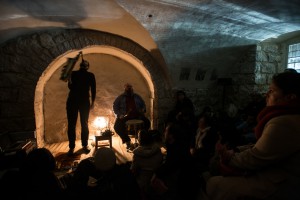
“The Voice of the Word” festival deals with the connection between the text and its performative aspects. In “His Voice in Her: Dybbuk” we suggested a refraction of the play using its motives, texts, or characters. Each of the parts the artists chose takes place in the historical building the architect Conrad Schick designed. The play, whose acts develop on a timeline, develops in the festival with its dispersal throughout the different spaces: Time becomes territory.
00269_0000220_00

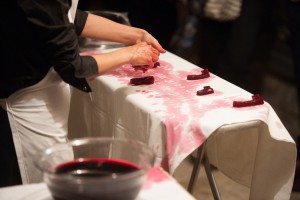
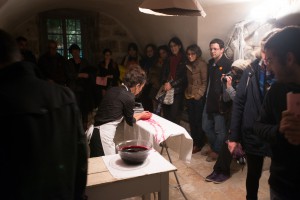
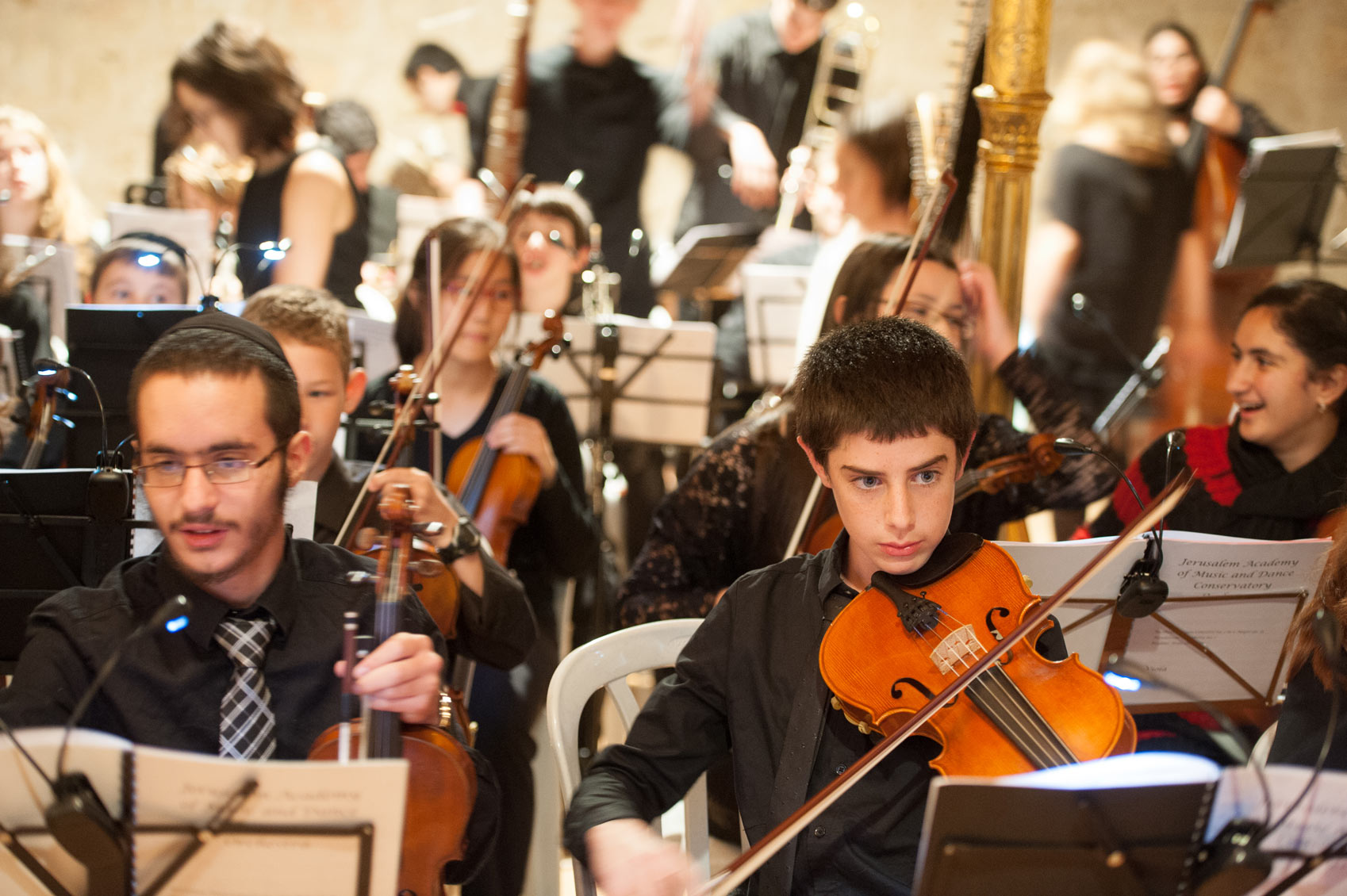
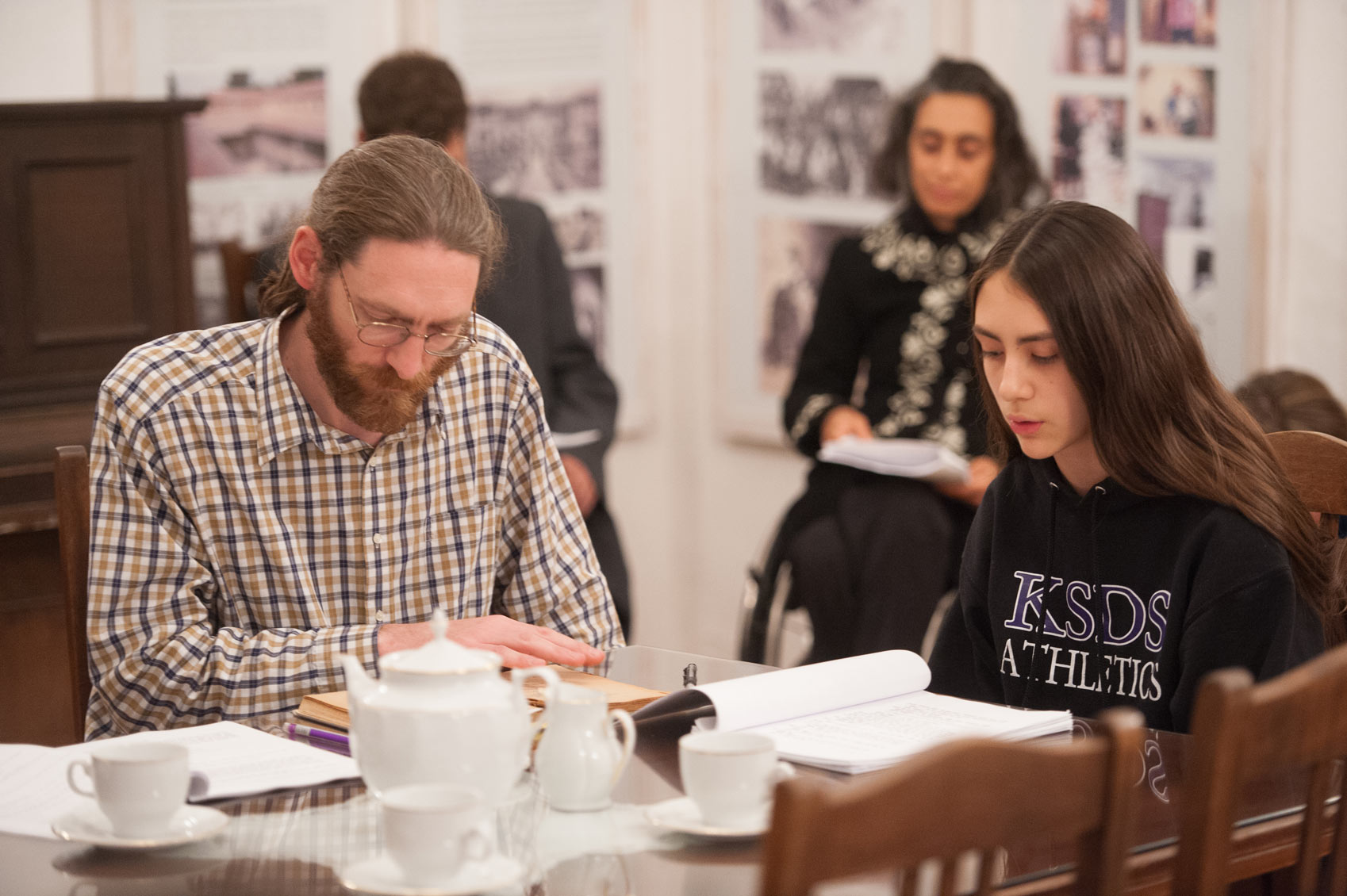
Divorce ceremonies, interpretations using auditory activities and works, mechanical theater, mixes of sounds and images, archived material and live happenings,  edits of old movies mixed with live performances of a youth orchestra – all these give one of the Jewish theater’s classic plays in Hebrew and in Yiddish a modern take. The artists once again bring up questions on ownership, on national and gender identity, on possession, on sound and spirit and on the spirit of time and convey a feeling that must be similar to the one created during the play’s performances in the 1920’s: The feeling that one world of values is disappearing, and a new one is taking its place.
 

00020_00 00160_0000170_00   00040_00

00163_00

What’s Hidden Behind the Pastoral?, 2009

What’s Hidden Behind the Pastoral? is an art project in which more than thirty artists present installations, performances, tours, and shows dealing with the past, present, and future of Ein Karem. The project explores the history of the village from biblical times, through its epoch as a Palestinian village, and until its present day as a Jewish neighborhood of West Jerusalem and a primary object of desire for big real-state projects. These are the central themes that the artists deal with at the project. This series of actions examines the place of the pastoral in Israeli art in general and its implications on Ein Karem specifically. The event is also the formal opening to the public of the Mamuta at the Daniela Passal Art and Media Center, which has been operating since February 2009 in the house of the late artist Daniela Passal, thanks to her generosity. Mamuta is a joint project of the Jerusalem Foundation and the Sala-manca group.

Works and projects that will be held and presented at the event:

1 – The presentation of some twenty five actions, media installations, and performances by different artists

2 – Open Source Souvenir Shop Project (OSSS). At the Shop, the public will be able to create souvenirs of the event and of Ein Karem, with free access to some of the images of the artists’ works.

3 – Audio tours of Ein Karem will be offered, creating a new and multi-layered narrative of the village: the visitors are invited to go set out on a hike with a map and an MP3 of guided tours made up of different voices that present the history of Ein Karem from different points of view.

4 – Throughout the event and in real time, three groups—each comprised of a poet, a photographer, a theoretician, an editor, and a graphic designer—will head out on a safari with a personal guide, to collect and create materials. Each group will produce and design its own catalogue for the event. The catalogues will be printed on the site and the public will have the opportunity to choose between the different catalogues—different records of the same event

5  -Friday October 16, from 9:30 to 13:00: Symposium on the curation and creation of art in contested spaces, with the participation of Galit Eilat, Charles Esche and Danna Tagar.

6 – Saturday October 17, from 11:00 to 14:00: Bridge tournament between the local ladies’ team and guests of the event.

Background

The Center’s location demands in our view a treatment of the historical and ideological complexity of the loaded landscape: the landscape of the village of Ein Karem and the village of Ein Karem as landscape.

The central project that guides us at Mamuta, and which gives this lecture its title, is: “What’s Hidden Behind the Pastoral?”

One of Mamuta’s main challenges is its location and history and the need to observe and confront that very same spatial pastorality, which is essentially a window into understanding Israeli reality in the broadest sense. Through “What’s Hidden Behind the Pastoral?” we take a critical look at the geographic and historical space of Ein Karem; we deal with the representation of the landscape and the relationship of the landscape with notions of power and nation; and we explore the connection between art, media, and technology, and the Israeli landscape as an arena for events and critical artistic production in general and in the representation of Israeliness in particular.

According to jewish the tradition, Ein Karem is the ancient Beit HaKarem as recorded in the Bible (Jeremiah 6:1, Nehemia 3:14).According to the Christian tradition, Ein Karem is the birthplace of John the Baptist. In the Byzantine era, churches were built there that are connected to the name of John the Baptist and his family, and to this day Ein Karem is considered a holy place for Christianity and a site of pilgrimage.

In the thirteenth century, the village was conquered by the arabs forces of Omar al-Khatav ,. In the nineteenth century, the village, home to both Christians and Muslims, developed into a site of pilgrimage for Christians from around the world and also a site for the cultivation of olives and the production of olive oil.

In the 1948 war—which ended with Independence for Israel, and catastrophe, or Nakba, for the Palestinians—the village was conquered by Israeli army forces. Most of the residents of the village fled before the army came in, following attacks on neighboring villages . After the property was confiscated, the State began to settle the village with Jewish refugees and immigrants from various countries. A youth agricultural school was established there over the years , and in the 1980s Ein Karem became a central tourist spot in Jerusalem, bringing about a rise in real estate prices and an influx of wealthy residents.

Ein Karem is one of the few Arab villages that was not destroyed by the Israeli army during or after the 1948 war, and it amazingly preserves the pre-1948 architecture of the village.

The history of the village, the history of the representation of the landscape in Israeli art and a criticism on the dominant pastoral perspective in the area in which the Center is located are the central subjects of the long-term project that will occupy us and the center for the coming years,. This project will be comprised of a series of actions, events, exhibits, and performances dealing with the present, the past, and the future of Ein Karem. The project will take place, will be produced and presented at Mamuta and its environs through collaboration with different institutions and neighbors. It is a project in stages, with different stops in which its opening date is known (this October 15-17) but its completion date is unknown.