WordPress database error: [DELETE command denied to user 'sala-manca'@'localhost' for table `sala_manca_net`.`wp_options`]
DELETE FROM `wp_options` WHERE `option_name` = '_site_transient_wp_theme_files_patterns-3e81fb819c0831df69203ee558a709b9'

WordPress database error: [DELETE command denied to user 'sala-manca'@'localhost' for table `sala_manca_net`.`wp_options`]
DELETE FROM `wp_options` WHERE `option_name` = '_site_transient_timeout_wp_theme_files_patterns-3e81fb819c0831df69203ee558a709b9'

WordPress database error: [INSERT, UPDATE command denied to user 'sala-manca'@'localhost' for table `sala_manca_net`.`wp_options`]
INSERT INTO `wp_options` (`option_name`, `option_value`, `autoload`) VALUES ('_site_transient_timeout_wp_theme_files_patterns-3e81fb819c0831df69203ee558a709b9', '1792702954', 'off') ON DUPLICATE KEY UPDATE `option_name` = VALUES(`option_name`), `option_value` = VALUES(`option_value`), `autoload` = VALUES(`autoload`)

WordPress database error: [INSERT, UPDATE command denied to user 'sala-manca'@'localhost' for table `sala_manca_net`.`wp_options`]
INSERT INTO `wp_options` (`option_name`, `option_value`, `autoload`) VALUES ('_site_transient_wp_theme_files_patterns-3e81fb819c0831df69203ee558a709b9', 'a:2:{s:7:\"version\";s:3:\"4.0\";s:8:\"patterns\";a:0:{}}', 'off') ON DUPLICATE KEY UPDATE `option_name` = VALUES(`option_name`), `option_value` = VALUES(`option_value`), `autoload` = VALUES(`autoload`)

WordPress database error: [INSERT, UPDATE command denied to user 'sala-manca'@'localhost' for table `sala_manca_net`.`wp_options`]
INSERT INTO `wp_options` (`option_name`, `option_value`, `autoload`) VALUES ('_transient_doing_cron', '1792701154.1542809009552001953125', 'on') ON DUPLICATE KEY UPDATE `option_name` = VALUES(`option_name`), `option_value` = VALUES(`option_value`), `autoload` = VALUES(`autoload`)

Pil&Galia Kollectiv – Sala-Manca

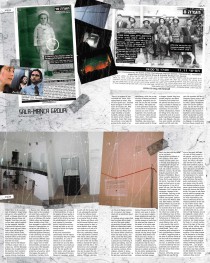
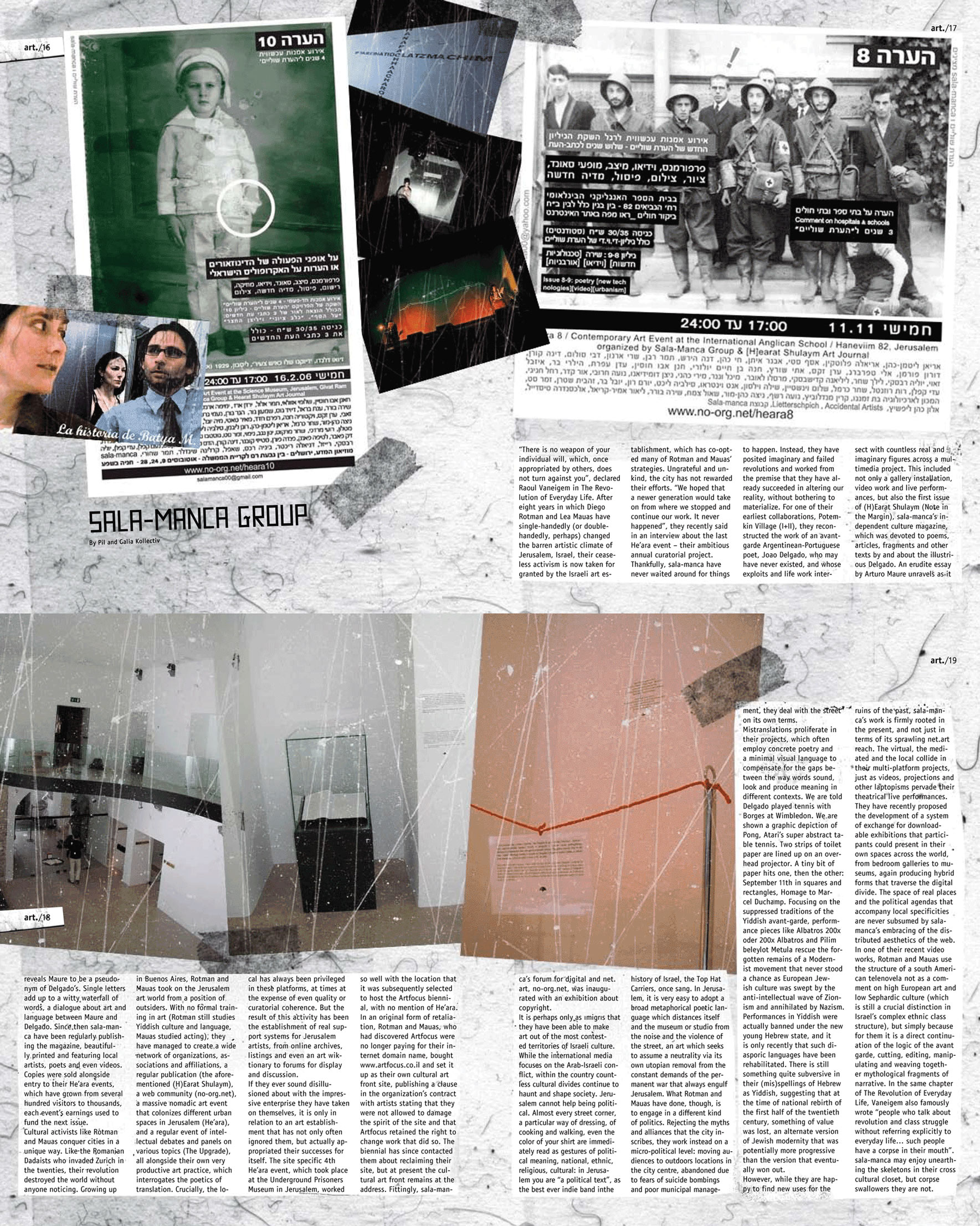
*Heara – Independent Art in Jerusalem at the Beginning of the 21st Century, 2014

Ronen Eidelman, Lea Mauas, Diego Rotman (eds.), *Heara – Independent Art in Jerusalem at the Beginning of the 21st Century, 2014, Jerusalem: Hearat Shulaym, 2014 [English and Hebrew | Book, 352 p.]

*Heara is a collection of testimonies, reflections, interpretations and documentations of Heara events, as well as images from issues of Hearat Shulaym (Note in the Margin), an independent contemporary art and literature journal published together and as an inherent part of the events. The book includes articles published in Hearat Shulaym and additional articles written especially for the book by Israeli artists and scholars, as well as artworks which were part of the Heara art project. The art events and journal were active in divided, grief-stricken Jerusalem of the Second Intifada, outside conventional art venues and without any cooperation or funding by the government or private corporations. Nevertheless, the events managed to form fascinating connections between artists operating in different media ־ visual art, theater, poetry, video and sounds, and created a platform of growth and articulation for hundreds of artists, producing exciting, unpredictable, inspiring and thought-provoking pieces.
To Download the book

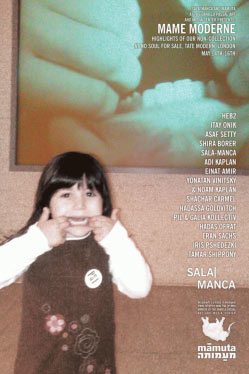
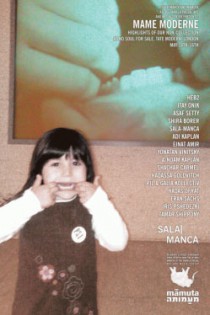
Mame Moderne at Tate Modern, 2010

MAME Moderne at No Soul For Sale, Tate Modern
Highlights from our non-collection
Curators: Sala-Manca Collective

Mame Moderne (“Modern Mother” in Yiddish) is the name of the TATE Modern translated literaly and genderly to the Yiddish language (Tate means “Father” in Yiddish). In this salon we show a series of works which don’t belong to us—non-collectors of this non-collection. Maybe a reflection on art habits and rituals, maybe a negative of Museum, maybe a gallery in the local barber shop (or maybe not).
mamemod
In our 25m2 of Tate Modern we present the Mame Moderne Salon, with its waiting room composed of works presented in different projects curated by Sala-Manca since 2000, dealing (or not) with the topic of Identity Change.

While awaiting the hairdresser to hairdress you watching the process you are passing through in someone else (performance by Shira Borer), you can watch a TV film of a “patriotic” recreation of the myths of the Golem (video by Adi Kaplan, Shahar Carmel, Yonatan Vinitsky, Noam Kaplan, and Etai Onik),  hear the story of a Palestinian refugee from Ein Kerem told in the voice of a Jewish-Israeli artist (sound work and performance by Hadas Ofrat), watch a live streaming of barber shops and transformed urban areas in the conflicted Hebron (Heb2-live steaming), see a futuristic film about a post-IKEA society (Pil&Galia Kollectiv) and a still-video work about a sound researcher (Asaf Setty), observe a reflection on cultural treasures and ownership in a video of a film as a metaphor for cultural re-appropriation (Iris Pshedezki) and a woman and a tree that became one and stand alone (Tamar Shipony), hear classical English poetry translated from English into English through Babylon software (Sala-Manca) and foreign workers in Tel Aviv speaking the “holy language” (Eran Sachs) , or buy MAME Moderne t-shirts designed by Einat Amir (einat amir)
On Sunday May 16 at 11:30, a live performance of a love story between an orthodox Jew and a secret agent of the Mossad (Sala-Manca’s live performance at the main stage 2010).

Link to Brochure

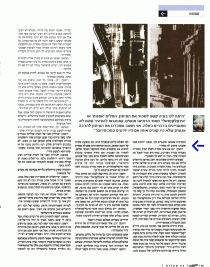
The Latest Convention’s Breakers, Pil&Galia Kollectiv, 7.2002


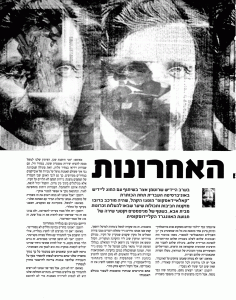
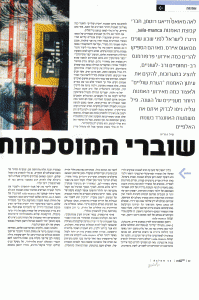
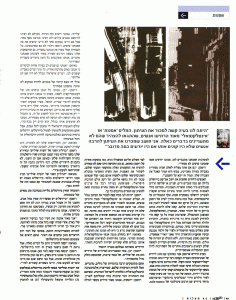
Latest Convention Breakers, Pil&Galia, 42 maalot, July 2002

Lea Mauas and Diego Rotman, members of the group Sala-Manca, immigrated to Israel from Buenos Aires seven years ago. Since then, they managed to produce some multidisciplinary and multilingual performances, to display some exhibitions, to set up the art magazine “Hearat Shulaym”, and to organize some of the most interesting artistic events of the year…Sergei Eisenstein considered cinema as an art that would free the latent strength by creating a united collective conscience that would allow the public to experience the channel as if it was one single man…Without drowning their public, Rotman and Mauas succeed in raising questions about the ability of the public to experience a revolutionary instant, refined like the one Sergei Eisenstein talked about…Their affection for the proud and revolutionary modernism of the beginning of the 20’s century is reflected in all their works, from “Potiomkin Village” to “Hearat Shulaym” and a cultural avant-garde Yiddish evening, even through the conception of an exhibition of fax works made of ephemeral thermal paper…
The following scene, taken from one of their performances, illustrates best the cat and mouse game that Rotman and Mauas run with modernism: on the ground of a big black and white slide, of two “sticks players” and a square pixel ball, Rotman declares “Delgado and Borges play tennis in Wimbledon” and erases in a second all what extends between “the garden of the divided paths” and the Atari. Something in that humor and in their readiness to integrate in their work a reference to their immediate environment, in their ability to break the abysmal seriousness that froze the dada, the surrealism, and the futurism into the glass of the museum, raises the suspicion that their faithfulness is divided.

42MAALOTPAGE242MAALOTPAGE1 42MAALOTPAGE3

Click to enlarge