WordPress database error: [DELETE command denied to user 'sala-manca'@'localhost' for table `sala_manca_net`.`wp_options`]
DELETE FROM `wp_options` WHERE `option_name` = '_site_transient_wp_theme_files_patterns-3e81fb819c0831df69203ee558a709b9'

WordPress database error: [DELETE command denied to user 'sala-manca'@'localhost' for table `sala_manca_net`.`wp_options`]
DELETE FROM `wp_options` WHERE `option_name` = '_site_transient_timeout_wp_theme_files_patterns-3e81fb819c0831df69203ee558a709b9'

WordPress database error: [INSERT, UPDATE command denied to user 'sala-manca'@'localhost' for table `sala_manca_net`.`wp_options`]
INSERT INTO `wp_options` (`option_name`, `option_value`, `autoload`) VALUES ('_site_transient_timeout_wp_theme_files_patterns-3e81fb819c0831df69203ee558a709b9', '1792702890', 'off') ON DUPLICATE KEY UPDATE `option_name` = VALUES(`option_name`), `option_value` = VALUES(`option_value`), `autoload` = VALUES(`autoload`)

WordPress database error: [INSERT, UPDATE command denied to user 'sala-manca'@'localhost' for table `sala_manca_net`.`wp_options`]
INSERT INTO `wp_options` (`option_name`, `option_value`, `autoload`) VALUES ('_site_transient_wp_theme_files_patterns-3e81fb819c0831df69203ee558a709b9', 'a:2:{s:7:\"version\";s:3:\"4.0\";s:8:\"patterns\";a:0:{}}', 'off') ON DUPLICATE KEY UPDATE `option_name` = VALUES(`option_name`), `option_value` = VALUES(`option_value`), `autoload` = VALUES(`autoload`)

WordPress database error: [INSERT, UPDATE command denied to user 'sala-manca'@'localhost' for table `sala_manca_net`.`wp_options`]
INSERT INTO `wp_options` (`option_name`, `option_value`, `autoload`) VALUES ('_transient_doing_cron', '1792701090.5006940364837646484375', 'on') ON DUPLICATE KEY UPDATE `option_name` = VALUES(`option_name`), `option_value` = VALUES(`option_value`), `autoload` = VALUES(`autoload`)

Einat Amir – Sala-Manca

Living in a Film, 2014

Mamuta at Hansen | January-February 2013

Artists: Asya Lukin, Itamar Mendes-Flohr, Guy Yitzhaki, Hagar Goren, Hadassa Goldvitch, Zemer Sat, Yarden Erez, Einat Amir and Sala-Manca

Curators: Sala-manca

The project, which incorporates art, cinema and performance, will feature eight artists who were artists-in-residence at Mamuta in Ein Karem. The entrance to “Living in a Film” is every full hour. The viewers are led by a movie usher named Esther, a girl born to a Jewish Orthodox family, who left religion and fell in love with the usher of the Lisbon Cinema, which operated in the cellars of the leppers’ house in the city of Lisbon in Portugal between 1963 and 1973 (the era of Salazar’s dictatorship – and managed to serve as the underground nerve center of freedom fighters, right under the regime’s nose). In the wake of her love to the usher she also fell in love with the art of cinema, and because of that love was banished from her home.

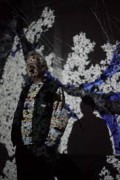
images from the exhibition

FFINAL-Poster-Live-in-a-Film (1)

The  Exhibition is supported by the Ostrovsky Family Fund and the Ministry of Culture


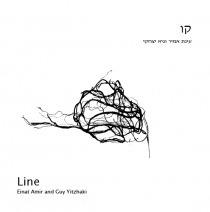
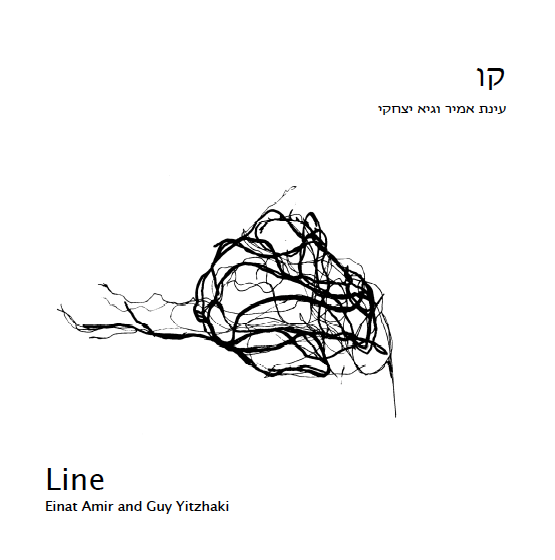
Line | Einat Amir and Guy Yizhaki, 2011

Mamuta at Daniela Passal House, Ein Karem

Curators: sala-manca

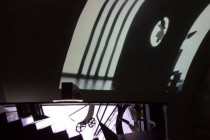
The living room is wall-papered with drawings. A projection
onto the drawings creates a hybrid image. In the space
between the projection and the drawing, strings diverge and
converge, transforming into a three-dimensional image that
changes with the projection. Elsewhere, on the living-room
floor, a projected drawing is thickened by drops of water.
The scenery changes as in a nighttime stroll through the
forest out of a Japanese animated film.
In the library, a book of sketches by Einat and Guy converses
with Illuminated Manuscripts by David Small. As the
spectator browses through the book, the drawings projected
onto it change. They are like memories of digital sketches
from a different place—a combination of the manual craft
and the digital craft. The exhibit is rounded out by Einat’s
drawings, hung in the living-room of the house.
The joint exhibition, Line, was commissioned by Mamuta in
order to bring to fruition the potential of dialogue between
the two artists, which began about two years ago when they
began their residencies in the Center’s shared studio space, and continued with various projects (see the interview with Jan Tichy). It was a successful realization of Mamuta’s choice not to place walls between the studio spaces. Their dialogue
stemmed from Einat’s curiosity about new media and from her desire to penetrate the world of programming and the projected image, which is Guy’s artistic world. Einat feels that with these media she will be able to deepen the investigation of the dimension of time in her own work. For his part, Guy believes that the encounter with the materiality of Einat’s works can broaden his own experimental style—
which entails the creation and projection of images through algorithms that react to physical structures. Their collaboration creates a unique language, combining
two different semiotic systems—that of drawing, craft, and text, and that of the digital image. Thanks to its precision, the connection is fascinating, poetic, and challenging.
The exhibit is the culmination of a year and a half of work at Mamuta, in which the two artists began to develop their common language. Line is the first closing of a circle. This  point is only a beginning.
Lea and Diego (Sala-Manca group)


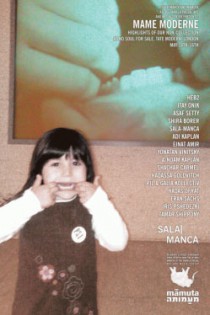
Mame Moderne at Tate Modern, 2010

MAME Moderne at No Soul For Sale, Tate Modern
Highlights from our non-collection
Curators: Sala-Manca Collective

Mame Moderne (“Modern Mother” in Yiddish) is the name of the TATE Modern translated literaly and genderly to the Yiddish language (Tate means “Father” in Yiddish). In this salon we show a series of works which don’t belong to us—non-collectors of this non-collection. Maybe a reflection on art habits and rituals, maybe a negative of Museum, maybe a gallery in the local barber shop (or maybe not).
mamemod
In our 25m2 of Tate Modern we present the Mame Moderne Salon, with its waiting room composed of works presented in different projects curated by Sala-Manca since 2000, dealing (or not) with the topic of Identity Change.

While awaiting the hairdresser to hairdress you watching the process you are passing through in someone else (performance by Shira Borer), you can watch a TV film of a “patriotic” recreation of the myths of the Golem (video by Adi Kaplan, Shahar Carmel, Yonatan Vinitsky, Noam Kaplan, and Etai Onik),  hear the story of a Palestinian refugee from Ein Kerem told in the voice of a Jewish-Israeli artist (sound work and performance by Hadas Ofrat), watch a live streaming of barber shops and transformed urban areas in the conflicted Hebron (Heb2-live steaming), see a futuristic film about a post-IKEA society (Pil&Galia Kollectiv) and a still-video work about a sound researcher (Asaf Setty), observe a reflection on cultural treasures and ownership in a video of a film as a metaphor for cultural re-appropriation (Iris Pshedezki) and a woman and a tree that became one and stand alone (Tamar Shipony), hear classical English poetry translated from English into English through Babylon software (Sala-Manca) and foreign workers in Tel Aviv speaking the “holy language” (Eran Sachs) , or buy MAME Moderne t-shirts designed by Einat Amir (einat amir)
On Sunday May 16 at 11:30, a live performance of a love story between an orthodox Jew and a secret agent of the Mossad (Sala-Manca’s live performance at the main stage 2010).

Link to Brochure

What’s Hidden Behind the Pastoral?, 2009

What’s Hidden Behind the Pastoral? is an art project in which more than thirty artists present installations, performances, tours, and shows dealing with the past, present, and future of Ein Karem. The project explores the history of the village from biblical times, through its epoch as a Palestinian village, and until its present day as a Jewish neighborhood of West Jerusalem and a primary object of desire for big real-state projects. These are the central themes that the artists deal with at the project. This series of actions examines the place of the pastoral in Israeli art in general and its implications on Ein Karem specifically. The event is also the formal opening to the public of the Mamuta at the Daniela Passal Art and Media Center, which has been operating since February 2009 in the house of the late artist Daniela Passal, thanks to her generosity. Mamuta is a joint project of the Jerusalem Foundation and the Sala-manca group.

Works and projects that will be held and presented at the event:

1 – The presentation of some twenty five actions, media installations, and performances by different artists

2 – Open Source Souvenir Shop Project (OSSS). At the Shop, the public will be able to create souvenirs of the event and of Ein Karem, with free access to some of the images of the artists’ works.

3 – Audio tours of Ein Karem will be offered, creating a new and multi-layered narrative of the village: the visitors are invited to go set out on a hike with a map and an MP3 of guided tours made up of different voices that present the history of Ein Karem from different points of view.

4 – Throughout the event and in real time, three groups—each comprised of a poet, a photographer, a theoretician, an editor, and a graphic designer—will head out on a safari with a personal guide, to collect and create materials. Each group will produce and design its own catalogue for the event. The catalogues will be printed on the site and the public will have the opportunity to choose between the different catalogues—different records of the same event

5  -Friday October 16, from 9:30 to 13:00: Symposium on the curation and creation of art in contested spaces, with the participation of Galit Eilat, Charles Esche and Danna Tagar.

6 – Saturday October 17, from 11:00 to 14:00: Bridge tournament between the local ladies’ team and guests of the event.

Background

The Center’s location demands in our view a treatment of the historical and ideological complexity of the loaded landscape: the landscape of the village of Ein Karem and the village of Ein Karem as landscape.

The central project that guides us at Mamuta, and which gives this lecture its title, is: “What’s Hidden Behind the Pastoral?”

One of Mamuta’s main challenges is its location and history and the need to observe and confront that very same spatial pastorality, which is essentially a window into understanding Israeli reality in the broadest sense. Through “What’s Hidden Behind the Pastoral?” we take a critical look at the geographic and historical space of Ein Karem; we deal with the representation of the landscape and the relationship of the landscape with notions of power and nation; and we explore the connection between art, media, and technology, and the Israeli landscape as an arena for events and critical artistic production in general and in the representation of Israeliness in particular.

According to jewish the tradition, Ein Karem is the ancient Beit HaKarem as recorded in the Bible (Jeremiah 6:1, Nehemia 3:14).According to the Christian tradition, Ein Karem is the birthplace of John the Baptist. In the Byzantine era, churches were built there that are connected to the name of John the Baptist and his family, and to this day Ein Karem is considered a holy place for Christianity and a site of pilgrimage.

In the thirteenth century, the village was conquered by the arabs forces of Omar al-Khatav ,. In the nineteenth century, the village, home to both Christians and Muslims, developed into a site of pilgrimage for Christians from around the world and also a site for the cultivation of olives and the production of olive oil.

In the 1948 war—which ended with Independence for Israel, and catastrophe, or Nakba, for the Palestinians—the village was conquered by Israeli army forces. Most of the residents of the village fled before the army came in, following attacks on neighboring villages . After the property was confiscated, the State began to settle the village with Jewish refugees and immigrants from various countries. A youth agricultural school was established there over the years , and in the 1980s Ein Karem became a central tourist spot in Jerusalem, bringing about a rise in real estate prices and an influx of wealthy residents.

Ein Karem is one of the few Arab villages that was not destroyed by the Israeli army during or after the 1948 war, and it amazingly preserves the pre-1948 architecture of the village.

The history of the village, the history of the representation of the landscape in Israeli art and a criticism on the dominant pastoral perspective in the area in which the Center is located are the central subjects of the long-term project that will occupy us and the center for the coming years,. This project will be comprised of a series of actions, events, exhibits, and performances dealing with the present, the past, and the future of Ein Karem. The project will take place, will be produced and presented at Mamuta and its environs through collaboration with different institutions and neighbors. It is a project in stages, with different stops in which its opening date is known (this October 15-17) but its completion date is unknown.