WordPress database error: [DELETE command denied to user 'sala-manca'@'localhost' for table `sala_manca_net`.`wp_options`]
DELETE FROM `wp_options` WHERE `option_name` = '_site_transient_wp_theme_files_patterns-3e81fb819c0831df69203ee558a709b9'

WordPress database error: [DELETE command denied to user 'sala-manca'@'localhost' for table `sala_manca_net`.`wp_options`]
DELETE FROM `wp_options` WHERE `option_name` = '_site_transient_timeout_wp_theme_files_patterns-3e81fb819c0831df69203ee558a709b9'

WordPress database error: [INSERT, UPDATE command denied to user 'sala-manca'@'localhost' for table `sala_manca_net`.`wp_options`]
INSERT INTO `wp_options` (`option_name`, `option_value`, `autoload`) VALUES ('_site_transient_timeout_wp_theme_files_patterns-3e81fb819c0831df69203ee558a709b9', '1792702909', 'off') ON DUPLICATE KEY UPDATE `option_name` = VALUES(`option_name`), `option_value` = VALUES(`option_value`), `autoload` = VALUES(`autoload`)

WordPress database error: [INSERT, UPDATE command denied to user 'sala-manca'@'localhost' for table `sala_manca_net`.`wp_options`]
INSERT INTO `wp_options` (`option_name`, `option_value`, `autoload`) VALUES ('_site_transient_wp_theme_files_patterns-3e81fb819c0831df69203ee558a709b9', 'a:2:{s:7:\"version\";s:3:\"4.0\";s:8:\"patterns\";a:0:{}}', 'off') ON DUPLICATE KEY UPDATE `option_name` = VALUES(`option_name`), `option_value` = VALUES(`option_value`), `autoload` = VALUES(`autoload`)

WordPress database error: [INSERT, UPDATE command denied to user 'sala-manca'@'localhost' for table `sala_manca_net`.`wp_options`]
INSERT INTO `wp_options` (`option_name`, `option_value`, `autoload`) VALUES ('_transient_doing_cron', '1792701109.8197550773620605468750', 'on') ON DUPLICATE KEY UPDATE `option_name` = VALUES(`option_name`), `option_value` = VALUES(`option_value`), `autoload` = VALUES(`autoload`)

Yarden Erez – Sala-Manca

La Máquina de Hacer Pájaros, 2014

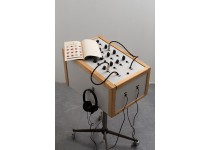
Formica and wood box, miniature printed circuit board (PCB), MP3 players, audio sockets and earphones, power supply, metal leg, two sofas from Casa Argentina, Jerusalem Text: João Delgado; music: Yarden Erez; electronic system: Amir Markovitz; programming

Exhibited in the frame of  Recalculating Route at Petach Tikva Museum of Art, in theframe of the 4 Mediations Biennale, Poznan, 2014 | 2.10.2014-24.1.2015

Curator: Drorit Gur Arie

The spirit of João Delgado has been haunting Diego Rotman and Lea Mauas, members of the Jerusalem-based Sala-Manca Group, for fifteen years. A Portuguese poet, writer, playwright, and essayist, Delgado was, in all likelihood, born in Lisbon (date unknown) and disappeared in Argentina in the second half of the 1970s, in the dark years of the Generals’ regime. Like the circumstances of his disappearance, his life was equally shrouded in mystery, and little is known about it. Years later, his post-realist poetry has had a vast impact on late 20th century Latin-American literary avant-garde, but Delgado himself did not live to see it, since the political circumstances—the censorship placed by the military junta in Argentina—and his own choices interfered with the reception of his works by the public at large. His writing was confusing, and he often used fictive aliases which further blurred his identity. In literary terms, Delgado was a modernist who addressed the formal questions of writing (like Georges Perec and the Oulipo group): the author’s identity, the gap between the text and the world, and the illusions of fiction and reality. In this he joined other, more senior, contemporary modernists, from the Argentinean Jorge Luis Borges and Portuguese Fernando Pessoa to the Hungarian Lajos Kassák, whose Cubist poetry from the 1930s and 1940s had influenced Delgado when he lived in Central Europe.
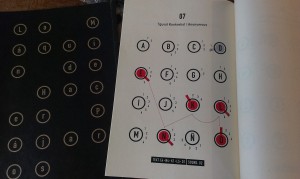
Design: Maya Shleifer

The members of the Sala-Manca Group, in their joint work as artists, curators, and activists, often revisit Delgado’s figure, publishing translations of his work and incorporating excerpts from his unfinished plays into their performances. The return to Delgado, the eternal migrant who wandered until he disappeared, is linked with Rotman’s and Mauas’s personal immigration experiences and the need to discover new territories through language and the act of writing.
The work La Maquina de Hacer Pájaros (‘The Bird-Making Machine,’ as the name of an Argentinean rock band which formed in 1976, in the dictatorship days) is yet another chapter in the quest after the Portuguese-Argentinean writer. The viewer-listener is given the opportunity to wander amid excerpts of text by Delgado and other writers of his alleged circle, such as Juan Mestre, Regina Handeke, Irina Pantalova, and Arturo Maure, who may well have been none other than Delgado himself. This wandering is akin to a journey through the soundtrack of a literary microcosm, comprised of fragments of texts, sounds, and linguistic images. The listener is invited to try to compose the narrative as s/he pleases, to believe the story in whose making s/he took part, or disbelieve it altogether.
One of the legends associated with Delgado maintains that he made his way from Portugal to Argentina with the aid of a map of the Atlantic Ocean which he adopted from a Lewis Carroll book. Whether and how he arrived at his destination—no one knows. João Delgado is, in fact, a fictive entity, a figment of Rotman and Mauas’s imagination; at the same time, like them—who create in-between the splinters of their Latin-American and Israeli identities, in-between the language from there and the one they have adopted in Jerusalem—he is totally real.

Drorit Gur Arie
 

Living in a Film, 2014

Mamuta at Hansen | January-February 2013

Artists: Asya Lukin, Itamar Mendes-Flohr, Guy Yitzhaki, Hagar Goren, Hadassa Goldvitch, Zemer Sat, Yarden Erez, Einat Amir and Sala-Manca

Curators: Sala-manca

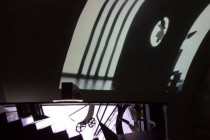
The project, which incorporates art, cinema and performance, will feature eight artists who were artists-in-residence at Mamuta in Ein Karem. The entrance to “Living in a Film” is every full hour. The viewers are led by a movie usher named Esther, a girl born to a Jewish Orthodox family, who left religion and fell in love with the usher of the Lisbon Cinema, which operated in the cellars of the leppers’ house in the city of Lisbon in Portugal between 1963 and 1973 (the era of Salazar’s dictatorship – and managed to serve as the underground nerve center of freedom fighters, right under the regime’s nose). In the wake of her love to the usher she also fell in love with the art of cinema, and because of that love was banished from her home.

images from the exhibition

FFINAL-Poster-Live-in-a-Film (1)

The  Exhibition is supported by the Ostrovsky Family Fund and the Ministry of Culture


The History of Batya M. : The Return Home, 2013

Shown at the salon of the artits’s house, Musrara, 2013

Sala-manca, Laura Simcovich, Dina Blei, Andres Simcovich, Samuel Rotman, Ayu, Nahuel, Cuca | Music: Yarden Erez

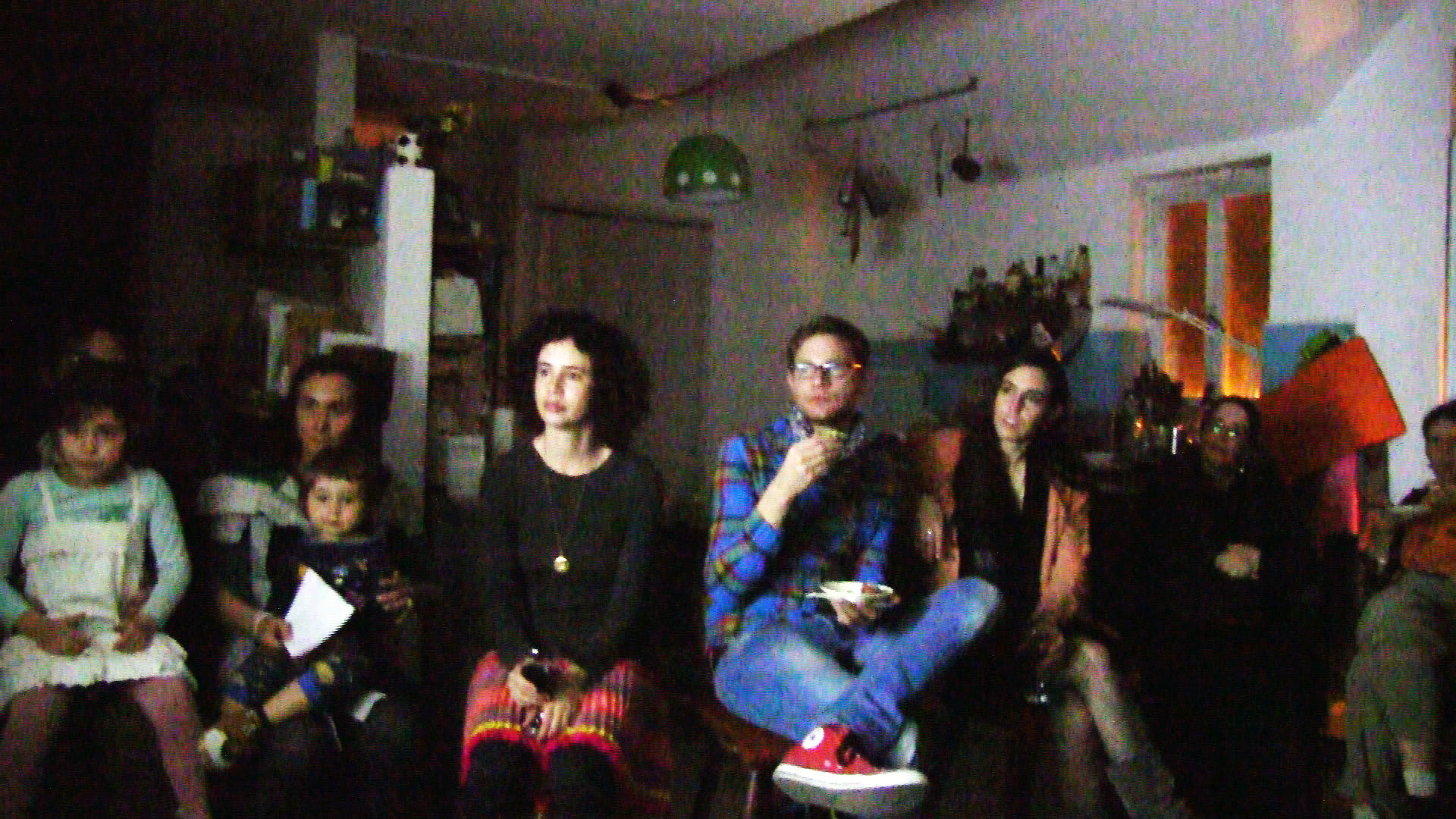
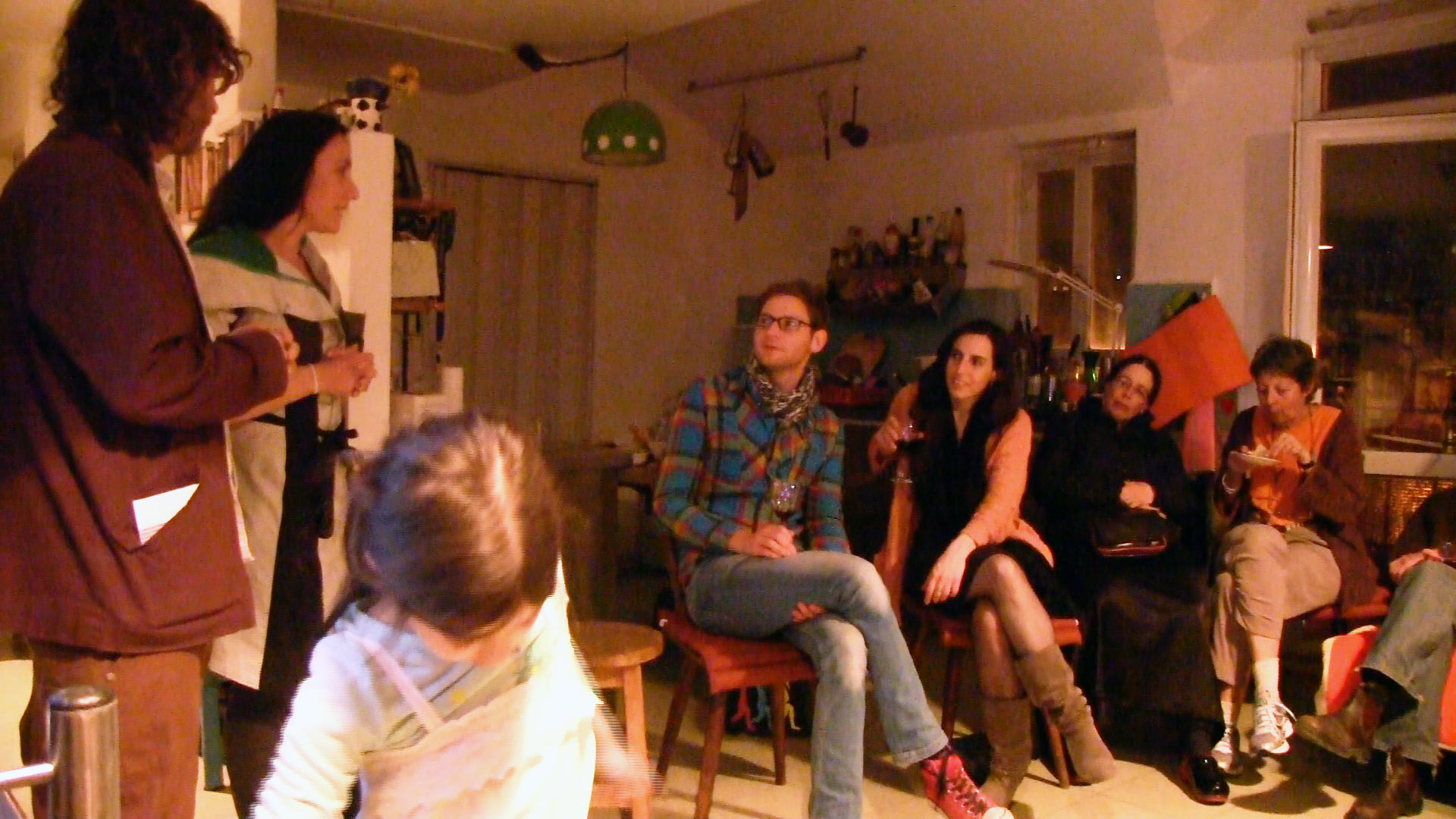
“Batya M. – The Return Home (2013)” is the last (and only) episode of the tetelenovela - return homelenovela starring and filmed by Sala-Manca group in Buenos Aires and Jerusalem and a continuation of The History of Batya M. (2007) .
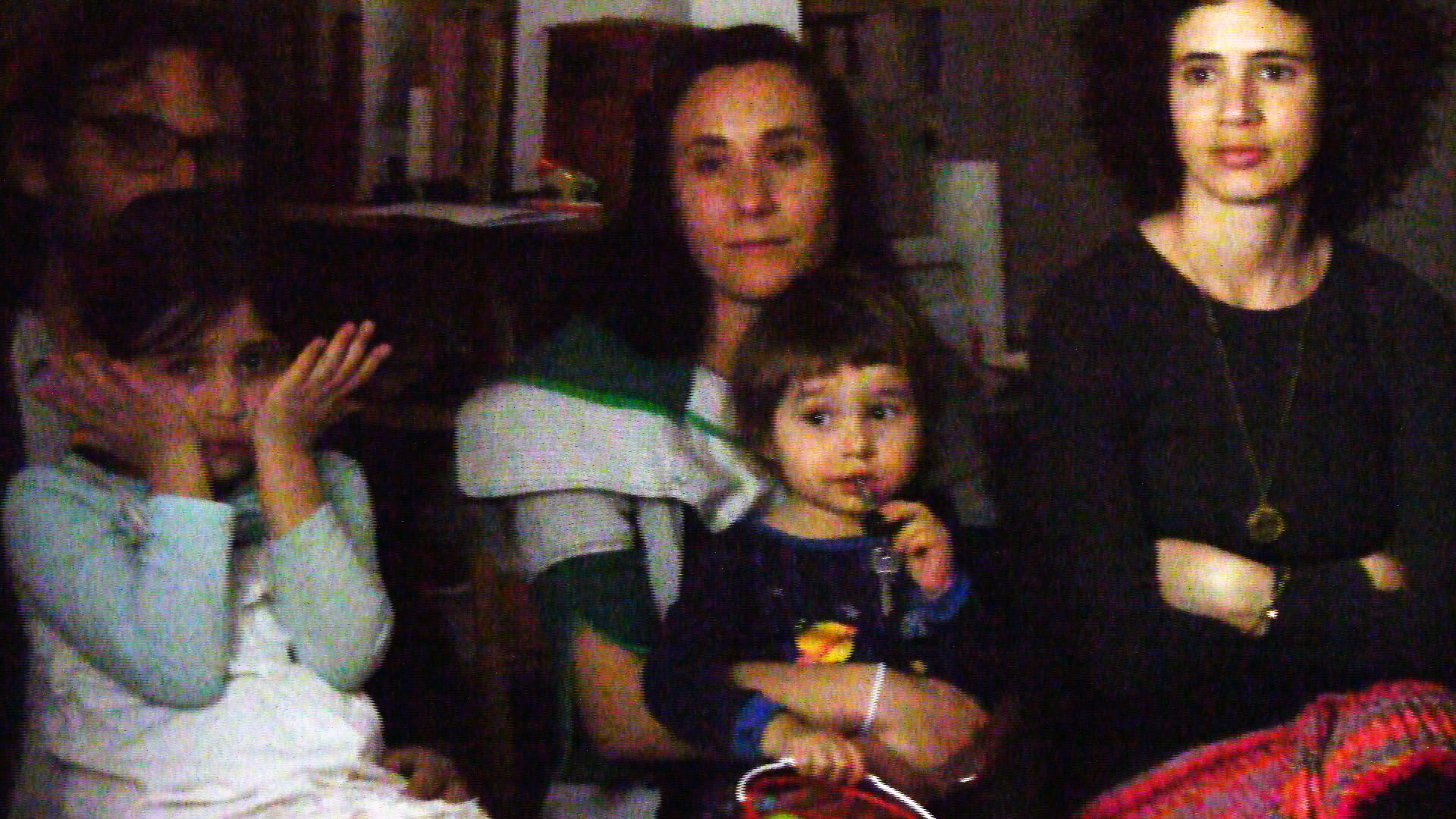
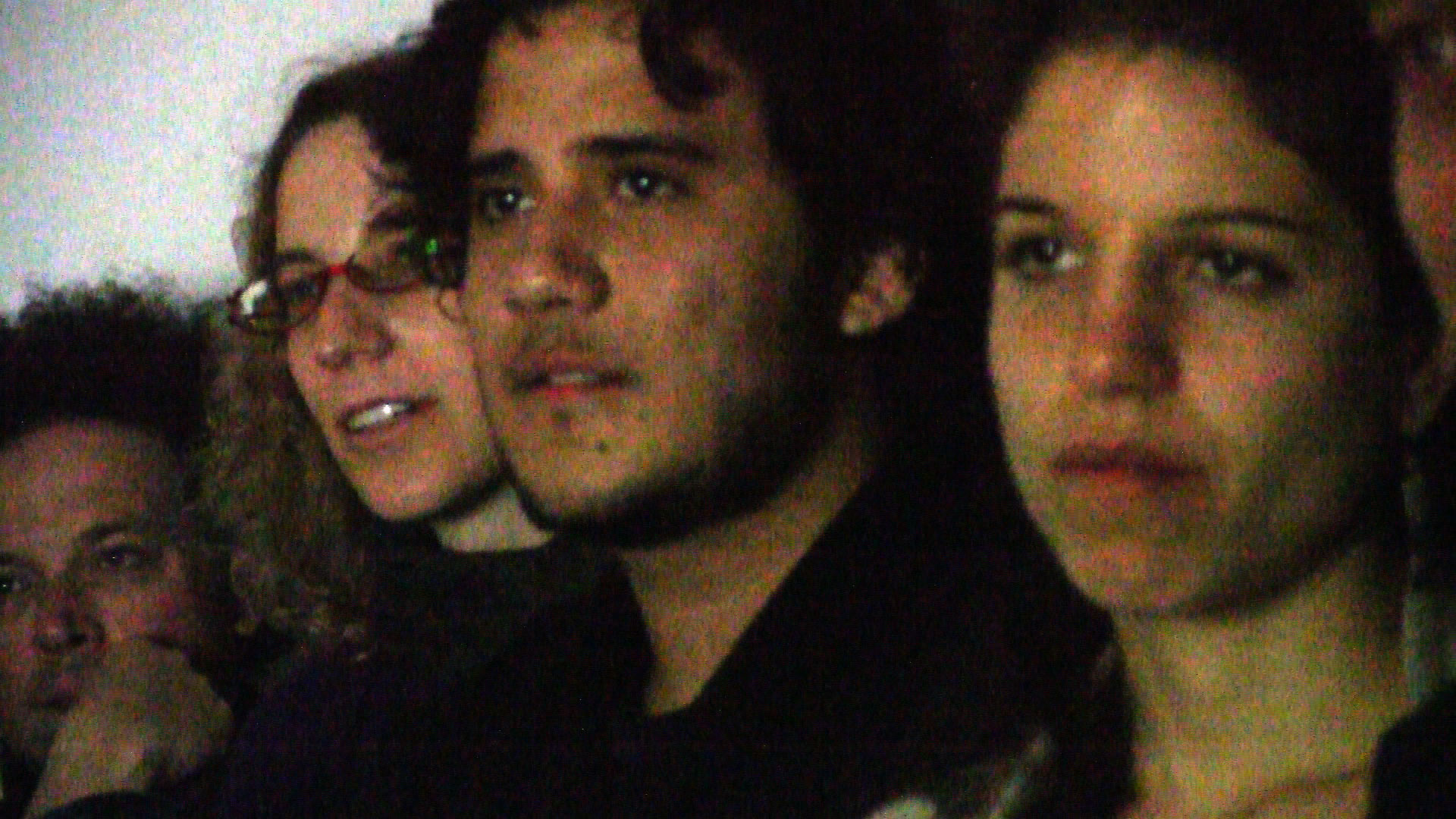
The screening of the single episode will be held at the home of the telenovela’s protagonists in Jerusalem’s Musrara neighborhood, rendering the viewing experience an active experience that includes performative activities and dinner, with a tongue-in-cheek action in which the protagonists and viewers become the participants in an unaired reality show.


toldotea-2-public-2 toldotea-2-public toldotea-2-public-3 toldotea-2-public-1

Haaretz – Batya M. [tamar rotem’s pdf]

Link to Tamar Rotem’s article about the performance in Haaretz (Heb)

Short fragment

The Church of Criticism, 2012

Installation, in the frame of The Museum of the Contemporary, Mamuta in Ein Karem

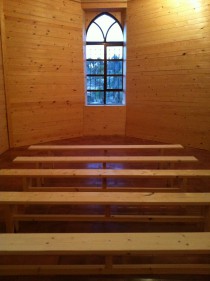
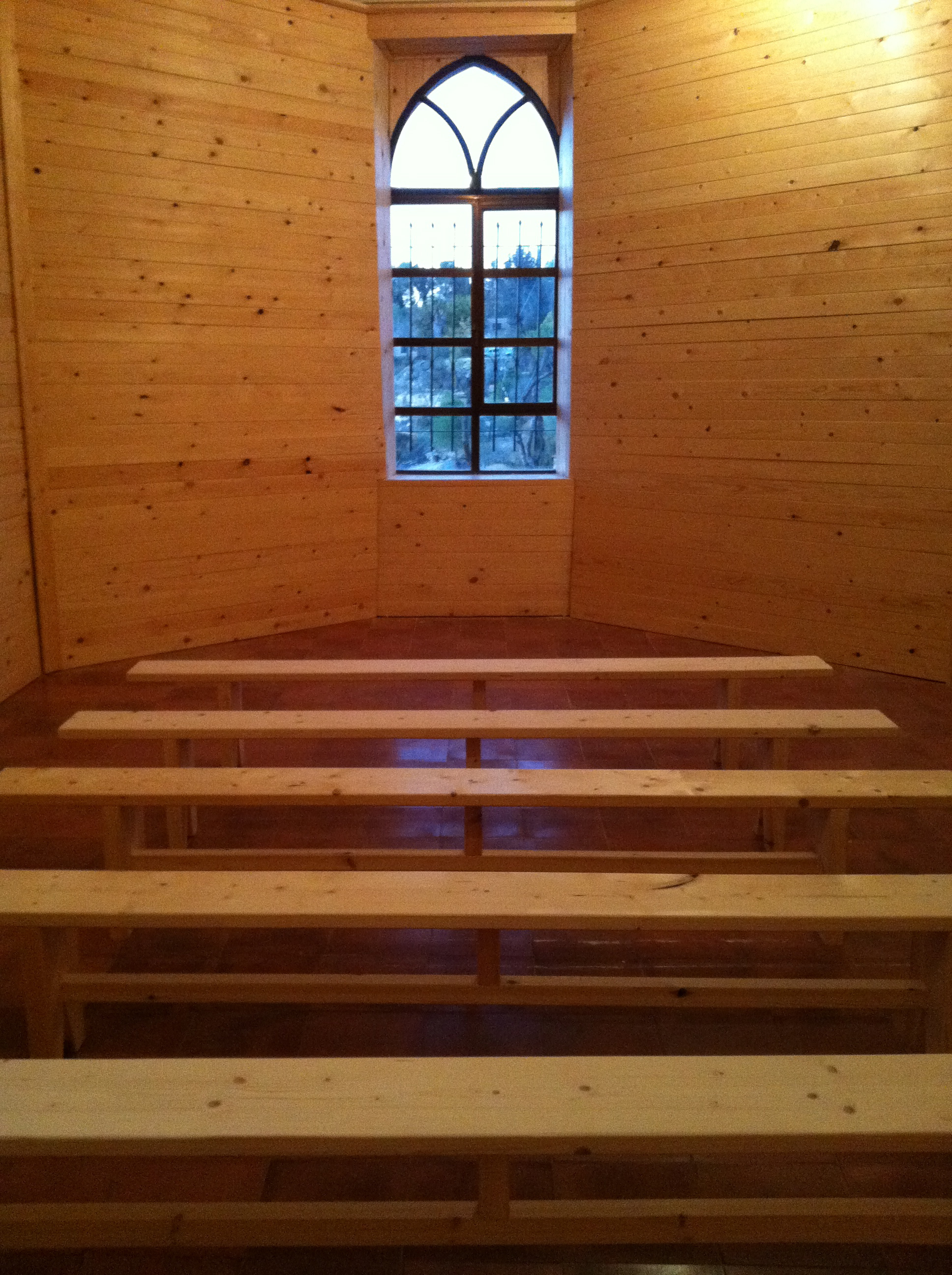
Another stop along the tourists’ route, where art becomes the decoration of a private school-trip experience. The museum is a modern secular church and the performance executed in the Church is a combination of a mass, sermon and poetry reading. A reference to the unique geographic site of the Museum of the Contemporary, midway through the pilgrimage route to the Church of Visitation. A sculptural object, duplication of an Eastern European church to the Arab village; another comment on the process of converting the house’s original identity, “halfway” between the architectural tradition of a Norwegian church and a zimmer in northern Israel. The Church of Criticism features and quotes Western philosophers as icons of the Church’s outlook.

[*Knesiat Habikoret, a play on the Hebrew name of Church of Visitation]

Pine wood, stained glass, projector, mixer, computer, music machine, microphones, metal megaphone, camera obscura :pierced black wallpaper, tracing paper

IMG_1844


Sound of the Installation: Yarden Erez, “The Temple of Contemporary”


Short doc of the video installation at the church:

The Story of Batya M., 2006

International Street Theater Festival, Bat Yam, 2006 |  Spanish/Hebrew/English; Spanish/English/Polish

Actors: Sala-manca, Laura Simcovich, Dina Blei, Samuel Rotman, Salomon Mauas, Ayu

Music: Yarden Erez

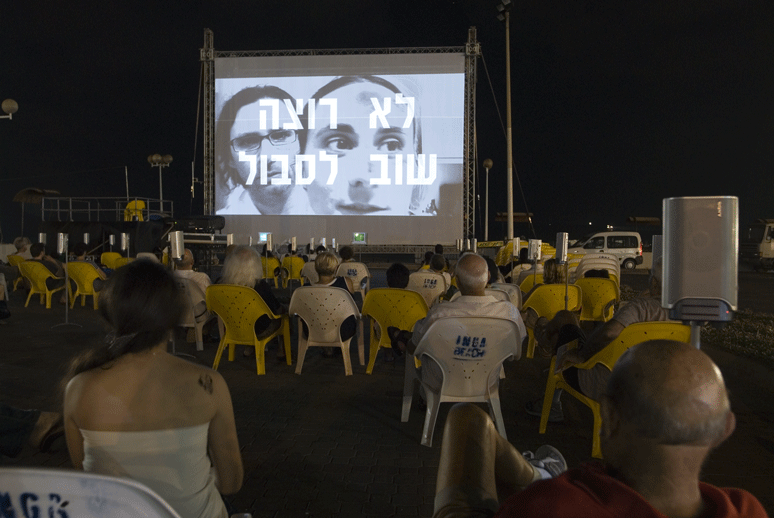
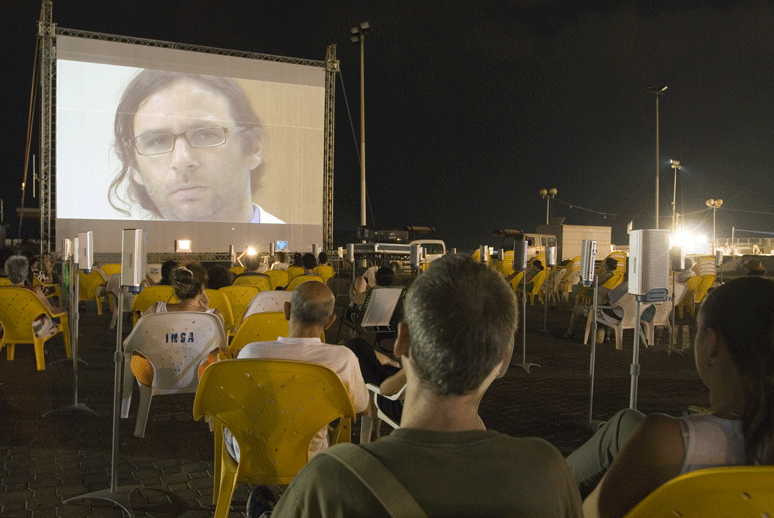
_DSC2278Drive-in cinema in a parking lot by the sea. An Argentinean soap opera is projected on the screen. On the stage, the two leading actors dub the scenes. The language they use changes, the translation becomes dubious, the design of the subtitles and the conventions of the genre are also transformed. The outcome is the last and only episode of a soap opera that exists on the border between mass television culture and avant-garde performance.

_DSC2264


Video trailer

Press:

Shlomit Aladgem, Do you know the small Siren (Bat Yam)?