WordPress database error: [DELETE command denied to user 'sala-manca'@'localhost' for table `sala_manca_net`.`wp_options`]
DELETE FROM `wp_options` WHERE `option_name` = '_site_transient_wp_theme_files_patterns-3e81fb819c0831df69203ee558a709b9'

WordPress database error: [DELETE command denied to user 'sala-manca'@'localhost' for table `sala_manca_net`.`wp_options`]
DELETE FROM `wp_options` WHERE `option_name` = '_site_transient_timeout_wp_theme_files_patterns-3e81fb819c0831df69203ee558a709b9'

WordPress database error: [INSERT, UPDATE command denied to user 'sala-manca'@'localhost' for table `sala_manca_net`.`wp_options`]
INSERT INTO `wp_options` (`option_name`, `option_value`, `autoload`) VALUES ('_site_transient_timeout_wp_theme_files_patterns-3e81fb819c0831df69203ee558a709b9', '1792712705', 'off') ON DUPLICATE KEY UPDATE `option_name` = VALUES(`option_name`), `option_value` = VALUES(`option_value`), `autoload` = VALUES(`autoload`)

WordPress database error: [INSERT, UPDATE command denied to user 'sala-manca'@'localhost' for table `sala_manca_net`.`wp_options`]
INSERT INTO `wp_options` (`option_name`, `option_value`, `autoload`) VALUES ('_site_transient_wp_theme_files_patterns-3e81fb819c0831df69203ee558a709b9', 'a:2:{s:7:\"version\";s:3:\"4.0\";s:8:\"patterns\";a:0:{}}', 'off') ON DUPLICATE KEY UPDATE `option_name` = VALUES(`option_name`), `option_value` = VALUES(`option_value`), `autoload` = VALUES(`autoload`)

WordPress database error: [INSERT, UPDATE command denied to user 'sala-manca'@'localhost' for table `sala_manca_net`.`wp_options`]
INSERT INTO `wp_options` (`option_name`, `option_value`, `autoload`) VALUES ('_transient_doing_cron', '1792710905.4919590950012207031250', 'on') ON DUPLICATE KEY UPDATE `option_name` = VALUES(`option_name`), `option_value` = VALUES(`option_value`), `autoload` = VALUES(`autoload`)

salamanca – Page 8 – Sala-Manca

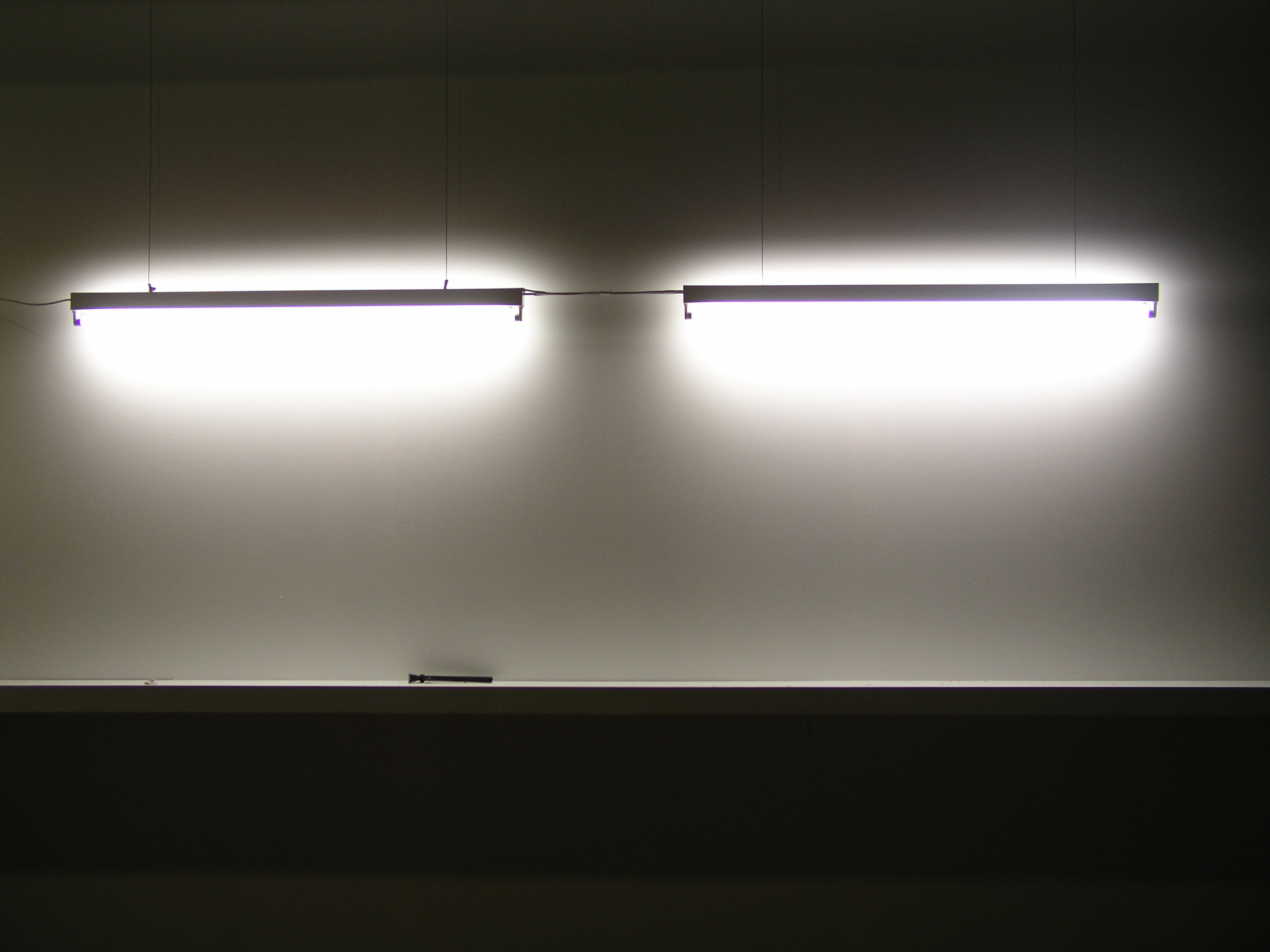
Eternal Shabes, 2009-2014

Ready made, base with white lacquer, two candlesticks, two light bulbs, white electrical cord, short black electrical cord, electrical plug, white insulation tape

Candlesticks created for Osher and Malka Rotman, parents of the artist in Buenos Aires in 1990. The nanny Cristina used to light the candles every Sabbath Eve. It was never clear who and how blew them out, if at all. In 1995 the candlesticks returned to Samuel Rotman’s home and in 2009 they were brought to Israel.

Exhibited at “Drama of Identities” curated by Irena Gordon, in Beth Hatfutsot MuseumElectric Sabbath is a work by Samuel Rotman; at the Museum of the Contemporary, Ein Karem; The Ethnographic Department, Hansen House

“Lea Mauas and Diego Rotman, the Sala-Manca group, persistently deal with the modes of formation of Jewish cultural identity through various acts of translation and through the creation of alternative, fictional histories that hold up Diaspora culture as a critical and emotional mirror to Israeli culture.

Samuel Rotman
Samuel Rotman

IMG_0280They create performative video and sound installations alongside cinematic and theatrical works, whose nature is ironic and full of parody though always centered on the particular human subject. At the center of “Eternal Sabbath,” the installation prepared especially for this exhibition, are electric candles—a family heirloom. The story surrounding them poses questions about Jewish and Socialist traditions.” (Irena Gordon)


West und Ost – a film-translation, 2008-20010

In 1923 in Vienna Sidney Goldin filmed the Yiddish classicEast and West starring Molly Picon, the American-Yiddish star of Yiddish cinema and Jacob Karlich, her husband in real life. The film tells the story of Morris Brown, an American manufacturer born in Poland, who returns to his hometown for a family wedding with his very American daughter Mollie (Molly Picon.) The bride, a daughter of his traditional brother, and Mollie, whose exuberant antics fill the film, could not be more different. But Mollie unexpectedly meets her match, an engaging young yeshiva scholar, who forsakes tradition and joins the secular world to win her heart.

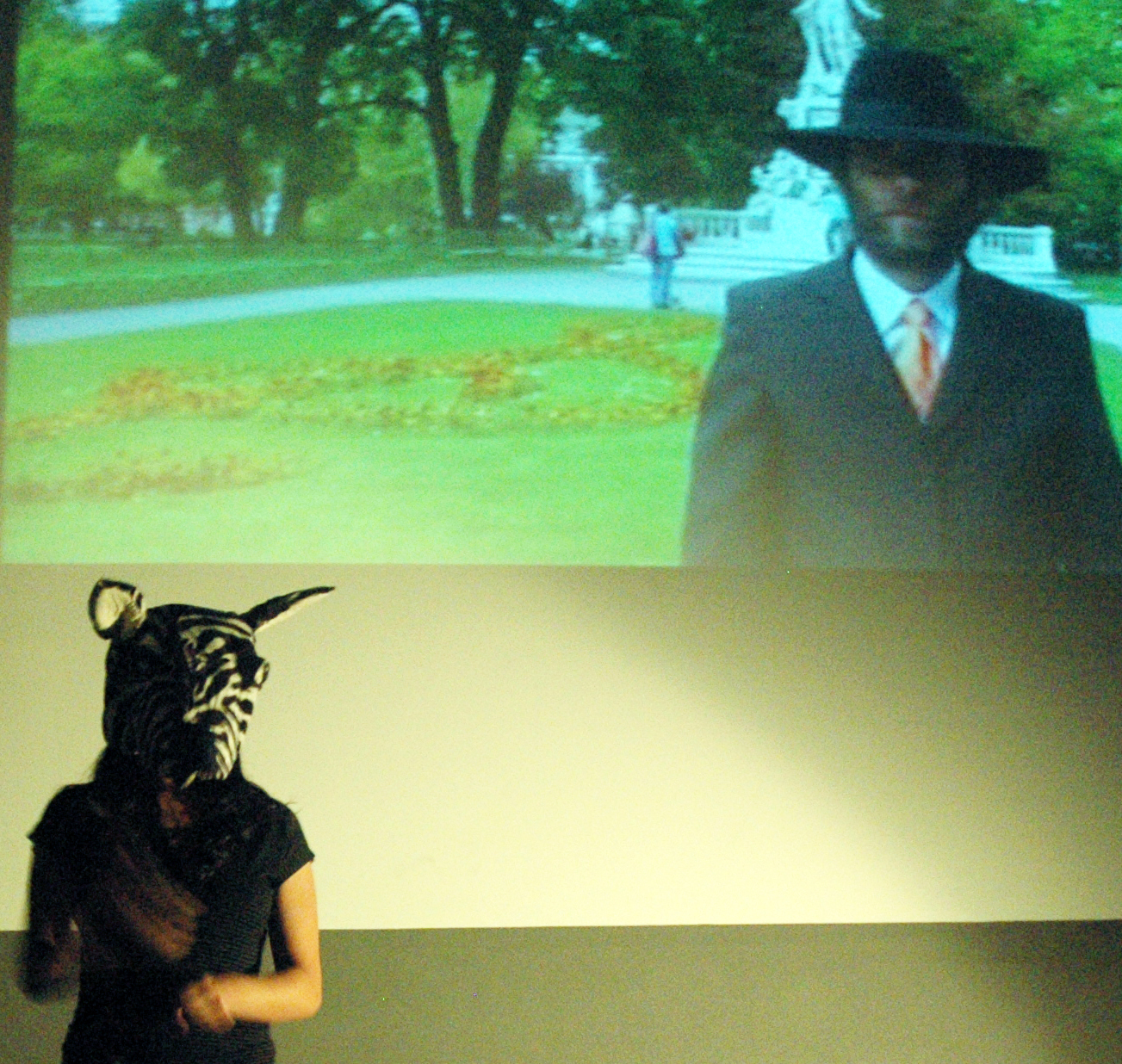
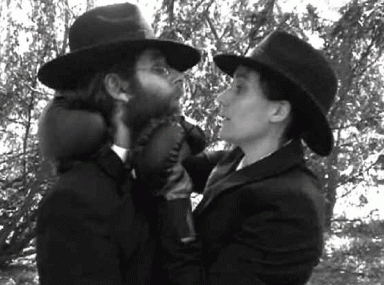
Untitled-185 years after Goldin’s film the Sala-Manca Group, a collective of Israeli-Argentinean artists, came to Vienna to shoot West und Ost – a film-translation. The work makes references to the idea of cultural and language translation between the Yiddish, English and German texts that also appear in the American and Austrian versions of Goldin’s film. It tells the story of Yaakov K., an Orthodox Jewish guy who is also a street graffiti writer. He is the grandson of the acclaimed writer Yaakov Ben-Ali (the main character of East and West), who was formerly orthodox before becoming secular. Yaakov K. comes to Vienna, in order to get a share of the Shilumim (restitution.) Because of the subversive tone of his graffiti, the Israeli intelligencwest and easte service Mosad sends a female agent called Moly F. to Vienna to spy on him and bring him back to Israel for investigation. Dressed as a young orthodox man (a quotation of Mollie’s male characteristic in East and West), Moly F. tries to get closer to Yaakov. “Unexpectedly”, they fall in love. Their feelings lead them to re-think their duties to their religion and to the state.

East and West is a funny and clear manifesto for the changing values, manners, and beliefs of traditional East European Jewish life. West und Ost – a film-translation is, however, not just an homage to Goldin’s film and how it deals with a specific and amazing moment in the history of European Jewry, but also a translation of the subversiveness of the film to contemporary terms and topics.

Untitled-6Performed at Tate Modern London in the frame of No Soul for Sale; PFA (Pacific Film Archives, Berkeley); DOX (Prague); Jerusalem Film Festival; CCA – Tel Aviv

The Messiah is a Polish Carpenter Named Maria, 2008

Action/Video Documentation

“Chosen” | Wyspa Art Institut, Gdansk, Poland & Digital Art LAb Holon | Curators: Aneta Szylak, Galit Eilat

Foreshadowing the Past | ARTISTERIUM in Tibilisi, Georgia | 2010 |Curator: Eyal Danon

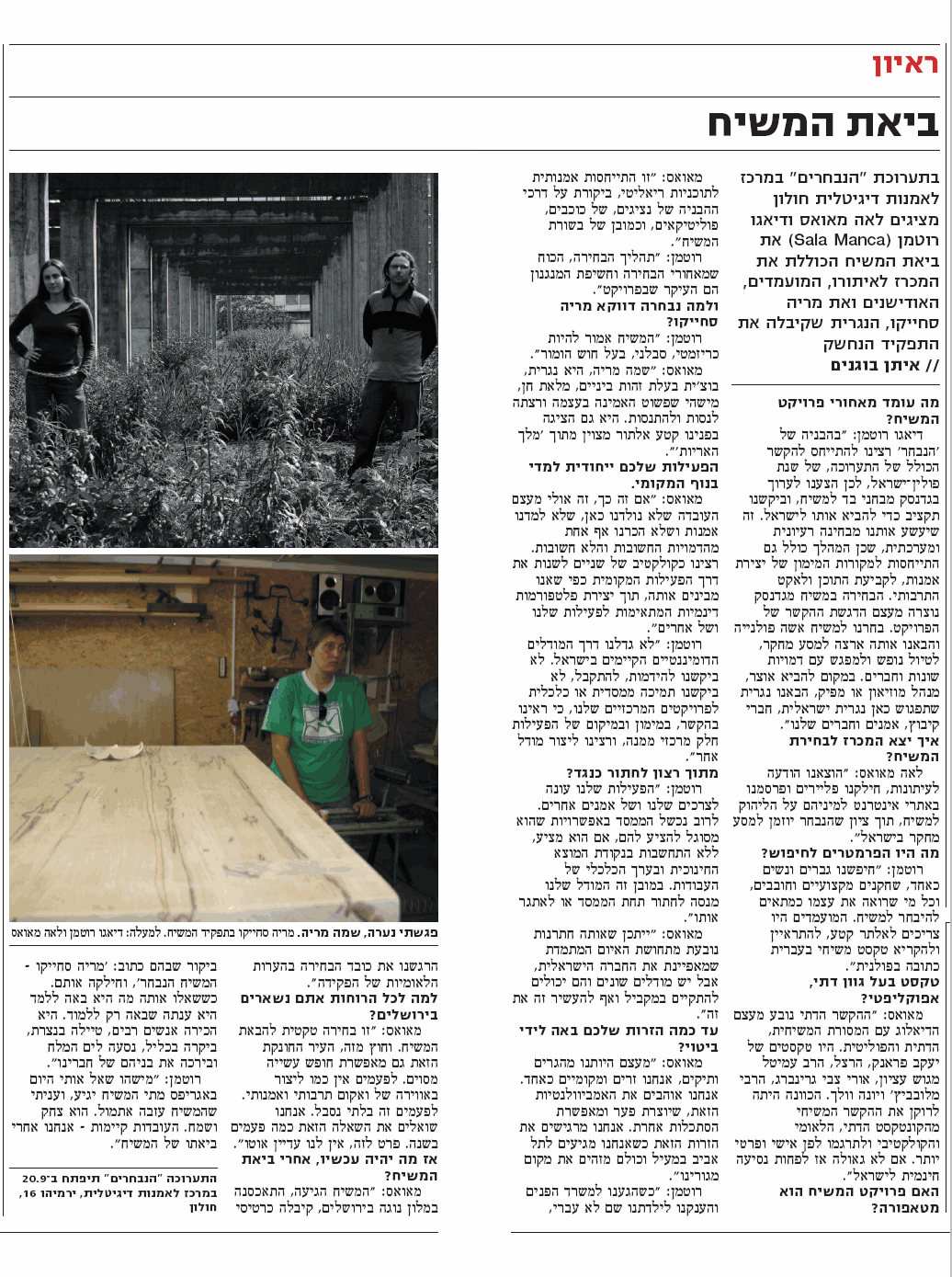
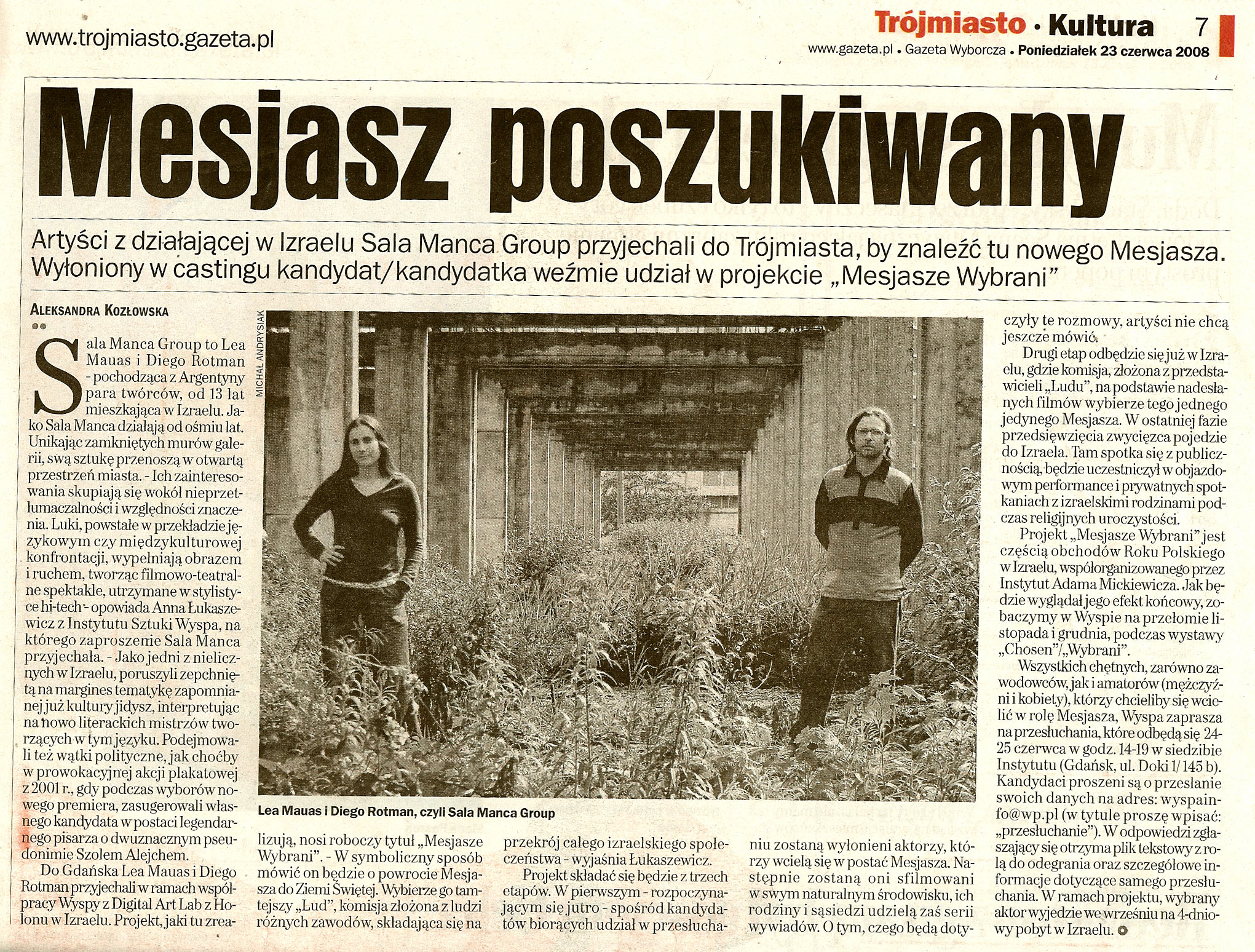
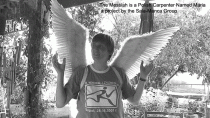
In one way or the other, most of the works of Israeli artists in this exhibition deal with the coming of the Messiah or with inducing his arrival. In “The Messiah is a Polish carpenter named Maria”, the group Sala-manca traveled from Jerusalem to Gdansk to hold auditions for a “Messiah”. The group published a want-ad in Polish stating that they are searching for a “Messiah” and that the “chosen” candidate will go to Israel as part of the project. Seven people, men and women of different backgrounds, arrived at the auditions, and were tested for the part. They were asked to read aloud “messianic” Hebrew texts by Jacob Frank, Theodor Herzl, Uri Zvi Greenberg, Yona Wallach and others, texts that were sent to them previously via email, to allow them to prepare for the audition. Finally the “Messiah” part was given to Maria Sahajko, whose visit to Israel took place in August 2008. The exhibition will present photos from a film documenting the “Messiahs” visit to Israel and her initial encounter with Israelis.

Interview with Eytan Buganim, Time Out

Bat-Yam Festival: Do you love the small Sirena (Bat Yam)?, Shlomit Aladgem, 2007

Bat-Yam Festival: Do you love the small Sirena (Bat Yam)?, Shlomit Aladgem, 2006

שולמית לב-אלג’ם, “פסטיבל בת-ים הבינלאומי לתיאטרון רחוב: האם אתה אוהב את בת [ה]ים הקטנה?”, תיאטרון, מס’ 22, דצמבר ,2007 , עמ’  11-15,

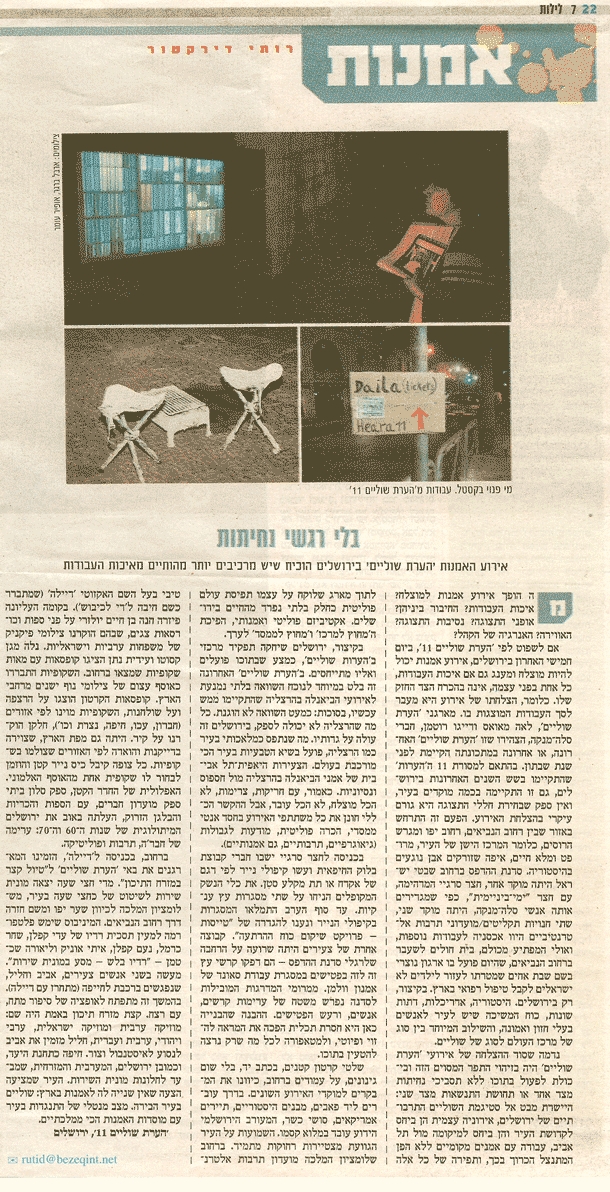
הגעתי לטיילת של בת-ים ביום הראשון של הפסטיבל לתיאטרון רחוב סמוך לשקיעת השמש. הופתעתי. לא הותקפתי ברעש של מוסיקה מקפיצה עם קולות כריזה, ואקרובטים וליצנים לא ניגשו להצחיק אותי, להציע לי מה לראות, מה לאכול או מה לקנות. בינתיים התרחשה על הטיילת והחוף הדרמה הספונטאנית, היומיומית, והפסטיבל היזום והמתוכנן לא השתלט באחת, אלא השתלב והתמזג ככל ששקעה השמש ועלה הירח. לאט, לאט הופיעו דוכני הסדקית ודברי המתיקה שהצטרפו לאלה הקיימים. על אחד מהקיוסקים החלו שני אקרובטים בתלבושת ובאיפור שחור-לבן לטפס למעלה ולרדת למטה, כאשר ליצן אחר מלוה אותם באקורדיון ננסי וחברו מצלם אותם ואת הקהל מסביב. זוהי להקת ארקטוס מצרפת במופע תרועה אילמת. בחצר בית קפה החלה תזמורת לנגן ברכות את “ניו יורק ניו יורק”, כאילו כך זה בכל שעת ערביים, בקיץ, בטיילת של בת-ים. לאט, לאט יכנסו לרחבה אימהות עם ילדיהן, ורק מאוחר יותר יפתיעו אל כולם מאשה טרואינסקי ובן זוגה בוריס מתכנית הטלוויזיה “רוקדים עם כוכבים”, ואלי מזרחי, השופט החביב מאותה התכנית יארגן נשף ריקודים סלוניים. בינתיים על החוף, ממש על שפת המים כלות וחתנים מצטלמים כחלק מהמיצג החברתי-האירוני עד החתונה זה יעבור, בביצוע ביה”ס לעיצוב אמנויות הבמה בהנהלת רקפת לוי. אישה מבוגרת שעמדה על הטיילת לידי, אמרה לחברתה: “תראי כלות, איזה יופי, איך הן הגיעו לשם?” עבורה זה היה לגמרי אמיתי ורומנטי. אך אחר כך כשירדה לאיטה והתקרבה אליהן, היא בוודאי שמה לב שמדובר במופע לא רק עם כלות וחתנים אלא גם עם אימהות וילדים, שבו כולם רבים עם כולם, והפנטזיה הרומנטית הופכת לסיוט.
השנה, עמד הפסטיבל בסימן של התחדשות ושינוי תוך כדי שמירה על רצף וחיבור לפסטיבלים הקודמים. המנהל האמנותי החדש, ד”ר עתי ציטרון, איש תיאטרון עם תפישה אסתטית-פוליטית אוונגרדית, הגיע לבת-ים לאחר שכיהן כמנהלו האמנותי של פסטיבל עכו לתיאטרון אחר (2004-2001).

[…]

תהיתי למה הם שותקים, האם בת הים הקטנה הזו זרה להם? לא מזכירה להם שום דבר מבת-ים? או שאולי הם לא אוהבים את בת-ים ולא נעים להם להגיד? במסיבת העיתונאים הסבירה מורן שוב שהיצירה שלה היא “דיבור על אמנות, אינטראקציה עם הקהל מבלי לתעתע בו, להיפך, מראים לו כל הזמן שזה תחליפים. זו קריצה חברתית שמזמינה את הקהל לראות מה אפשר לעשות בדמיון, בצבע בשמחה”. בקונטקסט של בת-ים נשא המופע ללא ספק גם מסרים ביקורתיים שאין בהם שמחה אלא תהייה. מה המשמעות של תחליף נהר, תחליף ספארי, תחליף בת הים בטיילת של בת-ים, שהיא עבור תושביה אולי אך תחליף לטיילת של תל אביב? או של עיר אחרת, רחוקה ממנה באו לישראל?
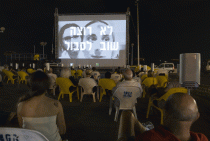
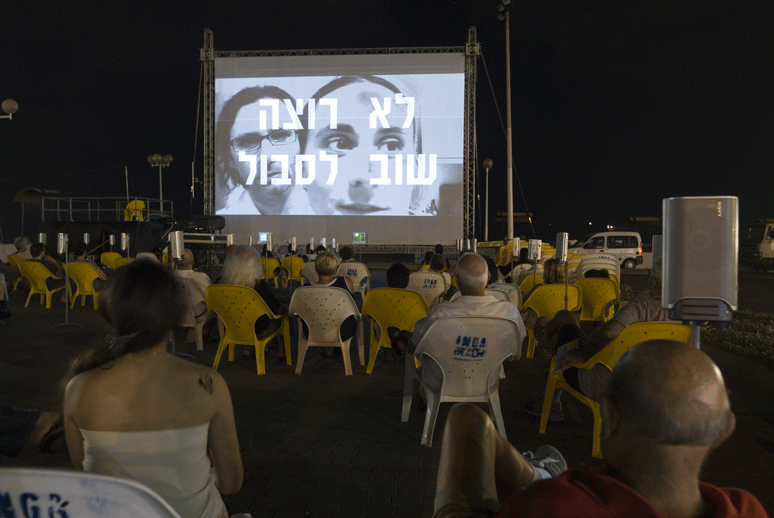
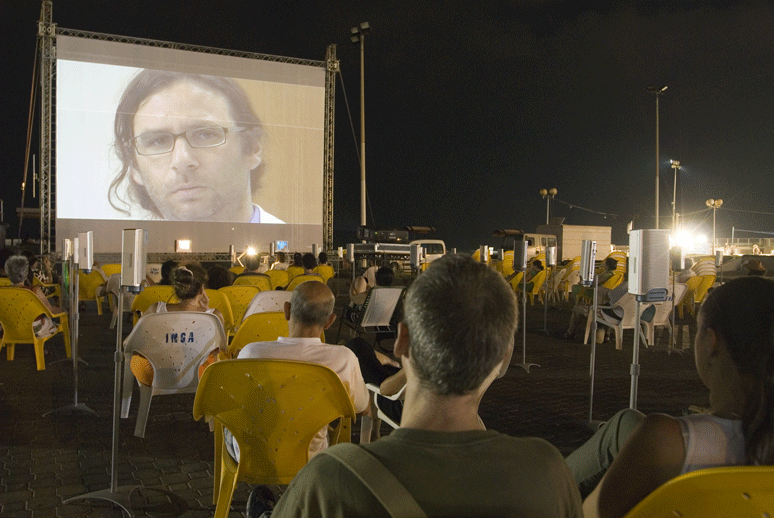
שאלות אלה התחדדו אצלי כשהגעתי למופע הדרומי ביותר, תולדותיה של בתיה מ. שיצרה קבוצת סלה-מנקה מירושלים, שידועה במיצגיה הבינתחומיים הרדיקליים. הפעם יצרו לאה מאואס ודיאגו רוטמן יחד עם בלומה גריסל, דינה בליי, לאורה סימקוביץ, מרי גולדוסר, סולומון מאואס, סמואל רוטמן וזהבית שטרן מיצג חוצות שמחבר באופן אירוני, אך בה בעת גם באופן נוגע ללב, בין הטלנובלה, הסוגה הפופולרית הטלוויונית, לבין הדרייב-אין- אתר הבילוי הפופולרי של פעם ובין חוף הים, הטיילת והעיר בת-ים. לכאורה צילמו השניים טלנובלה שמתרחשת בבואנוס איירס ובבת-ים. גבריאלה מ. מתאהבת בגבר נשוי בבואנוס איירס ובאה לישראל ללדת את בתה, בתיה מ. כשאביה גוסס היא חוזרת לבואנוס איירס כדי להיפרד ממנו ופוגשת שוב את אהובה. משנודע לו שיש לו בת הוא מחליט לעזוב את אשתו ובא לישראל על מנת להתאחד עם אהובתו. אורחי הפסטיבל מוזמנים לשבת בכיסאות, במקום במכוניות, ליד עמודי רדיו שמעבירים את הפסקול ולצפות בטלנובלה. תולדותיה של בתיה מ. בולטת בפסטיבל במורכבותה האסתטית, התקשורתית והטכנולוגית, והיא מציגה, על מסך ענק, לעיני הצופים, משחק פרוע שמפריע ומשבש לא רק את העלילה הטלנובלית, אלא גם את רכיבי השפה הקולנועית, שפת המופע החי ושפת הדיבור. לאה ודיאגו, שמופיעים על המסך כגיבורי הטלנובלה, משמשים גם כמתורגמנים ולחשנים באירוע עצמו, שמשדרים לקהל באופן חי, את הדיבוב לעברית, ומעבירים לשחקנים על המסך את הטקסט בעת הצורך. אך דיאגו מדבר גם את הטקסט הנשי, ולאה את הטקסט הגברי, ושניהם עוברים מספרדית, לעברית וחזרה כך שלא ברור עד כמה הם מהימנים וסינכרוניים עם התמונות המרצדות על המסך. גם הכיתוב על גבי המסך עובר משחקי פירוק והרכבה. לעיתים משתלטות האותיות על כל המסך ומוחקות את התמונה. פעמים אחרות מופיעות צורות וגדלים שונים של אותיות בעברית ובספרדית, ויש גם הצלבה של שפות כאשר הטקסט המדובר בספרדית נכתב בעברית פונטית ולהיפך. שבירת הטלנובלה מגיעה לשיאה כאשר הדמויות הבדיוניות על המסך צוחקות לפתע, יוצאות מהתפקיד, נכנסות לתוכו מחדש, ומבצעות את הסצנה כמה פעמים, כל פעם בצורה שונה. לאה ודיאגו, שיושבים מול המסך ליד הצופים, משחקים ומתערבבים עם לאה ודיאגו שמופיעים על המסך. בקטע האחרון, שבו עוזב האהוב את בואנוס איירס ומגיע במפתיע לגבריאלה, מוצגת בת-ים במתכוון, בשחור לבן ובצורה סטריאוטיפית על ידי שיר אהבה מזרחי, שמזויף מבחינה מוסיקלית. סצנת האיחוד המיוחלת מופרעת באמצעות צילום וקול שמעוותים את פניה ואת קולה של גבריאלה בתהליך מואץ שהולך ומקצין. העימות בין הסוגה ליוצרים מתגבר עד שנדמה שאכן האהבה והטלנובלה מנצחות הכל. הזוג האוהב ובתם התינוקת מצטלמים על הטיילת של בת-ים לאור השקיעה הרומנטית. זהו סוף הסרט עבור אלה מבין הצופים, שנאבקו בכל השבירות המרגיזות, והצליחו לארגן לעצמם את הנרטיב מההתחלה העצובה ועד להפי אנד. הצופים האלה, כפי שהעידה מאואס בריאיון שערכתי איתה ב-05.09.07, היו כל העת ערניים, דיברו ביניהם, הגיבו בקול והעירו הערות. ברגע שראו את זוג האוהבים עם תינוקם על הטיילת של בת-ים לאור השקיעה, קמו ועזבו את המתחם בתחושת הקלה וסיפוק. “היה חשוב לנו להעביר גם את תרבות הטלנובלה. למרות הכל אנחנו אוהבים אותה, ספגנו אותה בארגנטינה, גדלנו עליה”, אומרת מאואס. הצופים האחרים, כמוני, בעיקר אלה השייכים לקהילת האמנים, נשארו לשבת גם לסצנה הפרשנית, שסוגרת את המיצג, ובו פונה אלינו גולדה סטאר, חוקרת אמריקאית מאוניברסיטת ברקלי. “יש כאן משהו חשוד”, היא אומרת, “זה לא ממש הפי אנד. נכון, יש שקיעה, יש זוג ויש תינוק. אך עוד מעט יהיה חושך… הוא הרי לא יהודי, הוא מהגר, עובד זר. יהיו להם חיים קשים בישראל”. כך שוברים ולועגים לאה ודיאגו גם למעשה החתרני שלהם, שני הזרים מירושלים שבאים להציב מסך-מראה לתושביה של בת-ים, רובם מהגרים, לא תמיד יהודים, לעיתים קרובות עובדים זרים, ובכל מקרה חיים חיי יומיום קשים עם הטיילת של בת-ים או בלעדיה. זו אולי הסיבה שאיש מהקהל שהיה מסביבי לא הסתכל אחורה, לעבר הכביש, כשעברה התזמורת של הצופים האורתודוכסים מיפו, ומעט אחר כך כשצעדו הצופים האורתודוכסים מבית לחם מלווים בנגינת חמת חלילים ותופים. לא יכולתי להימלט מהמחשבה הטורדנית שבכל האירוע דווקא הם היו היחידים שצעדו בסדר צבאי מופתי, ונראו
HaGolem Project, 2007

HaMaabada Theater, Jerusalem

Artists: Josef Sprinzak, Ilan Green, Pharesia Group, Adi Kaplan and Shahar Karmel, Maya Levi, Eran Sachs, Adva Drori, Shaul Zemach

Curated by sala-manca together with Ofira Henig

Shaul Zemach
Shaul Zemach

The Golem project is the result of a long research and working process, which involved artists from the fields of the fine arts and the performing arts. The theme of The Golem afforded us the possibility to work on one of the most important issues in philosophy, folklore, Jewish mysticism, the arts, literature, and cinema, while also serving as a metaphor for evolving technology. It seems to us that by returning to the subject fro a contemporary viewpoint creates the possibility to examine different interpretations of The Golem. The long period of preparation for the project commenced with a seminar of two days in which artists from a wide spectrum of the arts met with researches from differentfields.After this seminar the artists were invited to send us their proposals for works that deal with the subject of The Golem and who reflect the working process and development that we sought out. The proposals we chose represent unique forms of expression.

golem-3.11-450 _MG_4939

The Lab, as a venue for the arts, which combines new media, is the fitting place and space for the production of this project, both from the point of vgolem-3.11-080iew of our desire to deal the issue of the development of technology, the role of “space” in the arts and based on the working process of The Lab as a “Laboratory” for the arts – one that attempts to illuminate different aspects of a subject without the desire to reach conclusive results.During the course of the past year, we have held lectures and exchanges between the artists and have accompanied the different projects. The Golem project serves as a crossroads in time and space, which opens the working process to the general public, through our desire to expose the public to the artist’s works and to maintain an open dialogue with it. . [to the program] / @ TheLab, Jerusalem, 29.10-4.11.2007
Seara/Storm, 2006-2007

vers 2.0 presented @ Hapzura Series, Digital Art Lab Holon | curator: Eran Sachs & Heara 10 | The Science Museum | curator: Sala-manca

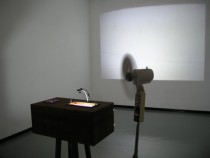
Seara/Storm *

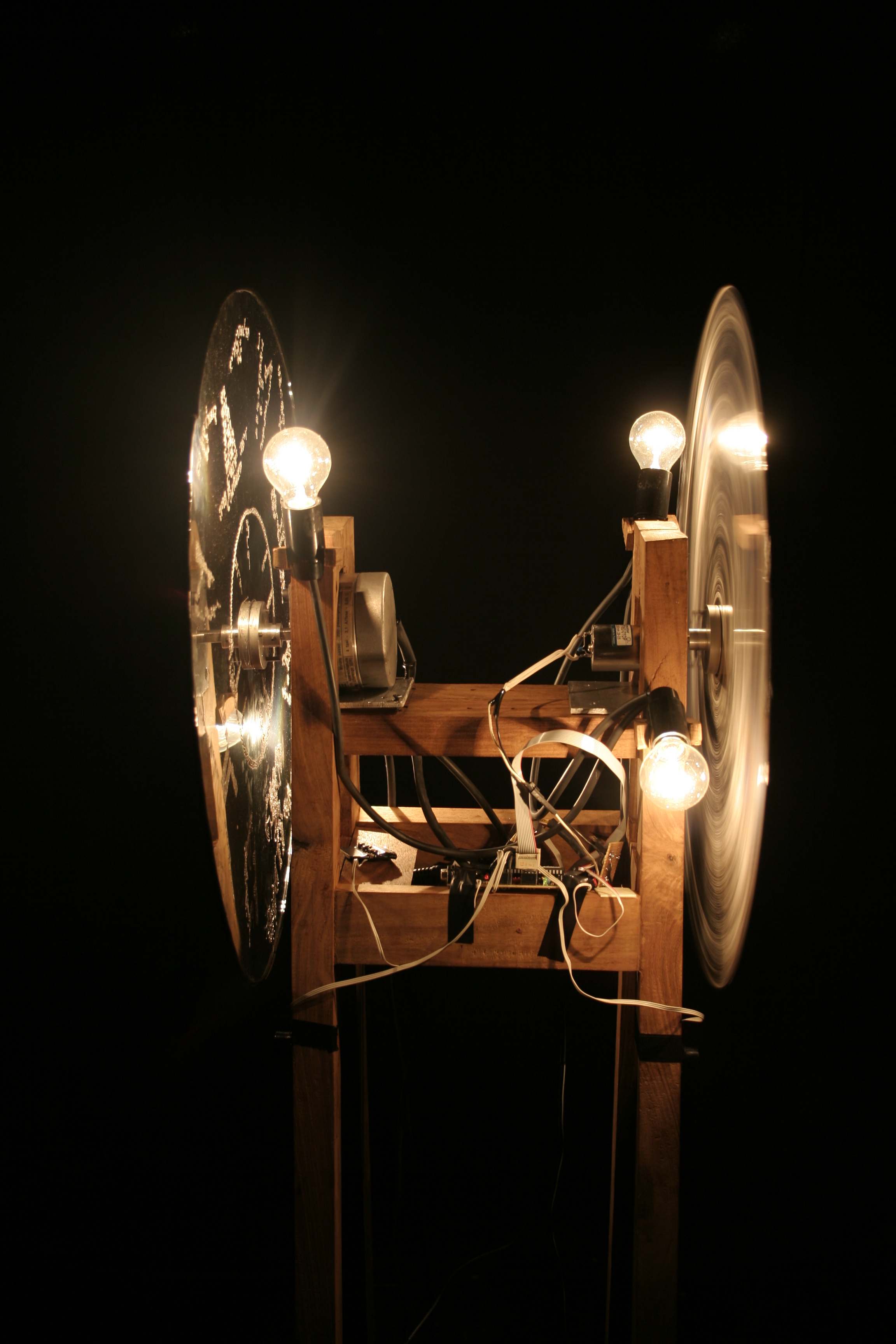
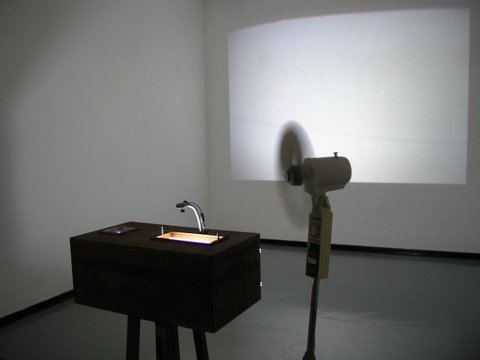
In 1950 during a party on the roof of Marian Loop, celebrating the 100 anniversary of Tomas Robinson’s invention of the wind meter, Regina Handke, Marian Loop and Joao Delgado decided to build a wind meter as a quotation to Robinson’s original machine.

OLYMPUS DIGITAL CAMERA Regina Handke, the Hungarian-Yiddish poet, who began in those days to learn Hebrew, told her friends that in Modern Hebrew there are two meanings to the word “seara”: hair and storm**. Delgado and Loop got excited from the linguistic discovery, and decided to build a wind meter based on a hair.

In 1955 the machine was brought to Israel and activated in a symbolic and nationalistic act, using David Ben Gurion’s hair. This experiment made Ben Gurion very disappointed from his hair quality, who sent the machine away.

In 2005 the machine was exhibit for the first time in fifty years in the frame of the Jerusalem Film Festival. In 2006 the machine is exhibited again , this time not only the wind meter has been repaired but also the sound-wind visual meter.

* This machine is part of sala-manca’s collection of Joao Delgado’s works.


** She was not aware that although the pronunciation is the same, “seara” for hair and “seara” for storm have a different Hebrew spelling.

vers. 1.0 – presented at the Intersection – Jerusalem Film Festival 2005, Heara 10-The Science Museum, Jerusalem, February 2006

The Right to Copy, 2006

A project by Sala-macna

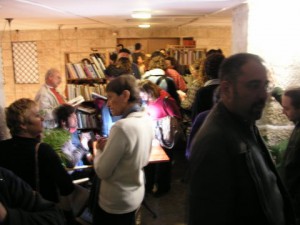
The Right to Copy Project includes six new works by SALA-MANCA: Herbarium of plastic plants picked in public places; performance: homage to the Anonymous poet; Canonical Hebrew poetry translated from Hebrew into Hebrew; archival short films about anonymous artists; Installation: quotations of the poetics and politics of urban destruction, and a library where visitors are invited to read and have a look at the books and materials of the artists, and copy whatever they want.

The works, exhibited in different spaces within the Confederation House, are part of a larger project which began in 2002 with “Potiomkin Village – Reconstruction of a never performed performance”. The works deal with topics that have been central to philosophers, artists and pedestrians throughout human history: Questions about the poetics and politics of artwork, about the relationship between original and copy, between anonymous and canoniOLYMPUS DIGITAL CAMERAcal work, between translation, imitation and original, and between copyright and public domain.
 

  OLYMPUS DIGITAL CAMERAthe works

[Babylon Poems]

In 1957, the Hungarian poet Regina Handke published “The New Anthology of Hungarian Poetry”. The book comprised 23 canonical poems of the Hungarian poetry translated from Hungarian back to Hungarian.

Handke, in an act that marked the beginning of the post-realism in Budapest, made use of 5 dictionaries (Hungarian- German, German -Russian, Russian-Polish, Polish- English and English-Hungarian) to translate in a literally way the poems through all those languages and to come back to the original language. The new translations were, in fact, poems that broke with their original poetics and meaning and owners of a new poetics, modernistic and critical at the same time.

OLYMPUS DIGITAL CAMERA

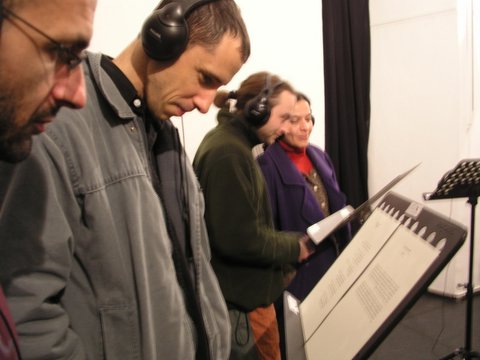
In “Babylon Poems”, the sala-manca group decided to translate from Hebrew to Hebrew ten poems from the high school final exam content lists. The poems were translated with automatic-anonymous translation passing them through 14 different languages, by using the “Babylon” software. The new poems were read by Ilana Zuckerman, sound and radio artist, founder of the Metula Poetry Festival.


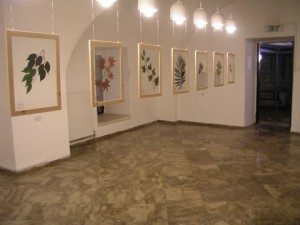
[Herbarium of Artificial Flora]

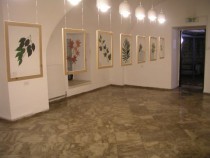
A series of plants that were picked from public institutions in Jerusalem in the months November-December 2006. The plants were identified by botanic and gardeners, and were catalogued and perpetuated by us. These plastic plants are the basis of the Herbarium of the Urban Artificial Flora in Israel.

[Urban Quotation]

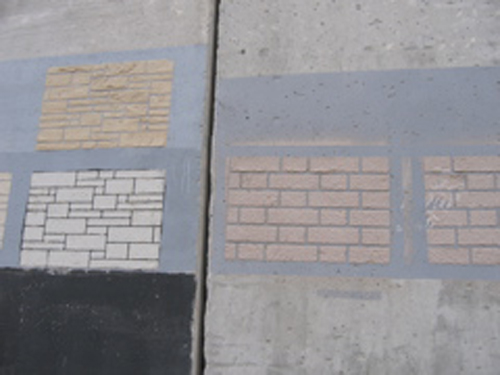
The installation in the courtyard is a quotation to the acts of facades demarcation in the Jerusalem houses that are going to be demolished. The stones are marked by number in order to reconstruct the façades in the same way as they were originally built. Metaphor without content, remembrance of themselves. The mark of the facades indicates the beginning of the deconstruction of the cultural and architectural history of the city, and the beginning of the construction of “Potemkin Villages” that try to hide the change.

[The Right to Copy]

The sala-manca group exposes the private library from their house in Nachlaot and invites the public to copy whatever they want.

[Hommage to the Anonymous Poet]

A poetry-performance that reconstructs the search of an expedition of the Hebrew university after the anonymous poet. The performance makes use of anonymous poetry and music, original sound, video, film and graphics


[Archive of the Anonymous]

Films from the “Archive of the Anonymous” in honour of Karl Gustav Karl. The films are fragments of the lives of anonymous artists and poets from different times and places.

Studies on New Israeli Landscapes, 2005-2008

From the beginning of the 20th century, Zionism visually represented ideologically charged Eretz Israel (Palestine), showing the local landscape as an idealized continuation of the biblical landscape. Until around 1970, Jewish Israeli art constructed an ideological representation of  “the own territory”, “the own landscape” where the Palestinian population was not represented at all, or became literally a part of  the landscape. Since 2002 with the beginning of the construction of the separation wall by the Israel government, a new border is being defined and a new landscape is being created.

1348 1338 1358 3

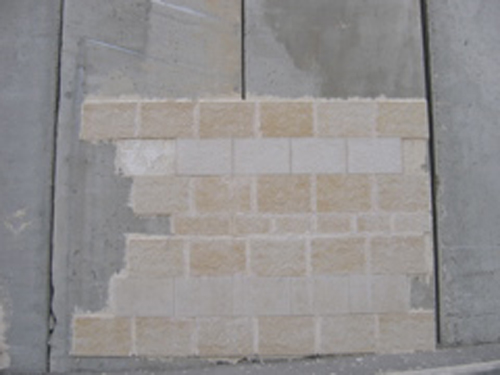
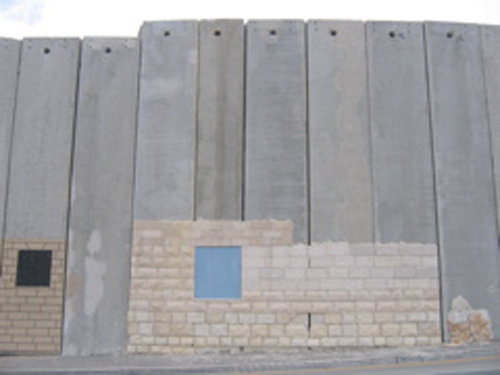
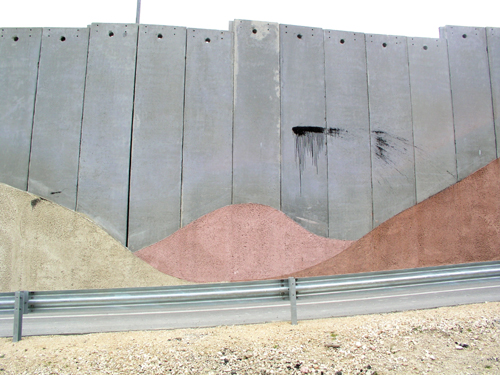
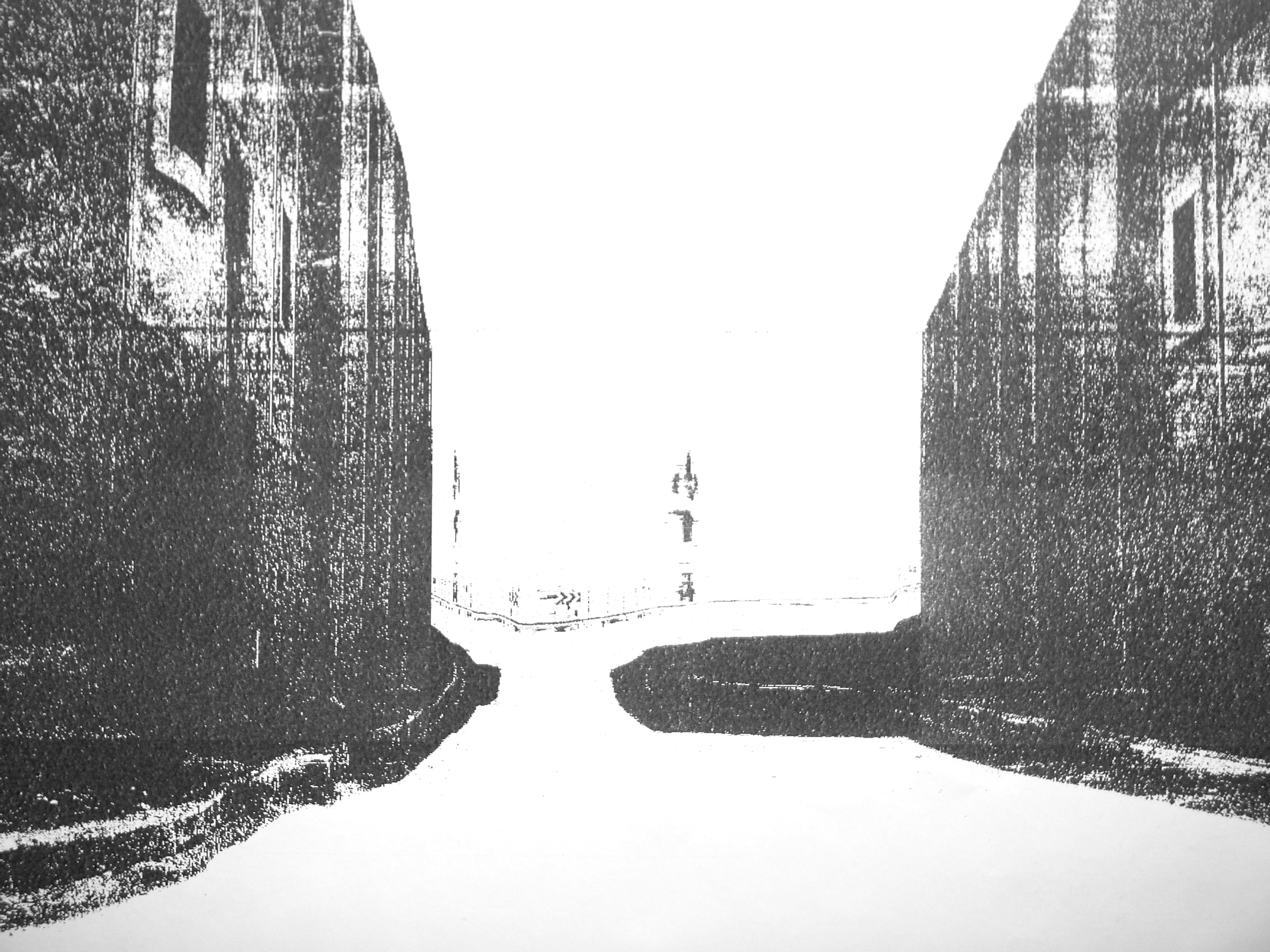
The construction of a new form of landscape, which has the aim of hiding the view of the separation wall, is being tested in Maavar Hazeitim (The Pass of the Olives), situated in Al-Azaria area, near Mount Scopus, Jerusalem. A pastoral and “natural” name is intended to conceal the fact that a weird terminal serves as a check-point. In this part of the wall the construction of a façade, of a Potemkin Village1, is being tested along the “border”, in order to prevent the Israeli citizens from seeing the wall. But the use of landscape construction, through painting and reliefs, is not only intended in this case to create the idea of a peaceful wall, but to make the wall disappear. You can see mountains, flowers, pastoral images, and also the facades of Jerusalem stone houses with windows which do not overlook any where.

In this project Sala-Manca deals with the use of political created landscapes, with these new forms of art-ificial or art-official and naïves landscapes, created in a very non-naïve platform. The platform is the message, and the naïve landscapes the decadence of an official aesthetics of colonialism. The first steps of a new fake as a way of living proposed by the Israeli state to its citizens.

Prof. G. Vakulinchuk


Sukkat Nezach (Eternal Tabernacle 1)

Produced in the frame of Liminal Spaces project curated by Galit Eilat, Reem Fadda, Eyal Danon and Phil Misselwitz. Exhibited at GFZK, Leipzig, Germany, 10.2006-1.2007

IMG_4645-1

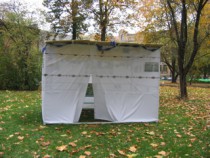
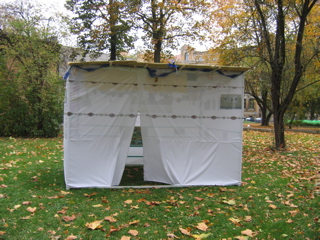
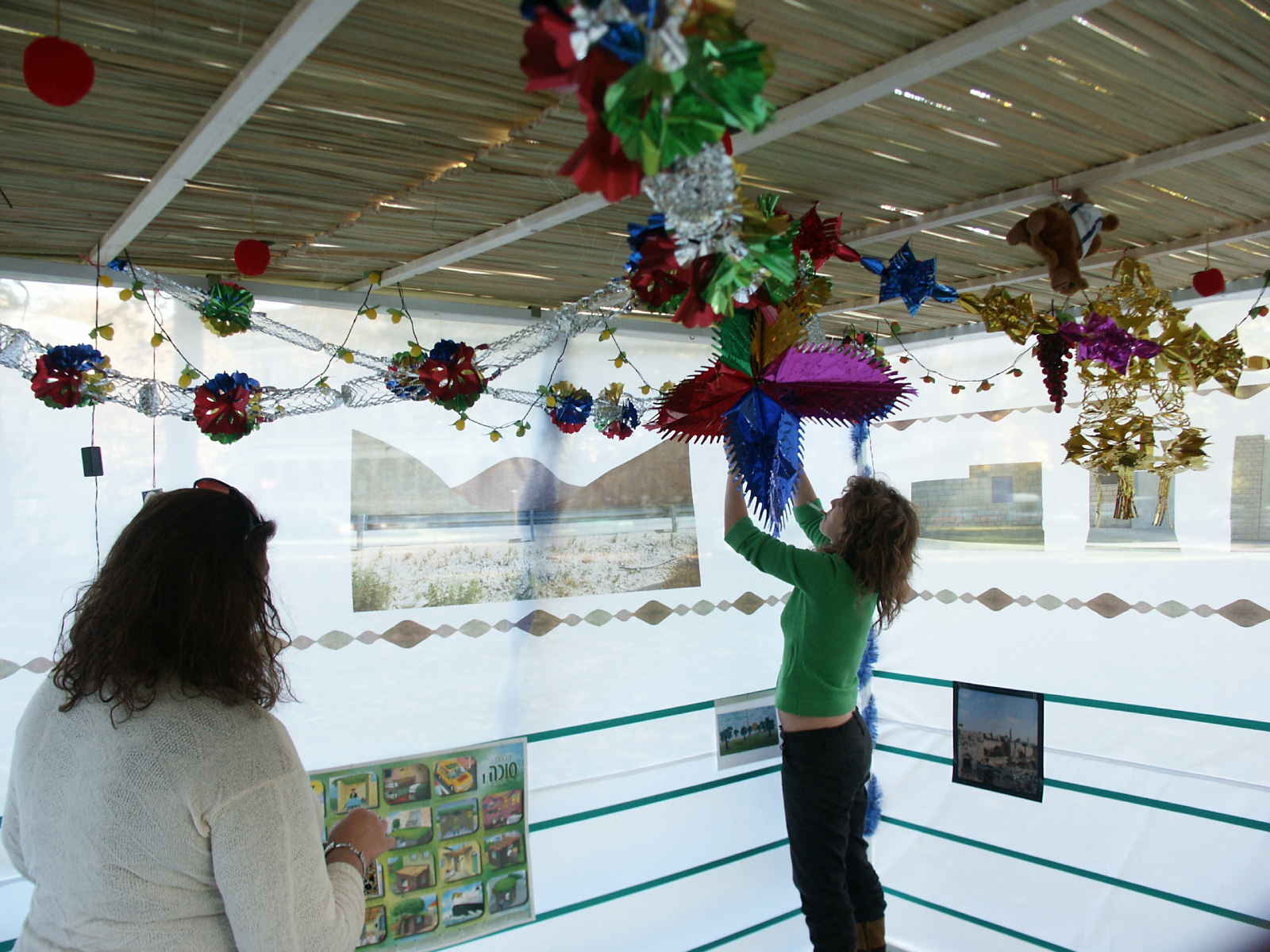
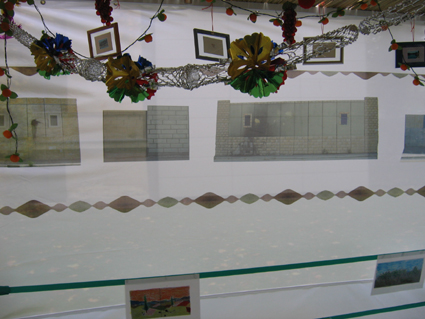
The holiday of Sukkot is one of the three holidays mentioned in the Torah on which it was customary to go on pilgrimage to Jerusalem during the period of the First and Second Temple. The name of the holiday comes from the word Sukkah – the name of the huts in which the Israelites encamped in the desert during their exodus from Egypt (Exodus 33:6). 1 The holiday’s relation to Jerusalem acquires additional meanings in the Bible when several of the prophets refer to the city using the term “Sukkah” – see, for instance, Isaiah (1:8) and Amos (9:11). 2 The holiday commemorates the exodus from Egypt by means of the commandment to build sukkot (Leviticus 23:42) – temporary structures topped by a covering of branches or fronds. During the holiday, one’s house become a “temporary residence”, while the sukkah becomes a “permanent residence”. During the holiday, Jews are commanded to sit in the sukkah, and to eat, study and even sleep in it during the seven days of the holiday. One of the central customs related to the holiday is the decoration of the sukkah; these decorations lend it a festive air and are a means of expressing the identity and ideological outlook of its builders. In the ultra orthodox community, dominant motifs include DCF 1.0 sukahrabbinical figures; the seven ushpizin, or exalted guests, who are symbolically invited to the sukkah; and various religious symbols. Members of the national-religious community adorn their sukkahs with decorations that have a national character, such as images of the local landscape, its fauna and flora, and the Israeli declaration of independence. Jerusalem and related symbols are always central motifs in sukkah decoration. The sukkah symbolizes the tension between a permanent residence and a temporary residence – between “the ancient ideal of wandering referred to by the symbols of the holiday and the ideal of permanent residence, which is at the core of Zionism”. 3 Eternal Tabernacle4 is composed of materials typically used to construct a sukkah in Jerusalem: an aluminum framework that is easy to construct and to dismantle, a prefabricated covering and other do-it-yourself-style paraphernalia. The cloth walls surrounding the sukkah are made of water-resistant material, which is frequently used to surround the modern sukkah. In many sukkahs, symbols and motifs related to Jerusalem are imprinted upon this cloth. The motifs we used for the walls of Eternal Tabernacle are taken from an area of the separation wall in Jerusalem. This area, which is called the “Olive Pass” was decorated by Akerstein Industries. The decoration of the wall was commissioned by the Ministry of Defense, in an a?empt to explore the possibility of artificially “beautifying” the separation wall and thus dissimulating its presence on the Israeli side. Thanks to Itay Weiser, David Mauas, Mery Goldwaser, Hagar Goren

1 The place name Sukkot is first mentioned in the Torah when Esau and Jacob go their separate ways; Jacob built a hut, or Sukkah, and named the place a?er it.
2 See G. Hasan-Rokem, 1997.
3 Ibid.
4 Eternal Tabernacle is a paradoxical name that expresses the tension between temporary and permanent residences. It is the name of one of the companies that builds and dismantles sukkahs.
Sources:
1. G. Hasan-Rokem, “Representation and Dialogue in Folklore Research: The Poetics
and Politics of an Unperformed Festival,” Jerusalem Studies in Jewish Folklore,
19–20, 1997–1998.
2. G. Vakulinchuk, “Studies on New Israeli Landscapes – Notes for a Project by Sala-
Manca (Jerusalem),” unpublished manuscript.
3.www.wikipedia. org

 New Territories

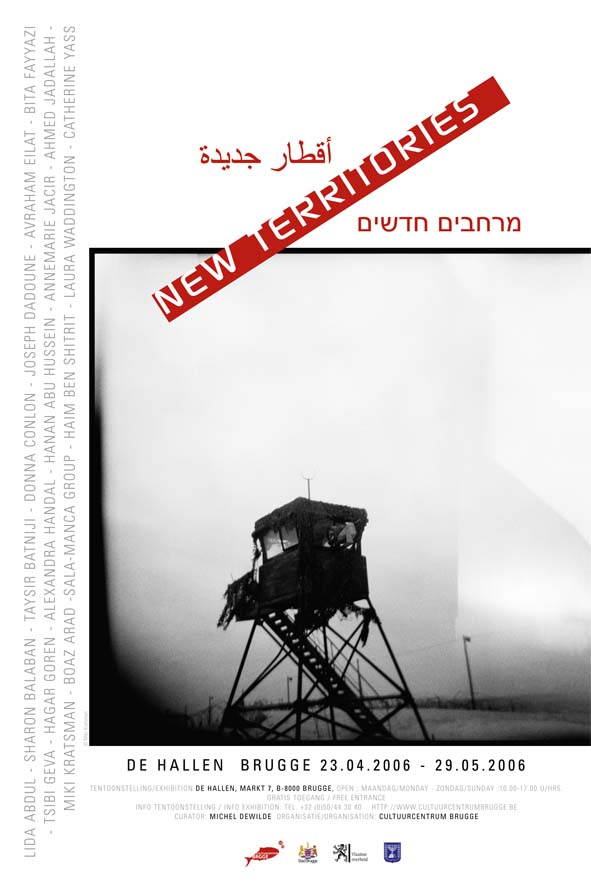
Ephemeral Territores at “New Territories” | De Hallen, Brugge – Belgium | Curator:  Michel DeWilde

Faxworks

OLYMPUS DIGITAL CAMERA OLYMPUS DIGITAL CAMERA OLYMPUS DIGITAL CAMERA OLYMPUS DIGITAL CAMERA OLYMPUS DIGITAL CAMERA

The Story of Batya M., 2006

International Street Theater Festival, Bat Yam, 2006 |  Spanish/Hebrew/English; Spanish/English/Polish

Actors: Sala-manca, Laura Simcovich, Dina Blei, Samuel Rotman, Salomon Mauas, Ayu

Music: Yarden Erez

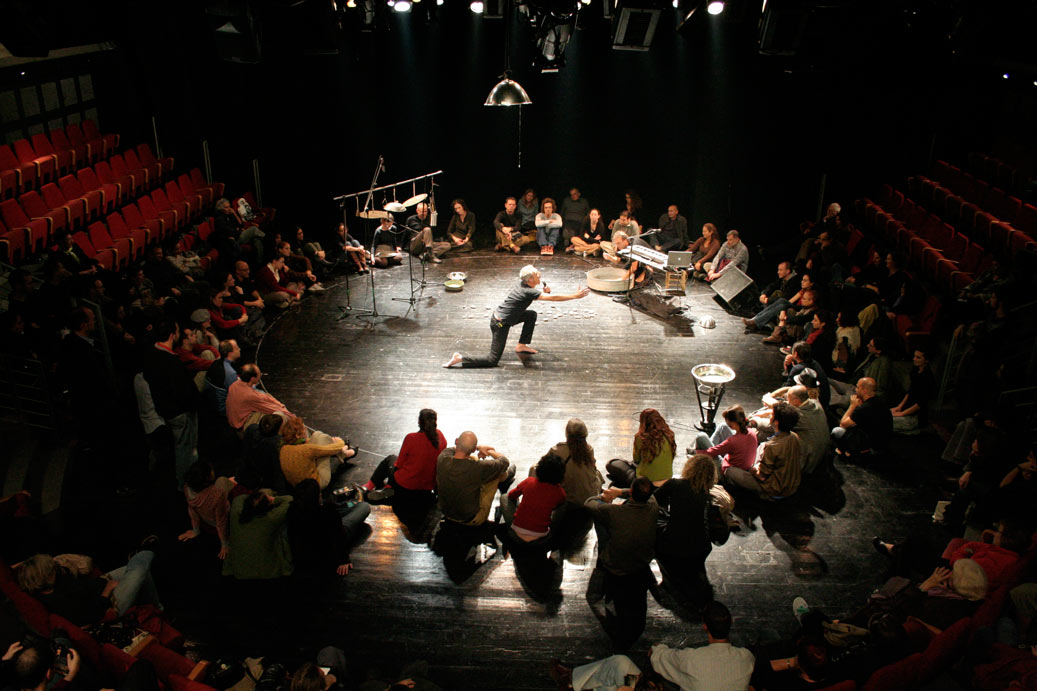
_DSC2278Drive-in cinema in a parking lot by the sea. An Argentinean soap opera is projected on the screen. On the stage, the two leading actors dub the scenes. The language they use changes, the translation becomes dubious, the design of the subtitles and the conventions of the genre are also transformed. The outcome is the last and only episode of a soap opera that exists on the border between mass television culture and avant-garde performance.

_DSC2264


Video trailer

Press:

Shlomit Aladgem, Do you know the small Siren (Bat Yam)?


Social Sound-Installation: “If you’ll Speak it Will not be a Legend”, Shlomit Sharbit, 26.2.2009

Social Sound-Installation: “If you’ll Speak it Will not be a Legend”, Shlomit Sharbit, Ynet, 26.2.2006

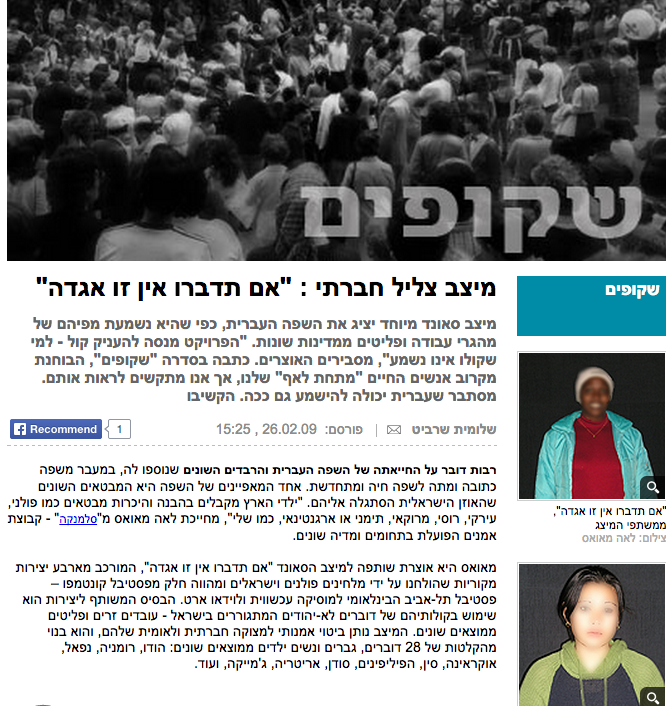
  שלומית שרביט, ynet, “מיצב צליל חברתי : “אם תדברו אין זו אגדה”

Screen Shot 2015-01-19 at 9.54.48 PM

רבות דובר על החייאתה של השפה העברית והרבדים השונים שנוספו לה, במעבר משפהכתובהומתה לשפה חיה ומתחדשת. אחד המאפיינים של השפה היא המבטאים השונים שהאוזן הישראלית הסתגלה אליהם. “ילדי הארץ מקבלים בהבנה והיכרות מבטאים כמו פולני, עירקי, רוסי, מרוקאי, תימני או ארגנטינאי, כמו שלי”, מחייכת לאה מאואס מ”סלמנקה” – קבוצת אמנים הפועלת בתחומים ומדיה שונים.

מאואס היא אוצרת שותפה למיצב הסאונד “אם תדברו אין זו אגדה”, המורכב מארבע יצירו מקוריות שהולחנו על ידי מלחינים פולנים וישראלים ומהווה חלק מפסטיבל קונטמפו – פסטיבל תל-אביב הבינלאומי למוסיקה עכשווית ולוידאו ארט. הבסיס המשותף ליצירות הוא שימוש בקולותיהם של דוברים לא-יהודים המתגוררים בישראל – עובדים זרים ופליטים ממוצאים שונים. המיצב נותן ביטוי אמנותי למצוקה חברתית ולאומית שלהם, והוא בנוי מהקלטות של 28 דוברים, גברים ונשים ילדים ממוצאים שונים: הודו, רומניה, נפאל, אוקראינה, סין, הפיליפינים, סודן,

אריטריה, ג’מייקה, ועוד.

“להעניק קול למי שקולו אינו נשמע”

יוצרי הפרויקט, החליטו להשמיע בפרויקט הצלילי המיוחד, עברית במבטאים אחרים, מוכרים ומקובלים הרבה פחות. כל דובר התבקש להקריא רשימת מילים עבריות בתעתיק לטיני. “כולם יודעים שיש בארץ מהגרי עבודה ופליטים, אבל הם לא מתערים בחברה והופכים להיות חלק ממנה”, מסבירה מאואס. “חלק מההתערות היא דיבור בשפה, וכאן הפרויקט מנסה להעניק קול למי שקולו אינו נשמע. זה נסיון להשמיע חזון בו המבטאים האלה היו גם חלק מהעברית, חלק מהנוף הצלילי, חלק מהחברה”, היא מוסיפה בלהט.

המילים שהדוברים התבקשו לבטא נבחרו מקובץ מילים שנכתבו בכתב יד, בדפים הראשונים הריקים בספר “רשימת מילות היסוד להוראת הלשון העברית”, שיצא לאור בירושלים ב-1960, על ידי “המחלקה לחינוך ולתרבות הגולה של ההסתדרות הציונית העולמית”. “היתה שם רשימת מילים של מישהו שלמד עברית”, מסבירה מאואס. “הופיעו חיבורים של מילים המגיעות מאותו שורש או פשוט נשמעות דומות”.

הפרויקט אורגן על-ידי מכון אדם מיצקביץ’ במסגרת שנת פולין בישראל וממומן על ידי משרד התרבות והמורשת הלאומית ומשרד החוץ של פולין. הדגש הושם על התכונות הצליליות של הדיבור, ערכו המוסיקלי, וביטוי מוסיקלי באמצעות הדיבור. ההתמקדות בקולות לא-יהודים קשורה אצל היוצרים לחיפוש אחר ביטוי חסר מטען אידיאולוגי לאומי, כזה שליווה את החייאתה של השפה העברית המודרנית ואת התפתחותה, תוך מתן ביטוי למוזיקאליות פחות מוכרת בעברית התל-אביבית של ימינו.

“מקהלה של אנשים שמדברים את אותה מילה ביחד”

כדי להגיע לקולות הייחודיים המופיעים במיצב פרסמו היוזמים בתחנה המרכזית בתל-אביב שלטים בעברית אנגלית וספרדית בהם ביקשו מאנשים להשתתף בהקלטות של עבודת אומנות. “שילמנו לכל מי שהשתתף בקלטות”, חשוב למאואס להבהיר “זה היה חשוב לנו כי זה חשוב להם”. באיסוף ההקלטות היה הדגש לא על משמעויות המדובר, אלא על ההיבט הפונולוגי שלו, תוך הבלטת הבדלים במבטא. החומר המקובץ כולל מלים בסיסיות, טיפוסיות, וכן פתגמים ומטבעות לשון.

“בניתי מקהלה של אנשים שמדברים את אותה מילה ביחד” מסביר ערן זקס, אומן סאונד ומוסיקאי ממשתפי הפרויקט, את העיבוד שעשה להקלטות. “כמו אקורד מוסיקלי ארוך שבנוי מהקולות של הדוברים בלבד. בחלק שלי בפרויקט יש ארבעה דוברים וכמו שפורטים לאט על מיתר של כינור, אני פרט על מיתרי הקול שלהם מאוד מאוד לאט”.

“חור התחת של תל-אביב”

התוצאה הסופית תוצג במהלך סוף השבוע הקרוב ב”צימר”, הממוקם בלב שכונת נווה שאנן בדרום תל אביב. “החלטה להציב את היצירות ב’צימר’ אינה בחירה ניטראלית”, מוסיפה מאואס. “המקום עצמאי, מאפשר מבט לאומנות בלי שום התייחסות לשיקולים מסחריים. בנוסף, ממוקם ה’צימר’ באזור בו מתגוררים רבים מקהילות הדוברים”.

“הדבר המרכזי שמעניין בעייני זה הצגת פרויקט דווקא בנווה שאנן”, מוסיף.  “בעייני יש משהו בשכונה, באזור, שמשתמר כחריג ושונה ברמת השפה ובכלל, מהחברה התל אביבית. הלידה של נווה שאנן החלה בשנות העשרים כחברה אוטופית שיוויונית ומעורבבת, גר שם ערב רב של אנשים שונים, עם רעיון קוסמופוליטי מהרגע הראשון”, צולל זקס למחוזות ההיסטוריה. “אבל הם נדחו אז על-ידי המוסדות של התנועה הציונית. עד היום לא מקבלים את מה שקורה בנווה שאנן, גם עכשיו השכונה היא מחוץ למדיניות ההקצבה של העירייה והמדינה, נראה כאילו הזמן קפא מלכת, וגם אחרי תשעים שנה כלום לא השתנה”, הוא מסכם.

אנשי הצימר קיימו הערכות מיוחדת טרם הצגת המיצב, “בנינו בצימר חלון שקוף מיוחד. בעצם, פתחנו חלון לשכונה כדי להזמין אותה פנימה”, מסביר זקס, “ואנחנו מאמינים שחלק מאותם פליטים ועובדים זרים

שהוקלטו לטובת המיצב יגיעו לראות את התוצר הסופי”.


“באמצעות המיצב יש התייחסות למצב הפוליטי – חברתי של המהגרים. זהו  פרויקט אמנות שמעיד על סוגיות ובעיות בחברה הישראלית – במקרה הזה דרך השפה”מסכמת מאואס, “ההתמקדות בקולות לא-יהודים קשורה לחיפוש אחר ביטוי שאין בו את המטען אידיאולוגי לאומי ליווה את החייאתה של השפה העברית המודרנית, תוך מתן ביטוי למוזיקאליות פחות מוכרת בעברית התל-אביבית של ימינו”.


“אני חושב שזו עבודה מדהימה, די מעניין לשמוע איך מטפלים בחומר גלם הזה, של עובדים זרים שמדברים עברית” מסכם זקס, “אנשים לא מגיעים הרבה לאזור הזה שיש שמכנים אותו ‘חור התחת של תל אביב’, ואני מזמין את כולם להגיע ולשמוע צלילים אחרים במקום שונה ומעניין”.

“If you speak it -it is no legend”, 2006

“If you speak it -it is no legend”, 2006
Curators: Sala-manca & Antoni Beksiak

Raw recording (short demo):

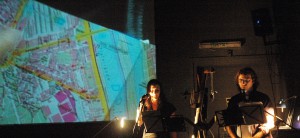
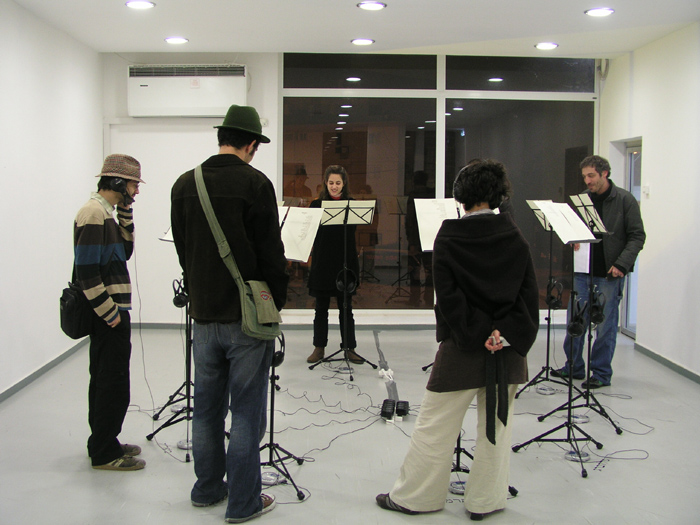
“If you speak it -it is no legend”  is a sound installation consisting of four original pieces written by Israeli and Polish composers. The common base of these works is the use of the voices of non-Jewish speakers who live in Israel – foreign workers and refugees from different countries, for whom Hebrew is primarily a functional language of communication.

The words that the speakers were requested to articulate were chosen from a selection handwritten on the first empty pages of a copy of the book titled “Reshimat milot ha-yesod le-hora’at ha-lashon ha-l’vrit” (A Basic Word List of Hebrew), published in Jerusalem in 1960 by the Department of Education and Culture in the Diaspora of the World Zionist Organization, edited by Y. Mehlman, H. B. Rosen and Y. Shaked.

The copy was purchased in Jerusalem in the Galleria le-Sifrut bookstore on Shats St, by Sala-manca. The choice of words included in the chapter ‘Principles of Selecting the Words’ is a didactic-linguistic one, whose point of departure is that the language to be learned is ‘living Hebrew’, as spoken and written in Israel. According to the editors, most of the 1,000 words included are useful for con versational topics and for the construction of basic sentences, maintaining that a basic knowledge of the language cannot be achieved without these selected words. It is apparent from the sticker on the book that the aforementioned additional list was chosen from the basic list of words by Dr. Edward Horowitz – who, it appears from a search on the Internet -was the author of the book. How the Hebrew Language Grew, also published in 1960. The recordings of the words and short conversations with the speakers were made by Aviad Albert and Bynia Reches in Bamat Meitzag at the new Central Bus Station in Tel Aviv. Twenty-eight speakers – men and women, and two children – participated, all coming from different backgrounds: China, Eritrea, India, Jamaica, Nepal, the Philippines, Romania, Sudan, Ukraine, and others. Each speaker was asked to read the list of words from a Latin transcription.

The recording collection reveals an emphasis on the phonological aspect and the differences in accents. The focus on the characteristics of speech sounds and their musical value is linked to modern music’s search for musical expression by means of speech. The focus on non- Jewish voices is connected to a search for expression that is devoid of the ideological-national influences that accompanied the revival and development of the modern Hebrew language, while giving way to a musicality that is less familiar in today’s Tel Aviv Hebrew.
The selection of the Zimmer club as the location for presenting the installation is not a neutral choice. The club is located near or within the communities of many of the speakers, and is a new space, unique and independent from contemporary Tel Aviv’s artistic and musical sphere. It is a location where different and experimental methods merge without any economic or political considerations.

demo of the music

Lea Mauas, Diego Rotman
Sala-Manca Group
imgres-1
The first presentation of the work took place in February 2009 in the Zimmer club within the framework of the ‘Contempo’ International Festival of Contemporary Music and Video Art in Tel Aviv, and formed part of the Polish Year in Israel 2008/09, Tel Aviv-Yafo Centennial as well as Turning Sounds 6, international meeting.
The initial idea behind the project, which I conceived in September 2008, during the Dialogue of Four Cultures Festival in Łodź, and which was later developed and transformed by Sala-Manca during our curatorial collaboration, was to address the relatively short, rapid history of Tel Aviv’s ethnic and ethnohistorical diversity. It addresses such issues as the formation of the community, its homogenization, and its parallel diversification due to ongoing immigration. Significantly, I was interested in the historical immigration arriving from Poland, as reflected in a saying I overheard, that early after World War II, Polish was commonly heard in Tel Aviv cafés. (When I visited the city in late 2007, I had a similar impression regarding the Russian language). My intention was to use the voices of the oldest living generation of immigrants, giving a historical perspective on the evolving social and ethnic composition of the city.
Language is central to the project. Interviews, each consisting of basic, rudimentary words and sayings, were conducted with representatives of various social/ethnic groups in contemporary Tel Aviv. The variety of pronunciations ensured that the recordings would play the role of ‘shibboleths’, where the differences in pronunciation underscore the ethnicity of the speaker. As the concept of ‘shibboleth’ is about phonology, not semantics, it was suggested to the composers to use the phoneme, and not the word, as the main compositional nucleus, without narrowing their artistic freedom. The Turning Sounds Society, which I chair, devotes itself to crossover art forms between so called ‘high’ and ‘pop’ culture. Since 2006, one of its activities is the Mouth-o-Fonic current, devoted to uncommon shades of the human voice. It is intriguing how artists using the beatboxing technique – still a deeply underexploited artistic resource – see the objets sonores they produce as a development of the musical qualities of the phonemes. The  “If you speak it, it’s no legend” project attempts to approach the same sphere from another direction.
 It is worth noting that the differences in pronunciation of any language in foreigners’ speech can be regarded as analogous to the differences between various dialects of a language. It is only through constructing an imagined generalized picture that we see language as one internally non-contradictive system. (It always makes me think when I hear fellow Poles speaking ‘incorrectly’).
Antoni Beksiak, The Turning Sounds Society
Press: 

—

Babylon Poems, 2006-2007

Translation, text, and sound works

Exhibited in the frame of “Free Radicals”, Digital Art Lab Holon, 24.2.2007-28.04.2007 | Curator: Eyal Danon

Hebrew to Hebrew translation of ten poems from the 2006-2007 matriculation exam list for Israeli high school students. The poems were translated using Babylon automatic machine translation software, passing through 14 different languages (from Hebrew to German, German to Dutch, Dutch to Spanish, Spanish to French, French to Italian, Italian to Portuguese, Portuguese to Japanese, Japanese to Chinese, Chinese to Arabic, Arabic to Korean, Korean to Turkish, Turkish to Russian, Russian to Polish, Polish to English, and from English back to Hebrew).
Babylon Poems
Poets: Haim Nachman Bialik, Nathan Alterman, Shaul Tchernichovsky, Uri Zvi Grinberg, Rachel, Dahlia Ravikovitch, Leah Goldberg, Natan Zach, David Avidan, Yehuda Amichai

The poems were read by Ilana Zuckerman, sound and radio artist, founder and director of the Metula Poetry Festival


Natan Zach

Uri Zvi Grinberg

Rachel

Chaym Nachman Bialik

Shown first as part of the project: “The Right to Copy”, 2006, Confederation House, Jerusalem

Note in the Margin | Hadas Ophrat Catalogue (2006)

Note in the Margin (a text for Hadas Ophrat catalogue, 2006)
*
HO walks on a thin wire. Red (the clothing, the moment). An underground
prisoner sings a traveling song one moment before his hanging, an echo of
yesterday’s underg0000007bround prisoners, today’s political prisoners (we are all political
prisoners). The installation is placed in the exercise yard of the Museum of
Underground Prisoners (“March”, ‘Heara 4′, Jerusalem 2002). The artist walks
alone, in the yard, and disrupts the declination of nouns (“my cradle, your cradle,
his cradle, her cradle, our land, your land, their land…”). Time stretches to the
edge of the gallows of time. On his back he wears a bag, sticking out from which
is a pile of eggs arranged to look like a house. This is a private ritual, naked,
before the crowd that has gathered abound him. From time to time it seems as if
everything is falling, time runs out – an egg falls from the prisoner’s back on to
the stone floor of the yard. The yard is grateful. “And the secret is not to let the
eggs break,” someone says, quoting something someone else once told him.
And he was wrong. Winter. Cold. A perfect day for carrying out the future
sentence of the Israeli artist in the courtyards of the Ministry of Defense. HO’s
sentence is not carried out in public.
**
The artist takes sleeping pills and chooses to escape from the reality of Israeli art
at the power station (“Insomnia”, Tel Aviv 2003). Art, in its meager dress for the
tasteless event, the artist in a symbolic, fragile and unforgettable act of sleeping
– perhaps forgotten for him the way a dream is forgotten. He warns us about
what is going on inside. Action that is minimalistic, internal, silent. Cycles of sleep
and death in 21st century Israel.***
Another type of walking was his walking blind in the Seidoff Courtyard (“Naked
Eye”,’Heara 2′, Jerusalem 2002). Here the artist portrays a figure from a Baroque
carving. He walks with his eyes covered, with the aid of two canes. The pain of
the blind man and the construction of a place in a temporary state of blindness,
an act of identifying boundaries, of losing one’s way. That same day there was a
bombing in the Mahane Yehuda market, 100 meters away. A dead-end situation,
constantly returning, time stretching out, walking in the dark.
****
And we shared with him his sleep in the power station, we walked with him along
the thin wire at the Underground Prisoners’ Museum, and we understood the
danger that understood him and us. Invitations to reflect on the minimal, the
basic: walking, death, the body, time, words. And the video documentation of
these works is, perhaps, an expression of another loneliness, an archive of
memory, an alternative text, a note on the heart of the matter.
Lea Mauas and Diego Rotman / Sala-Manca