An article in Hebrew by Diego Rotman at HaOketz, about the Eternal Sukkah project:
WordPress database error: [DELETE command denied to user 'sala-manca'@'localhost' for table `sala_manca_net`.`wp_options`]DELETE FROM `wp_options` WHERE `option_name` = '_site_transient_wp_theme_files_patterns-3e81fb819c0831df69203ee558a709b9'
WordPress database error: [DELETE command denied to user 'sala-manca'@'localhost' for table `sala_manca_net`.`wp_options`]DELETE FROM `wp_options` WHERE `option_name` = '_site_transient_timeout_wp_theme_files_patterns-3e81fb819c0831df69203ee558a709b9'
WordPress database error: [INSERT, UPDATE command denied to user 'sala-manca'@'localhost' for table `sala_manca_net`.`wp_options`]INSERT INTO `wp_options` (`option_name`, `option_value`, `autoload`) VALUES ('_site_transient_timeout_wp_theme_files_patterns-3e81fb819c0831df69203ee558a709b9', '1792709211', 'off') ON DUPLICATE KEY UPDATE `option_name` = VALUES(`option_name`), `option_value` = VALUES(`option_value`), `autoload` = VALUES(`autoload`)
WordPress database error: [INSERT, UPDATE command denied to user 'sala-manca'@'localhost' for table `sala_manca_net`.`wp_options`]INSERT INTO `wp_options` (`option_name`, `option_value`, `autoload`) VALUES ('_site_transient_wp_theme_files_patterns-3e81fb819c0831df69203ee558a709b9', 'a:2:{s:7:\"version\";s:3:\"4.0\";s:8:\"patterns\";a:0:{}}', 'off') ON DUPLICATE KEY UPDATE `option_name` = VALUES(`option_name`), `option_value` = VALUES(`option_value`), `autoload` = VALUES(`autoload`)
WordPress database error: [INSERT, UPDATE command denied to user 'sala-manca'@'localhost' for table `sala_manca_net`.`wp_options`]INSERT INTO `wp_options` (`option_name`, `option_value`, `autoload`) VALUES ('_transient_doing_cron', '1792707411.9828970432281494140625', 'on') ON DUPLICATE KEY UPDATE `option_name` = VALUES(`option_name`), `option_value` = VALUES(`option_value`), `autoload` = VALUES(`autoload`)
|
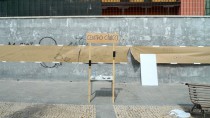
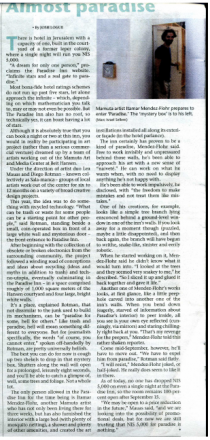
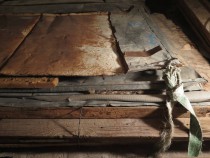
| In July 2014 Diego Rotman and Lea Mauas, two Israeli artists who operate under the alias Sala-manca, began a process that involved the purchase of a Beduin house, the materials of which they intended to use for the building of a succa.The structure came to be named “The Eternal Succa” and was recently acquired by the Israel Museum. |
for the enitre artice:
on-line:
http://www.jpost.com/Israel-News/Culture/Building-The-Eternal-Succa-415620
pdf:
An evening of thinking together with contributors to The Imaginary Republic:
Dr. Hélène Frichot, Associate Professor, KTH Stockholm
Georgia Kotretsos, Artist, Athens
Dr. Brandon LaBelle, Professor, Bergen Academy of Art and Design
Dr. Diego Rotman, Researcher, Hebrew University, Jerusalem
Lise Skou, Artist, Aarhus
The project, The Imaginary Republic, considers the dynamics of civic culture in today’s global environment, and how developments in economic, social and political realities have led to an intensification of public argument and dissident imagination.
The project converses with current social movements across Europe and elsewhere, and sets out to explore transformations in political consciousness. In particular, it aims to research creative expressions of political subjectivity with an emphasis on emancipatory practices. For instance, protests around social housing in Berlin have prompted a drive toward “re-communalization” which reconfigures the relation between local and migrant communities, drawing in the arts community through questions of gentrification. Or the ongoing alignment between neoliberal economy and education in Britain has sparked the emergence of independent schools and free pedagogical platforms, leading to new forms of shared work and knowledge production. These examples act as counter-narratives to major structures of national and regional governance, and embody a creative political consciousness – an insurrectionary drive. What consequences do such expressions have for understanding civic culture and its resistances? What knowledges might the interaction between the arts, the critical imagination and the political generate today? Is there an imaginary republic to be found within the drives and mechanisms of global capitalism, and from which new solidarities can be assembled?
Utilizing the extraordinary wealth of civic imagining at play in contemporary culture, The Imaginary Republic aims to rethink utopian tendencies, charting out contemporary expressions and exploring their practical challenges. This leads into questions of shared space and the architecturally contested, hopes and dreams for non-capitalistic economies and commoning, and the productions of dissident publics.
http://www.kunsthall.no/en/?AID=2177&ID=31&K=35&AAR=2015&MND=8&index=9
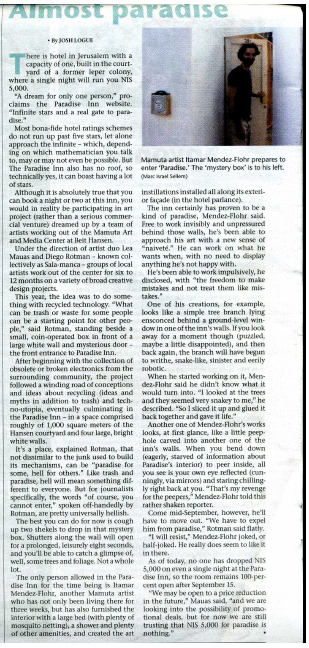
Paradise Inn
Paradise Inn, Talbiyeh, Jerusalem. A dream for only one person. Infinite stars and a real gate to paradise. Reserve your room at the former Lepers’ home.
Jerusalem, where any piece of land can become your temporary dwelling.
In light of the policy of the city of Jerusalem to develop tourism and to use art and culture as a touristic tool, a group of local artists decided to be part of this new trend. In order to generate a new resource for tourism as well as some independent income for local artists and the Mamuta Art and Media Center, they established the luxurious Paradise Inn on part of the lands of the former Jerusalem Lepers’ Home at Hansen House.
Using a “green” approach to urban design as well as the idea of recycling electronic waste, the artists created a summer hotel for temporary residence, inspired by Bauhaus architecture, temporary techniques of modernist parcelization, and the new school of architecture, Growing Walls.
The artists participated in the design and implementation of all aspects of the hotel, with the goal of giving everyone the possibility of spending a few nights at Paradise Inn. The project synthesizes new visionary ideas for a modern Jerusalem: a hotel for only one person, a personal paradise built in the exquisite Hansen House gardens.
Image“Paradise Inn is an island surrounded by the walls of the former Jerusalem Lepers’ Home. A metaphor of differentiation and exclusivity. Paradise Inn is a luxurious paradise that originates from a public institution that was historically used to protect society from lepers and lepers from society. Paradise Inn dwells in the spirit of gentrification, inviting an artist to reside for free in the paradise for a month and a half. In return, the artist is expected to produce artwork for the comfort of future residents.” (From I Love Jerusalem Magazine)
In the year 2018, the utopia that Boris Schatz wrote about in his novella “The Rebuilt Jerusalem: A Daydream” (1923), is supposed to be fulfilled. A Utopian Jerusalem in which paradise exists; harmonious coexistence with nature and with the Arab residents of the city, and building of the Third Temple, which will serve as a museum, with the consent of the Arab minority.
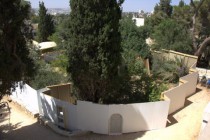
Three years prior, in the year 2015, at the Hansen House gardens, Paradise is built – a haven in the middle of the city, a white façade bounding a garden that has been expropriated from the public. In Paradise, only one human being at a time can experience the ideal and modern natural living, leaving the public with a sense of longing, allowing a sneak peek into a free and peaceful world, at an affordable price.
The entrepreneurs of Paradise Inn have invited an artist to live and create for a month and a half in this daydream – an infinite-star hotel for one, a slice of nature in the middle of Jerusalem, in the historical garden of the former Lepers’ House.
From the middle of September, Paradise’s sole room will be available for rent at an outrageous rate for all interested.
Please visit us and reserve your nights: www.paradisehotel.co
Concept: Sala-manca
Architects: Sala-manca and Nir Yahaom
Interior Desing: Itamar Mendes-Flohr
Paradise Inn art collection: OZ Malul, Guy Yitzhaki, Itamar Mendes-Flohr, Sala-manca, Shaul Zemach.
Souvenirs: Silent Room 1, Chen Cohen | Room-Kit, Pessi Komar | A letter for you, Shiri Zinger, Elevator to Paradise, Lior Pinski
Avantgarde workers: Yuval Galili, Diego Rotman, Yeshaiahu Rabinowitz, Rotem Zuta, Ayala Shamir, Ktura Manor, Lea Mauas, Chen Cohen, Galia Lulko, Nahuel & Ayu
Paradise Inn website: www.paradisehotel.co
Observation post to Paradise: Conrad Shick
Press:
http://www.haaretz.co.il/gallery/art/artreview/.premium-1.2732894
http://old.sala-manca.net/wordpress/wp-content/uploads/2015/08/almost-paradise.png
A comment on the Sukkah project in dutch bY Jacqueline Grandjean directeur en curator Oude Kerk, Amsterdam): “Sala-Manca is het enige onafhankelijke kunstenaarsplatform van de stad, gevestigd in een voormalig leprozentehuis Jesus Hilfe in Jerusalem. Ideologie is om een actieve gemeenschap voor kunstenaars te creëren die zich in verbinding stellen met de maatschappij. Een van de meest geëngageerde projecten die de twee oprichters, Lea Mauas and Diego Rotman tonen is Eternal Sukkah (2014). Soekot, dat een vreugdevol feest is, wordt beschreven in de Tenach (de Hebreeuwse Bijbel), waarin de Israëlieten (en daarmee ook hun nakomelingen de Joden) wordt opgedragen dit feest elk jaar te vieren. Volgens de traditie bouw je een hut in de tuin, een Sukkkah, waar de maaltijd wordt genoten. In aanloop tot dit feest besloten de kunstenaars van Sala- Manca een loofhut te bouwen in de openbare ruimte. In het holst van de nacht trokken ze de woestijn in om de naar dit gebied verbannen Jehalin Bedoeïenen te bezoeken. De gemeenschap leeft hier een nomadisch bestaan sinds ze in 1949 van hun land in de Negev woestijn werd verdreven. De kunstenaars luisterden naar de verhalen van de bedoeïenen en besloten een van de zelfgebouwde hutten te kopen en te vervoeren naar Jerusalem. De ontmanteling vond ’s-nachts plaats om militair ingrijpen te voorkomen. De Jehalin is een volk op de vlucht, dus hun sobere onderkomen is in een aantal uur van de ene naar de andere plek te verplaatsen. De geadopteerde hut (Sukkah) biedt in de openbare ruimte van Jerusalem een perspectief op de Joodse geschiedenis en werpt een blik op de status van vluchteling. Het project legt op sympathieke wijze de diversiteit bloot van de harde realiteit van het leven in Israël en haar paradoxale geschiedenis.
Na het Loofhuttenfeest werd de hut afgebroken en genummerd en gecategoriseerd opgeborgen. Het Israël Museum toonde onlangs haar interesse in het project. Sala-Manca denkt momenteel na op welke manier deze manifestatie tot museumobject kan transformeren. Een ding staat vast: de Bedoeïenen profiteren mee van de verkoopsom van het werk. “
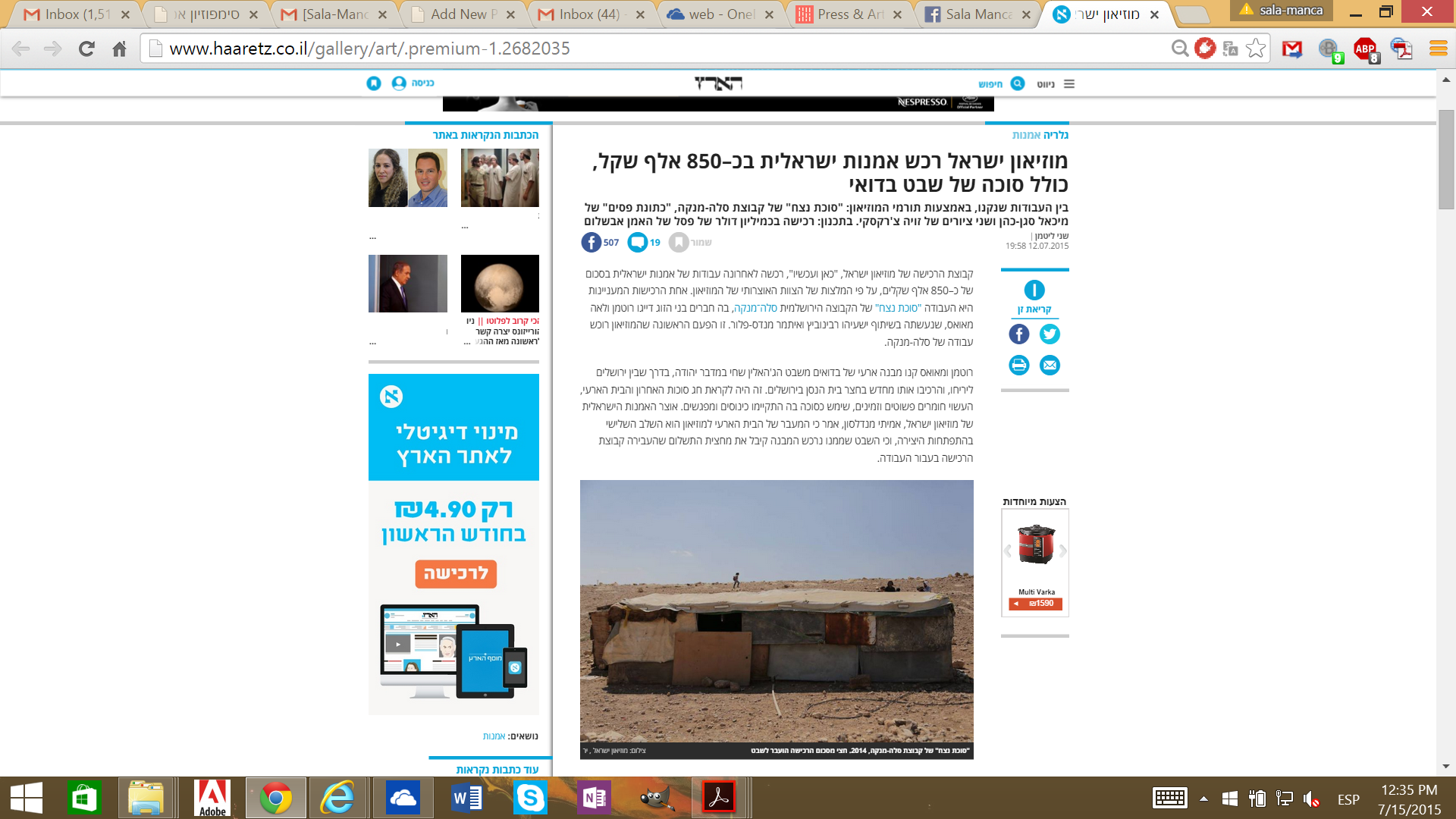
We are glad to announce that the “Eternal Sukkah” (a collaborative projecct by Sala Manca with Itamar Mendes-Flohr and Yeshaiahu Rabinovitz) was bought by the Israel Museum, Jerusalem for its permanent collection. Half of the sum is going to be paid to the Al-Korhan family.
for furthe info about the project: http://old.sala-manca.net/?p=99
from the Museum’s pr:
יצירה מיוחדת שנרכשה היא היצירה “סוכת נצח” של קבוצת סלה-מנקה (קבוצה שחברים בה דייגו רוטמן ולאה מאואס והיא פועלת בבית הנסן בירושלים) בשיתוף איתמר מנדס-פלוהר וישיעהו רבינוביץ. האמנים, העוסקים באמנות בעלת ממד מושגי, פוליטי וחברתי, רכשו מבנה ארעי של בדואים משבט הג’האלין שחי במדבר יהודה בדרך שבין ירושלים ליריחו והרכיבו אותו מחדש בחצר בית הנסן. הבית הארעי העשוי חומרים פשוטים ומזדמנים הפך בסוכות תשע”ה לסוכה שהתקיימו בה כינוסים ומפגשים. עתה המבנה – ששימש את הבדואים ואת הבאים למפגשים בסוכות בבית הנסן – יהפוך לחלק מאוסף המוזיאון. הטרנספורמציה שעבר המבנה, ממאהל בדואי לסוכה יהודית, ולבסוף ליצירת אמנות המוצגת במוזיאון, מציפה שאלות הנוגעות לפליטות, לקבלת האחר, לשינוי בייעוד ובמשמעות של אובייקט, ולסוגיית היחסים המורכבים שבין האמנות למציאות עכשווית.
from haaretz:
רוטמן ומאואס קנו מבנה ארעי של בדואים משבט הג’האלין שחי במדבר יהודה, בדרך שבין ירושלים ליריחו, והרכיבו אותו מחדש בחצר בית הנסן בירושלים. זה היה לקראת חג סוכות האחרון והבית הארעי, העשוי חומרים פשוטים וזמינים, שימש כסוכה בה התקיימו כינוסים ומפגשים. אוצר האמנות הישראלית של מוזיאון ישראל, אמיתי מנדלסון, אמר כי המעבר של הבית הארעי למוזיאון הוא השלב השלישי בהתפתחות היצירה, וכי השבט שממנו נרכש המבנה קיבל את מחצית התשלום שהעבירה קבוצת הרכישה בעבור העבודה.
מנדלסון הוסיף כי הוא עוקב אחרי פעילותה של הקבוצה כבר זמן רב, וכי “סוכת נצח” תוצג במוזיאון החל מחודש ספטמבר הקרוב. “הם עשו פה פעולה שיש בה ממד פוליטי מאוד וקשור לנושא של פליטות וליחס בין מרכז לפריפריה. יש בזה צדדים מעניינים מבחינה קונספטואלית וגם פוליטית. זה מהלך לא רגיל בשביל המוזיאון, זה דרש הסברים לקבוצת הרכישה — למה זה חשוב, למה זה אמנות — אבל זה מהלך עקרוני בעיני מבחינת המוזיאון”.
from globes:
“”סוכת נצח” היא למעשה מבנה ארעי גדול של אוהל בדואי משבט הג’האלין. ההקבלה המפתיעה בין המאהל הבדואי לבין מושג הסוכה היהודי-ישראלי יוצרת הזרה, מדגישה את הפערים התרבותיים והחברתיים, ובו בזמן קושרת בין הרקע התנ”כי של המסורת לחיים העכשוויים. סוכת-נצח היא יצור כילאיים פרקטי, שבא לענות על צורך מודרני בייעול מנהגי החג – משחקי הסוכה. הכנסת האוהל למוזיאון, בהקשר אמנותי ולא אתנוגרפי, כמוה כהערה על יישוב השבטים הנודדים של הבדואים בכפרי קבע.
[[…] האמנים רכשו את האוהל משבט הג’האלין, שחי במדבר יהודה בין ירושלים ליריחו, וקיימו בו במהלך חג סוכות כינוסים ומפגשים. המבנה עשוי חומרים פשוטים ומזדמנים, והוא “הסתגל” לשינוי הייעוד שנכפה עליו – מבית בדואי ארעי, לסוכה יהודית ובסופו של דבר ליצירת אמנות במוזיאון. גלגוליו מעלים שאלות הנוגעות לקבלת האחר, לשינוי במשמעות ובפונקציה של אובייקט, ולסוגיית היחסים המורכבים שבין האמנות למציאות עכשווית.
For further info:
haaretz: http://www.haaretz.co.il/gallery/art/.premium-1.2682035
globes: http://www.globes.co.il/news/article.aspx?did=1001052896#FromSearchPage
museum website: http://www.imjnet.org.il/page_17605#herenow
Esther, born to a Jewish Orthodox family, left religion and fell in love with the usher of the Lisbon Cinema, which operated in the basement of the lepers’ house in Lisbon, Portugal from 1963 to 1973 (during the Salazar dictatorship it served as the underground nerve center for freedom fighters, right under the regime’s nose). Thanks to her love for the usher, she also fell in love with cinema, and was consequently banished from her home.
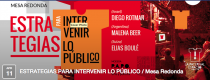
Participan: Diego Rotman (Israel) Malena Beer(Argentina) Elias Boulé (Suiza)
Modera: PAPO – Paternal: Arte y Política
El próximo Sábado 11 de Abril, LPEP invita a la primer mesa redonda del año 2015 :
” Estrategias para intervenir lo público”, donde artistas y gestores de diferentes países comparten sus experiencias en prácticas en contexto y espacio público.
INVITADOS
Diego Rotman (Israel)
Ofrecerá un panorama de los proyectos llevados adelante por el colectivo Sala-manca (Lea Mauas y Diego Rotman), haciendo foco en dos proyectos artísticos que son a su vez plataformas (Museo y Academia).www.mamuta.org // www.sala-manca.net
Malena Beer ( Argentina)
Presenta los proyectos que viene desarrollando desde 2012 : “Endless” y ” Un-Visible: performance para un performer, un espectador y un espacio”.http://www.malenabeer.net/
Elias Boulé (Suiza)
Presenta “Memorias de una deriva “, resultado de una deambulación, de un desplazamiento en el espacio a través de un viaje de seis meses en Asia. Relevamiento fotográfico, análisis arquitectural.
www.largescalestudios.com
Moderan:
Nicolás Herman y Renato Fumero
(Paternal Arte y Política – PAPO)
* Diego Rotman
Artista, curador e investigador.Integra el colectivo Sala-Manca, co-director del centro de arte Mamuta.Actualmente es becario del centro de investigación “Daat Hamakom” (Universidad Hebrea de Jerusalem)
* Malena Beer
Artista, coreógrafa y Socióloga. Desarrolla un trabajo creativo que interroga y actúa sobre los condicionamiento del cuerpo y la percepción de la realidad.Sus proyectos han sido presentados en el Palais de Tokyo (Paris), Wiels (Bruselas), Espace Louis Vuitton (Paris), entre muchos otros.
* Elias Boulé
Arquitecto, carpintero, fundador de la asociación “Largescalestudios”,
plataforma de intercambio y desarrollo independiente, dedicada a la investigación en torno al espacio de vida del ser humano y el futuro de las ciudades, en torno a los derechos humanos y el medio ambiente.
ORGANIZA:
PAPO / Paternal: Arte y Política
https://
ConJugar Ciudad
https://
La Paternal Espacio Proyecto
Residencia de Arte //Investigación y producción //Exhibición
Auspicia: Movimiento Inútil
Organiza: Núcleo de Estudios Judíos
Lugar: IDES, Aráoz 2838, CABA
Para solicitar el material y mayor información: estudiosjudios@ides.org.ar
Diego Rotman es investigador, artista y curador. Se doctoró en la Universidad Hebrea de Jerusalén con una tesis sobre performance y crítica cultural en el teatro de Dzigan & Shumacher (1927-1980). Actualmente es research fellow en la misma Universidad. Junto con Lea Mauas integra el grupo artístico independiente Sala-Manca, con base en Jerusalén. En 2009 fundó el Mamuta Art and Media Center.
Nadia Zysman se doctoró en Historia en la Freie Universität de Berlín. Actualmente se desempeña como investigadora asistente en la misma Universidad en el marco del Colegio Internacional de Graduados “Entre Espacios”. Se licenció en Ciencia Política en la Universidad de Buenos Aires y cursó una maestría en Historia en la Universidad Humboldt de Berlín.
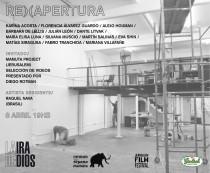
Presenting a selection of Israeli Video Art from the “Intersections” of the Jerusalem Film Festival at La Ira de Dios Buenos Aires, curated by Sala-manca:
Intersections (Israel Video Art)
from the Jerusalem Film Festival – Expermiental Cinema and Video Art Award (2010-2014)

Curated by Sala-manca artists group (Mamuta Art and Media Center)
Presented by Diego Rotman
Oryctolagus Cuniculus |Keren Shavit | 2010 | 7′
A group of men in long white coats congregate at the local community center basketball gym for the evaluation of 144 rabbits. The rabbit scoring highest in all categories is declared the winner.
Amir Yartsiv | Detroit | 13′
The title of the video is borrowed from this training area in the country’s southern region. “Detroit” is a 1:1 simulation of a Palestinian city. The simulation generates an alternative reality which conceals the true reality. The training city “Detroit” was intended to prepare soldiers for combat in an urban area. It resembles a Muslim quarter, thus meeting the users’ needs in a simulation which would furnish them with a fantasy of an Arab city.
Amitai Arnon, Esther Bires | Masks | 2014 | 12′
The film Masks was shot over 12 years during which Esther and Amitai documented two siblings at Purim festivities, dressed up as different characters and embodying various roles. In Purim, as in the carnival, sacred and sanctified things are legitimately parodied. For 12 minutes a partial portrait of the children’s growing up is presented, in states of abandon. Their adolescence and identity play is designated by the immediate surroundings of their life, the Israeli town of Ramla – according to the national and religious timetable and the growing children’s life cycle during the film.
Ohad Fishof | ABDUCTION | 2010 | 8:34
Based on an eponymous sci-fi story. Here, it is man who abducts the alien, and not vice versa.” The film and the story are a second part in a series of works, “Hoon,” which describes characters, sites, and events in the imaginary town of Hoon.
Dana Gillerman | Pornographic Collage | 2014 | 9:44
Ten women from diverse backgrounds were asked to watch a short porn film and
describe what they see. The viewing is via computer, filmed in Skype-like or porn-film style: intimate, domestic and unpretentious.
Sally Krysztal Kramberg | Je te vois | 2013 | 1:38
A video work that almost merges with the whiteness of the wall; a screwdriver emerges through a cardboard wall. The screwdriver pierces the surface separating it from the external world and opens a window that reveals nothing.
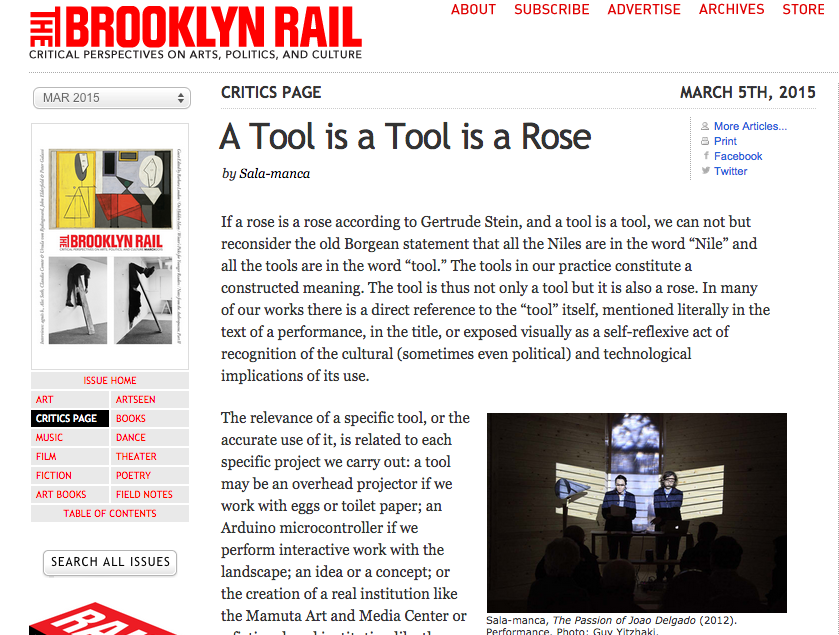
A new text by us (A Tool is a Tool is a Rose), published as part of the “Tools and Contemporary Art” by Barbara London in the Guest Art Editor section of The Brooklyn Rail
Lecture presented at the Fiction 5 Conference: “Art Tv”, Tel-Aviv University, 4.2.2006
On the borders between reality and fiction, telenovela and life, academy lecture and performance. A new approach to the works: “The History of Batya M.” (2006) and “The Return Home” (2013), by Sala-manca.
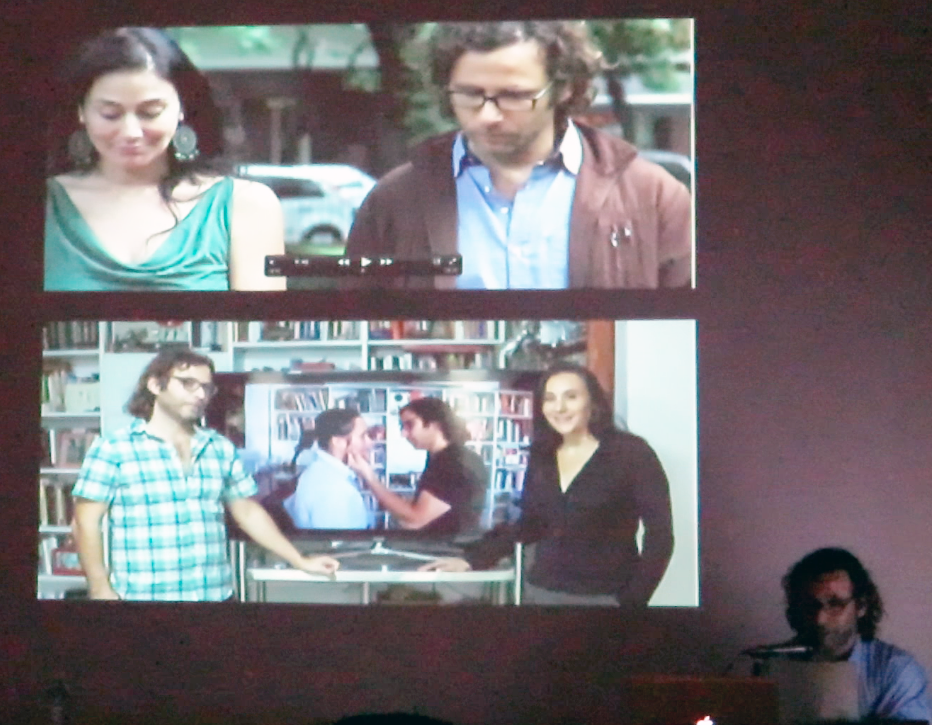
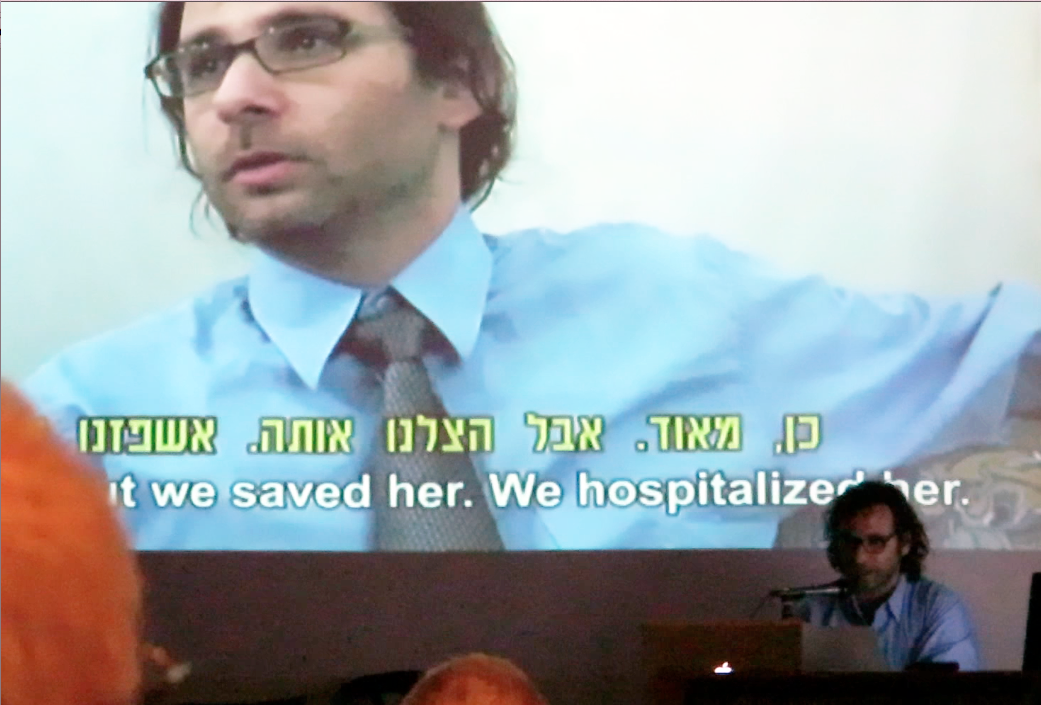
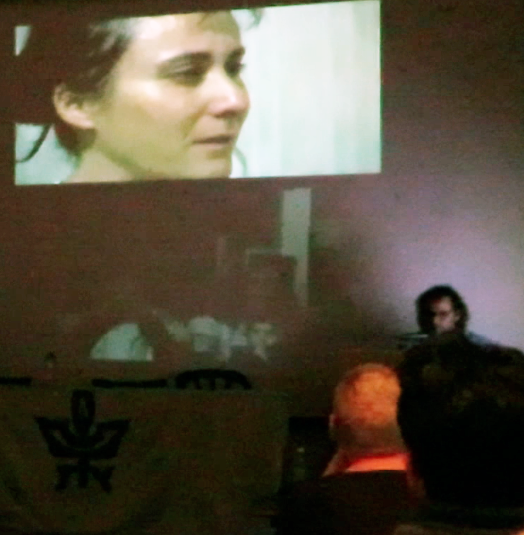
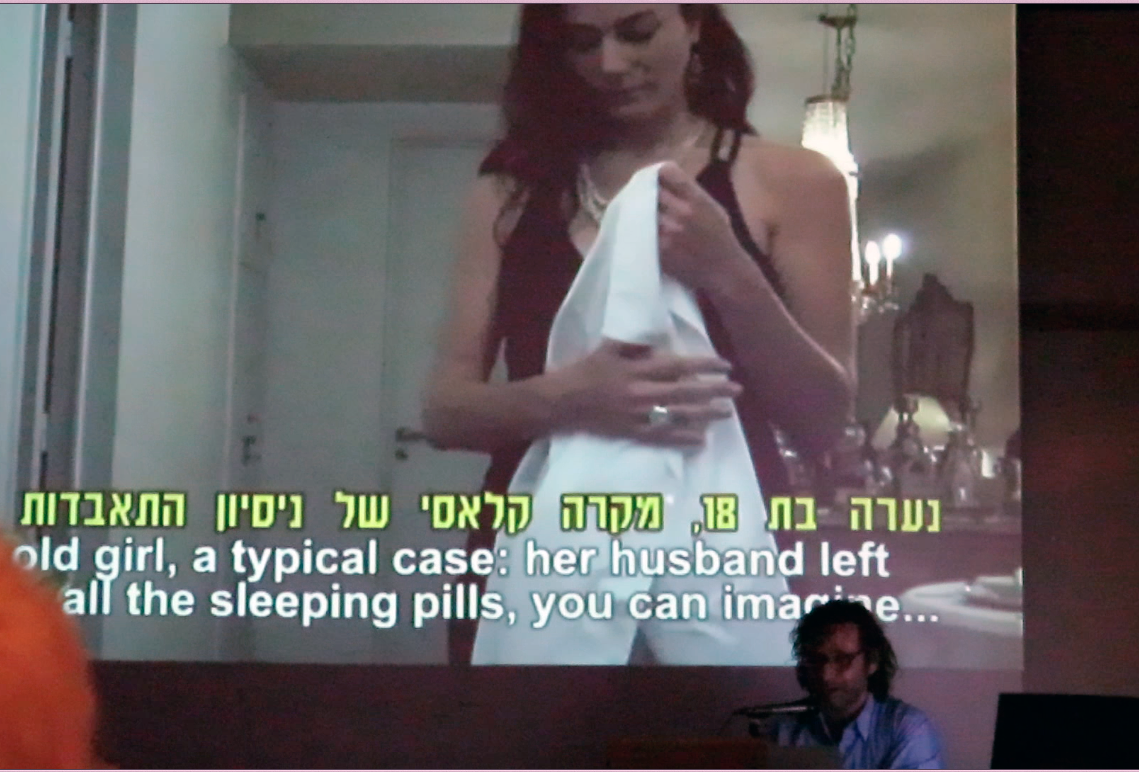
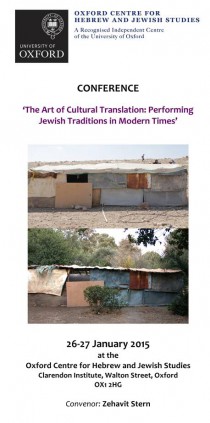
27.1.2015 | On the Architecture of the Ephemeral: The Eternal Sukkah of the Jahalin Tribe, Oxford, Diego Rotman, Oxford University in the frame of: The Art of Cultural Translation Conference

Mamuta at Hansen | Artists: Yeshaiau Raboinowitz, Itamar Mendes-Flohr, Sala-manca, Ktura Manor, Ester Bires, Amitai Arnon, Nir Yaalom, Adi Kaplan, Shahar Carmel, Hanan Abu-Hussein, Samuel Rotman | Curators: Sala-manca
Opening Hours: Monday and Thursday 10-15, Wednesday 17-21 and Fridays 9-12
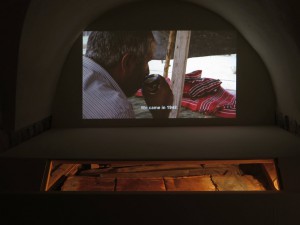 The Ethnographic Department addresses the link between an art museum and an ethnographic museum, between “fine” art and “folk” art, and the tension that exists between original, restoration, copy and adaptation. All of these are aspects central to the curatorial thinking that has guided the Museum of the Contemporary since its onset.
The Museum was founded in December 2009 at the Mamuta Center in Ein Kerem, in the home of Daniela Passal, formerly the home of Palestinian researcher Issa Manun and in the interim “absentee property”.  The first exhibition dealt with the museum as an institution, with the topography of Israeli memory, with the local historiography of the village Ein Karem and and with the home of the museum – the home of Daniela Passal. The Museum also developed a digital storage room of exhibitions which are not viewable on the net but are offered for downloading – each exhibition as a “package” for printing, exhibiting or re-installing – according to the physical and economic possibilities of the downloading body.
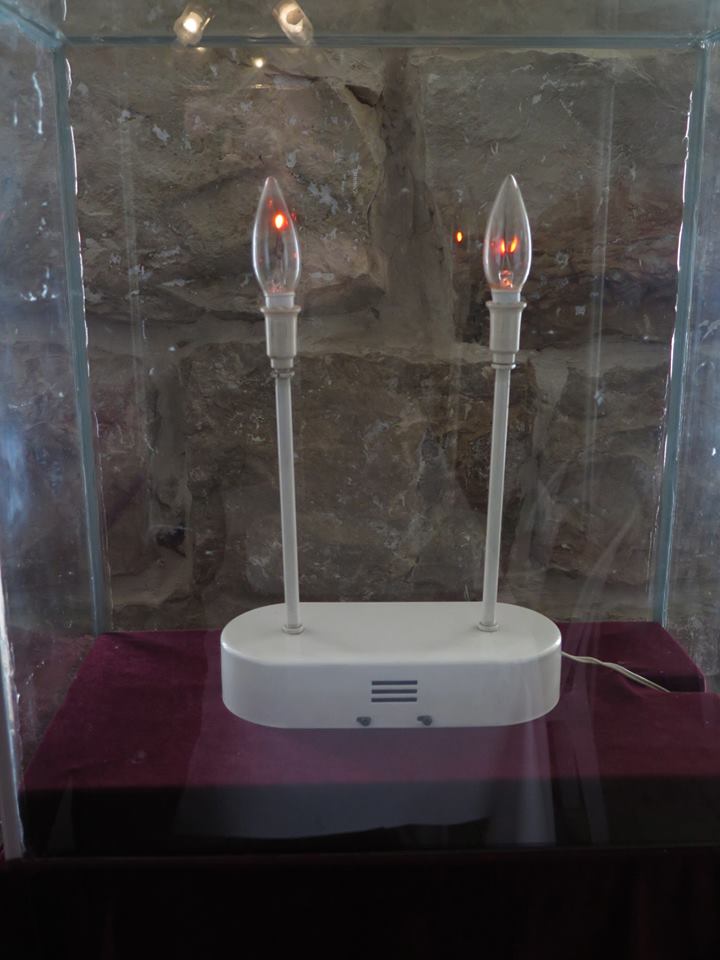 The Ethnographic Department also deals in part with the history of the structure in which it dwells. This is the Leprosarium Jesus Hilfe , founded as an isolatedrefuge for leprosy patients.
It was created by the German-Protestant Moravian community in 1867 and operated for twenty years in a building on today’s Agron Street, Jerusalem. In 1887 the institute moved to a new building in the Talbiya neighborhood of Jerusalem, planned by Konrad Shick. 
Press:
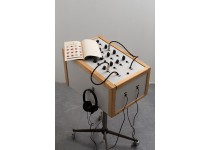
Formica and wood box, miniature printed circuit board (PCB), MP3 players, audio sockets and earphones, power supply, metal leg, two sofas from Casa Argentina, Jerusalem Text: João Delgado; music: Yarden Erez; electronic system: Amir Markovitz; programming
Exhibited in the frame of Recalculating Route at Petach Tikva Museum of Art, in theframe of the 4 Mediations Biennale, Poznan, 2014 | 2.10.2014-24.1.2015
Curator: Drorit Gur Arie

The spirit of João Delgado has been haunting Diego Rotman and Lea Mauas, members of the Jerusalem-based Sala-Manca Group, for fifteen years. A Portuguese poet, writer, playwright, and essayist, Delgado was, in all likelihood, born in Lisbon (date unknown) and disappeared in Argentina in the second half of the 1970s, in the dark years of the Generals’ regime. Like the circumstances of his disappearance, his life was equally shrouded in mystery, and little is known about it. Years later, his post-realist poetry has had a vast impact on late 20th century Latin-American literary avant-garde, but Delgado himself did not live to see it, since the political circumstances—the censorship placed by the military junta in Argentina—and his own choices interfered with the reception of his works by the public at large. His writing was confusing, and he often used fictive aliases which further blurred his identity. In literary terms, Delgado was a modernist who addressed the formal questions of writing (like Georges Perec and the Oulipo group): the author’s identity, the gap between the text and the world, and the illusions of fiction and reality. In this he joined other, more senior, contemporary modernists, from the Argentinean Jorge Luis Borges and Portuguese Fernando Pessoa to the Hungarian Lajos Kassák, whose Cubist poetry from the 1930s and 1940s had influenced Delgado when he lived in Central Europe.
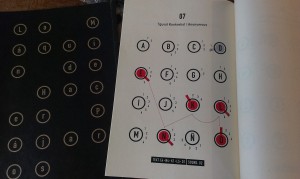
The members of the Sala-Manca Group, in their joint work as artists, curators, and activists, often revisit Delgado’s figure, publishing translations of his work and incorporating excerpts from his unfinished plays into their performances. The return to Delgado, the eternal migrant who wandered until he disappeared, is linked with Rotman’s and Mauas’s personal immigration experiences and the need to discover new territories through language and the act of writing.
The work La Maquina de Hacer Pájaros (‘The Bird-Making Machine,’ as the name of an Argentinean rock band which formed in 1976, in the dictatorship days) is yet another chapter in the quest after the Portuguese-Argentinean writer. The viewer-listener is given the opportunity to wander amid excerpts of text by Delgado and other writers of his alleged circle, such as Juan Mestre, Regina Handeke, Irina Pantalova, and Arturo Maure, who may well have been none other than Delgado himself. This wandering is akin to a journey through the soundtrack of a literary microcosm, comprised of fragments of texts, sounds, and linguistic images. The listener is invited to try to compose the narrative as s/he pleases, to believe the story in whose making s/he took part, or disbelieve it altogether.
One of the legends associated with Delgado maintains that he made his way from Portugal to Argentina with the aid of a map of the Atlantic Ocean which he adopted from a Lewis Carroll book. Whether and how he arrived at his destination—no one knows. João Delgado is, in fact, a fictive entity, a figment of Rotman and Mauas’s imagination; at the same time, like them—who create in-between the splinters of their Latin-American and Israeli identities, in-between the language from there and the one they have adopted in Jerusalem—he is totally real.
Drorit Gur Arie
‘This report on the Bedouin communities residing east of Jerusalem describes their present situation in terms of physical and planning considerations, as well as the life and daily existence of their residents. These communities have for many years faced ongoing threats of uprooting and deportation, due to a policy that seeks to concentrate all of the Bedouin communities in the region into a single community in the eastern outskirts of greater Jerusalem, near Al-E’izariya. Administratively, the area is located within Area C, as determined by the Oslo Accords, such that the residents of these Bedouin communities are under Israeli sovereignty, and the State of Israel, through the Civil Administration, is solely responsible for their living conditions and welfare and for devising acceptable solutions to ensure that their rights are upheld.”
[for further info: http://bimkom.org/eng/wp-content/uploads/jahalin/index.htm]
המחלקה האתנוגרפית (תערוכה), המוזיאון של העכשווי, בית הנסן, ירושלים
 תערוכת האמנות המוצגת ב”מוזיאון של העכשווי” של קבוצת סלה-מנקה, נוצרה בהשראתה של המשלחת האתנוגרפית שהוביל ש. אנ-סקי בתחום המושב היהודי בשנים 1914-1912. אנ-סקי שגדל בסביבה מסורתית פנה לסוציאליזם מהפכני, חי עם פועלים רוסים, ובעקבות מהפכת 1905 ומפגשו עם ספרות יידיש המודרנית, גילה מחדש את המסורות העממיות היהודיות. את חמש-עשרה שנות חייו האחרונות הקדיש ליצירה ביידיש ולמחקר של פולקלור יהודי, מתוך אמונה כי מהזהות העממית ניתן להצמיח תרבות מודרנית חופשית וצודקת. בזמן שהמשכילים נטו לבוז לתרבות העממית, והציונים ביקשו להחליף את תרבות הגולה המנוונת בתרבות לאומית גבוהה שמקורות השראתה תנכיים או כנעניים, פנו יידישיסטים כמו אנ-סקי דווקא אל המסורות העממיות מתוך אמונה באדם ובכוח החיים של העם הפשוט.
התערוכה “המחלקה האתנוגרפית” עוסקת גם היא בניסיון להצמיח זהות מודרנית חופשית וצודקת מתוך התבוננות אתנוגרפית במציאות הישראלית והפלסטינית. היא מתייחסת בנוסף לכך לחלל המיוחד בו היא ממוקמת – בית החולים למצורעים “עזרת ישו” שנבנה במאה התשע-עשרה ובשנים האחרונות הפך לבית אמנות פתוח ותוסס בירושלים. התערוכה ממוקמת בקומת הקרקע של המבנה הישן שקירות האבן העבים שלו והתקרות המקושתות, כמו גם שרידי המתקנים השונים ששרתו את בית החולים, יוצרים חלל בעל אווירה מיוחדת.
חדר אחד בתערוכה הפך בידיהם של ניר יהלום, סלה-מנקה וסמואל רוטמן ל”טיש”, מחווה לסעודה החסידית בחברתו של הרבי המהווה את שיאה של השבת בקהילות חסידיות רבות. החדר המצויד בשולחן וספסלים, טריבונות מעץ, וגם נרות שבת חשמליים, הוא מעין עבודת שימור אתנוגרפית, אך האמנים מבקשים להפוך אותו לחלל שבו יתקיימו סדנאות במהלך הצגת התערוכה, וכך להפוך אותו שוב ממוצג מוזיאלי למסורת חיה.
 יצירות שונות בתערוכה מתייחסות ישירות לעבודתו של אנ-סקי. ביצירה “שורש זר” גילמה שירה בורר בתוך החומר את הניגון החסידי הפותח את המחזה “הדיבוק” של אנ-סקי. הניגון החסידי שואל את שאלת השאלות של הקיום: “מפני מה ירדה הנשמה מאגרא רמא לבירא עמיקא?” ותשובתו הנותרת סתומה לא פחות היא: “הירידה צורך עליה היא.” על מפה לבנה צחה כתבה האמנית את המלים “על מה ולמה” בכתב בלתי נראה. לאחר מכן גילפה אותיות בסלק והניחה אותן על המפה עד שיצרו את המלים “יורדת הנשמה”. נוזלי הסלק האדומים כדם התפשטו ויצרו כתמים עזים על המפה ואגב כך חשפו את השאלה הסמויה הכתובה עליה. אך הסלק (הו הסלק, מלך המטבח המזרח אירופי) כמו גוף האדם שבו כלואה הנשמה, אינו קיים לנצח. הוא מרקיב ומעלה עובש ומלות הניגון המגולפות בו הולכות ומשתבשות ככל שנוקפים הימים בתערוכה.
בעבודת הווידיאו “מסכות” (אמיתי ארנון, אסתר בירס) עקבו האמנים אחר תחפושות הפורים של שני אחים ישראלים במהלכן של שתים-עשרה שנים. כמו אנ-סקי שתיעד את מנהגי היהודים מתעדים האמנים בעבודה זו את מנהגי הישראלים. אך לצדו של המבט האמפתי על המציאות הישראלית ניכרת גם התבוננות ביקורתית – הילד בן השמונה מתחפש לחייל והמבוגרים מלמדים אותו פרק בתורת לחימה צה”לית, הבת מתחפשת לכלה או למלצרית, הבן מתחפש למחבל מתאבד ומעמיד פנים שהוא מתפוצץ ביחד עם אחותו שהתחפשה לפייה, ובפורים אחר הם מוטרדים מתקינותם של מסכות מסוג שונה לגמרי – מסכות אב”ך.
עבודת הווידיאו “סוכת נצח” המוצגת בחלל אחר בתערוכה עוסקת בהעתקתו של צריף בדואי של שבט ג’הלין ממדבר יהודה אל בית הנסן בירושלים. האמנים, קבוצת סלה-מנקה ביחד עם איתמר מנדס-פלוהר וישעיהו רבינוביץ’, התבקשו להקים סוכה בחצר המתחם והחליטו לשוב אל מקורותיה של המצווה המזכירה לתושבי הארץ המבוססים את ימיהם כנוודים במדבר, ובאמצעות זאת את הצורך באמונה ובמוסר כגורם מאזן לתחושת “כוחי ועוצם ידי” הנובעת מהביטחון שבממלכה החזקה. האמנים פירקו צריף בכפר של שבט ג’הלין, שמקום מושבו אינו מוכר בידי מדינת ישראל, והקימו תחתיו צריף חדש ויציב יותר. את הצריף המפורק העתיקו בהעתקה קפדנית לחצר בית הנסן והפכו אותו שם לסוכה ירושלמית. אולי כמעין פרודיה על הפנטזיה הציונית להפוך לבדואים, ואולי דווקא כקריאה רצינית להתבוננות פנימית בשורשי הציונות, כפרויקט המשיב את הפוליטי ואת האנושי למרכזה של החוויה היהודית, באופן העולה בקנה אחד עם תפישת עולמו של אנ-סקי.
שתי עבודות נוספות בתערוכה, של האמנים חנאן אבו חוסיין ושל ישעיהו רבינוביץ’ מתייחסות לאוסף הקמיעות של תאופיק כנעאן, שהיה מנהלו של בית החולים בין השנים 1948-1919. לצד עבודתו כרופא בבית החולים הגרמני ובבית המצורעים היה כנעאן חוקר פולקלור פלסטיני וחיבר מספר ספרים על המסורות העממיות של בני הארץ. הצבת עבודות המתייחסות לאוסף הקמיעות של כנעאן בתערוכה שנוצרה בהשראת המשלחת האתנוגרפית של אנ-סקי יוצרת קשר מרתק בין שני האישים האלה, שהרי הפרויקטים שלהם דומים להפליא. כנעאן כמו אנ-סקי ביקש ליצור זהות לאומית מודרנית מתוך הפולקלור העממי ההולך ונעלם שלוקט בעמל רב, ואנ-סקי כמו כנעאן ביקש להוכיח באמצעות הפולקלור הזה כי לעמו זכות קיום כמו לשאר העמים. מעניין כי בין שאר הנושאים בהם טיפל כנעאן הוא כתב גם על האמונה בדיבוק בידי שדים, וכרופא ביקש להציע לה הסבר פסיכולוגי.
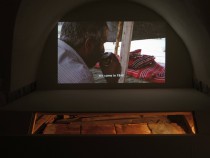
 בחלל הקולנועי הנהדר בקצה התערוכה מוקרנים שני סרטים – הסרט המוקומנטרי “הגולם” (עדי קפלן ושחר כרמל) העוסק בהברחתו של הגולם מפראג לישראל לאחר הקמת המדינה, ונוסח “מקוצר ומשופר” של הסרט היידי “הדיבוק” (פולין, 1937) שנוצר על פי המחזה של אנ-סקי. הסרט המוצג גם הוא עבודה של עדי קפלן ושחר כרמל, שחיברו פסקול חדש לסרט בהשראת ה”מולדבה” של סמטנה, וחתכו את סופו, כך שהדיבוק לא מגורש ולאה לא מתה. סוף אלטרנטיבי מפתיע ומטריד. קולה של היידיש החיה מהדהד היטב מחללו של אולם זה.
Interactive installation and questionnaire
Exhibited at The Ethnographic Department, 2015
Concept: Sala-manca | Programmer: Guy Yitzhaki
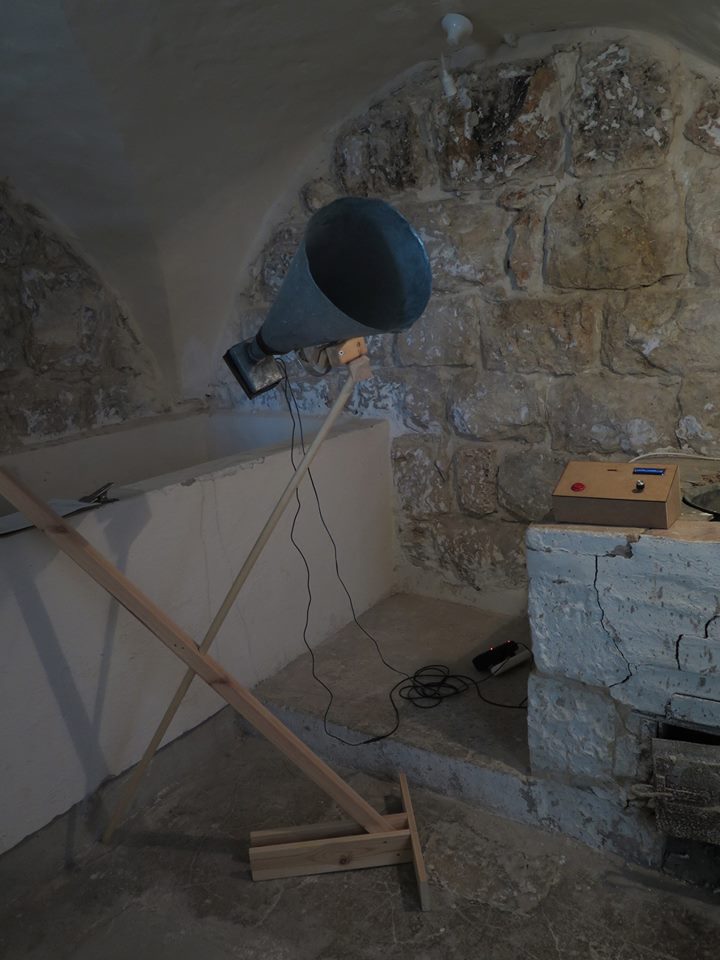
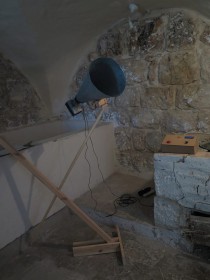
“Real time” is an interactive machine that makes part of the sounds shaping Israeli time and pacing conduct according to one’s awareness of the sanctity and meaning of time on the Sabbath, Memorial Day, Holocaust Memorial Day and in times of emergency and war.”
This work is a sound archive that requires the visitor to pay for its function. The price of working the siren is set according to a criteria hierarchy, moving between 5 and 12 NIS.
Towards an updated ethnographic questionnaire (following S. An-ski)
28 First Questions