WordPress database error: [DELETE command denied to user 'sala-manca'@'localhost' for table `sala_manca_net`.`wp_options`]
DELETE FROM `wp_options` WHERE `option_name` = '_site_transient_wp_theme_files_patterns-3e81fb819c0831df69203ee558a709b9'

WordPress database error: [DELETE command denied to user 'sala-manca'@'localhost' for table `sala_manca_net`.`wp_options`]
DELETE FROM `wp_options` WHERE `option_name` = '_site_transient_timeout_wp_theme_files_patterns-3e81fb819c0831df69203ee558a709b9'

WordPress database error: [INSERT, UPDATE command denied to user 'sala-manca'@'localhost' for table `sala_manca_net`.`wp_options`]
INSERT INTO `wp_options` (`option_name`, `option_value`, `autoload`) VALUES ('_site_transient_timeout_wp_theme_files_patterns-3e81fb819c0831df69203ee558a709b9', '1792712700', 'off') ON DUPLICATE KEY UPDATE `option_name` = VALUES(`option_name`), `option_value` = VALUES(`option_value`), `autoload` = VALUES(`autoload`)

WordPress database error: [INSERT, UPDATE command denied to user 'sala-manca'@'localhost' for table `sala_manca_net`.`wp_options`]
INSERT INTO `wp_options` (`option_name`, `option_value`, `autoload`) VALUES ('_site_transient_wp_theme_files_patterns-3e81fb819c0831df69203ee558a709b9', 'a:2:{s:7:\"version\";s:3:\"4.0\";s:8:\"patterns\";a:0:{}}', 'off') ON DUPLICATE KEY UPDATE `option_name` = VALUES(`option_name`), `option_value` = VALUES(`option_value`), `autoload` = VALUES(`autoload`)

WordPress database error: [INSERT, UPDATE command denied to user 'sala-manca'@'localhost' for table `sala_manca_net`.`wp_options`]
INSERT INTO `wp_options` (`option_name`, `option_value`, `autoload`) VALUES ('_transient_doing_cron', '1792710900.1387250423431396484375', 'on') ON DUPLICATE KEY UPDATE `option_name` = VALUES(`option_name`), `option_value` = VALUES(`option_value`), `autoload` = VALUES(`autoload`)

Sala-Manca – Page 6

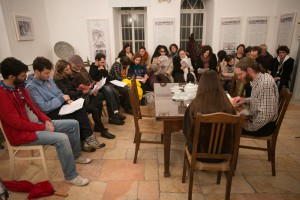
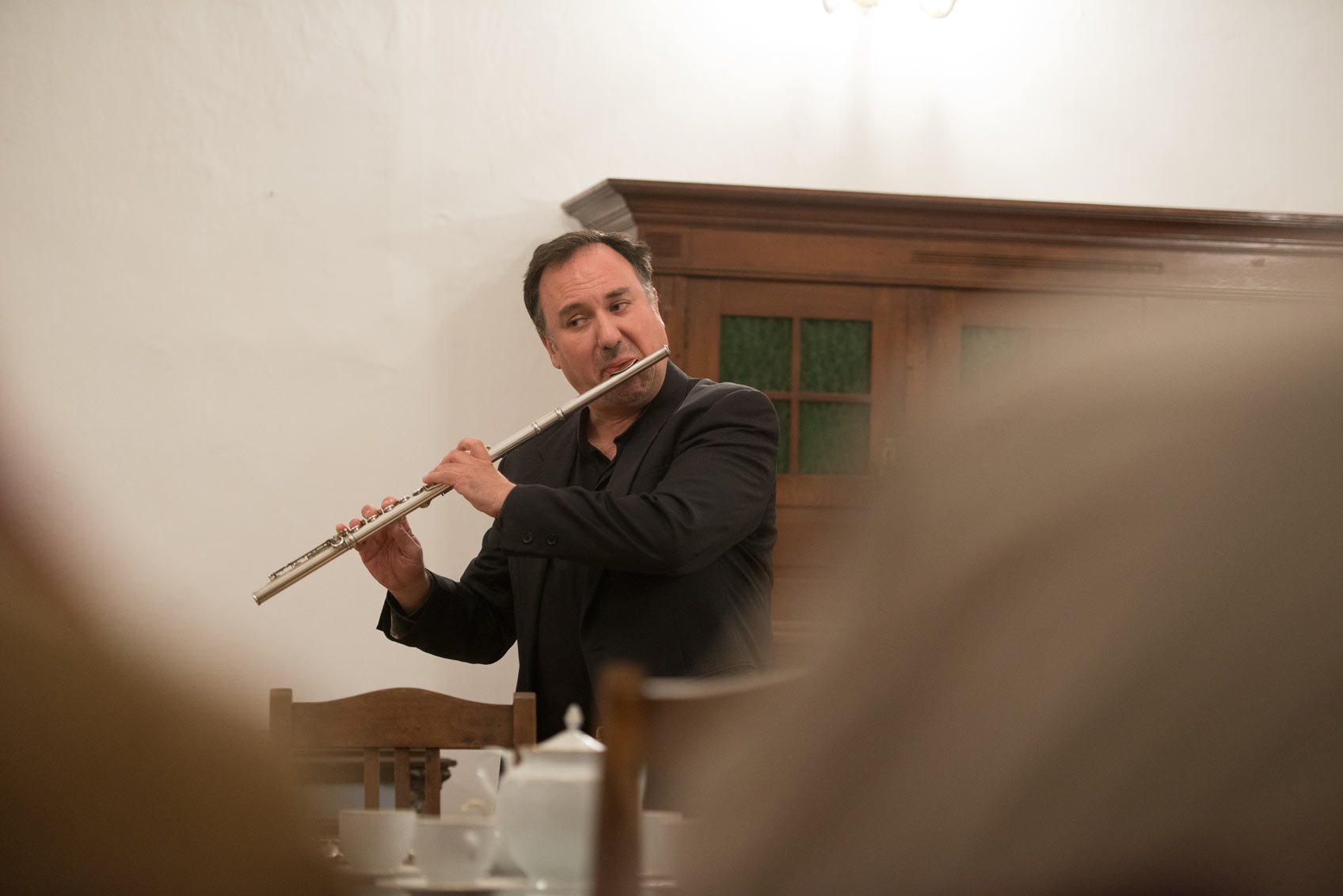
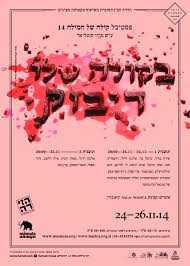
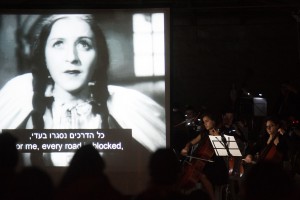
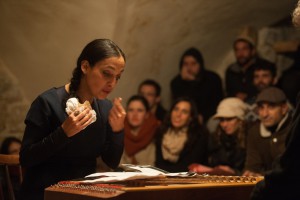
In his/her Voice | The Voice of the Word Performance Festival, 2014

Participating Artists: Adi Kaplan, Shachar Carmel, Tom Soloveichik, Alex Drool, Josef Sprinzak, Carmel Bar, Li Lorian, Adam Yodfat, Victoria Hanna, Noam Inbar, Shira Borer, Jerusalem Conservatory Chamber Orchestra with Conductor Michael Klinghoffer, Ilan Volkov, Zohar Shafir, Tomer Damsky, Eran Sachs, Maya Dunitz

Curators: The Sala-Manca Group and Guy Biran
imgres-2

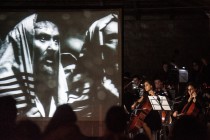
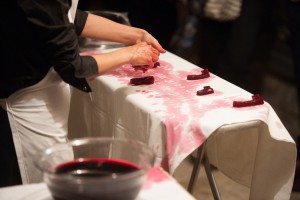
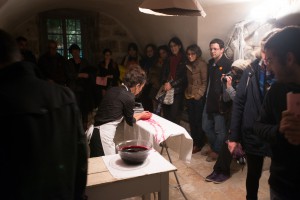
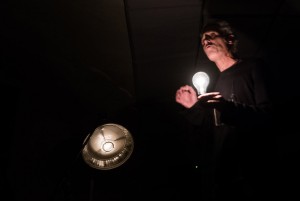
The 14 Kola Shel Ha’Mila Festival Named after Mario Kotliar Bekola Shelo Dybbuk   The Hazira Performance Art Arena’s flagship festival, now in its 14th year, examines the relationship between word/text and performance art. This year, the festival is being held in participation with the ‘Mamuta’ Center for Art and Media at Hansen House.   in the photo: Joseph Shprinzak   The dybbuk (an evil spirit in Jewish folklore) phenomenon, through Ansky’s play, is the basis and inspiration for this year’s Kola Shel Ha’Mila festival (The Voice of the Word). The Mamuta spaces at Hansen House, formerly a leper colony, are transformed into an area for challenging one’s spiritual transformation, as a metaphor for the ancient building’s newly designated mission. In Kola Shelo, Hansen House is granted the suppressed forces of experience, which connect past and present, art and ritualism, healing and performance. The dybbuk is an external force that penetrates the human body and causes it to behave erratically. According to tradition, the dybbuk is the spirit of a deceased person, which takes over a live body and speaks through it in another voice. The dybbuk is a way of coping with harsh social situations, voice dissent, for which the afflicted have no words, and reveal dark occurrences from a community’s past.
00185_0000179_00

Maybe it’s because the Leper Hospital was previously known as “Jesus Hilfe”, or,”Jesus Help Asylum”, and it reminds us of two of Jesus’ qualities – healing and banishing demons; maybe it’s because in 1950 a different, political and ideological spirit possessed the building, and it was decided to change the hospital’s persona and rename it after Dr. Hansen, who discovered Leprosy’s origin and seemed,  to  the building’s new owners (Israel’s Health Ministry) , like the right spirit for the public body they now represented; maybe it’s because the Leper Hospital lost its function, became an arts and technology center, and was named “Hansen House”, as if it is the home of the spirit that replaced Jesus; maybe it’s because today, instead of the lepers, artists and students are the ones who live in the building, and sometimes challenge the local cultural hegemony; maybe it’s because one hundred years have passed since S. An-sky’s ethnographic expedition, where he collected a part of the stories that functioned as the play’s basis, and a hundred years since the play’s first drafts were written in Russian and Yiddish; maybe it’s because of all these things, separately or together, that we decided, as a part of the “The Voice of the Word 14” festival, to return to one of the most profound traditions in Jewish culture, to dwell on an external spirit which possesses the body of a flesh and blood human being: the Dybbuk.
00062_0000061_00

“Into the body of a living human being, with an individual, distinct soul, enters at a certain point in his life another soul – the soul of a person who died prematurely and was seen as a sinner so terrible, even entering hell was deprived from him, and he remains between two worlds, haunted and tortured by angels of destruction […] the Dybbuk seeks a refuge from its persecutors and enters the living body against its will, seizing  it, sticking to it, possessing it and speaking  from the mouth of the person possessed as a distinct personality” (Rachel Elior). Yoram Bilu writes that the urges and aspirations that stand at the base of this disorder were challenges that threatened the traditional Jewish lifestyle.  The play was written during the years 1912-1917 in Russian and Yiddish, and was inspired by the traditions and stories of the Dybbuk that An-sky collected when he was the head of an ethnographical expedition to Volhynia and Podolia. The play was performed many times by different groups, and through the years became a canonical play in Jewish theater’s history, in Yiddish and in Hebrew.
00239_0000239_00

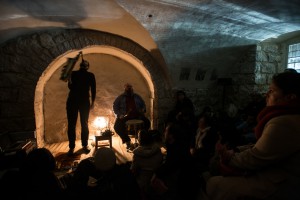
“The Voice of the Word” festival deals with the connection between the text and its performative aspects. In “His Voice in Her: Dybbuk” we suggested a refraction of the play using its motives, texts, or characters. Each of the parts the artists chose takes place in the historical building the architect Conrad Schick designed. The play, whose acts develop on a timeline, develops in the festival with its dispersal throughout the different spaces: Time becomes territory.
00269_0000220_00

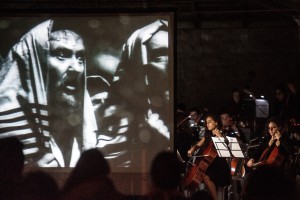
Divorce ceremonies, interpretations using auditory activities and works, mechanical theater, mixes of sounds and images, archived material and live happenings,  edits of old movies mixed with live performances of a youth orchestra – all these give one of the Jewish theater’s classic plays in Hebrew and in Yiddish a modern take. The artists once again bring up questions on ownership, on national and gender identity, on possession, on sound and spirit and on the spirit of time and convey a feeling that must be similar to the one created during the play’s performances in the 1920’s: The feeling that one world of values is disappearing, and a new one is taking its place.
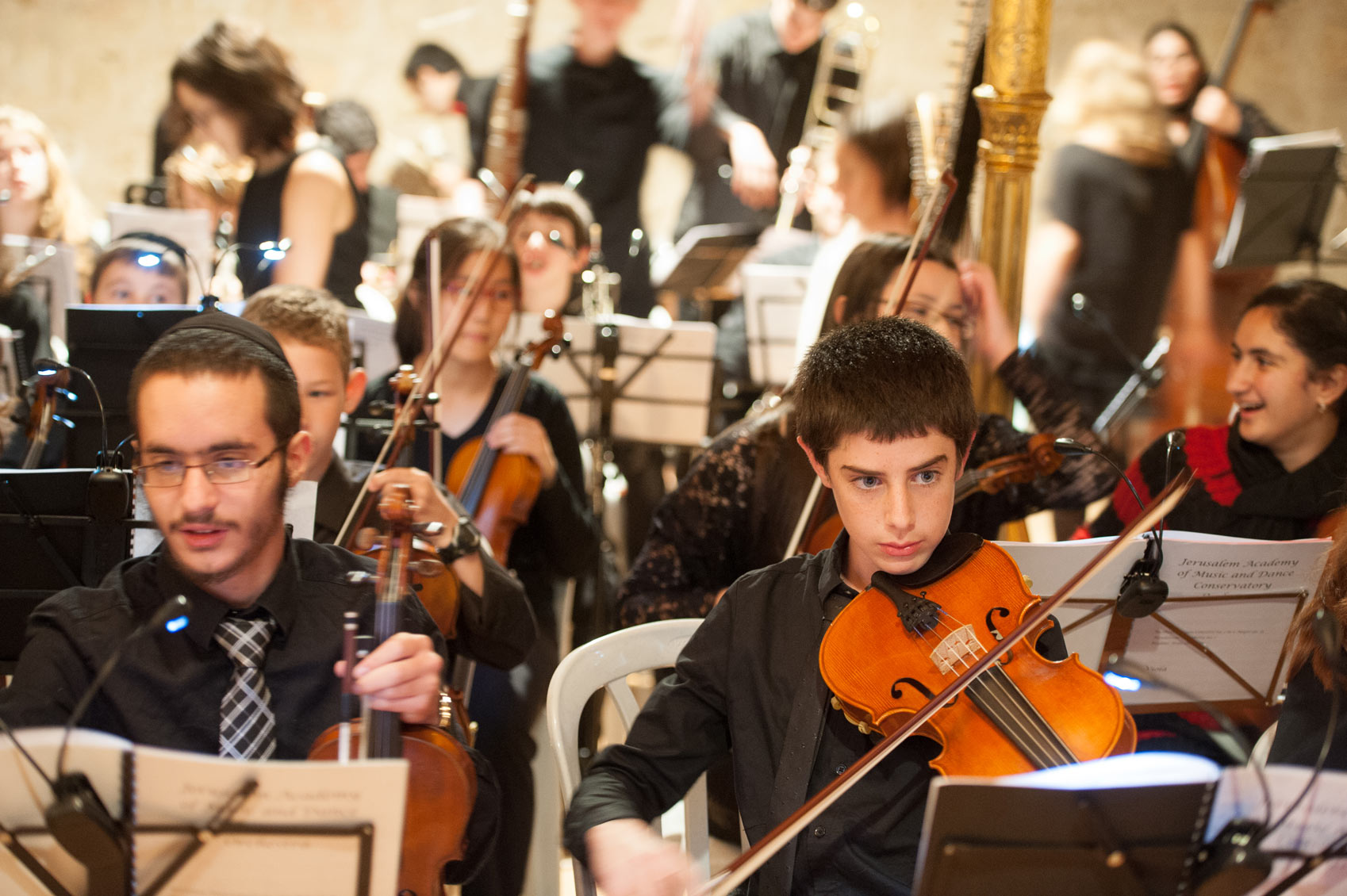
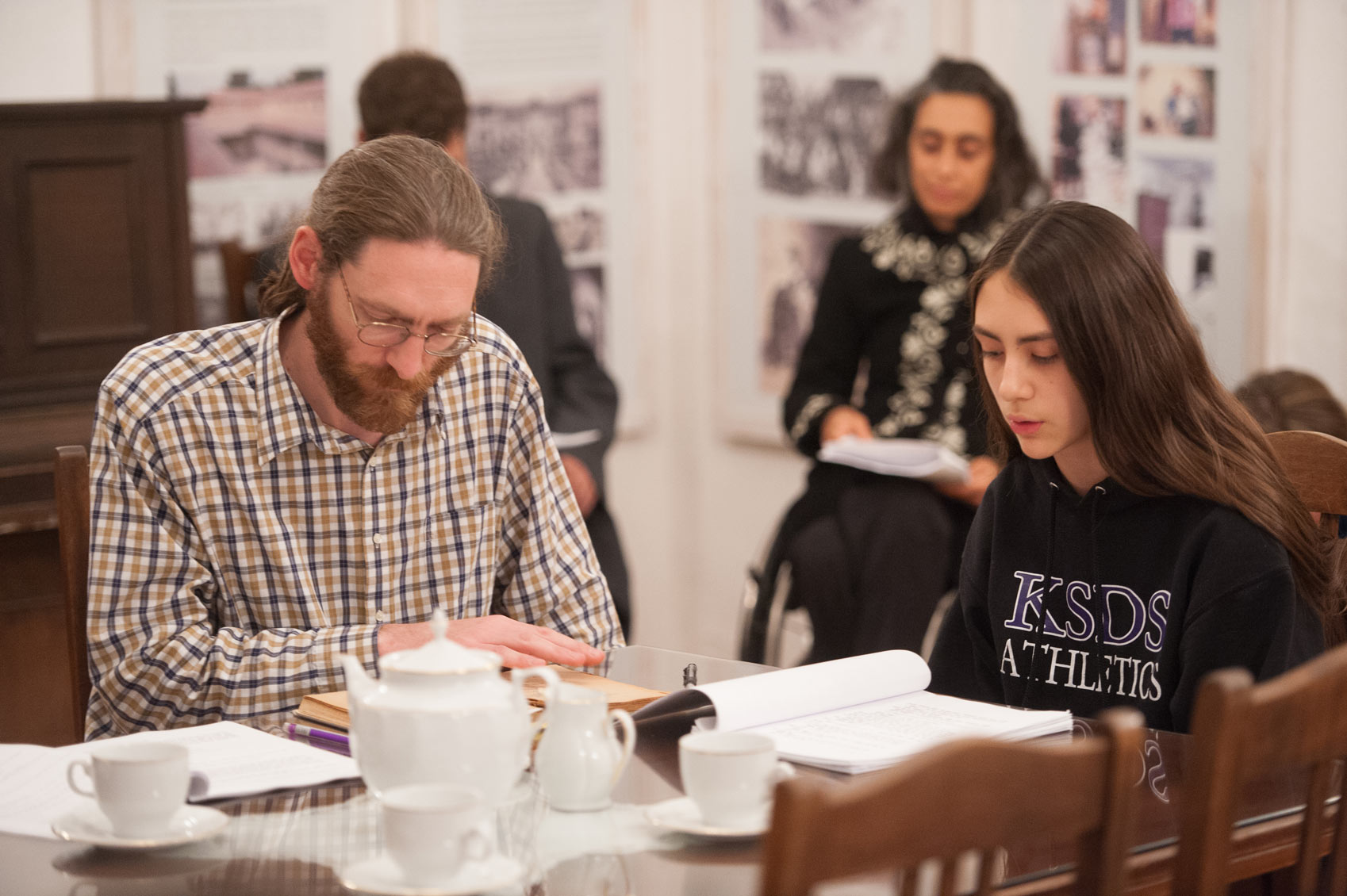
 

00020_00 00160_0000170_00   00040_00

00163_00

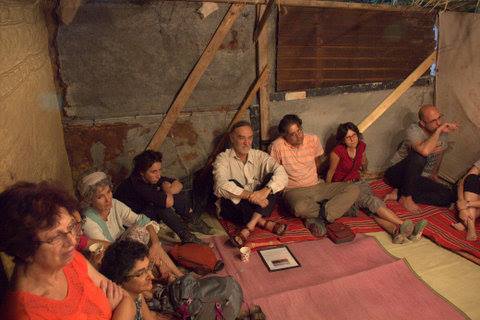
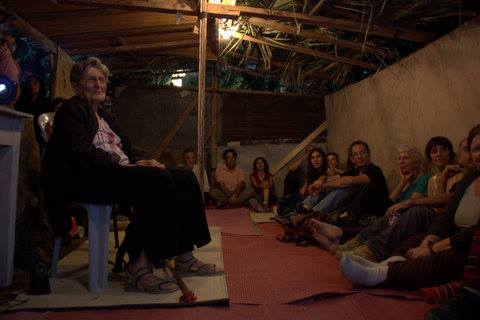
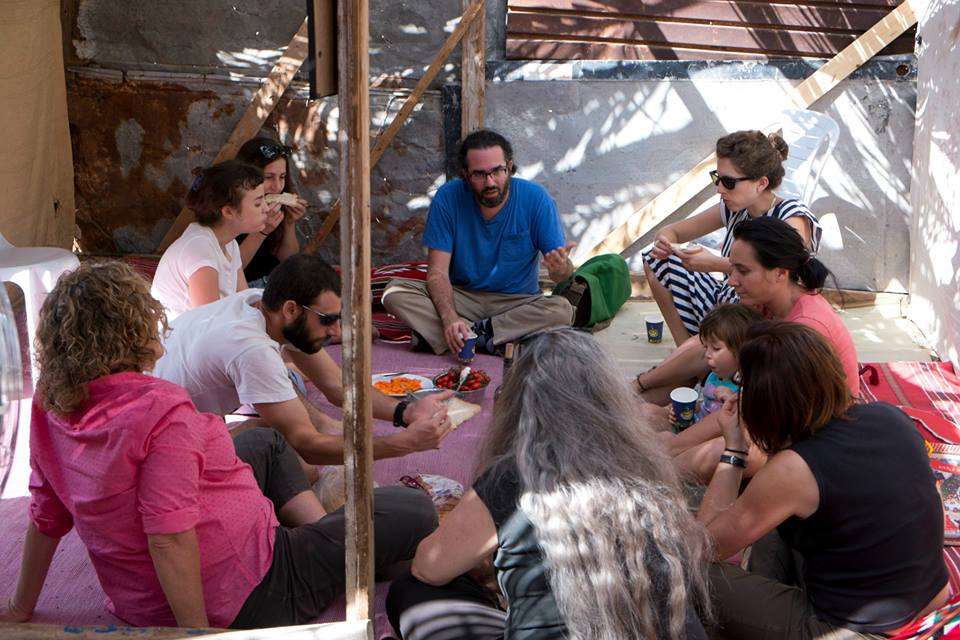
Events held at the Sukkah in Hansen and at the Jahalin’s Village

Events organized at the Eternal Sukkah in Hansen

“It’s a kosher sukkah, and dwelling in it during Sukkot totally transforms the mitzvah – emotionally, socially, politically – into a more religious act than I’ve ever felt.”(Rab Jeremy Milgrom)

10686597_934385039908255_3550126091747494816_n 1384263_934385256574900_4879013819683800142_n

10671215_10152766927448270_1606643842573125113_n

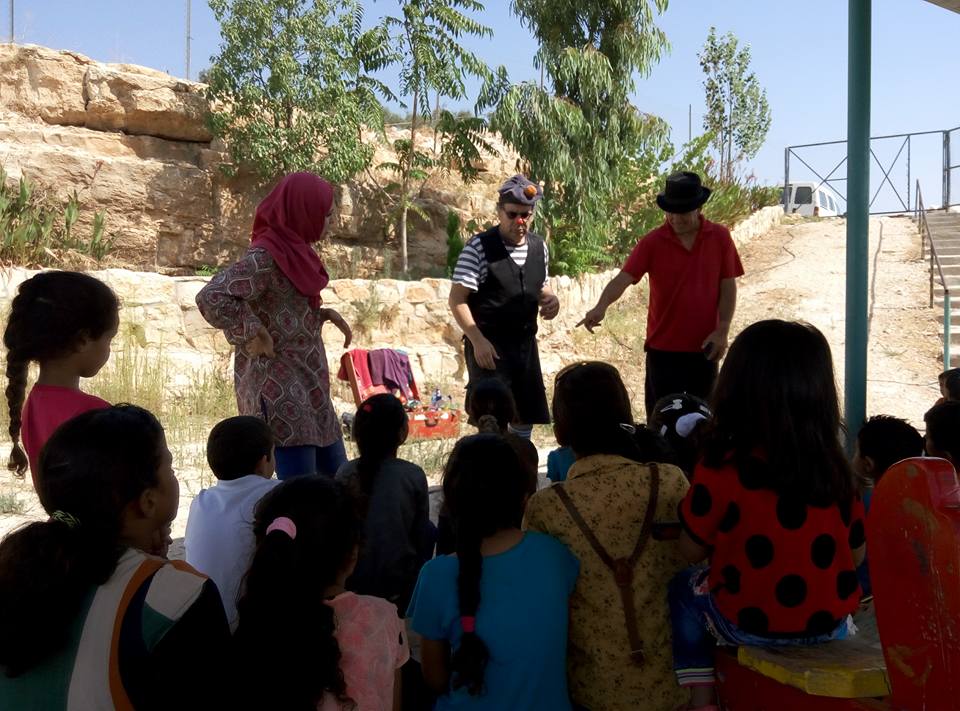
Events organized at the Village


  • Youval and Tal in the Village in the frame of the Puppet’s Van project, August, 2015

11900024_1126784844001606_9057004019152523016_n


  • Screening of the documental film about the Eternal Sukkah
  • Screening films for kids in Arabic

The Underground Academy, Open Studio, 2014

The Underground Academy – The Academy of the Contemporary

Open Studio Exhibition in the frame of Manofim 2014

Artists: Chen Cohen,  Ktura Manor, Itamar Mendes-Flohr,  Sala-Manca, Yeshaiau Rabinowitz, Yoel Regev, Maytal Rotenberg, Ayelet Zohar

10547754_823629837679754_952350159024582472_o
Ayelet Zohar
10733767_823630177679720_4776509276133093047_o
Yeshaiau Rabinovitz
1920602_823628297679908_7569762044895922254_n
Ktura Manor
10379511_823631551012916_4169108278609574908_o
Maytal Rotenberg

In 1963 Portuguese poet João DelgadoIn wrote, in an unpublished manifesto, that all museums, universities and sports clubs should be closed for at least one year, in order to reopen a year later.  After Delgado locked two municipal museums with his own locks, he was arrested.  In jail he wrote the outlines for The Academy of the Contemporary.

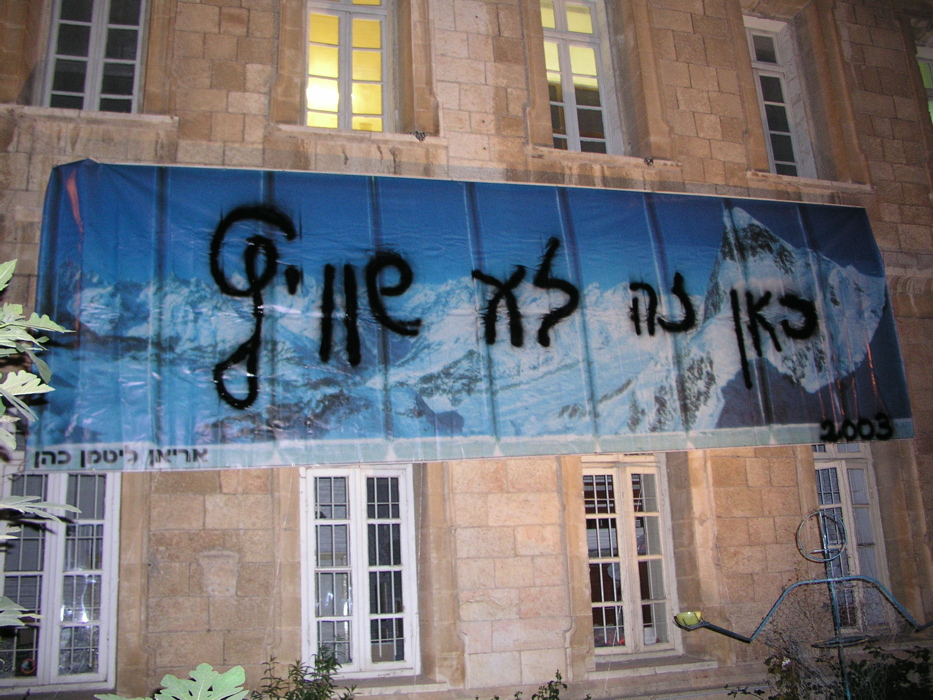
Heara art events:’Here it is not Switzerland’, Ariane Littman, 2014

Heara art events:’Here it is not Switzerland’, 2014

Or some thoughts about the Heara’s art events in Jerusalem

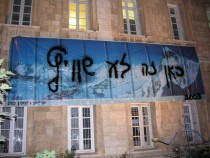
The Heara (comments) multidisciplinary art events orchestrated by Lea Mauas and Diego Rotman of the Sala-Manca art group  that took place in Jerusalem during the years 2002-2007, in the midst of the Second Intifada, and involved hundred of artists who exhibited site-specific works in significant sites throughout the city, were the most fascinating art events in which I took part. It was during these events that I did my first performances and that I collaborated with other artists to create works of art. Those events enhanced my perception that Jerusalem was the geographical place I would choose in order to express my art without having to run to Tel Aviv to present my portfolio to curators hesitant to drive beyond the Sha’ar Hagai’s junction. It increased my awareness that art should not dwell into Kantian Disinterestedness, but should instead be rooted into the political and the ethical of a ‘here and now’. It was at a time when, with almost daily suicide bombings and the building of the Wall around Jerusalem, the political conflict entered my art more directly consequently to my work as a free-lance news photographer. ‘Here it is not Switzerland’, with black graffiti in Hebrew written over a huge banderol showing Lindt chocolats snowy Alps’ peaks hanging on the facade of the Sergey Coutyard, created the link between my pastoral country of birth, art and the ‘here and now’ that did not allow me to make blind aesthetic choices detached from the actual context. The banderol was exhibited at the art happening ‘Migrashim Harousim’ (2003) together with two Jerusalem Scrolls showing the Separation Wall in Abu Dis. The event was organised by Lea and Diego in response to Art Focus, the international art biennial, taking place nearby at the Museum of Underground Prisoners.

The Heara events offered the artists the challenge of learning about and ‘reacting’ to the history of a building, bringing together past and present into a work of art, a possibility that could not actualise in the more respectable yet dull ’White Cube’ museum space. During these events, I also discovered the power we had, we the artists, as a group of creative individuals thirsty to express ourselves without being dependant on the dominant institutions and without having to pursue a ‘courting ballet’ with its curators. In the midst of the Intifada, and afterwards, there was still a reason to create and exhibit in Jerusalem and to be proud of doing so. Lea and Diego created this space and we filled up that space with creative energies and works of art that resonated throughout the corridors and the rooms of those historical buildings. What else could we ask for?

Here-its-not-Switzerland1

It is  only now in retrospect, after the last Heara 12 at The Hansen House and while reading the documentation in *Heara, that I am able to realise the significance of what happened back then. It was much more then just another colourful art event, it was a real ‘Comment’, an ‘Heara’, about the institutional world of art, about center and periphery and about engaged multidisciplinary creation.

Jerusalem, September 15 2014

For more information on the Heara projects, see

De la mèr(e) au désert by Chantal Akerman, 2014

AN EXHIBITION BY CHANTAL AKERMAN

“For me, the whole piece is like throwing a stone into the river and then creating ripples and ripples and ripples and ripples…” (Chantal Akerman)

Curators: Sharon Balaban, Sala-manca | Mamuta at Hansen

chantal akerman

.The installation De la mèr(e) au désert, created for Mamuta, is Akerman’s portrait of a desert city in Israel. In this work as well as in Akerman’s oeuvre, memory and observation are often overlaid, as well as the personal and the public, the autobiographical and the testimonial, life and death.

Chantal Akerman (born in Brussels, 1950; living and working in Paris) has been a leading figure in experimental cinema since the 1970s.

Since the early 90s she has used video and installation in her exploration of film form. Akerman’s most recent retrospective, Too Far, Too Close, was presented at MUHKA, Antwerp in 2012. Akerman’s work has also been included in such significant group exhibitions as the 2010 Sao Paulo Biennial, 2002 Documenta XI, Kassel, Germany, and the 2001 Venice Bienniale, as well as numerous international film festivals.

The exhibition is held with the support of the Ostrovsky Family Fund. Mamuta Art and Media Center at Hansen House, in collaboration with the Screen Based Department – Bezalel Art Academy and in the frame of Intersections – Jerusalem Film Festival


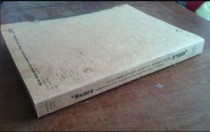
*Heara – Independent Art in Jerusalem at the Beginning of the 21st Century, 2014

Ronen Eidelman, Lea Mauas, Diego Rotman (eds.), *Heara – Independent Art in Jerusalem at the Beginning of the 21st Century, 2014, Jerusalem: Hearat Shulaym, 2014 [English and Hebrew | Book, 352 p.]

*Heara is a collection of testimonies, reflections, interpretations and documentations of Heara events, as well as images from issues of Hearat Shulaym (Note in the Margin), an independent contemporary art and literature journal published together and as an inherent part of the events. The book includes articles published in Hearat Shulaym and additional articles written especially for the book by Israeli artists and scholars, as well as artworks which were part of the Heara art project. The art events and journal were active in divided, grief-stricken Jerusalem of the Second Intifada, outside conventional art venues and without any cooperation or funding by the government or private corporations. Nevertheless, the events managed to form fascinating connections between artists operating in different media ־ visual art, theater, poetry, video and sounds, and created a platform of growth and articulation for hundreds of artists, producing exciting, unpredictable, inspiring and thought-provoking pieces.

To Download the book

Borderline, 2013

Borderline – Two performance events in the frame of Rashamim (drawing biennale) and with the collaboration of Daat HaMakom

Participating artists: adi kaplan and shahar carmel together with Dudu Carmel and invited musicians, shira legmann together with musica nova consort, hadas ophrat, lezli rubin-kunda, josef sprinzak.
Invited artists: Guy Yitzhaki and Dafi Sapunar, Yonatan Amir and Ronen Eidelman

Curators: Sala-manca.

“Borderline” is the title of two performance events featuring new works that address the space of the former Hansen leper house, and engage with cartography, mapping, and drawing in space.

Lezli-Rubin-Kunda-2Cartography, as a field of knowledge that encodes the space and delineates the connections between space and identity, employs the language of drawing in order to express political, economic, and social worldviews, all the while preserving and founding perceptions of identity. The works in “Borderline” will offer a different mapping of the space, whether through a revised reading of existing maps or the creation of alternative poetic maps.

The wall of Hansen House – which marked the separation between normal life and abnormal life – serves as the borderline, the initial point of departure for some of the works. The Hansen wall, residue of the outside self-defense against the inside, marks the space of a ghetto, of exile within the city, and serves as an architectural metaphor that echoes other walls. The works in the series of performances engage with the conceptual and concrete notion of the borderline: its delineation, erasure, or blurring. The borderline appears in the works as a formal or metaphorical line that separates and unifies its two sides, produces situations of passage, blockage, schism, or destination, and materializes in the encounter with agents that indicate its existence: customs, police, border crossing, conflict between different interests.Hadas-ofrat-3

The aspiration towards a utopian borderless space, a plan for a space without lines, was the dream of architect Rodriguez (the pseudonym of João Delgado), who had signed his business card “Arch. Rodriguez – Plans without Lines: an architect on a tightrope”.

http://traces.art.org.il/5/venues/mamuta?en

Living in a Film, 2014

Mamuta at Hansen | January-February 2013

Artists: Asya Lukin, Itamar Mendes-Flohr, Guy Yitzhaki, Hagar Goren, Hadassa Goldvitch, Zemer Sat, Yarden Erez, Einat Amir and Sala-Manca

Curators: Sala-manca

The project, which incorporates art, cinema and performance, will feature eight artists who were artists-in-residence at Mamuta in Ein Karem. The entrance to “Living in a Film” is every full hour. The viewers are led by a movie usher named Esther, a girl born to a Jewish Orthodox family, who left religion and fell in love with the usher of the Lisbon Cinema, which operated in the cellars of the leppers’ house in the city of Lisbon in Portugal between 1963 and 1973 (the era of Salazar’s dictatorship – and managed to serve as the underground nerve center of freedom fighters, right under the regime’s nose). In the wake of her love to the usher she also fell in love with the art of cinema, and because of that love was banished from her home.

images from the exhibition

FFINAL-Poster-Live-in-a-Film (1)

The  Exhibition is supported by the Ostrovsky Family Fund and the Ministry of Culture


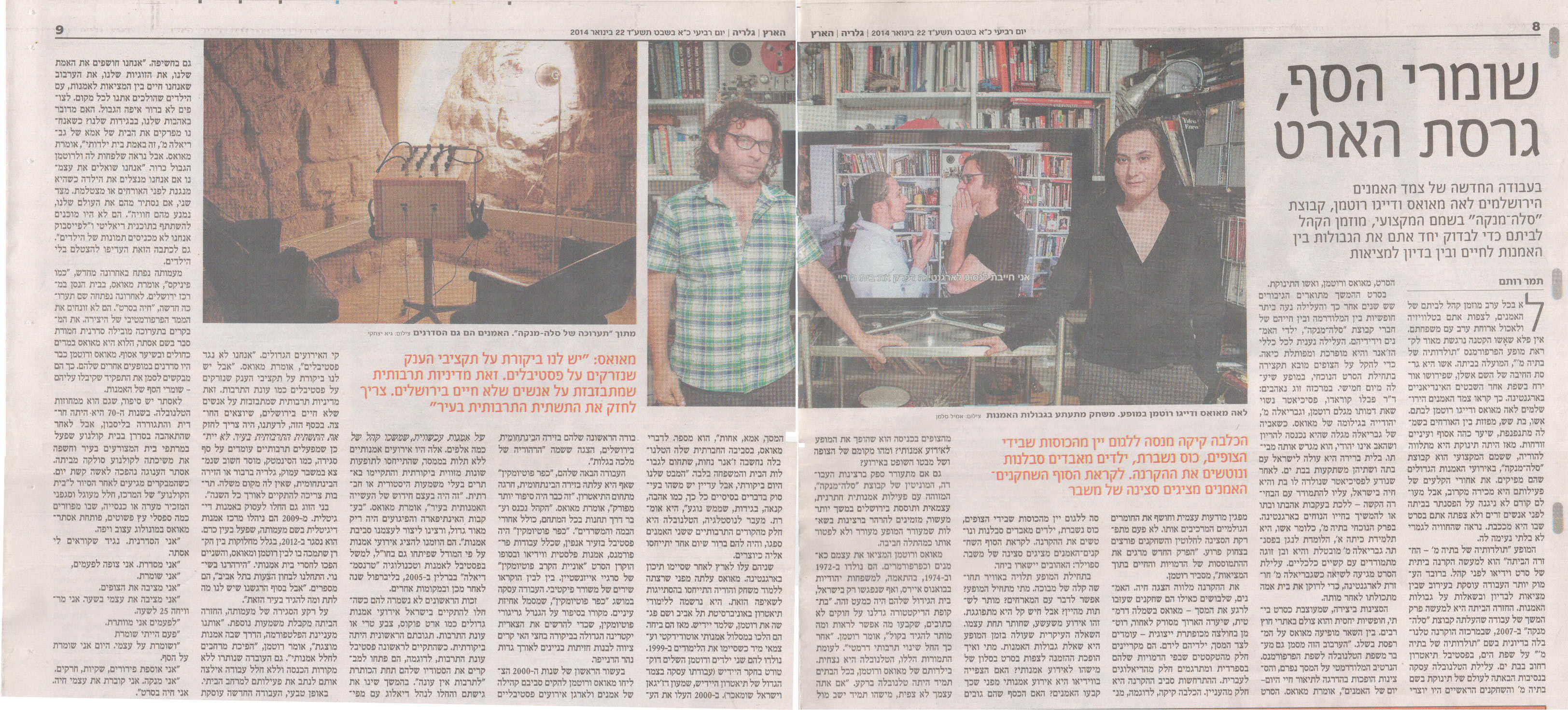
The History of Batya M. : The Return Home, 2013

Shown at the salon of the artits’s house, Musrara, 2013

Sala-manca, Laura Simcovich, Dina Blei, Andres Simcovich, Samuel Rotman, Ayu, Nahuel, Cuca | Music: Yarden Erez

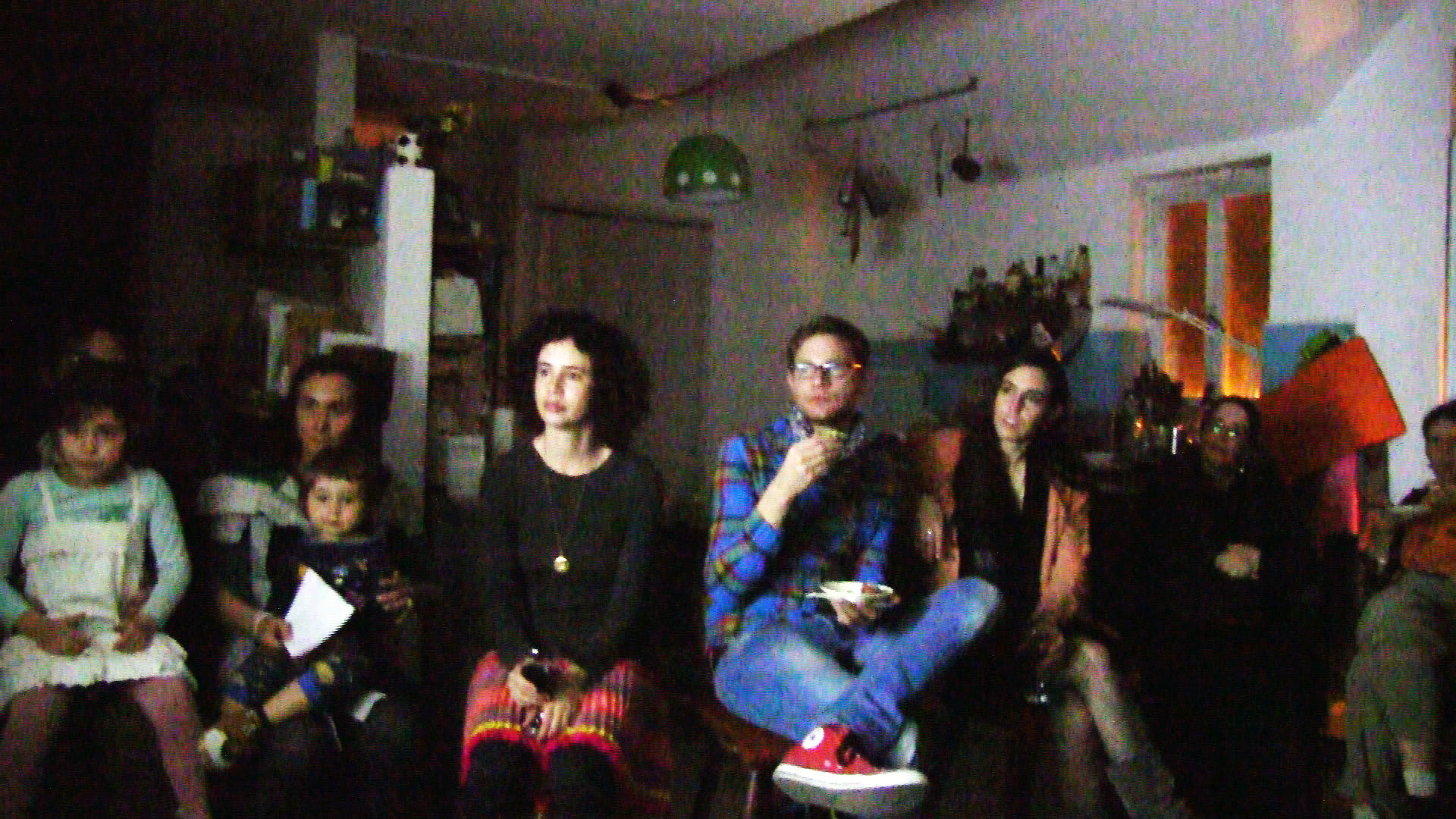
“Batya M. – The Return Home (2013)” is the last (and only) episode of the tetelenovela - return homelenovela starring and filmed by Sala-Manca group in Buenos Aires and Jerusalem and a continuation of The History of Batya M. (2007) .
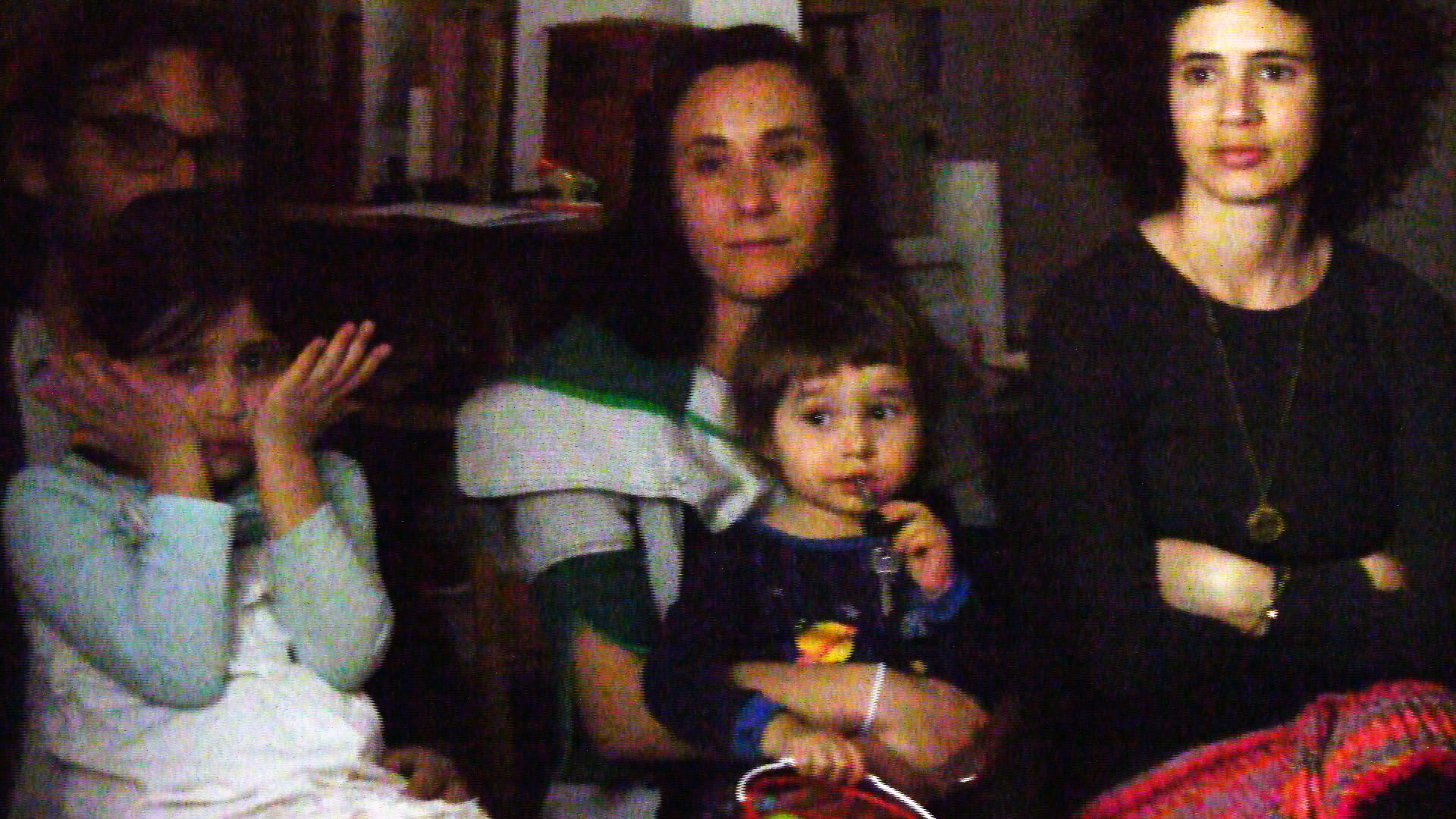
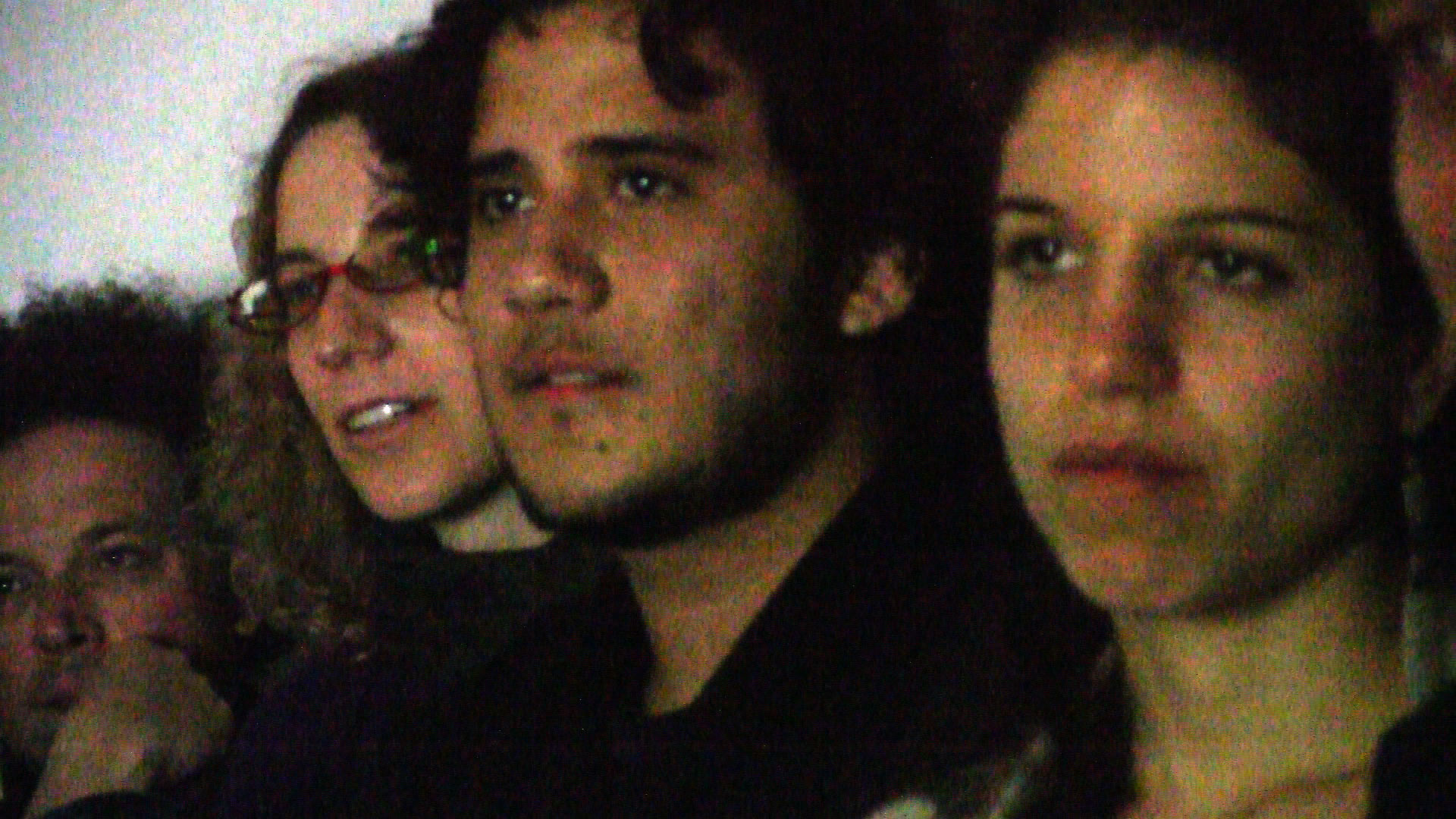
The screening of the single episode will be held at the home of the telenovela’s protagonists in Jerusalem’s Musrara neighborhood, rendering the viewing experience an active experience that includes performative activities and dinner, with a tongue-in-cheek action in which the protagonists and viewers become the participants in an unaired reality show.


toldotea-2-public-2 toldotea-2-public toldotea-2-public-3 toldotea-2-public-1

Haaretz – Batya M. [tamar rotem’s pdf]

Link to Tamar Rotem’s article about the performance in Haaretz (Heb)

Short fragment

Autonomy & Anatomy of the Moving Image (conference), 2013

AUTONOMY & ANATOMY OF THE MOVING IMAGE:
Video & Experimental Cinema in the Last Decade

Celebrating 10 years of the Video Art and Experimental Cinema Awards at the Jerusalem Film Festival

July 7-9 •  Jerusalem Cinematheque •  Free Entrance (except for screenings) • 7.7 and 8.7 will be held in English without translation 9/7 will be held in Hebrew without translation .
Jerusalem Film Festival | Mamuta Art and Media Center | Hebrew University | Bezalel Art Academy, Department of Screen-Based Arts with the generous support of the Ostrovsky Family Fund

For further information: www.mamuta.org

The symposium will explore how developments in new technologies have turned the Internet into a new platform replacing traditional platforms and media. The conference will also address the “war on terror” policy, which has turned video into one of the central instruments of state control. At the same time, subversive video practices have been developed by artists and activists, not only developing new social and political practices for “powerless” individuals and groups, but influencing and re-defining the aesthetics, poetics, and politics of video/art in the last decade or more, from the 9/11 attacks and until the Arab spring.

Haifa-Jerusalem-Tel Aviv, 2013

Haifa-Jerusalem-Tel Aviv, Haifa Museum, Curator: Ruti Direktor

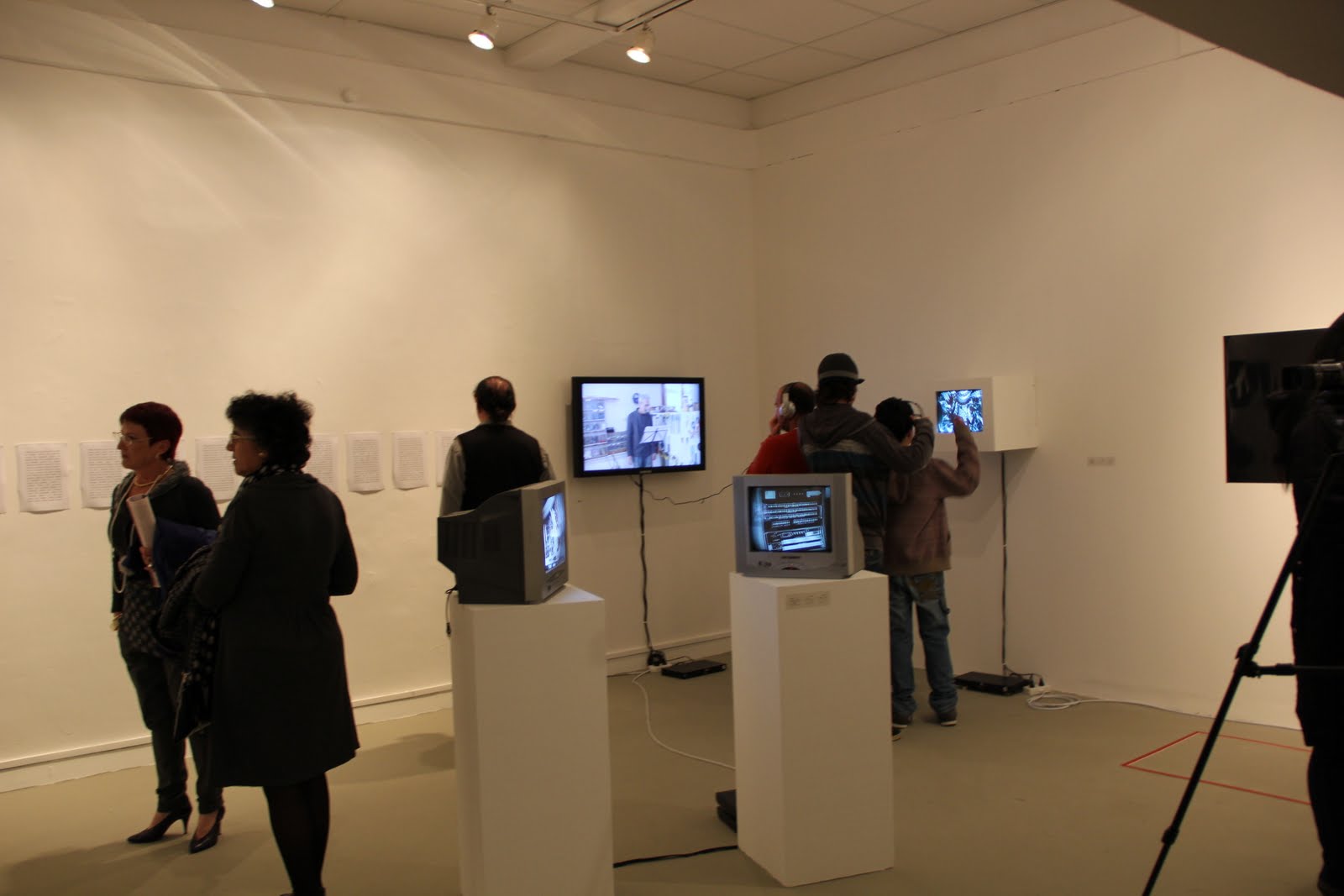
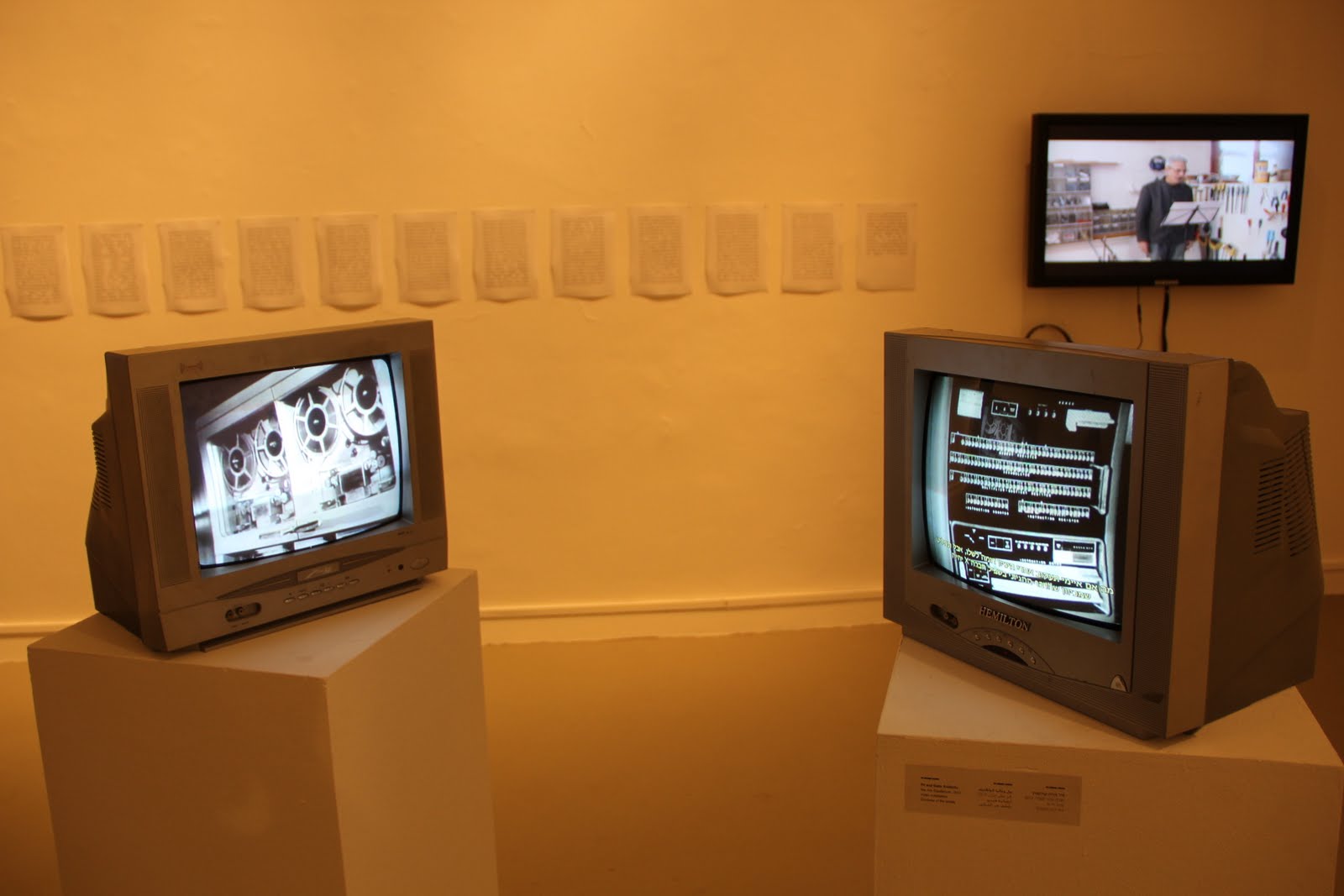
Mofc project: Sala-manca | Exhibited Show: “File Transfer Protocol”, Curators: Pil and Galia Kollectiv

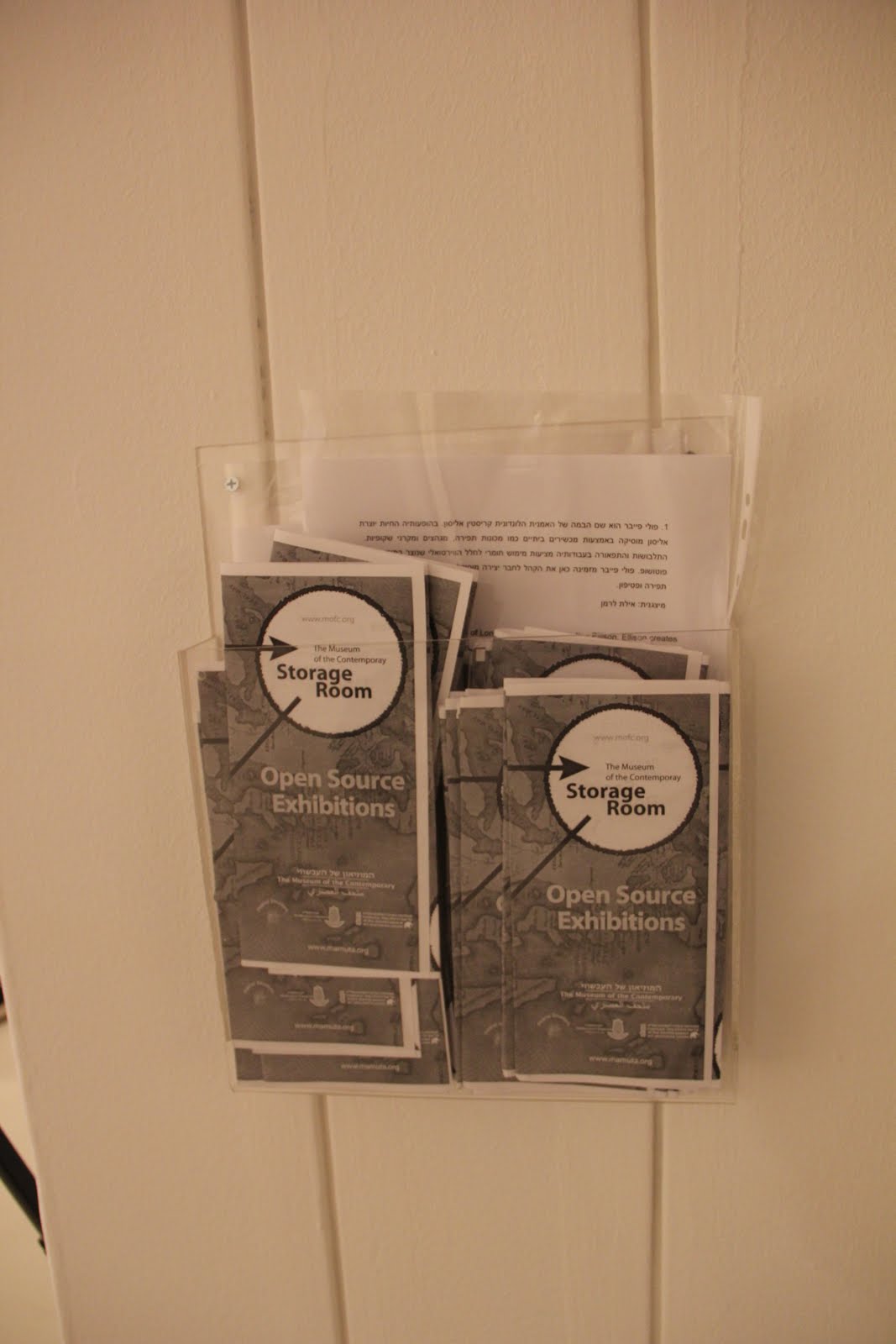
Mauas and Rotman devised the project The Storage Room, as part of The Museum of the Contemporary which they recently undertook in the framework of Mamuta’s activity. In The Museum of the Contemporary Mauas and Rotman intend to create a virtual collection of exhibitions that could be realized in any exhibition venue, anywhere in the world. They contacted Pil and Galia Kollectiv, an artist duo collaborating in London, and invited them to offer a proposal for the first exhibition in the collection. Here the extension of an invitation was elaborated and expanded: the museum invited Mamuta, Mamuta invited Pil and Galia Kollectiv who invited six London-based artists. For the realization of the exhibition the museum received directions from the members of Mamuta, who themselves received directions from Pil and Galia Kollectiv. (Ruti Direktor)


FILE TRANSFER PROTOCOL

The discourse surrounding the virtual has moved away from the utopian thinking accompanying the rise of the Internet in the 1990s. The Cyber-gurus of the last decades promised a technotopia removed from materiality and the confines of the flesh and the built environment, a liberation from old institutions and power structures. But since then, the virtual has grown into a distinct yet related sphere of cultural and political production that both parallels and occasionally flows over into the old world of material objects. The strict dichotomy of matter and digital purity has been replaced more recently with a more complex model where both the world of stuff and the world of knowledge support, resist and at the same time contain each other. Online social networks amplify and extend existing ones; other cultural interfaces like youtube have not replaced the communal experience of watching moving images in a semi-public space (the cinema) or the semi-private space (the family living room). Rather the experience of viewing is very much about sharing and communicating, offering interpretations and comments. Many of the web’s strongest entities (Amazon, eBay, Gumtree etc.) sit exactly at this juncture of applying tools taken from the knowledge management industry to organize the chaos of the material world along (post-)Fordist rationality.
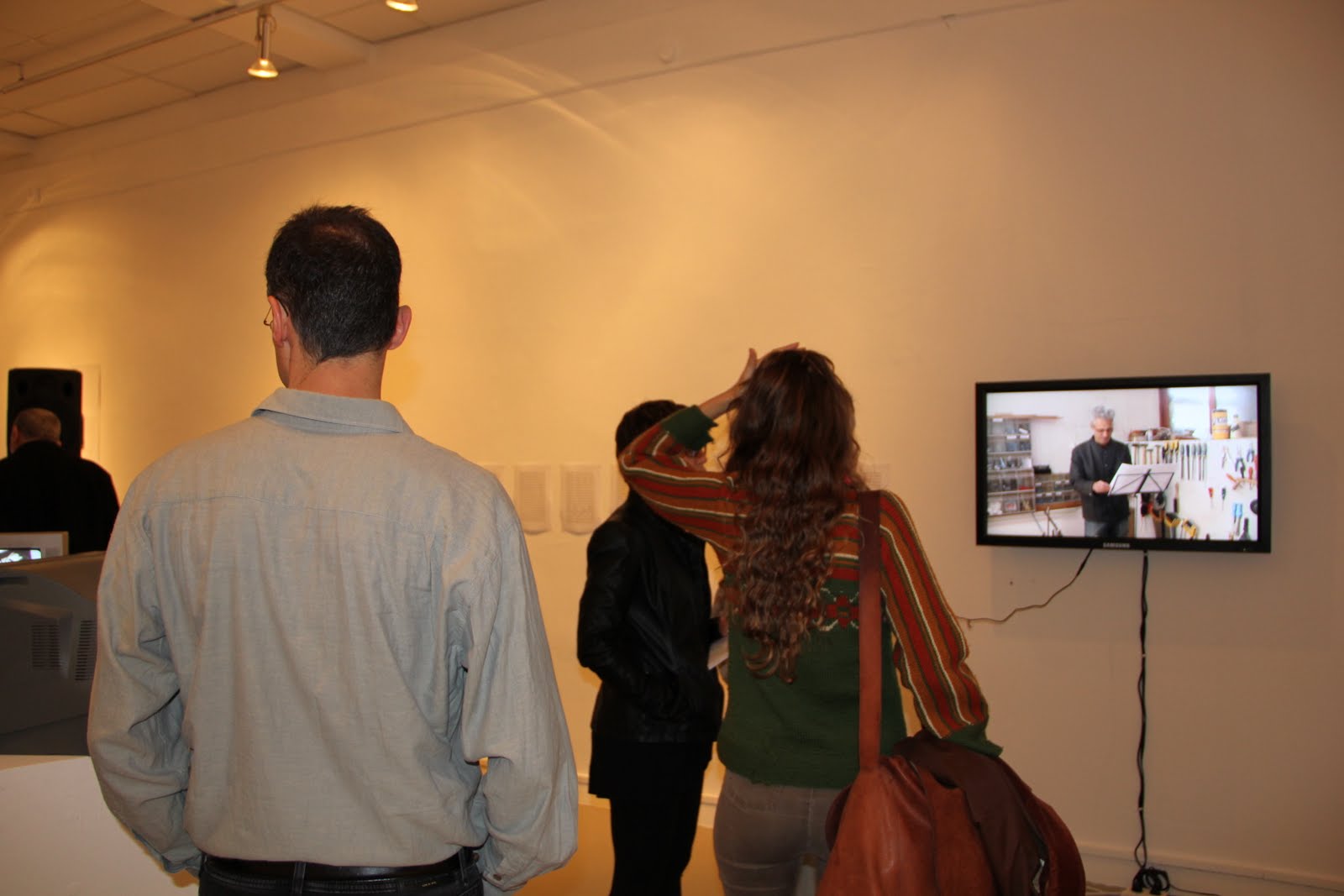
Since the early 1990s there have been many artistic and curatorial attempts to use the Internet as a platform of producing and exhibiting art, but a lot of these were reluctant to let go of the fantasy of digital freedom. Storage Room collapses the binary opposition of real and virtual space by using online data storage as a conduit for IRL art production. The artworks here will not be available for viewing online in a ‘screen’ environment but only as part of a downloadable package with the intention that the exhibition could be displayed (in a physical space) by any interested party and realised as ambitiously or minimally as the downloader wishes, based on their means. The artists will therefore also supply a set of instructions for the physical installation of the work alongside the digital files. In response to this curatorial initiative, File Transfer Protocol invites seven UK based artists to produce digital art for a physical environment, addressing the intersection between the virtual and the material. The files range from sound, video, digital prints and net art, blueprints for an action to take place, something to be made, a conceptual text piece, etc.

IMG_1327 IMG_1310 IMG_1313 IMG_1323 IMG_1306 IMG_1316 IMG_1331 IMG_1346


About the works and artists:

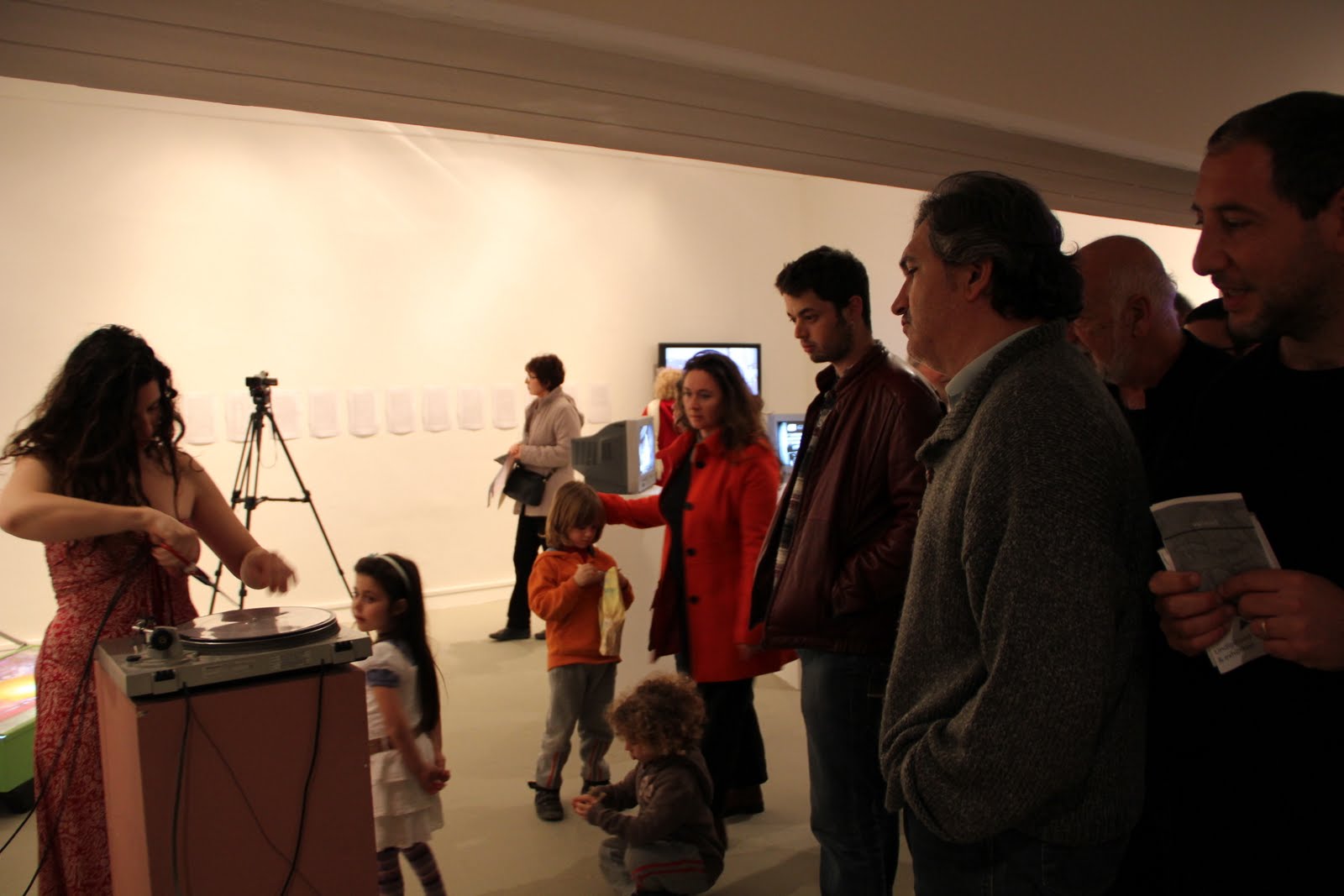
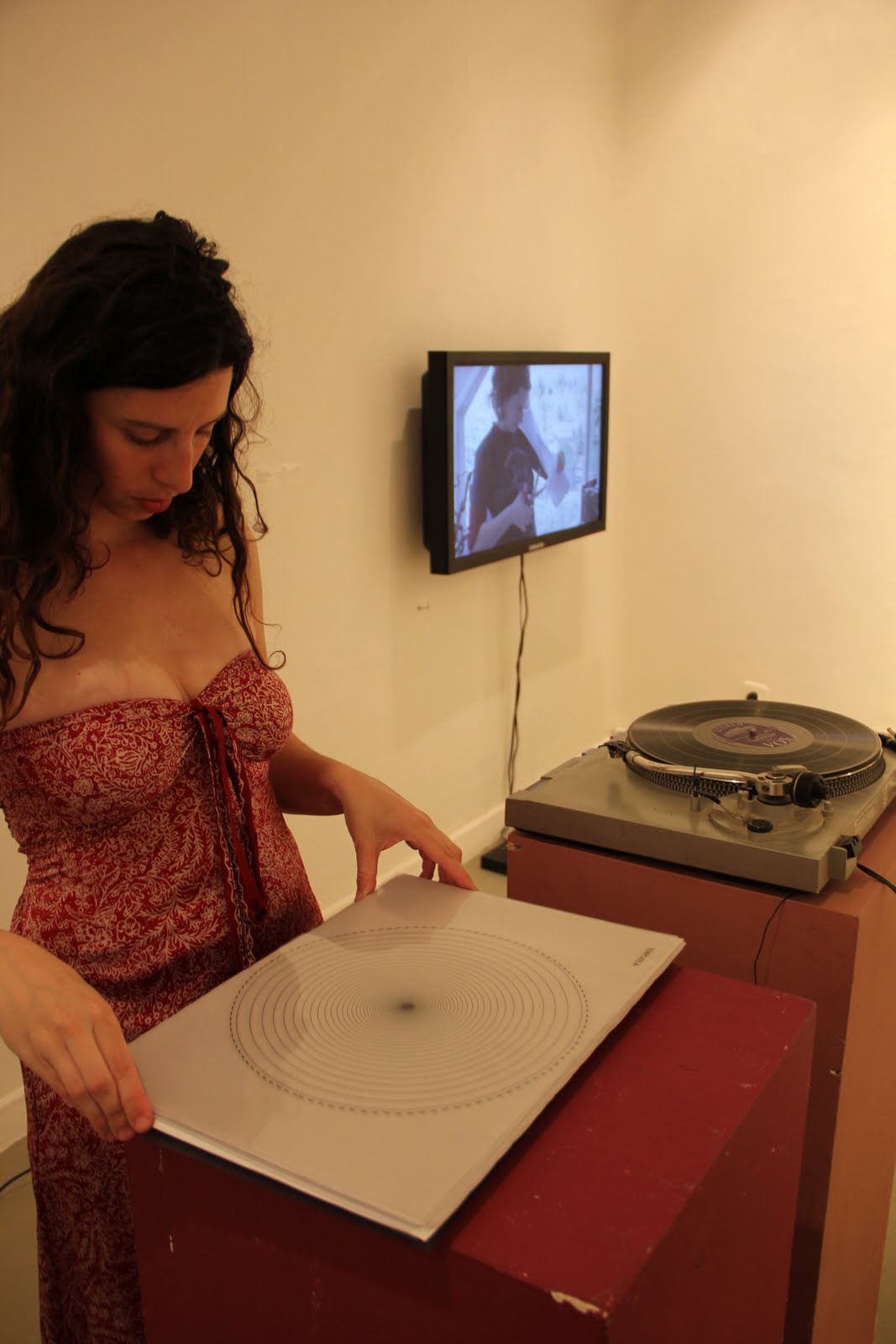
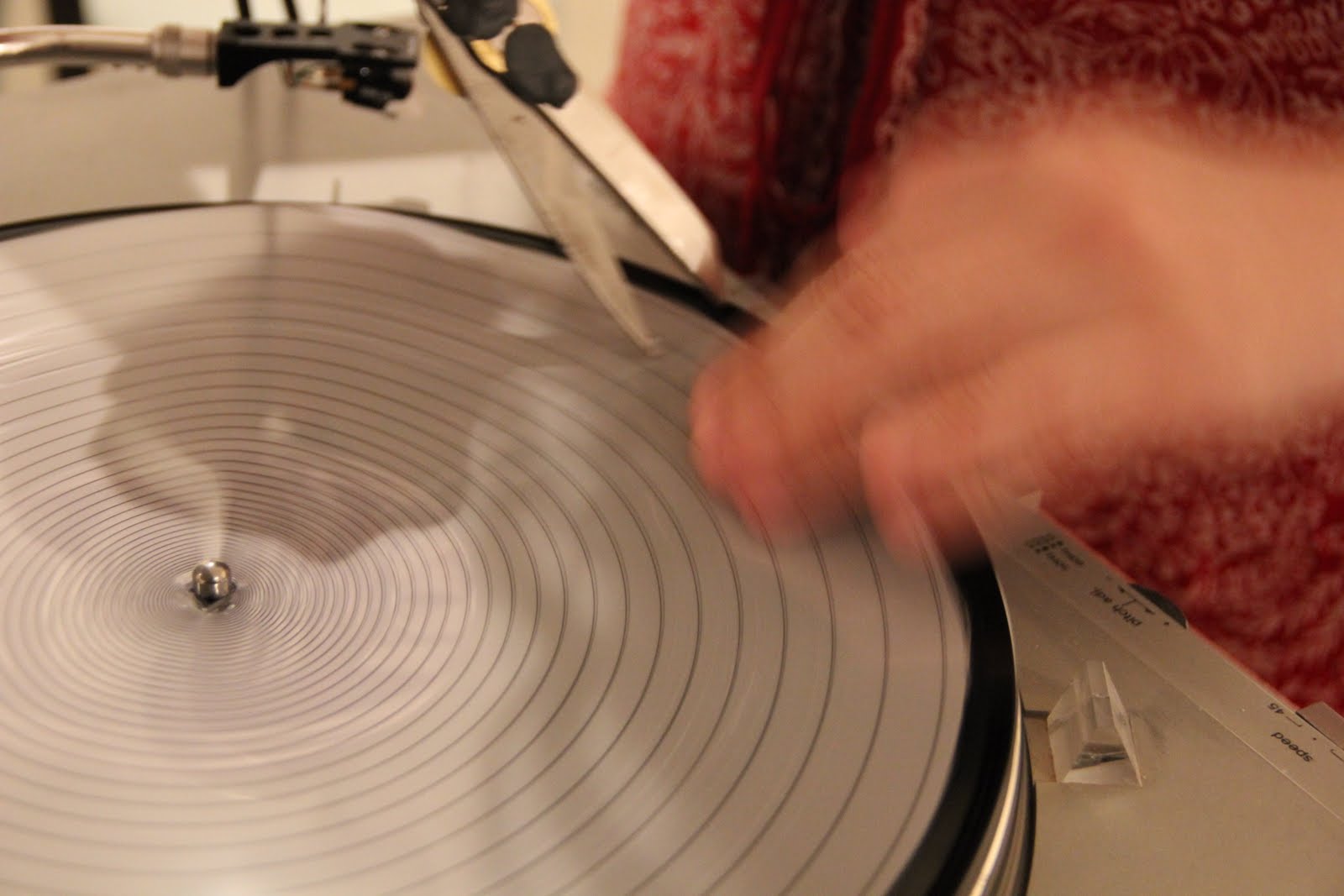
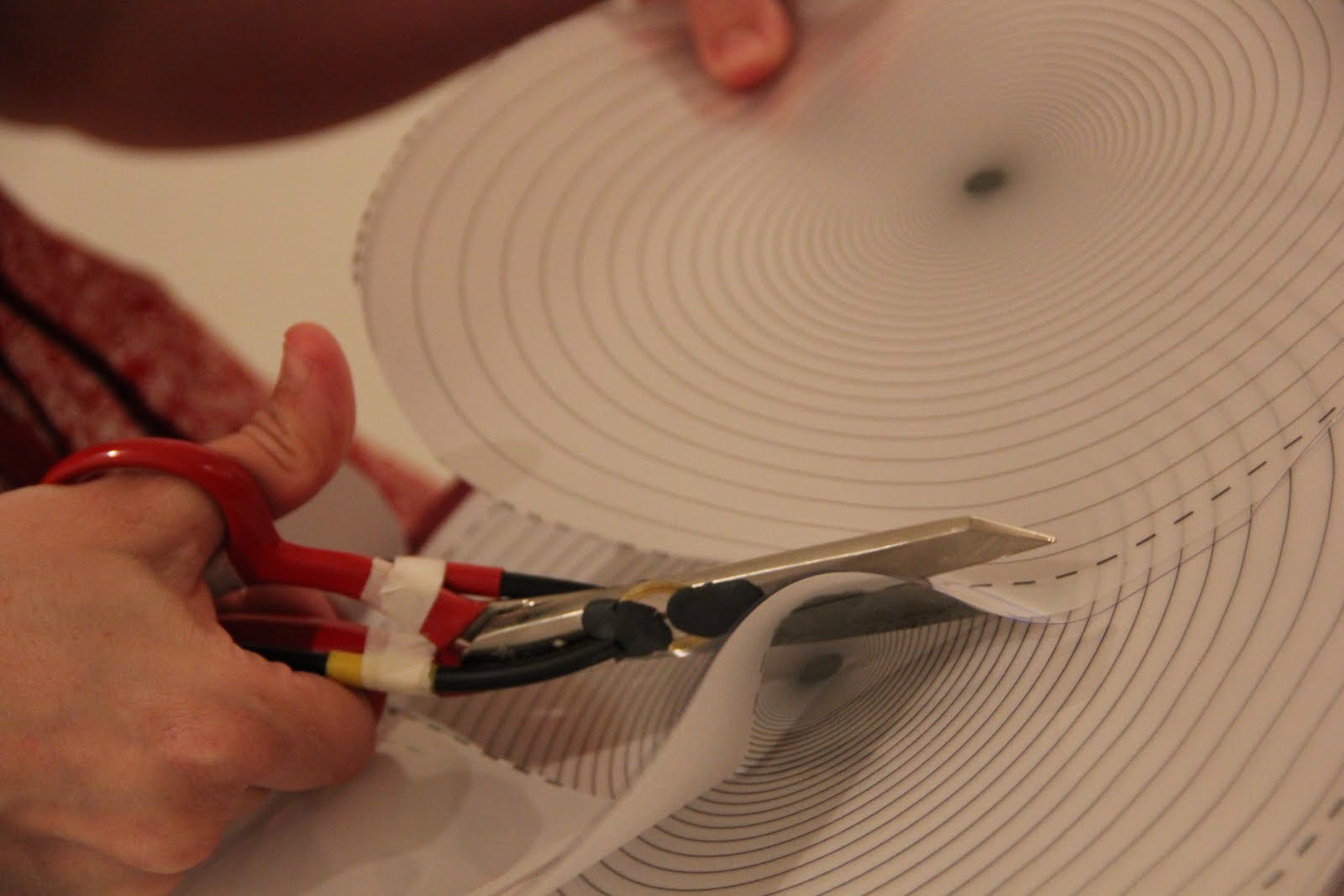
Polly Fibre is the pseudonym of London-based artist Christine Ellison. Ellison creates live music using domestic devices such as sewing machines, irons and slide projectors. Her costumes and stage sets propose a physical manifestation of the virtual space that is created inside software like Photoshop. For this exhibition, Polly Fibre invites the audience to create a musical composition using a pair of amplified scissors and a turntable. http://www.pollyfibre.com

John Russell, a founding member of 1990s art group Bank, is an artist, curator and writer who explores in his work the contemporary political conditions of the work of art. In his digital print, Russell collages together visual representations of abstract philosophical ideas and transforms them into a post apocalyptic landscape that is complex and banal at the same time. www.john-russell.org

The work of Bristol based artist Jem Nobel opens up a dialogue between the contemporary and the legacy of 20th century conceptual art around questions of collectivism and participation, authorship and individualism. His print SPACE concretizes the representation of the most common piece of Unicode: the vacant space between words. In this way, the gap itself turns from invisible cipher to sign. www.jemnoble.com

Annabel Frearson is rewriting Mary Shelley’s Frankenstein using all and only the words from the original text. Frankenstein 2, or the Monster of Main Stream, is read in parts by different performers, embodying the psychotic character of the protagonist, a mongrel hybrid of used language. www.annabelfrearson.com

Darren Banks uses fragments of effect laden Holywood films to create an impossible space. The fictitious parts don’t add up to a convincing material reality, leaving the viewer with a failed amalgamation of simulations of sophisticated technologies. www.darrenbanks.co.uk

FIELDCLUB is collaboration between artist Paul Chaney and researcher Kenna Hernly. Chaney and Hernly developed together a project that critically examines various proposals for the management of sustainable ecological systems. Their FIELDMACHINE invites the public to design an ideal agricultural field. By playing with different types of crops that are found in the south west of England, it is possible for the user, for example, to create a balanced, but protein poor, diet or to simply decide to ‘get rid’ of half the population. The meeting point of the Platonic field and it physical consequences, generates a geometric abstraction that investigates the relationship between modernist utopianism and contemporary actuality. www.fieldclub.co.uk

Pil and Galia Kollectiv, who have also curated the exhibition are London-based artists and run the xero, kline & coma gallery. Here they present a dialogue between two computers. The conversation opens with a simple text book problem in business studies. But gradually the language, mimicking the application of game theory in the business sector, becomes more abstract. The two interlocutors become adversaries trapped forever in a competition without winners. www.kollectiv.co.uk

Total Investment, 2013

IMG_6256 IMG_6258 IMG_6261969508_652127261467369_1815255362_n

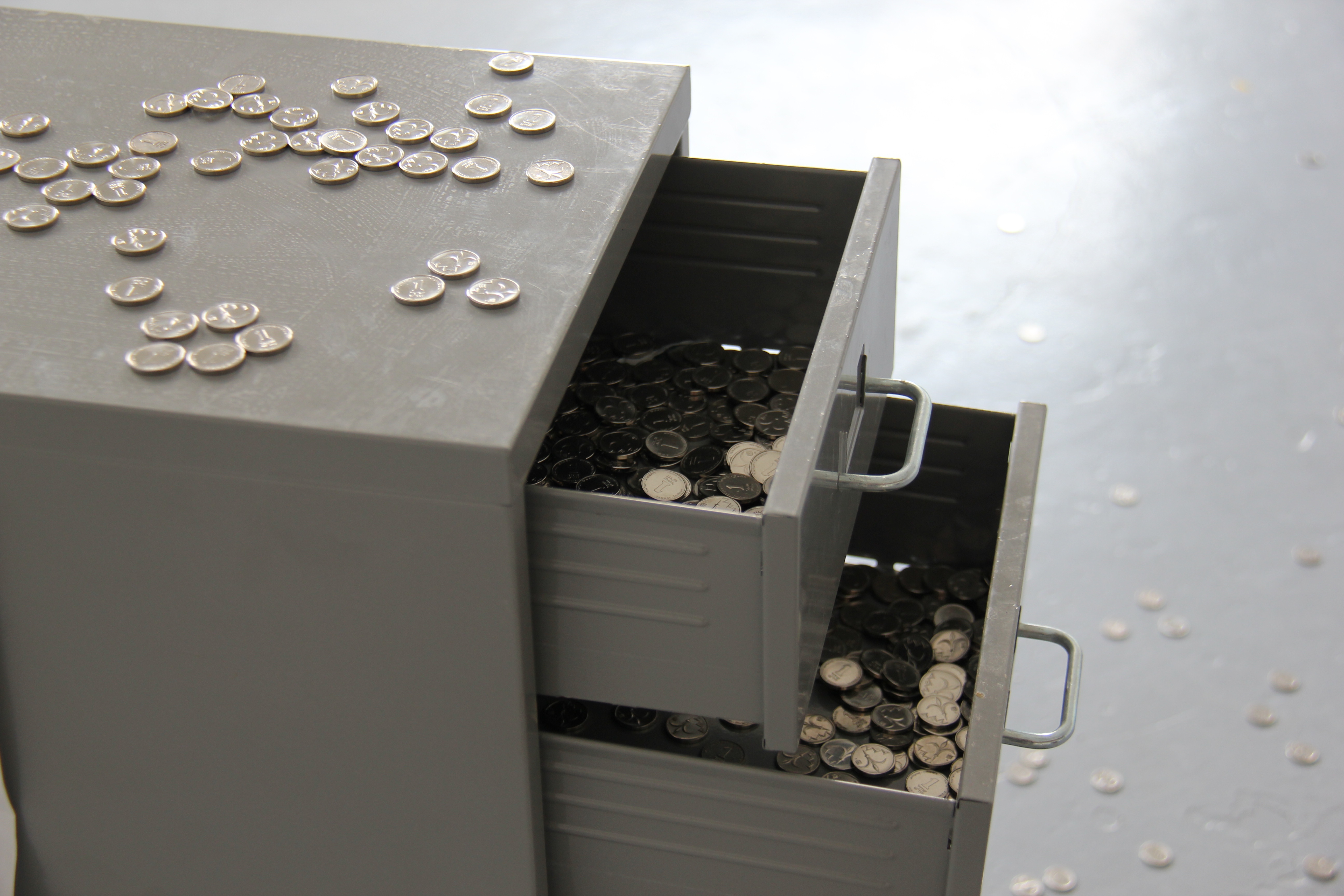
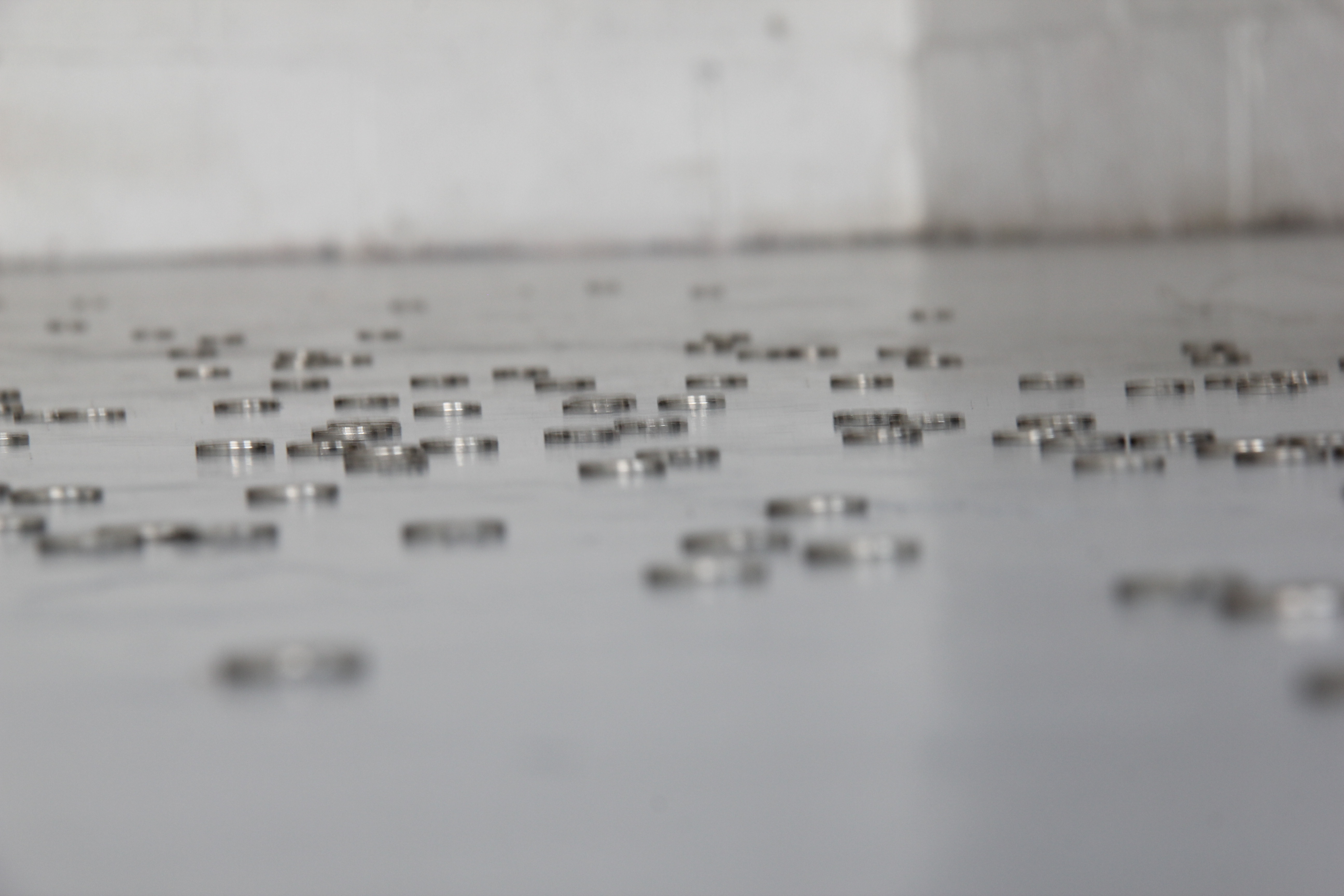
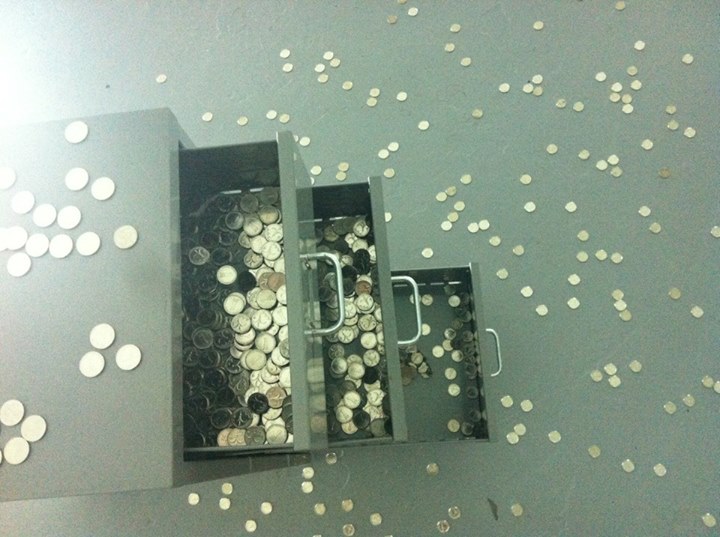
The project budget for the work was 1000 nis. The work is a sculpture  comprised of 1000 – shekel coins, the artists’ fee including expenses.

The sculpture is for sale. the price is 8000 shekel.

Performa 0:2 Festival / School of Visual Theater/ Curator: Guy Gutman 

Background

In 1972, the Portuguese-Argentinian Joao Delgado decided to expose the support mechanisms of the fringe theater he managed in Argentina. In the first act of his first play, on stage, he signed a contract with an urban producer stipulating the conditions and budget of the production itself. In the second act he took it back, and signed with the largest fund in the city that gives the smallest grants. In the third act he built a tower out of 2500 one-peso coins, comprising the meager budget of the entire show.

In the fourth act, to everyone’s surprise, the money vanished from the stage.

Play was performed only once and was a critical response to the ruling economic and political policy in Argentina at the time, when both foreign and local foundations and organizations attempted to dictate an alien cultural agenda, by force of their wealth. In this work, called “Total Investment”, Delgado preceded his time in a brilliant critical act and continued to work independently until his disappearance during the military dictatorship in Argentina.

photos: hilla spector

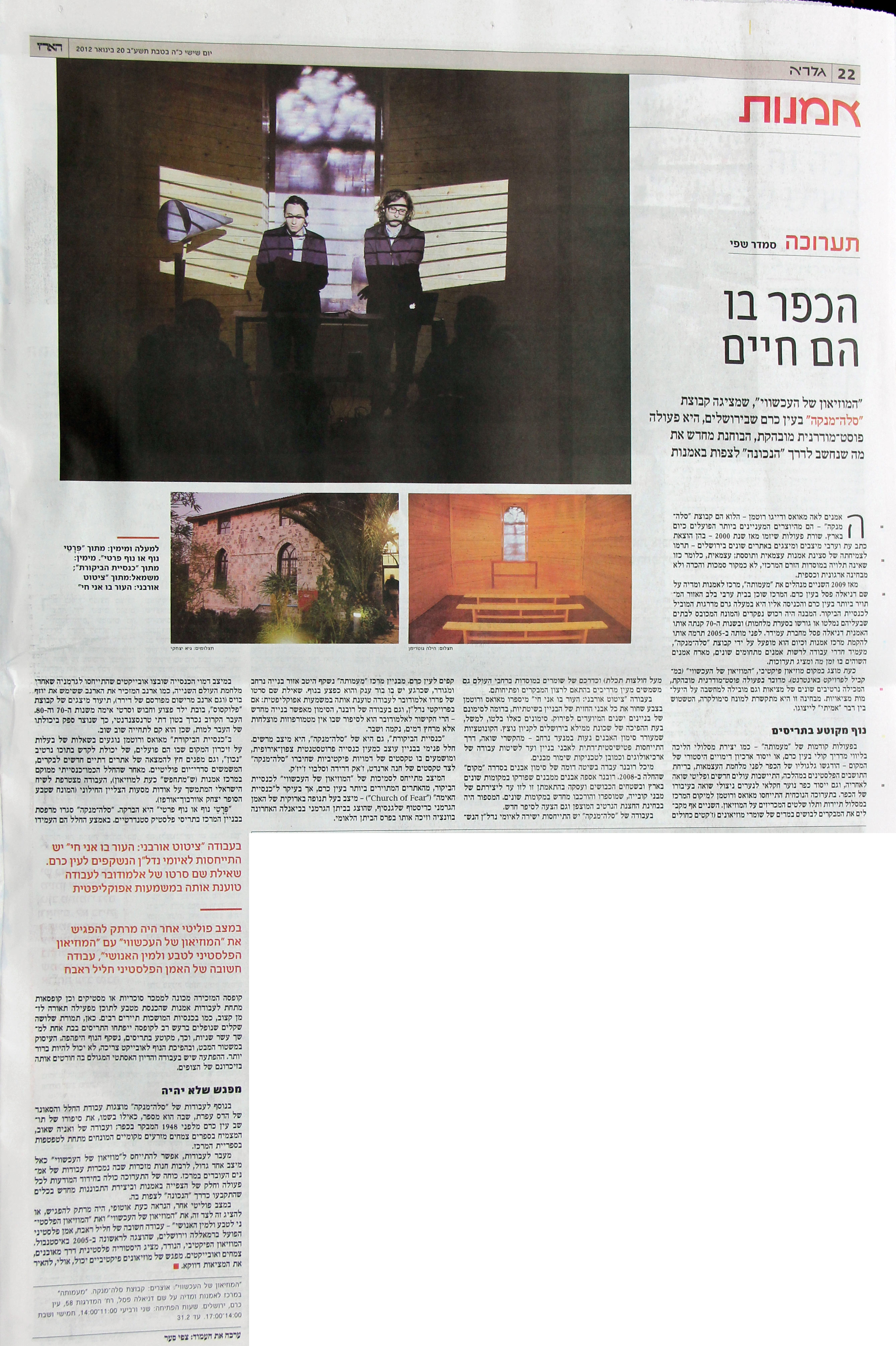
The Village They Live In, Smadar Shefi, 20.1.12

The Village They Live In, Smadar Shefi, Haaretz,  20.1.12sheficlick to enlarge


The artists Lea Mauas and Diego Rotman – the sole members of Sala-manca group – are
two of the most interesting artists working in Israel today. A series of actions they initiated
since 2000 – including the publication of a magazine and a series of installation and performance nights at different sites in Jerusalem – have contributed to the emergence of a vibrant
and independent art scene; independent, meaning one that is not dependent on the
mainstream institutions, either as a source of authority and recognition or in the organizational and financial respect.
Since 2009 Sala-manca group, have been running Mamuta at the Daniela Passal art and
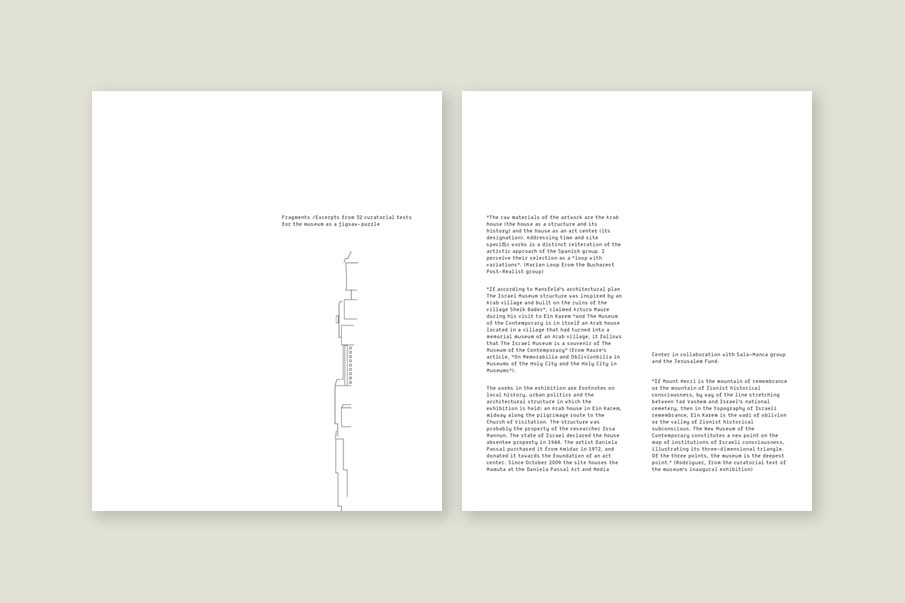
media center in Ein Karem. The center is situated in an arab house at the heart of the most
touristic area of Ein Karem, (and) its entrance is located by the steps leading to the church
of visitation. the structure was considered absentee property the whitewashed term for
houses whose owners escaped or were exiled in the turmoil of war and in the 1970s was
purchased from the Amidar company (Israeli Social Housing Company) by the artist Daniela Passal. Before her death in 2005 she donated it to the foundation of an art center, and today it is operated by the Sala-manca group, o!ers workrooms for artists from di!erent disciplines, hosts artists who reside in it for extended period’s of time and functions as an alternative exhibition space (holds exhibitions).
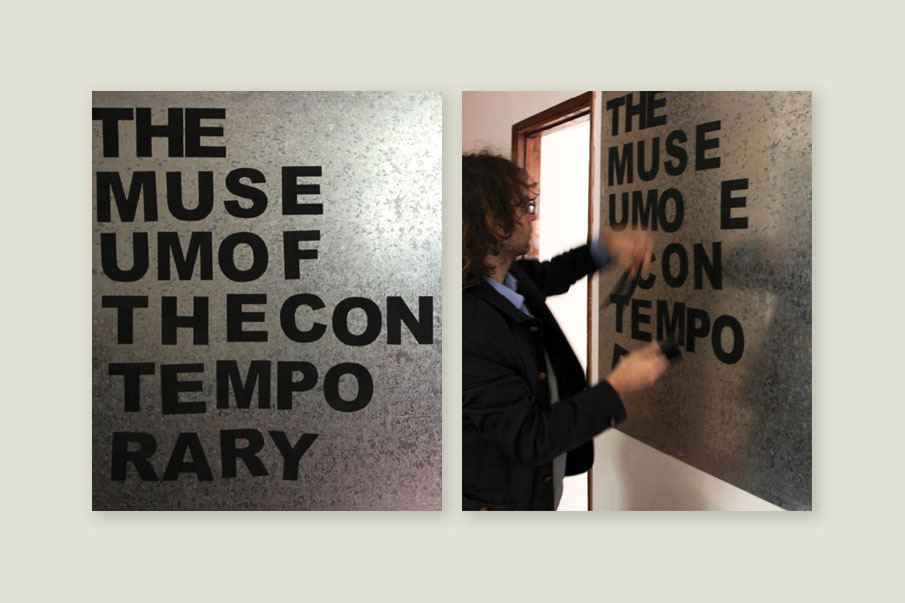
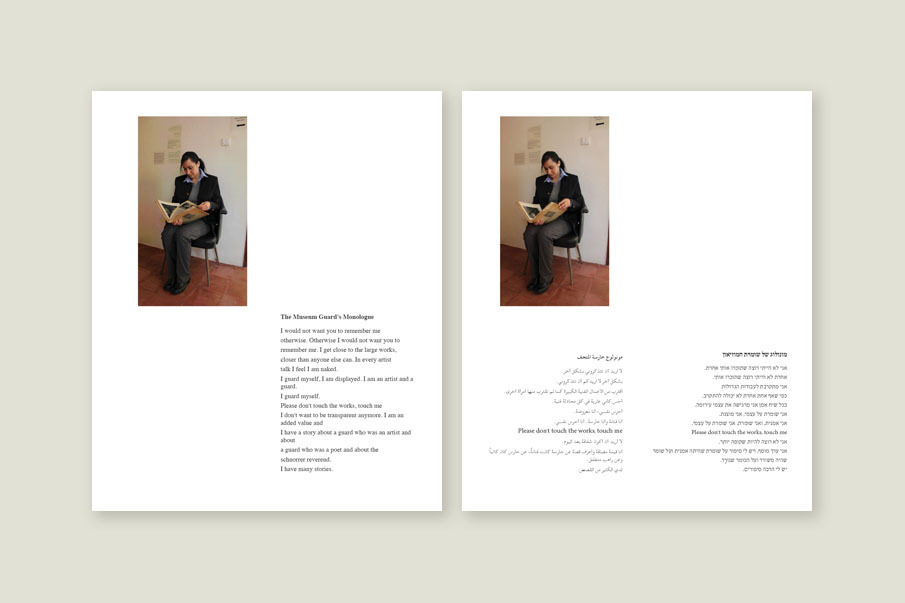
The current exhibition is “The museum of the Contemporary” running parallel to an internet project. It is a distinctly post-modern action containing di!erent thought provoking narratives and addressing the disappearance of local realities. in that sense, it is associated with the term simulacrum, the blurring between “real” and its representation.Mamuta’s previous actions – such as creating walking routes in Ein Karem; an audio guide, founding of an historical images archive of the site –representing the lives of the village prior to the independence war (1948), the flight of Palestinian residents in its course, the settlement of immigrants and holocaust refugees after the war including an agricultural youth village for children holocaust survivors in the center of the village. In the museum of the contemporary Mauas and Rotman related to the location of the center on the touristic route and put up signs announcing the museum. The two greet visitors wearing museum guards’ uniform (blue jackets over light blue shirts) and like guards in institutions worldwide, also serve as voluntary guides of sort, according to the willingness of the visitors. in the work “Urban Quote: The Skin I Live In” Mauas and Rotman have systematically numbered
the stones of the building’s facade in black paint, akin to the marking of old buildings
designated for demolition. Such markings stood out, for instance, in the course of
transforming Mamilla neighborhood in jerusalem into a glossy shopping mall. the connotations evoked by the marking of the stones range – from holocaust associations, through a fetishist-religious attitude towards building blocks to archaeologists’ working methods and of course buildings conservation techniques. Michal Rovner employed a similar method of marking stones in the series “Makom” – 2008.
Rovner gathered stones from dismantled structures in Israel and the occupied territories
and took on matching them to each other to create cubical structures, which were numbered and reassembled in di!erent locations. the numbering comprised the externalization of the encrypted narrative as well as a proposal for a new narrative.
Sala-manca’s work directly refers to real-estate threats looming over Ein Karem. The Mamuta center building overlooks an extensive fenced construction site, which at the moment has a giant pit, like a gash in the landscape. Adopting the title of pedro Almodóvar’s film for the work charges it with apocalyptic meaning: if in real-estate projects, as well as in Rovner’s work, the marking enables a re-construction, then the link to Almodóvar film promises no successful metamorphoses but rather a blood bath, revenge and calamity.
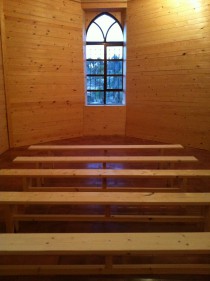
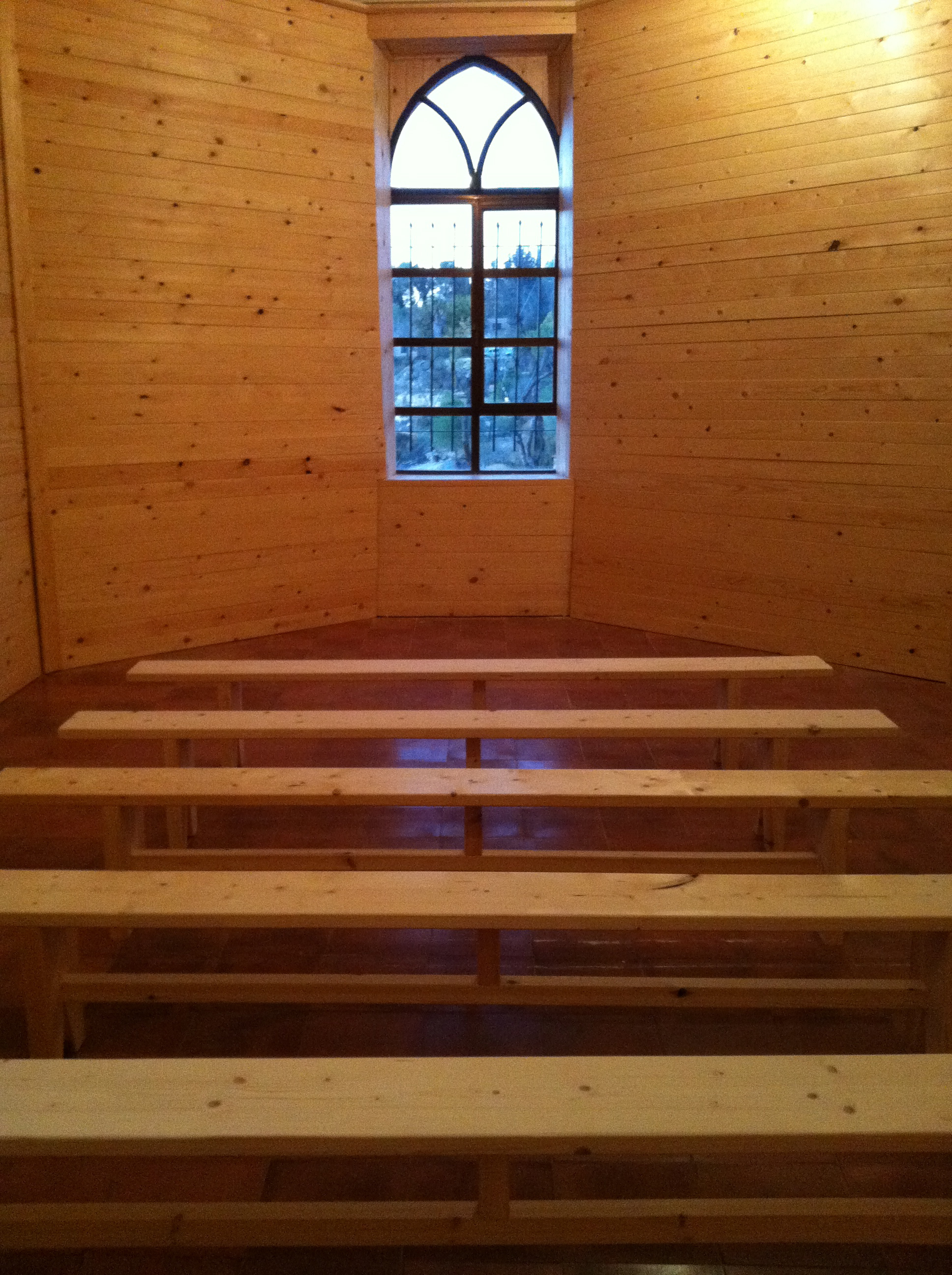
The “Church of Criticism”, also by Sala-manca, is an impressive installation. an inner space in the building was designed as a northern-european protestant church, in which texts by fictive figures composed by Sala-manca in conjunction with texts by Hanna Arendt, Jacques Derrida and Slavoj žižek are played.
The installation addresses the proximity of “The Museum of the Contemporary” to the
Church of Visitation, a popular tourist attraction in Ein Karem, but mainly to the “Church of Fear”, an installation of baroque scope by the german artist Christoph Schlingensief, exhib-ited at the german pavilion in the last Venice Biennale (2011), which gained the national pavilion award.
The church-like installation is clustered with objects referring to post second world war
germany, like a hare reminiscent of the hare used by Josef Beuys, (as well as the hare in
Dürer’s famous drawing), documentation of Fluxus group, a figure of a wounded bandaged
boy and horror films from the 1970s and 1980s. The recent past is tangled with a religious
transcendental tone, thus generating doubt in the ability of the past to die, since it is resurrected over and over again.
In the “Church of Criticism” Mauas and Rotman touch upon questions of ownership of
memory of the place in which they operate, the ability to hallow in it a “right” narrative,
while pointing at the frequent invention of new religious sites in the service of political
agendas. Since the church-like space is placed in an art center (currently assuming the
guise of a museum), their work joins the ongoing israeli discourse of the journeys of the
secular pilgrim (a term coined by the author Yitshak Orpaz).
“Private Landscape” is a stroke of genius. Sala-manca has closed o! a balcony in the central
building with standard plastic blinds. in the middle of the space they have placed a box
which brings to mind a candy or gum vending machine as well as the boxes placed below
artworks, which with the insertion of a coin switch on the work’s lighting for a short period
of time, like in churches that attract tourists. Here, for three israeli shekels that drop to the
box with great noise, the blinds will open abruptly for ten seconds, and so, segmented by
shades, the beautiful landscape stretches before the viewer. The preoccupation with the
control of the gaze and the transformation of the landscape into a commodity could not
have been clearer. The surprise in the work and the aesthetic debate embodied in it, linger
it in the viewers’ memory. An encounter that will not take place
In addition to Sala-manca’s works, the exhibition also features Hadas Ophrat’s sound installation, in which he recounts, in first person, the story of a former resident of Ein Karem prior to 1948 who is visiting the village; and a work by Wanja Schaub, who grow plants from local seeds in books placed under drippers at the center’s library.
Beyond the individual works, one may think of “The Museum of the Contemporary” as an
inclusive installation, which includes a souvenir shop that sells works by artists working at
the center. The power of the entire exhibition lies in heightening awareness to each action
and part of viewing art and in creating a renewed examination of the means that became
set as the “correct” way for viewing it.
In a diferent political situation, that at the moment seems utopian, it would have been fascinating to bring together, or exhibit side by side, “The Museum of the Contemporary” and”The Palestinian Museum of Natural History and Humankind”, an important work by Khalil
Rabah, a palestinian artist working in Ramallah and Jerusalem, which was exhibited for the first time in the Istanbul Biennial in 2005. The fictive, traveling museum exhibits Palestinian history via fossils, plants and objects. A meeting of the fictive museums could have given an enriching perspective on the Israeli-Palestinean situation.
(translated from Hebrew)

‏Too Much Talk about Space by Ayelet Lerman, 2012

‏Artists: Ayelet Lerman in collaboration with Zemer Sat, Guy Yitzhaki and Neta Cohen

Curators: Sala-macna | Mamuta at Daniela Passal House, Ein Karem

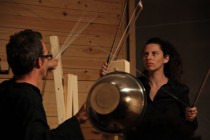
The project Too Much Talk aboutSpace, concluding 18 months of Ayelet Lerman‘s stay at Mamuta’s Studios is an invitation to a wonder visit which embodies a fascinating encounter between sound and visual art in four performances that were turned into unique musical instruments: a metal chimney attached on the mechanism of an old carousel is transformed into a rotating instrument on which she plays, attached to it by her artificial hair. The viewers watch as they spin on another carousel or swing on a seesaw. Another work incorporates Ayelet and Zemer Sat into Sala-manca’s installation Church of Criticism, turning the (wooden) church into a resonance box with taut strings along its length, as the church itself becomes the instrument of the uncompromising luthiers. Another collaboration, with Guy Yizhaki, is a dream in the sounds of spring nights, taking place in the building’s backyard.Lerman‘s sound and playing activate Yizhaki’s video work, forming a dialogue that illustrates the wondrous reality of the site, located in a complex historical and political space. The last work is 5 Minutes of Silence, collaboration between Lermanand Neta Cohen, in which the environmental noises were composed and emphasized to illustrate the silence, in a dialogue with John Cage’s famous work, 4:33.


Ayelet Lerman is a sound, performance and installation artist, creating at the Daniela Passal Art and Media Center as an artist in residence. She graduated the School of Visual Theater, and received the 2010 Jerusalem Mayor award for her graduation work.  She studied viola at the Music Academy in Jerusalem, Tel Aviv and Bologna (Italy). She collaborated with various artists and displayed her works in festivals, culture events and exhibitions. This is her first solo exhibition.

The exhibition is a joint production of Mamuta at the Daniela Passal Art and Media Center and Hazira

The Church of Criticism, 2012

Installation, in the frame of The Museum of the Contemporary, Mamuta in Ein Karem

Another stop along the tourists’ route, where art becomes the decoration of a private school-trip experience. The museum is a modern secular church and the performance executed in the Church is a combination of a mass, sermon and poetry reading. A reference to the unique geographic site of the Museum of the Contemporary, midway through the pilgrimage route to the Church of Visitation. A sculptural object, duplication of an Eastern European church to the Arab village; another comment on the process of converting the house’s original identity, “halfway” between the architectural tradition of a Norwegian church and a zimmer in northern Israel. The Church of Criticism features and quotes Western philosophers as icons of the Church’s outlook.

[*Knesiat Habikoret, a play on the Hebrew name of Church of Visitation]

Pine wood, stained glass, projector, mixer, computer, music machine, microphones, metal megaphone, camera obscura :pierced black wallpaper, tracing paper

IMG_1844


Sound of the Installation: Yarden Erez, “The Temple of Contemporary”


Short doc of the video installation at the church:

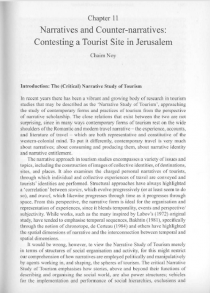
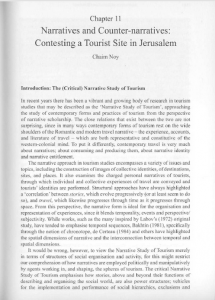
Narratives and Counter-Narratives: Contesting a Tourist Site in Jerusalem, Chaim Noy, 2012

Chaim Noy, Narratives and Counter-Narratives: Contesting a Tourist Site in Jerusalem, in Jacqueline Tivers and Tijana Rakić (eds.), Narratives of Travel and Tourism. Aldershot, VT: Ashgate. Pp. 135-150, 2012

Chaim Noy’s article about the “Multivocal Audio Tour in Ein Karem”

Chaim Noy
Chaim Noy

Click the image to go to the whole article


See also: Chaim Noy, Peace Activism in Tourism: Two Cases Studies (and a Few Reflections) in Jerusalem in Peace Through Tourism, Linda Ann-Blanchard and Freya Higgings-Desbiolles, Routledge, 2013